| Author |
 Replies: 273 / Views: 40,444 Replies: 273 / Views: 40,444 |
|
|
|
Pillar of the Community
 United States
1549 Posts |
I agree but it is still hard to be certain without looking under a scope.
|
|
Bedrock of the Community
United States
10045 Posts |
I always see something new here, this time the "anonymous pagan" coins.  The first thing I wondered...would coins be issued in Roman provinces without the emperor's bust?  Then again, I know very little about Roman provincials...but there's something different about the coins posted above. I like the "Guiness" patina too!  |
|
Pillar of the Community
United States
1315 Posts |
Doug, I probably couldn't say for sure even with a scope, but if you want to take a look at it let me know.
|
|
Pillar of the Community
United States
1315 Posts |
There was a monumental sculpture made by Eutychides of Sicyon in the latter part of the 4th century BC, for the founding of the city of Antioch, now lost to archaeology, but it survived long enough for the Romans to borrow the image and use it on these Pagan type coins. Here is a picture of a Roman copy of that sculpture. 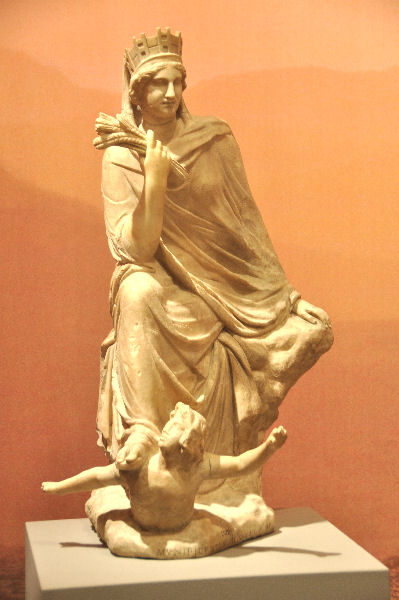 The inscription on the coins refers to the Genius of Antioch, but the sculpture is know as Tyche of Antioch. "The Tyche of Palmyra shown here, made nearly 500 years after its Antioch ancestor, shows a local adaptation: Antioch's Orontes River is replaced by the spring that watered Palmyra's oasis". I just thought this was interesting also. 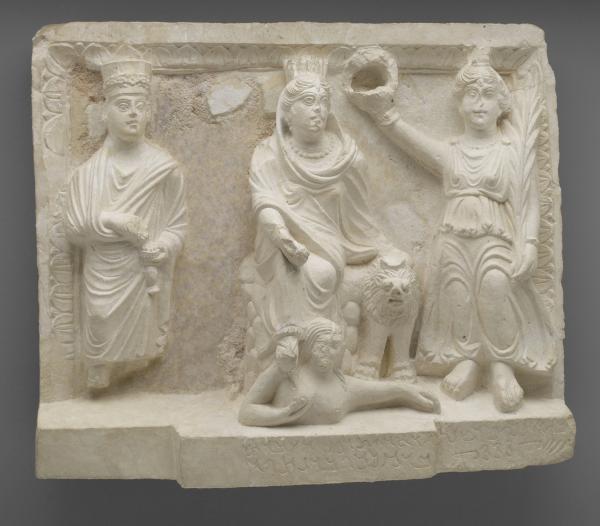 Edited by Doucet
05/26/2012 3:03 pm
|
|
Pillar of the Community
3352 Posts |
Nice => very cool statues, Doucet => thanks for adding the visual-finish to my blah-blah-blah ... |
|
Pillar of the Community
United States
1549 Posts |
#8 Septimius Severus AR denarius Alexandria mint INVICTO IMP reverse Coin #8 is exceptional in that it is one of the ugliest, lowest grade coins I own. How did it rank so high? It is also the finest specimen (OK, only specimen) known. My #1 special interest in coins are the Eastern mint denarii of Septimius Severus. My collection is about 20% coins of this category. I do not have all the known types but neither does anyone else since there are several known by only one specimen. Will another be found tomorrow? I hope so, I'd like to upgrade. 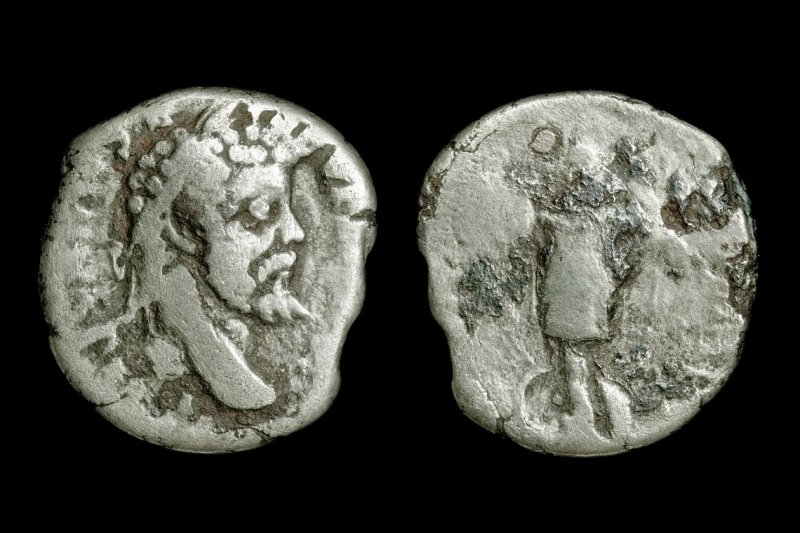 The reverse shows a trophy of arms - a pile of captured items after a battle. It is one of the more common reverses used in the most common Eastern mint known as "Emesa" (the actual location is uncertain). This one, however has the obverse portrait style of Alexandria. All Alexandrian denarii are rare. This is a 'unique' survivor. Prior to his untimely death, Roger Bickford-Smith (the greatest expert on this period) told me that this was, of all my coins, the one he would most like to own. Not all of us are condition freaks. I must be one since I still have 7 more coins to go. Roger was a good friend and is missed. For the record I will show below a standard and common (no more than scarce anyway) Emesa example of the type. The Alexandria coin would not have had COSII on the obverse but would have been similar otherwise. There is, by wild luck, a trace of the P at the end of the reverse legend of #8 proving that the legend was the short version INVICTO IMP rather than INVICTO IMP TROPHAEA as used at Emesa in its earliest period. 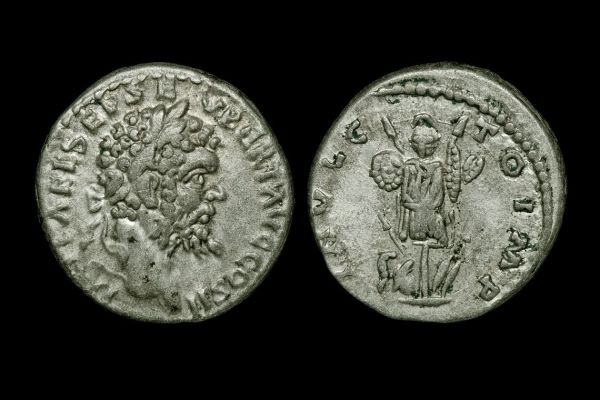 OK, I lied. The Emesa coin shown here is not the 'standard and common' version but has a minor variation that only a specialist in the series would care about. Did you notice it? Spelling errors on these Eastern denarii are not uncommon. For the most part they don't even add to the price but that is often because dealers price coins more on grade than on whether it reads INVLCTO or INVICTO. The die cutters almost certainly read no Latin and may have not been terribly strong in any language. An error on one die is no big deal. If you are to be a specialist in a narrow field like these denarii, you need to look at coins carefully and notice things like this. There are a thousand specialties available to collectors of ancient coins. "Eastern denarii of 193 to 196 AD" is mine. This is the first one I have shown in the 25 but there are more to come. I could have shown my top 25 Septimius coins but that would really have driven all of you away! Edited by dougsmit
05/26/2012 9:20 pm
|
|
Valued Member
United States
422 Posts |
This could have easily been your top coin in this thread. I find the fact that you have the only known specimen incredibly fascinating! Certainly must make one feel special in this specialized field of collecting? Again, awesome history lesson. Thank you for sharing. |
|
Pillar of the Community
United States
2596 Posts |
Nice coin dougsmit. One thing I like about ancients is most of the time I'm not too worried about higher grade coins. In fact I prefer coins with some green vertigres and encrustations. I'm not too worried about the grade. That's a great example especially considering the rarity. Great find.
|
|
Bedrock of the Community
United States
10045 Posts |
Having the only known specimen is fascinating--and makes me wonder what ancient coin types have completely disappeared? Many ancient metal objects, such as some of the best Greek scuplture, have been lost to remelting over centuries. I would guess to ancient Greeks and Romans, remelting coins would be seen as purely economical.
|
|
Pillar of the Community
United States
4253 Posts |
Ugly coin - but I would love to own it. Thanks for the lesson.
|
|
Pillar of the Community
United States
1549 Posts |
#7 Geta AE16x18 Nicopolis ad Istrum Apollo Sauroktonos (the lizard slayer) This is a nice coin but what elevated it to #7 is not the coin but the human connection. Provincial cities' coins often showed small renditions of statues as reverse types. In many cases, I suspect the city was proud to own the statue shown. Nicopolis has a lot of statuary types so I suspect the local populace was proud of their art museum. http://en.wikipedia.org/wiki/Apollo_SauroctonosIn the 4th century BC, Praxiteles made a bronze sculpture showing a young man attempting to capture a lizard on a tree trunk. The statue was highly regarded and copied in marble in Roman times. One of those copies is currently in the Louvre in Paris. The fate of the original is not clear. Did Nicopolis own the original Praxiteles bronze or one of the many Roman era copies? We will never know for sure. I just hope they didn't melt it down to get the metal for these coins!  Of the various coins I have seen copying this statue, this Geta is my favorite because of the way the lizard is shown so clearly.  The human part of this story comes from an email I received after posting a photo of this coin on my website: http://www.forumancientcoins.com/do.../apollo.htmlA professor of art at a major university identified this as a favorite sculpture and asked how hard it was to find such coins. As luck would have it, I had bought the coin from a dealer/friend who I recalled had more than one coin with this reverse so I put them in contact. The result has been a long standing friendship and correspondence with someone who has helped me immensely in my understanding of Greek art and provincial statuary shown on coins. The dealer had long been and is among my most valued numismatic friends so this turned out to be the classic win-win-win situation. Since then we each have have added several other Sauroktonos copies to our collections but that first one will always be the one that means the most to me and made #7 on this list. Show me your Sauroktonos coins! |
|
Pillar of the Community
3352 Posts |
I'm a big fan of the lizard-slayer coin!! |
|
Valued Member
United States
422 Posts |
Ahhhh, got no Sauroktonons coins to show Doug.  Enjoy the story though ! |
|
Moderator
 United States
23731 Posts |
|
|
Pillar of the Community
United States
2596 Posts |
|
| |
Replies: 273 / Views: 40,444 |








 First Page
 Previous Page


 Posted 05/26/2012 2:26 pm


