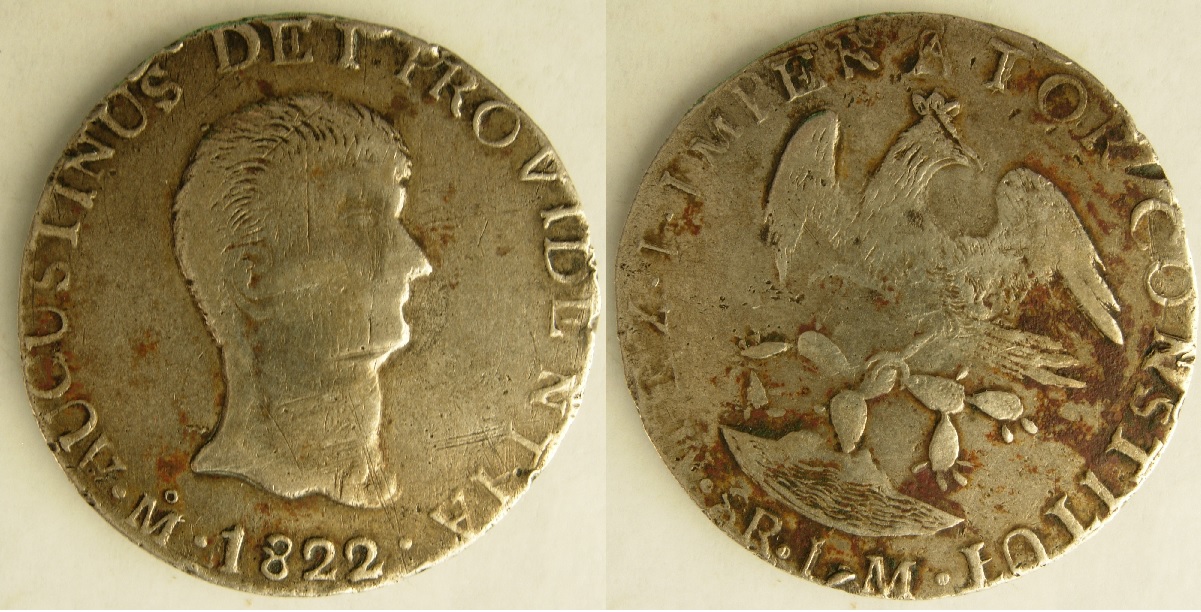
First Page


 Posted 07/05/2012 10:06 pm


All this time I thought it was an eagle and it could be a Crested Caracara. 
But what is a Caracara?
So I looked it up and it is apparently a Falcon in the Vulture family. Vulture does not sound too good for any national symbol so I wanted to know what it looked like.
So here is a picture I found of a Crested Caracara.
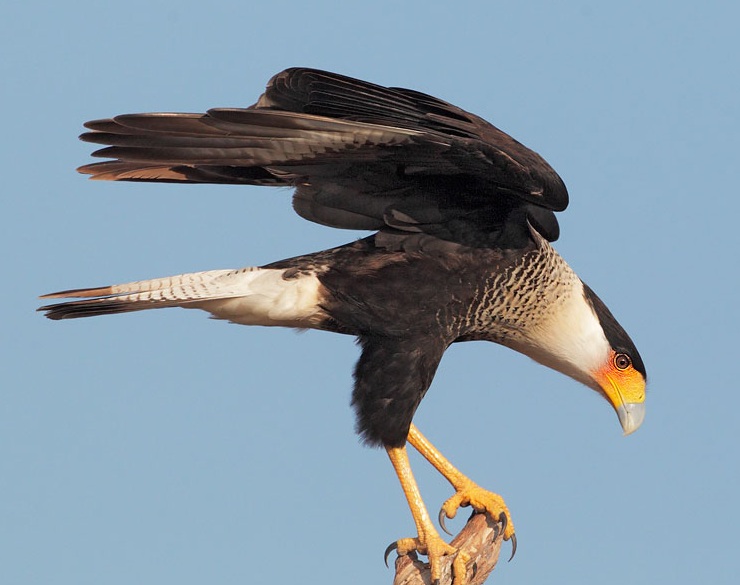
Personally, based on this and the other pictures I found, I think it is a beautiful bird. It has a very prominent dark area on the back of its head which looks like an elongated crest - but which is not really a distinct crest at all but just a change in the color of the feathers. It does resemble facially the bird seen on many 8 Rales. Also I noticed that the leggings on the caracara's legs stop at the knee - they do not go down to near the toes like the Bald Eagle or for that matter most eagles.
The length of the legging on the 8R birds has always seemed odd to me. Perhaps it came from years on the chicken farm but I have always loved birds and a feature like how log the leggings are is something I notice. All 8R coins depict a bird with leggings that do not extend to the toes. The Caracara and the 8R bird has this in common.
Then there is the beak - the Caracara's beak does not hook at the tip like a bird of prey but is curved like a vulture or chicken. That too has been a problem for me when I viewed the range of birds shown on the Mexican 8 Reales. Some 8R birds, like the early Zacatecas birds, have a very deep hook giving them the fearsome look of an eagle while others like the very early Durango coins show a bird with no hook but a simple curve.
However those of us familiar with the various Mexican eagle designs will realize that two of these three features are actually the most variable items on the depictions used on the 8Rs. The bird is depicted with and without a crest. It is also depicted with and without a hooked beak. But it is always depicted with the leggings stopping well above the toes.
So I can see how a Caracara is a very nice match for what the bird on some of the 8R's looks like.
The history of the Mexican Coat of Arms indicates (in most sources I have seen) a reliance on the legend of Tenochtitlan and upon the Codex Mendoza and in some cases on the Codex Fejervary Mayer.
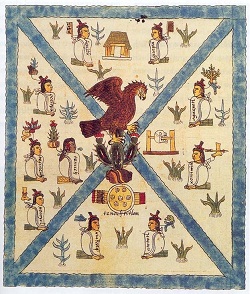
However, I do not see the Caracara as matching the bird from the cover of the Codex Mendoza at all. The codex Mendoza dates to about 1551 or 1552 and is an Aztec Codex depicting the History of the Aztecs. The First page is the page used most often as the precursor to the design used on the Mexican coat of arms. But on the Codex Mendoza there is NO SNAKE at all.
Here is a picture of page 1 of the Codex Mendoza.
Here is a blow up of the central part of the page - the bird itself.
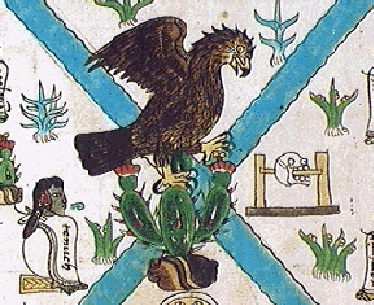
The Mendoza bird has a crest composed of multiple feathers, it has a deep hook in its beak and the leggings extend to the lower leg but stop short of the toes. Pretty good match to the Caracara until you look at the color. That is simply wrong. To me, I think the codex is attempting to depict a bird like a Golden Eagle.

Some articles, as noted above, also refer to a dependence on the Codex Fejervary Mayer an earlier document which shows an eagle attacking a serpent on page one. Here is that illustration.
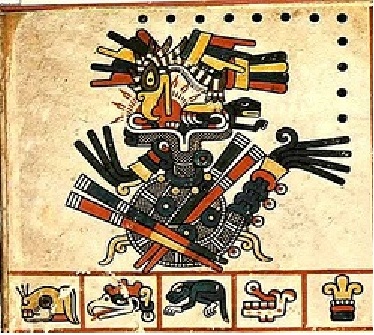
Not a great likeness of a snake. To me it looks like a small reptile because it seems to be extending one leg.
Just because it was mentioned I will show the image on the Teocalli de la guerra sagrada, a stone copy of a temple that was thought to be a throne. But since it dates to 1831, I do not see how it is definitive when discussing the symbolism adopted decades earlier.
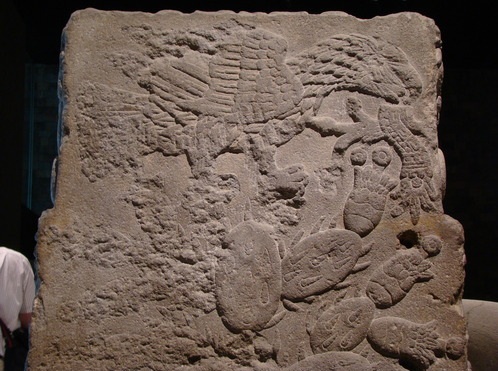
After looking at all the pictures, while I like the Caracara, the bird that everyone seems to want to depict is an eagle of some sort. (But then again, what do I know).
One thing I do know is that the counterfeit of the 1822 Iturbide has arrived and based on my preliminary review appears to be VERY old and struck multiple imes on a very low impact press.
But what is a Caracara?
So I looked it up and it is apparently a Falcon in the Vulture family. Vulture does not sound too good for any national symbol so I wanted to know what it looked like.
So here is a picture I found of a Crested Caracara.
Personally, based on this and the other pictures I found, I think it is a beautiful bird. It has a very prominent dark area on the back of its head which looks like an elongated crest - but which is not really a distinct crest at all but just a change in the color of the feathers. It does resemble facially the bird seen on many 8 Rales. Also I noticed that the leggings on the caracara's legs stop at the knee - they do not go down to near the toes like the Bald Eagle or for that matter most eagles.
The length of the legging on the 8R birds has always seemed odd to me. Perhaps it came from years on the chicken farm but I have always loved birds and a feature like how log the leggings are is something I notice. All 8R coins depict a bird with leggings that do not extend to the toes. The Caracara and the 8R bird has this in common.
Then there is the beak - the Caracara's beak does not hook at the tip like a bird of prey but is curved like a vulture or chicken. That too has been a problem for me when I viewed the range of birds shown on the Mexican 8 Reales. Some 8R birds, like the early Zacatecas birds, have a very deep hook giving them the fearsome look of an eagle while others like the very early Durango coins show a bird with no hook but a simple curve.
However those of us familiar with the various Mexican eagle designs will realize that two of these three features are actually the most variable items on the depictions used on the 8Rs. The bird is depicted with and without a crest. It is also depicted with and without a hooked beak. But it is always depicted with the leggings stopping well above the toes.
So I can see how a Caracara is a very nice match for what the bird on some of the 8R's looks like.
The history of the Mexican Coat of Arms indicates (in most sources I have seen) a reliance on the legend of Tenochtitlan and upon the Codex Mendoza and in some cases on the Codex Fejervary Mayer.
However, I do not see the Caracara as matching the bird from the cover of the Codex Mendoza at all. The codex Mendoza dates to about 1551 or 1552 and is an Aztec Codex depicting the History of the Aztecs. The First page is the page used most often as the precursor to the design used on the Mexican coat of arms. But on the Codex Mendoza there is NO SNAKE at all.
Here is a picture of page 1 of the Codex Mendoza.
Here is a blow up of the central part of the page - the bird itself.
The Mendoza bird has a crest composed of multiple feathers, it has a deep hook in its beak and the leggings extend to the lower leg but stop short of the toes. Pretty good match to the Caracara until you look at the color. That is simply wrong. To me, I think the codex is attempting to depict a bird like a Golden Eagle.
Some articles, as noted above, also refer to a dependence on the Codex Fejervary Mayer an earlier document which shows an eagle attacking a serpent on page one. Here is that illustration.
Not a great likeness of a snake. To me it looks like a small reptile because it seems to be extending one leg.
Just because it was mentioned I will show the image on the Teocalli de la guerra sagrada, a stone copy of a temple that was thought to be a throne. But since it dates to 1831, I do not see how it is definitive when discussing the symbolism adopted decades earlier.
After looking at all the pictures, while I like the Caracara, the bird that everyone seems to want to depict is an eagle of some sort. (But then again, what do I know).
One thing I do know is that the counterfeit of the 1822 Iturbide has arrived and based on my preliminary review appears to be VERY old and struck multiple imes on a very low impact press.
Edited by swamperbob
07/05/2012 10:16 pm
07/05/2012 10:16 pm