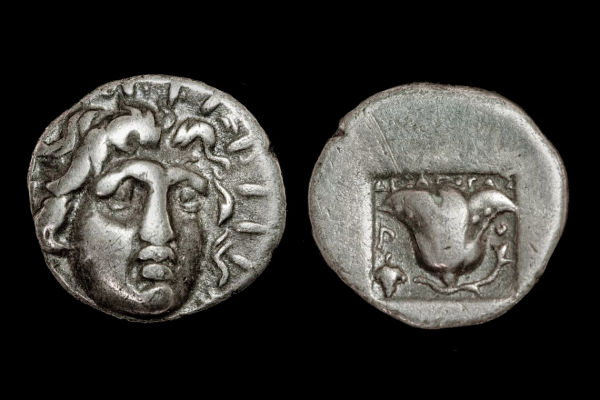
It is very much a matter of whether we like the Archaic style or the full Classical treatment. My coin shows the later period which was very much appreciated in the 19th century and would have had influence on the Statue of Liberty. Archaic became more appreciated in the later 20th century. Workmanship was more careful later as well. The OP coin is very nice for what it is (I hope Sear agrees)and even has the clear city name PO rather than a magistrate name often seen above the rose.
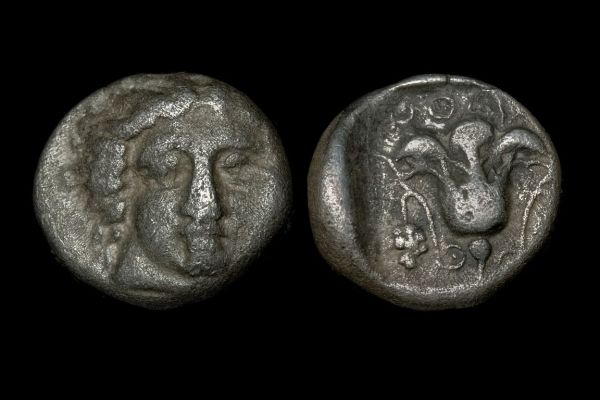
My two hemidrachms are more often what you see. The earlier (4th century) one is crude with less clear legend while the later one (2nd century?) has the magistrate name in tiny letters above. Specialists would probably be able to date it more closely from that but I don't have that reference. I'll be interested in seeing where Sear dates the OP. This is like the Athenian owls that were issued over such a long period that the early and the late hardly look like each other. I suspect that the head on my didrachm looks a lot like the head on the famous Colossus of Rhodes but we have no real way of knowing that. If you don't know of the statue and its link to the Statue of Liberty, read:
http://en.wikipedia.org/wiki/Colossus_of_Rhodes Did you know?:
Early collectors with a flair for the mystic attributed these coins to a later time and thought the radiate head was Christ. This was a clear case of seeing what you want to see and probably was realized as ridiculous by more informed collectors but I suspect it sold coins to more than a few pious noblemen a few hundred years ago.








 First Page


 Posted 08/09/2012 2:53 pm


