| Author |
 Replies: 92 / Views: 20,967 Replies: 92 / Views: 20,967 |
|
|
|
Valued Member
United States
143 Posts |
As another chemist, the difference between acetone and MEK is negligible. I prefer acetone because it's more often than not a better solvent for the organic contaminants on coins, it evaporates quicker, smells better, and has a slightly lower toxicity. However I have seen solvents remove toning, and you can usually tell if a coin has been solvent cleaned if it feels smooth and clean to the touch. All that said, solvent does work well. Both acetone and MEK can be purchased in the paint department of your local hardware store.
|
|
Pillar of the Community
United States
1761 Posts |
Freon never left that blue-ish tone on Lincoln Cents when I experimented ... acetone and MEK usually does. But again I never cleaned a mint state copper coin and never will ... I have no issues with acetone or MEK on circ copper if absolutely necessary such as stopping green growth but not just as a habit ... good discussion.
John Lorenzo
United States
Edited by colonialjohn
09/14/2012 4:15 pm
|
|
Bedrock of the Community
United States
20049 Posts |
Quote:
Freon never left that blue-ish tone on Lincoln Cents when I experimented ... acetone and MEK usually does. I have used acetone on thousands of coins and NEVER have I seen a "bluish tone" as a result. In fact, I've never seen that effect with ANY organic solvent. What types of coins have you seen this on? |
|
Pillar of the Community
United States
3755 Posts |
I have to go with Thad on this one, I have never ever once seen any kind of negative effect on a coin with acetone, whether it was copper or silver.
|
|
Pillar of the Community
United States
1547 Posts |
Quote:
Olive oil is a sure path to ruining your copper coin permanently. I know a lot of you aren't going to want to believe this, but this is true. And I learned it the hard way. |
|
Pillar of the Community
United States
1761 Posts |
Thad and smoker - try it on Mint Red 2012 Lincoln Cents - report results after 24 hours - acetone or MEK. No effect on brown UNC's or AU specimens.
|
|
Bedrock of the Community
United States
20049 Posts |
Why a 2012 cent? I've use acetone on every single Lincoln proof I own (up to 2011) and a lot of my Memorial cent collection. However, those have simply been rinsed. In my experimentation, soaking in acetone (except to remove PVC residue) is futile on copper. I've also soaked many different Lincolns from circulated to BU for days and days in acetone to prove to others they don't "turn pink" or any other colors. You're not the first person to make this claim. I've refuted it quite a few times over the years. As a scientist you should know that there are simply no reaction mechanisms possible between copper and acetone. If you do see something, it's because the coin surface has some sort of organic residue on it or your acetone was contaminated. Edited by BadThad
09/17/2012 11:09 am
|
|
Pillar of the Community
United States
1345 Posts |
Here's a coin I stole off the Bay because it shows signs of an acetone bath. At least according to the seller, here's what the description read; Selling: 1934 D Lincoln Wheat cent. The coin photographs well - but in hand has more of a pinkish hue that suggests it's taken an acetone bath at some point. I have not seen the coin in hand yet but judging from the sellers photo, is he correct about the acetone? And silly question but can anything be done to reverse/remove/neutralize this effect, without further damage to the coins finish of course.. 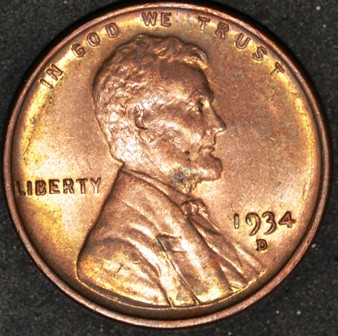 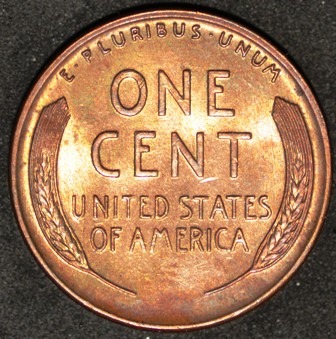 |
|
Bedrock of the Community
United States
20049 Posts |
"Signs of an acetone bath"
Pure conjecture....complete hogwash.
|
|
Pillar of the Community
United States
1903 Posts |
Why should do a myth busters thread about all these things that are all hearsay and finally put them to rest. The forum could sticky it and call it CCF mythbusting
|
|
Pillar of the Community
United States
3755 Posts |
This is akin to the one inch of fish per gallon "rule" (which is pure bunk BTW and the quickest way to kill fish) in the aquarium hobby. Just because a lot of people say it, does NOT make it true. As Thad said, acetone is not something that interacts with any of the metals in coins.
|
|
Pillar of the Community
 United States
1795 Posts |
Man I love reading all of this....I'm going to have to do a lot of different test here ....but keep em coming the more the merrier. Thanks to All who have replied to this post.
|
|
Bedrock of the Community
United States
20049 Posts |
|
|
Bedrock of the Community
United States
17884 Posts |
Thad, might I suggest standing a cent on edge so that you soak HALF of the coin in the acetone. Showing the whole coin before and after soaking opens questions of possible differences in photography or lighting etc and frankly the fact that you are looking at two different pictures makes comparison slightly more difficult. But a single coin that has been half soaked will show whether or not the color of the coin has changed. (I don't believe there will be any change.)
One problem you do still have is that even the mint red coins straight from a "mint" roll (or even one purchased directly from the mint.) will still have a layer of oil on them from the coining process. The press is lubricated, the dies are oiled even the planchets are oiled so they won't stick while moving through the feeding mechanisms. The removal of the oil layer could create a slight difference in the appearance.
|
|
Bedrock of the Community
United States
20753 Posts |
Quote:
Posted 09/15/2012 1:12 pm
Quote:
Freon never left that blue-ish tone on Lincoln Cents when I experimented ... acetone and MEK usually does.
I have used acetone on thousands of coins and NEVER have I seen a "bluish tone" as a result. In fact, I've never seen that effect with ANY organic solvent. What types of coins have you seen this on?
I've been using Acetone on coins for possibly 40+ years with no effects except in mixing coins of different types. And too, occationally, as Conder101 pointed out, even new coins may contain oils which could give all sorts of odd results if not rinsed properly. Most people fail to remember that what was on a coin prior to dumping in Acetone, then allowing to dry, may well create a problem to to the STUFF left after the evaporation of the Acetone. Also, note there is another post on the Main Coin Forum of a similar subject. Edited by just carl
09/18/2012 09:56 am
|
| |
Replies: 92 / Views: 20,967 |








 First Page
 Previous Page


 Posted 09/14/2012 4:04 pm


