| Author |
 Replies: 15 / Views: 4,676 Replies: 15 / Views: 4,676 |
|
|
Pillar of the Community
United Kingdom
2139 Posts |
This coin is a Greek drachma of 1926 with a silver paper impression pasted on its reverse. The obverse looks like a normal cupro-nickel drachma of 1926: 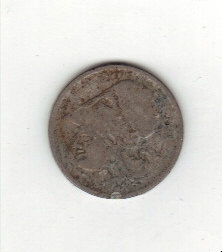 but the reverse looks as if it might be bronze underneath: 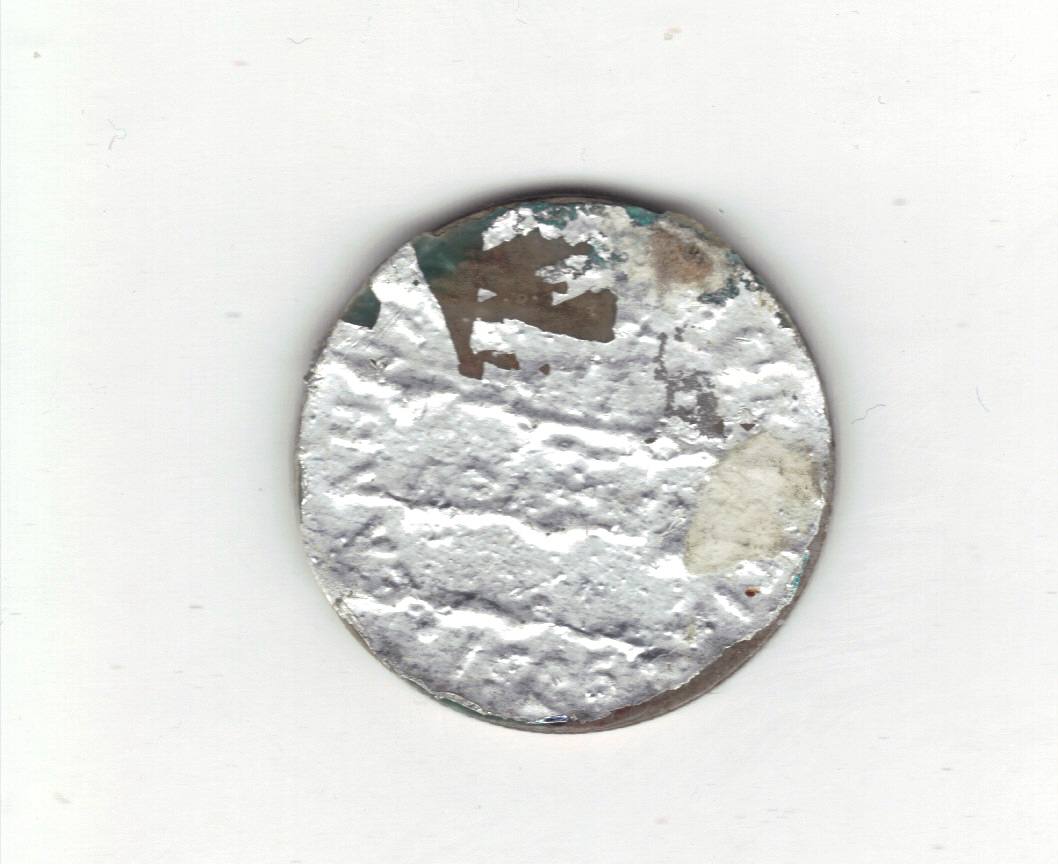 The shine makes it difficult to read, so here it is in grayscale: 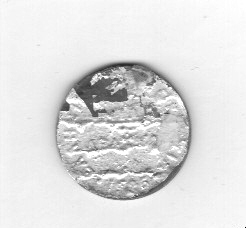 Are contemporary forgeries known of this coin, please ? What do you think ? |
|
|
|
Pillar of the Community
United States
1674 Posts |
Are you sure it's not just an altered genuine coin?
|
|
Pillar of the Community
 United Kingdom
2139 Posts |
I'm not sure but why would anyone stick silver paper on top and rub the letters through unless they were planning to deceive ?
|
|
Pillar of the Community
United Kingdom
2490 Posts |
I'm not sure but why would anyone stick silver paper on top and rub the letters through
I'm remembering that's exactly what we would do, before the ice age, when I was a kid.
|
|
Pillar of the Community
United Kingdom
2139 Posts |
Yes, indeed, but only to take an impression of the coin, not to paste it on permanently.
|
|
Rest in Peace
United States
1729 Posts |
We did some strange things with gum wrapper "silver" over on this side of the pond, too, during antediluvian times when we were kids.
|
|
Valued Member
United States
386 Posts |
Sometimes Greeks will wrap a coin in silver paper and place it in a cake which you cut up on New years Eve (after 12am). Whoever gets the coin is supposed to have good fortune for the upcoming year. Depending on the family, whoever finds the coin also gets a gift or a sum of money. Maybe that is what you have found.
Edited by sjh241
09/17/2012 11:40 am
|
|
Pillar of the Community
United Kingdom
2139 Posts |
That seems like a more reasonable explanation.
I reached the bottom of the box this afternoon, it included a small box with what I thought was a piece of wood and some crumbs but is probably a very hard piece of cake; some cards, a small ship made of plastic and some more silver paper wrapped coins - a very worn 10 lepta of the 1869-1882 vintage, and a 5 drachma of 1930, another 1 drachma of 1926. The latter 2 coins have a hard green paint or plastic surface under the silver paper, is that part of the custom or is Greek glue green ?
Why have they used old coins ? Do they reuse the same coins each year, or is it frugal Greeks using 'worthless' obsolete coins ?
|
|
Pillar of the Community
Serbia (Srbija)
576 Posts |
Quote:
Sometimes Greeks will wrap a coin in silver paper and place it in a cake which you cut up on New years Eve (after 12am). Whoever gets the coin is supposed to have good fortune for the upcoming year. Depending on the family, whoever finds the coin also gets a gift or a sum of money. Maybe that is what you have found. Similar custom we have in Serbia. But we do not wrap coins in silver (some use silver coins tho) and who ever finds it doesn't get gift in money, coin is a gift itself (hmmm maybe we should change that  ). Some say you should spend it and some that you should keep it until next Christmas for good luck and fortune... My collection on Numista page: 7500 different coins and counting... https://en.numista.com/echanges/pro...hp?id=129798 |
|
Valued Member
United States
386 Posts |
The coins in the New Years cake (Vasilopita) depends on the family.
Some bake their own cake. others buy a ready-made one at the bakery.
If you bake your own, it depends on the family what they put inside. Some families put in an expensive coin (my wife's family places a real gold coin), some a silver one, and some just a regular one or one wrapped in something, like the silver paper. For the regular/wrapped coins a gift or monetary gift may be given for the coin finder.
If you buy one of these cakes from the bakery, it is usually wrapped in tin foil or in some cases, the silver paper.
What you may have depends on when the cakes were cut. If they were cut a long time ago the coin itself or a small prize may have been awarded. This may be your case since the coins are drachmas and it appears someone held on to them.
It could also be from recent times, and someone wished to not put a Euro coin in but a drachma coin and had these lying around. They could have tried to use these older coins as a special gift/remembrance in modern times.
Some of the won coins, or other coins in general, may have been placed on icons which hang on peoples walls for luck.
For the green material it is not a custom to have the coin "preserved" or colored. It may be that someone tried a crude preservation method, or tried to preserve them because they sat on an icon.
|
|
New Member
United Kingdom
33 Posts |
Thank you.
A fascinating bit of social history.
|
|
Pillar of the Community
United Kingdom
2139 Posts |
I agree; that's one of the things that makes numismatics so interesting.
It's interested me in languages, geography, science, metallurgy, maths, banking, commerce and psychology too.
|
|
Valued Member
United States
386 Posts |
I was just thinking that the green hard stuff under the silver foil may be a result of the coin actually being baked in the cake. I know my mother-in-law sticks that gold coin in from the bottom after the cake is made, but I know people who also bake those cakes with the foil coin inside. Here is a link from wiki about this cake, its origins, and the reasoning behind the coin being baked into it. http://en.wikipedia.org/wiki/VasilopitaOne last thing. If in that box you are searching there are the Greek letters X and the Greek Pi (like in Geometry)on anything and they are together, that would be a good indicator that these are coins from a cake. Xronia Polla (Happy New Year) would have been written on the top of the cake, or on a won gift or card. Edited by sjh241
09/17/2012 8:13 pm
|
|
Valued Member
United States
240 Posts |
This is my favorite kind of thread. I love learning about other cultures through the hobby.
|
|
Pillar of the Community
United Kingdom
2139 Posts |
Is the custom of putting wrapped coins in cakes an Orthodox Church tradition rather than a Greek tradition ?
My father grew up in Romania after World War I and his mother was Roumanian Orthodox (in spite of being British) and spent summer holidays in Cyprus (presumably getting there via Greece) and in Alexandria.
I didn't find any Greek letters, other than on the coins.
The writing on the cards is in very faint pencil, but I can't make out the words. One word at the top starts 'lav' and lower down is 'Andrea' (my father's name - later anglicised to Andrew).
|
|
Valued Member
United States
386 Posts |
If you read the wiki link, it shows that the tradition is shared in several countries.
|
| |
Replies: 15 / Views: 4,676 |
|







 Posted 09/16/2012 06:17 am





