| Author |
 Replies: 9 / Views: 6,131 Replies: 9 / Views: 6,131 |
|
|
New Member
United States
38 Posts |
I have another coin in my collection that I need some help with. This coin is obviously from 1912, but here is a list of things I would like to learn. 1: Where is this coin from 2: What does the "2" on the back of this coin refer to 3: What is the symbol on the front of this coin. Thank You. 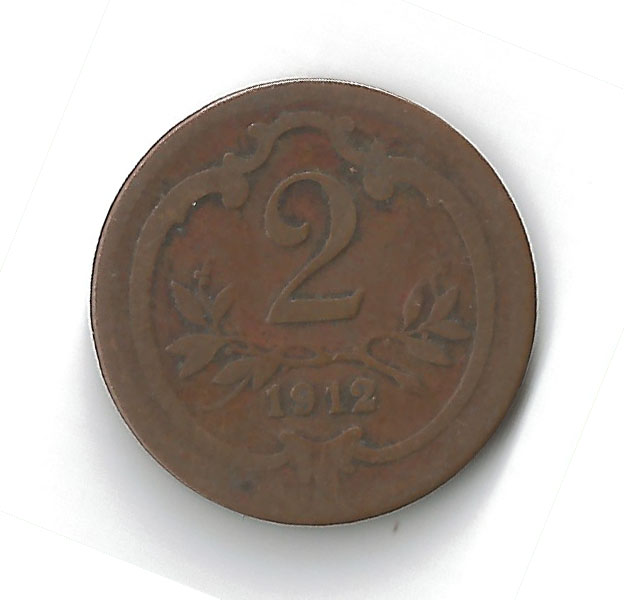 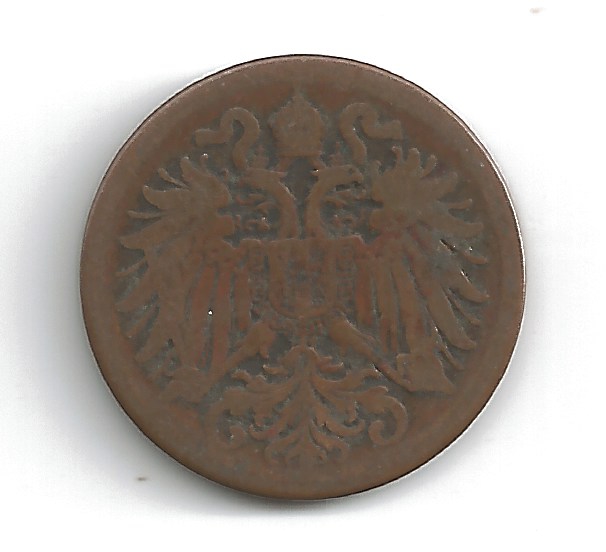 |
|
|
|
Moderator
 United States
14463 Posts |
Edited by Fuzzy317
11/02/2012 12:34 am
|
|
Pillar of the Community
Canada
2786 Posts |
turbozack
i have found numista.com a great source for ID'ing coins. using the advanced search you can enter various elements of a coin and narrow the search until you find a match. tons of pictures, mintage #s, etc. you can also keep track of your collection there as well (all free)
|
|
Pillar of the Community
Australia
2830 Posts |
a slight correction: the double-headed eagle is the symbol of the Dual-Empire, Austria-Hungary.
|
|
Pillar of the Community
2087 Posts |
I am not comfortable with the statement regarding double headed eagle being the symbol of the Austro-Hungarian empire. The reason being is I believe there is more to the story. Certainly it was used by the Austro-Hungarian empire but it predates that Empire and was more closely associated with the Holy Roman empire and the Austrian Habsburgs. I for one need to go off and find out some history about the Double headed eagle......It wasn't on the Thalers of Leopold the Hogmouth in the 17th century. His thalers had a single headed eagle that looked more like a badly strangled chicken. From my limited knowledge the double headed eagle started being used in the 18th century
|
|
Pillar of the Community
Hong Kong
1270 Posts |
austrokiwi, I agree with that the double headed eagle was not a symbol of Austro-Hungarian Dual Empire but an emblem of Hapsburg emperors or Holy Roman Empire from at least Charles V. Double headed eagle on the Austro-Hungarian Empire coins was only a tradition extending from the past. One of my oldest coin is a Charles V thaler that shows a double headed eagle, it emerged much longer than you think so the one single headed eagle of Leopold the Hogmouth you saw was likely from Hall mint only. Weight and diameter of the following coin : 27.41 grams and 40.7-41.0mm respectively. I still not start to search the information about this coin, you can comment on it, austrokiwi, if you like. Henry 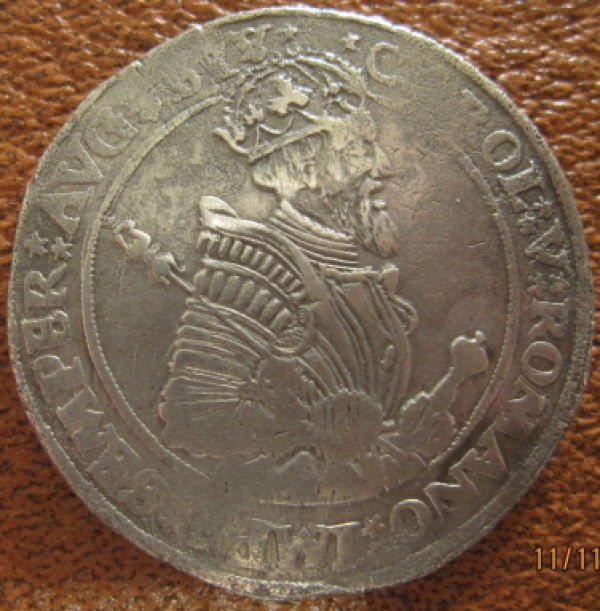 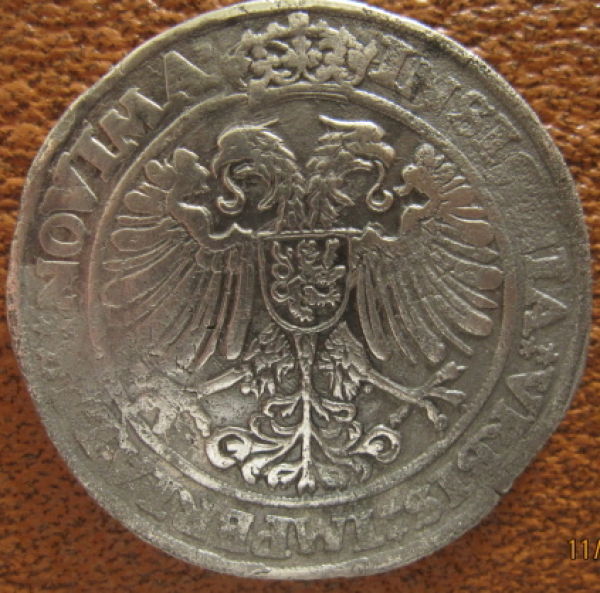 |
|
Pillar of the Community
Germany
1238 Posts |
The double headed eagle was not even a "particularly Habsburg" symbol. :) It basically refers to the concept of (some) duality, such as the double eagle of the late Byzantine Empire. The Russian tsars adopted that, and you see that eagle on today's coins from Russia too. As for the Holy Roman Empire, even long before the Habsburgs the two heads of the eagle referred to the king and the emperor.
When the HRE ended in 1806, the Habsburgs continued to use the double headed eagle. Later, and also at the time when that 2 heller coin was issued, it referred to the double monarchy of Austria (Cisleithania) and Hungary (Transleithania). It stayed in use until 1918 and was then replaced, after WW1, by the single headed eagle. The Austrofascist regime (1934-38) used a modified version of the double-headed eagle again - as a reference to the "Glory of the Empire" or so ...
Christian
Edited by chrisild
11/11/2012 06:22 am
|
|
Pillar of the Community
United Kingdom
709 Posts |
Both the Austro-Hungarian army and the Russian army used to have the double-headed eagle on their standards. I vaguely recall reading that on one of them the right head looked lower down than the left ( I think it was the Austro-Hungarian ). This was because the left head faced direct towards the threat of Western Europe, and the right head looked South-East towards the threat of the Otttoman empire. I am at work so cannot check my sources/facts. Later when I am able, I will look this up and clarify.
|
|
Moderator
Australia
16989 Posts |
The double-headed eagle originated as a symbol of the Byzantine Empire: looking both East and West, it symbolized that they owned lands in both Europe and Asia.
Since the collapse of the Byzantine empire, several nations and groups claiming to be the true heirs of the old empire have adopted the double-headed eagle as their own symbol. The Muslim conquerors of Constantinople used it, which is why you can still find it on, say, the flag of Albania. The Russians adopted it as part of their "Third Rome" doctrine. And the Holy Roman Empire claimed it as they now regarded themselves as the only legitimate "Roman Empire" left in Europe.
On the dissolution of the Holy Roman Empire, Austria (whose ruling house had supplied most of the Holy Roman Emperors) continued to use the double-headed eagle symbol for its own empire. Later, as the Austrian empire evolved into the dual monarchy, the official interpretation of the symbol changed to that of the two halves of the Empire, Austria and Hungary.
Don't say "infinitely" when you mean "very"; otherwise, you'll have no word left when you want to talk about something really infinite. - C. S. Lewis
|
|
Pillar of the Community
Hong Kong
1270 Posts |
Sap, you give the most comprehensive and persuasive information, thank you.  Quote:
I vaguely recall reading that on one of them the right head looked lower down than the left Anaximander, that is new to me, really? |
| |
Replies: 9 / Views: 6,131 |
|









 Posted 11/02/2012 6:14 pm


