Coin Community Family of Web Sites Join Thousands of Coin, Bullion, & Money Collectors
Royal Canadian Mint products, Canadian, Polish, American, and world coins and banknotes. Specializing in Modern Numismatics Royal Estate Auctions - $1 Coin AuctionsJoin Thousands of Coin, Bullion, & Money Collectors 300,000 items to help build your collection! Coin, Banknote and Medal Collectors's Online Mall Vancouvers #1 Coin and Paper Money Dealer


Username:
Password:
Save Password
Forgot your Password?


This page may contain links that result in small commissions to keep this free site up and running.

Welcome Guest! Registering and/or logging in will remove the anchor (bottom) ads. It's Free!

8 Reales Mexico 1756 Forgery Or Real

To participate in the forum you must log in or register.
Author Previous TopicReplies: 43 / Views: 17,872Next Topic
Page: of 3
Pillar of the Community
United States
686 Posts
 Posted 11/11/2012  11:58 pm  Show Profile   Bookmark this reply Add Westwood Arms to your friends list Get a Link to this Reply
I would not buy the coins. Find a local expert or go to NCG or PCGS.
Pillar of the Community
wonghinghi's Avatar
Hong Kong
1270 Posts
 Posted 11/12/2012  9:59 pm  Show Profile   Bookmark this reply Add wonghinghi to your friends list Get a Link to this Reply
Hi swamperbob, thank you so much for your detailed explanation and subtle observations. I read it very carefully and try to give my feedback. I hope I can express properly for my viewpoints and sorry that if I don't touch the point because English is not my mother tongue.


Quote:
a real die is BIGGER than the flan(planchet) but a forged die made from a coin is COIN sized not as big as a die

At first I don't like this 1763 Pillar for its size is too small so I suspected it is a counterfeit. The diameters of my 1739 (not shown in this post)is 38.8-39.0mm, my 1753 and 1771 Pillars are both 39.8mm but the 1763 is 38.1-38.3 mm. Having seen a lot of 1760s Pillars in ebay, all of the 1760s are of diameter 38mm as stated, I started to realize the diameter of 1760s Pillars are smaller in size than 1750s and 1770s. This fact relieves part of my fear that the 1763 Pillar is a counterfeit. I suppose the original die of 1763 is smaller than usual at the time of design.


Quote:
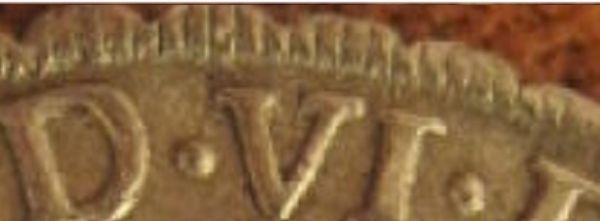
The following a a piece of one of the pictures in this post that illustrates a coin the was edged BEFORE the strike.The dentils extend as far as there is metal and if you looked at the edge at this point the design should be compressed.

This is the 1753 Pillar posted.
8-Reales-Mexico-1756-Forgery-Or-Real
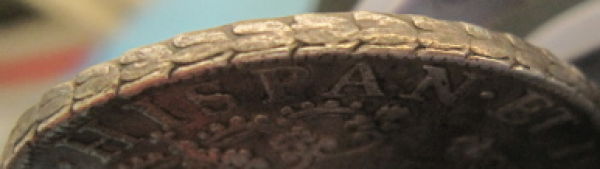
I prepare the edge pictures for you and they are really compressed (a petal of fleur de lis being compressed as expected).
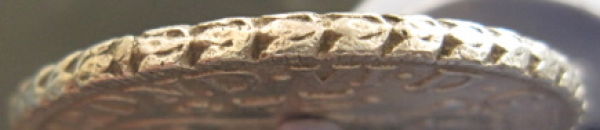
8-Reales-Mexico-1756-Forgery-Or-Real
Bird's eye view at the same position:

8-Reales-Mexico-1756-Forgery-Or-Real


Quote:
BUT what I see on your coin is neither really...The edge does not look compressed by the edge application...

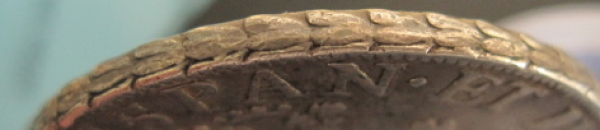
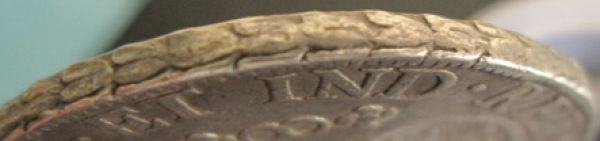
I take 8 shots of edge of the 1763 Pillar as follows and let you see if there is no any point of compression.

Quite normal but slight compression on the upper side:
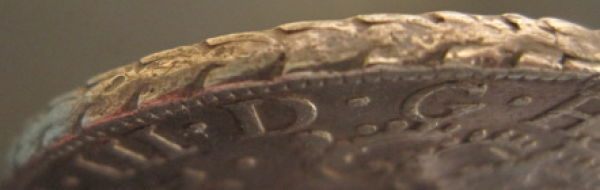
8-Reales-Mexico-1756-Forgery-Or-Real
Moderate compression on the lower side:
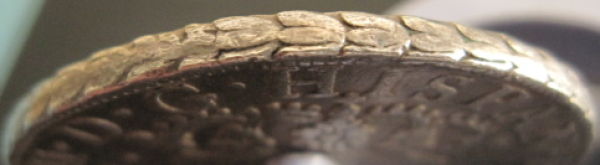
8-Reales-Mexico-1756-Forgery-Or-Real
Also moderate compression:
8-Reales-Mexico-1756-Forgery-Or-Real
Serious compression:
8-Reales-Mexico-1756-Forgery-Or-Real
Serious compression:
8-Reales-Mexico-1756-Forgery-Or-Real
Moderate compression again:
8-Reales-Mexico-1756-Forgery-Or-Real
Slight compression again:
8-Reales-Mexico-1756-Forgery-Or-Real
Normal again:
8-Reales-Mexico-1756-Forgery-Or-Real


Quote:
the dentils stop just short of the edge of the coin.

Doubtless, the 1763 Pillar was edged before striking and this should be the norm because I don't think a blank planchet is struck first and then edged would be an efficient process no matter a real minting process or counterfeiting especially in the consideration of the appearance of a coin.
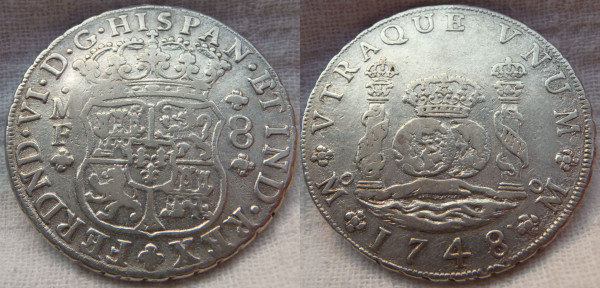
The 1763 Pillar is well-centered struck, "the dentils stop just short of the edge of the coin" might be the results of using a small planchet during minting. This is not uncommon in other small flan Pillar; is the 1748 Pillar of this post an example of this phenomenon?
Compare the two coins as follows:
8-Reales-Mexico-1756-Forgery-Or-Real
I am quite sure the diameter of the 1748 Pillar is around 38mm, size smilar to the 1763.
8-Reales-Mexico-1756-Forgery-Or-Real

Pillar of the Community
swamperbob's Avatar
United States
5362 Posts
 Posted 11/12/2012  10:53 pm  Show Profile   Bookmark this reply Add swamperbob to your friends list Get a Link to this Reply
We are having difficulty with language.

In the 1760's virtually all planchets were edged BEFORE being struck.

The die sizes did not vary. But planchet size did at times.

The dentils at the edge of the coin should NEVER STOP before the edge of the coin.
Pillar of the Community
austrokiwi's Avatar
2087 Posts
 Posted 11/13/2012  01:13 am  Show Profile   Bookmark this reply Add austrokiwi to your friends list Get a Link to this Reply
Knowing little about Spanish Dollars I am curious. Was the edge design "struck" using two Edge Irons?

Perhaps Some useful info ( from my MTT knowledge) MTT were struck with out a collar ( I assume the spanish Dollars were the same. Interestingly a Royal Mint official (Graham Dyer) Noted that Striking the edge first tended to harden the edge of the the planchet(Blank) and that hardening acted(partially) as a defacto collar.
Pillar of the Community
swamperbob's Avatar
United States
5362 Posts
 Posted 11/13/2012  11:03 pm  Show Profile   Bookmark this reply Add swamperbob to your friends list Get a Link to this Reply
The Spanish American mints used a parallel two die edging mill which was manually operated with two hand cranks. It was a very simple apparatus that acted like a vice (vise). The blank was placed between the parallel hardened steel dies. One die was fixed on the surface of the mill (table). The second bar was held parallel to the fixed die but had two screw mechanisms that allowed it to be moved closer to the fixed die and to be moved parallel to the fixed die.

After the blank was placed between the dies a wheel which turned one of the two screw drives brought the movable die closer to the fixed die compressing the blank between the two dies. This pressure (like a vice) cut the design on the dies into the opposite sides of the softened silver blank at the same time. Once the desired depth of impression was achieved - the operator turned the second wheel. This caused the movable bar to move along parallel to the fixed die. As the die moved the blank rolled along between the dies and was edged. After one half a rotation - a distance equal to 1/2 the circumference of the blank - the entire edge design was in place. At this point the blank had been reduced in size (diameter) slightly and the dies were cut back so that the finished planchet simply fell into a waiting basket below.

At this point the blank was a planchet with an upset edge.

The next step was to wash the planchet in a weal acid to remove dirt and grease and then the planchets were annealed to soften them for striking.

The press used to strike the face impressions had NO collar.

The beauty of the process is that it provides a very accurate method for checking for forgery. The design ALWAYS has 2 overlaps exactly opposite one another that are EXACTLY the same length. Most forgers were unaware of this at first so that they made MANY ERRORS in applying the edge. The fct that the edge was applied first provided a good method for detecting cast copies since casts are routinely edged after they are cast to cover seams, vents and sprues.

The edge was innocuous to most people - they didn't even notice it but mint trained people whould know what to look for. I is for that reason that collectors need to look first at the edge of a coin when making an authentication.

I agree edging would harden the very edge of the planchet resulting in poor dentil transfer, but as I noted above the planchets were annealed for a second time just before the strike. Many English coins lacked the deep dentils of the Spanish coins. In addition England had the benefits of Matthew Boulton and his innovations far earlier tyhan the rest of the world.
Pillar of the Community
austrokiwi's Avatar
2087 Posts
 Posted 11/14/2012  12:48 am  Show Profile   Bookmark this reply Add austrokiwi to your friends list Get a Link to this Reply
Thanks swamper bob... Just to clarify the royal mints observation was in regards to Maria Theresa Thaler and the Royal mints production of that coin. With the MTTs the planchets were not annealed after the edge had been struck.
Pillar of the Community
swamperbob's Avatar
United States
5362 Posts
 Posted 11/14/2012  10:17 am  Show Profile   Bookmark this reply Add swamperbob to your friends list Get a Link to this Reply
austrokiwi I have always loved the MTT's because of the varieties that could be cherry picked before everyone knew they existed.

But a question comes to mind. If the coins were not annealed before the strike - shouldn't we see a few minor cracks in the edge? I would think that a harder ring of metal around a soft center would result in some very minor cracking if the planchets were not uniform. Not spectacular breaks just tiny cracks to relieve the stress. Have you observed such traits? My MTT collection is in the bank so I can't easily look.
Pillar of the Community
austrokiwi's Avatar
2087 Posts
 Posted 11/14/2012  3:11 pm  Show Profile   Bookmark this reply Add austrokiwi to your friends list Get a Link to this Reply
I have never seen one with that splitting. Just to clarify they were annealed before edging then edged and then struck. What Graham Dyer stated in a letter to MR broome( words to the effect) was that the edging acted as a defacto collar. I anticipate that annealing after the edge was impressed would have prevented that. However I don't think it was done on purpose rather Graham Dyer was just commenting on what The Royal Mint had observed. It also may relate to the striking pressure. The Indian mints During WWII produced the MTT using London mint dies and the coins were not so well struck. From The little I understand It seems possible that the Indian mints used much more pressure....without the collar the blank expanded (despite the slightly hardened edge) when struck and the metal did not "flow" properly resulting in fishtailed letters and a larger diameter (variable but ranging from 40mm to 41 mm as opposed to the Royal mints consistent 39.5 mm). Possibly the alloy may have been an issue. The Indian silver was not so well refined ( which may have caused further problems) Indian Mint MTT have a dirty alloy with trace amounts of zinc tin and gold.

I started my MTT addition for the same reason. Though some varieties are now more expensive I still think MTTs can be cherry picked. I know of no other coin series where one can find a coin that has a known population less than 10 and can be purchased for US$3000.00 or sometimes much less.
Pillar of the Community
swamperbob's Avatar
United States
5362 Posts
 Posted 11/14/2012  5:17 pm  Show Profile   Bookmark this reply Add swamperbob to your friends list Get a Link to this Reply
I can agree there - I still find the earlier strikes for melt but it is not like it was in the 1960's when they first came to my attention. They averaged $3 -5 then.

But I do know of a number of coins that routinely sell for under $50 that have survival numbers under 10. The counterfeit 8R series made at the time the original coins were circulating.
Pillar of the Community
wonghinghi's Avatar
Hong Kong
1270 Posts
 Posted 11/16/2012  9:20 pm  Show Profile   Bookmark this reply Add wonghinghi to your friends list Get a Link to this Reply
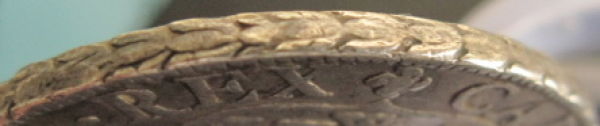
swamperbob, thank you so much for your patient to let us know the art of edging of the Mexican 8R. About the Pillar 1763, I am too stupid to get your meaning, partly due to the difficulty of language and also I think I am not at the same height to you. If you can mark the arc on the picture, it will be helpful to my understanding. Is the whole edge of the coin problematic? Do you mean just the part from ET to IND?

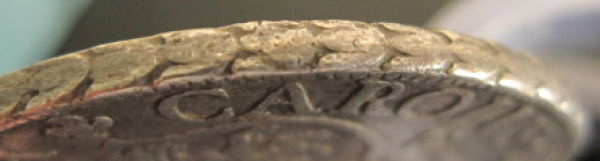
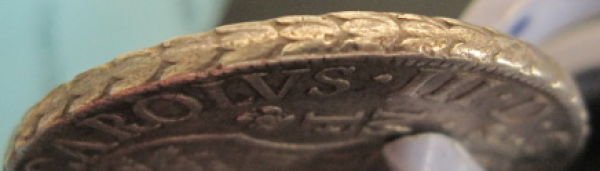
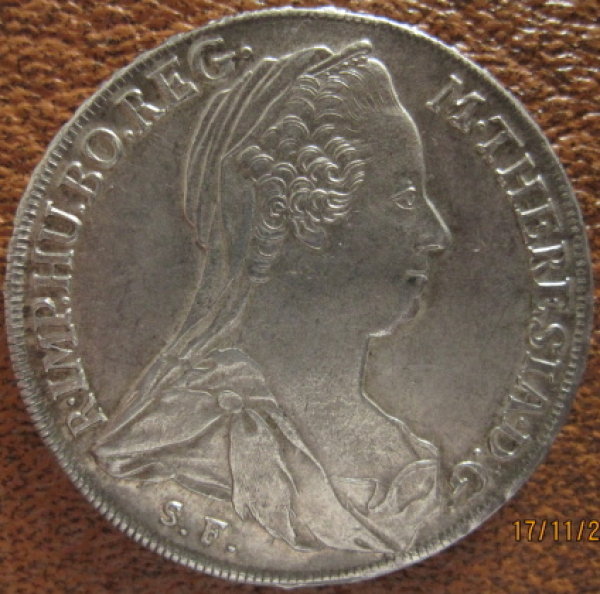
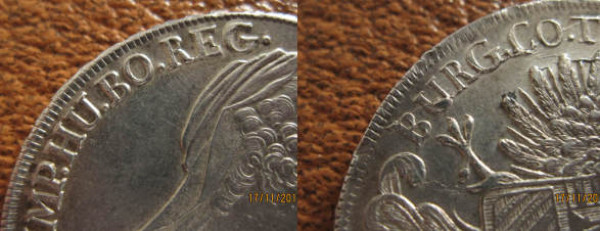
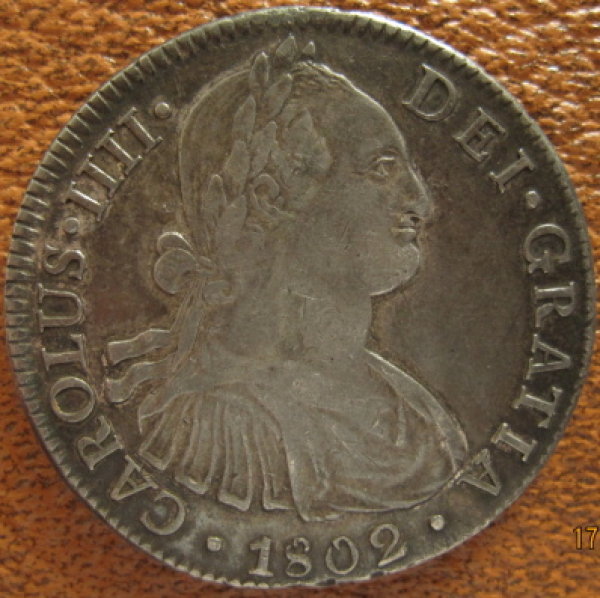
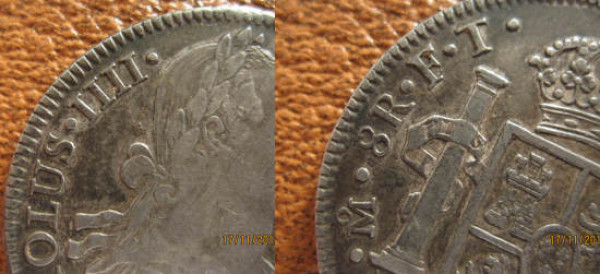
It is the discussion between you and austrokiwi about the edge minting between Mexican 8R and MTT intriges me to post two coins for comparison here.
MTT Gunzburg (1789-1792)
8-Reales-Mexico-1756-Forgery-Or-Real

8-Reales-Mexico-1756-Forgery-Or-Real
Carolus IIII (1802)
8-Reales-Mexico-1756-Forgery-Or-Real

8-Reales-Mexico-1756-Forgery-Or-Real

Several point that I observe:
1) austrokiwi spoke the point right "hardening of the edge as a defacto collar", a pseudo collar is present in the MTT.

2)The letters struck on the MTT seem to be bold, clear-cut and sharp when compared with the Mexican 8R, is this related to the process before striking, that is, no annealing to the MTT before being struck?

3)The letters on the Mexican 8R look "soft" when compared with MTT.

4)There are some remnant (very tiny) of metal around the letters on the Mexican 8R but this is not commonly seen from MTT. Is this related to the striking technique and pressure?

5)Is there a crack on the reverse side of MTT? This is what bob queried "If the coins were not annealed before the strike - shouldn't we see a few minor cracks in the edge?"

Thank you if there are further comments. Henry
Pillar of the Community
austrokiwi's Avatar
2087 Posts
 Posted 11/17/2012  09:56 am  Show Profile   Bookmark this reply Add austrokiwi to your friends list Get a Link to this Reply
HI I think this is going off topic so I will reply in the other thread on MTT I started.
Pillar of the Community
swamperbob's Avatar
United States
5362 Posts
 Posted 11/17/2012  6:41 pm  Show Profile   Bookmark this reply Add swamperbob to your friends list Get a Link to this Reply
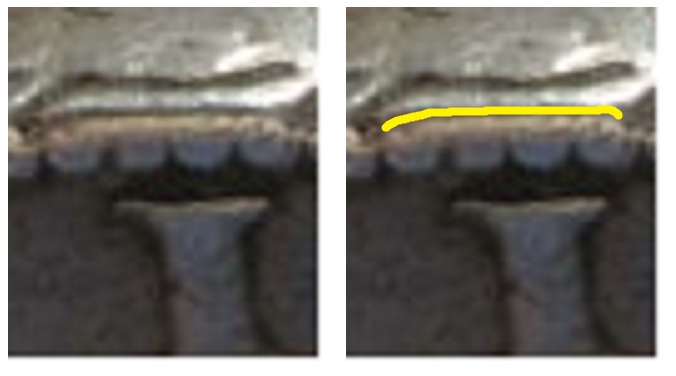
I will try again. On the picture that shows the edge - several segments show a LINE. I think the line was caused by the face die being too small. The face die should cut dentils right to the edge of the coin.

Here is the LINE.

8-Reales-Mexico-1756-Forgery-Or-Real

The picture at the right has a yellow line where the problem is.

How could that line get there if the coin was edged BEFORE it was struck?

The dentils at the edge of the die would run right to the edge of the metal. Below is a picture of the difference. The part at the left is WRONG - the part at the right is correct. Wear has to be checked - but it looks wrong to me.


8-Reales-Mexico-1756-Forgery-Or-Real
Pillar of the Community
wonghinghi's Avatar
Hong Kong
1270 Posts
 Posted 11/18/2012  01:10 am  Show Profile   Bookmark this reply Add wonghinghi to your friends list Get a Link to this Reply
swamperbob, thank you so much for your time and experience shared. I am now 100% understanding what the problem is. I earn a lot from this thread about the minting of edge. This irregularity occupies 1/3 of the whole edge (ring)of the coin. I will inestigate again the edge of this coin more closely and hope it will jump to a conclusion.

I post another coin that has a abnormal coin minting in another topic. Please have a look.
  Previous TopicReplies: 43 / Views: 17,872Next Topic
Page: of 3

To participate in the forum you must log in or register.


Disclaimer: While a tremendous amount of effort goes into ensuring the accuracy of the information contained in this site, Coin Community assumes no liability for errors. Copyright 2005 - 2026 Coin Community Family- all rights reserved worldwide. Use of any images or content on this website without prior written permission of Coin Community or the original lender is strictly prohibited.
Contact Us  |  Advertise Here  |  Privacy Policy / Terms of Use

Coin Community Forum © 2005 - 2026 Coin Community Forums
It took 0.37 seconds to rattle this change. Forums