| Author |
 Replies: 416 / Views: 99,874 Replies: 416 / Views: 99,874 |
|
|
|
Pillar of the Community
Hong Kong
1270 Posts |
Austrokiwi, your current reply is so informative, I enjoy reading it so much. I try to summarize what I understand about the 4th quadrant of the reverse emblem of MTT. Before 1745 and after 1765, MTTs bear the shield of Upper Austria on the 4th quadrant of the reverse emblem for coins struck in Tyrol or Vienna. Austrian Gunzburg mint (1764-1805), was the main mint to produce original and restrike MTT, its leading role in producing this Trade dollars for the middle East made its shield on the 4th quadrant of MTT more recognising. That is what you said "The MTTs form was shaped by market forces". Afterwards, no matter where the MTTs produced, the Gunzburg shield remained on the 4th quadrant of the reverse emblem. Quote:
When Maria Theresa's husband died the obverse design was changed to a heavily veiled bust. The situation is quite similar to Queen Victoria but her veiled bust coins only circulated in local GB rather than her colonies. Maybe MTTs acted differently. It was a Trade dollar in the Levant and Middle East regions, her bust changed from heavily veiled to lightly veiled for a balance to the Empress's will and the reality. I suppose this was a compromising result of using a lightly veiled MT bust. For Q. Victoria, there was no such compromise probably because the widow's bust coins only used in GB. Below there is a minor point not quite sure, you said, Quote:
In 1745 her husband became Holy Roman Emperor and so her thalers' changed to bear the full arms of the Holy Roman Empire: this was a three row coat of arms with 13 separate arms and the heart shield was varied according to the mint. Is it really 13, or it should be 14 or 15? I show a coin here, I think it should be 14(5+4+5). Correct me if I am incorrect. 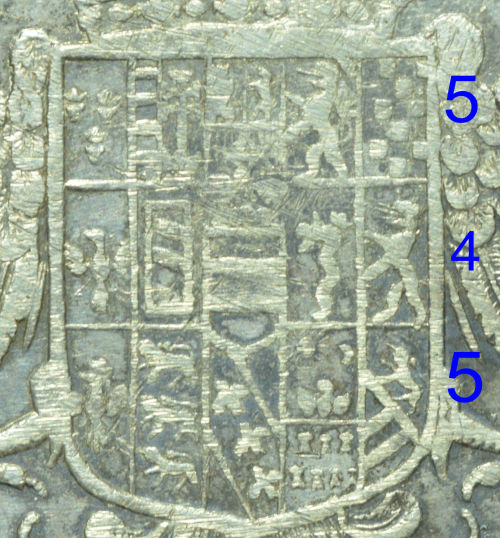 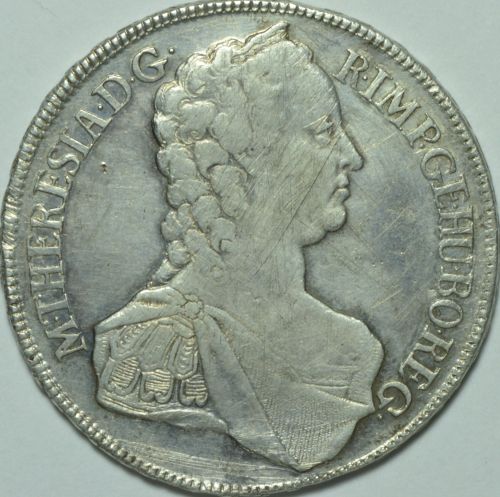 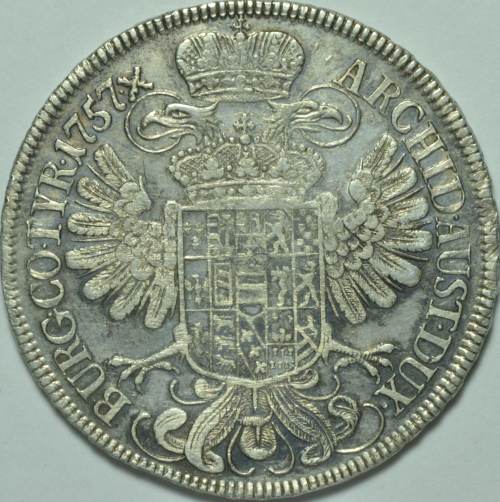 |
|
Pillar of the Community
2087 Posts |
On the three row coat of arms
I quickly counted the number arms..and with my old eyes probably missed counted.
I may have confused things a little with my long answer so some clarification points:
After 1765 when the four quadrant coat of arms came back into use. The standard convention was that the fourth quadrant would represent the region of the striking mint. However the MTT was an exception to that rule. While Guenzburg and Prague(until Prague started re-striking MTTs in 1812) mints maintained that rule. The mints of Karlsburg, and Kremnitz( in 1784) followed the Vienna mint form( arms of Upper Austria) but kept their own mint signatures and in the case of Kremnitz the mint mark (letter B). These mints were very much under the influence of von Fries' bank when it came to the MTT.
I am very dubious about calling the Guenzburg mint the "main" mint. The Guenzburg mint was a subsidiary provincial mint that was very much under the control of Vienna. It became the largest producer of MTT simply because it was in the neighborhood of Augsburg (and was u]possibly[/u] outside of Count von Fries influence. It received more orders from banking groups than any of the other mints.
When you compare 1770s (original) MTT and early (1780s) re-strikes from the different mints it is clear the Guenzburg mint was the simplest design. The obverse is much more cartoonish and two dimensional than the obverses from Vienna, Karlsburg and Kremnitz... I have gained the impression that Guenzburg may have been sacrificing quality of engraving so as to maximize production ( With high production levels Guenzburg would be cutting dies far more regularly than the other mints).
I believe in 1797 there was an attempt by Vienna to standardize the MTT to the Vienna form. It is that year that Guenzburg produced, from Vienna mint cut dies, the TS-IF variant which has the Upper Austria arms in the fourth quadrant.
There is another factor that supported the Guenzburg mint production, which occurred in 1795. France banned the export of French coin, this immediately caused an increased demand for the MTT. Prior to 1795, as far as Guenzburg goes, the MTT was still the cheaper coin for French traders to use as all they had to do is supply the necessary silver, usually in the form of higher silver content coins, and pay a few Groschen per coin for the production of MTT. A french trader could send Spanish 8 reals to Guenzburg pay the minting fee and still increase their potential profits through the increased number of coins(of lower silver content) they would get from the process.
If I am right and Guenzburg was indeed outside of von Fries control( I still need to look at the original patent documents and am only relying for now on the reports of other writers) the other mints producing MTT were not so economic as a royalty would have been paid on each MTT to von Fries bank( they had been awarded a patent over the trade of the coin to the Levant) this price differential would have been very much in Guenzburgs favor. One could say the MTT was shaped by capitalism and "free" trade.
On Queen Victoria's coins there is a more interesting parallel in Upper Sudan and Egypt in the latter part of the 19th century there was a preference for MTT driven by women. They had become aware of how many children Maria Theresa had had and they wore the MTT as a fertility ammulet. This also occurred with Queen Victorias coins
|
|
Pillar of the Community
2087 Posts |
Interesting but damaging zietgiest change? Over the last few months I have started to notice a, IMHO unhealthy, change in the way early (1781 -1805) MTT re-strikes are being advertised on ebay and in Auctions. IMHO a re-strike is any coin that is struck in subsequent years, while retaining the original date) following on from the original "properly" dated issue. there have always been the ignorant and hopeful sellers who see a coin that has mint signatures IC-FA, AH-GS, B/SK-PD, ans PS-IK and sell it declaring it is an original strike. I recall one stubborn ebay seller in the UK selling, unsuccessfully, a rare 1781-1785 restrike insisting the coin was original despite being advised it was a re-strike and correctly dating it to post 1780 himself. Now I am seeing reputable auction houses and ebay sellers who definitely know better doing the same thing. It seems that for some reason people are stretching the meaning of words beyond breaking point. MTT are an interesting collecting subject however it is IMHO the increased misuse of the word Original by reputable collectors and dealers can only serve to damage the market for the true 1780 struck examples ( of all varieties not more than 25-30 examples exist today). |
|
Pillar of the Community
Hong Kong
1270 Posts |
I can see how miserable an expert is! I would rather be a pedestrian than a policeman. What I shall leave to the late comers is by book(s) rather than voice imho! Henry
|
|
Valued Member
United States
329 Posts |
All 1780 mtts of the schobl design are restrikes. The 1780 genuine strikes are extremely rare. As is the 1781 gunzburg restrike which is the rarest mtt strike or restrike. Even the early 1800s restrikes seem much harder to find then the genuine strikes. Most were minted after 1750 and many more after 1765.
|
|
Valued Member
United States
329 Posts |
The 20th century ones are common
|
|
Valued Member
United States
329 Posts |
I have at least three earlier restrikes One is Milan the other Venice. I'll take some pics. But my favorite mt coin is my Karlsburg ducat.
|
|
Pillar of the Community
2087 Posts |
Quote:
All 1780 mtts of the schobl design are restrikes. 99.999% correct: See the example of the probable ( as described by Dr Franz Leypold in 1976) original Guenzburg(Burgau) strike in this thread: https://goccf.com/t/132629 Further on in that thread are the photos of the rarer 2nd Vienna mint original 1780 Strike variety. Quote:
The 1780 genuine strikes are extremely rare. Correct as stated earlier total number known to exist is 25-30 coins Quote:
As is the 1781 gunzburg restrike which is the rarest mtt strike or restrike. The correct spelling in English should(I am not saying that it is correct) be "Guenzburg" In German the "U" has an umlaut modifying the pronunciation, so to be phonetically correct the "e" should be added. As for the 1781 strike being the rarest ( there are a number of varieties attributed to that date and I have a least 6 examples), they are relatively easy to find ( not necessarily cheap) so I would be cautious using the word "rare", IMHO a misused word. In comparison The 1780 Prague strike: only two known to exist, one of which is in the Vienna Coin Cabinet ( Contained in Vienna's Art History Museum). In researching the original Guenzburg strike I was given the opportunity to inspect (I held it in my hands) that coin, unfortunately it is not on display!! The 1793 Guenzburg strike ( Mint Signature F.S. cataloged as Hafner 5): 7-10 known to exist ( I have the one that is pictured on and in Hafner's book) Utrecht strike: only two known to exist both examples are in the Utrecht mint museum. |
|
Pillar of the Community
2087 Posts |
Quote:
All 1780 mtts of the schobl design are restrikes. 99.999% correct: See the example of the probable ( as described by Dr Franz Leypold in 1976) original Guenzburg(Burgau) strike in this thread: https://goccf.com/t/132629 Further on in that thread are the photos of the rarer 2nd Vienna mint original 1780 Strike variety. Quote:
The 1780 genuine strikes are extremely rare. Correct as stated earlier total number known to exist is 25-30 coins Quote:
As is the 1781 gunzburg restrike which is the rarest mtt strike or restrike. The correct spelling in English should(I am not saying that it is correct) be "Guenzburg" In German the "U" has an umlaut modifying the pronunciation, so to be phonetically correct the "e" should be added. As for the 1781 strike being the rarest ( there are a number of varieties attributed to that date and I have a least 6 examples), they are relatively easy to find ( not necessarily cheap) so I would be cautious using the word "rare", IMHO a misused word. In comparison The 1780 Prague strike: only two known to exist, one of which is in the Vienna Coin Cabinet ( Contained in Vienna's Art History Museum). In researching the original Guenzburg strike I was given the opportunity to inspect (I held it in my hands) that coin, unfortunately it is not on display!! The 1793 Guenzburg strike ( Mint Signature F.S. cataloged as Hafner 5): 7-10 known to exist ( I have the one that is pictured on and in Hafner's book) Utrecht strike: only two known to exist both examples are in the Utrecht mint museum. |
|
Valued Member
United States
329 Posts |
I thoght there was only one Gunzburg 27b?. I speak German and am well aware of the umlaut but typing on text pad I dont get that feature.
Edited by wjl
04/05/2013 04:40 am
|
|
Valued Member
United States
329 Posts |
somewhere in a box I have Hafners book. It's in German. The coins I know exactly where they are. I have so much stuff in storage that looking for the book was a daunting task, so I never id'd them. One of the coins was purchased in Germany sold as a "Mailander nachpragung" The other was purchased in Argentina labeled 37a, that one I never confirmed, but beleie tobe Venetian restrike. I'll post pics when I return home.
Edited by wjl
04/05/2013 05:27 am
|
|
Pillar of the Community
2087 Posts |
Quote:
I thought there was only one Gunzburg 27b?. Hafner catalogs the original Burgau strike as H25. However his drawing of the bottom hair feathers ( in his book) match those of 27b but do not match what Dr Franz Leypold stated they should be like. Leypolds prediction matches very closely the designs of the 1777,1778 and apparently( I haven't seen one yet) the 1779 Burgau MTT. The 1781 strikes from Burgau are cataloged under H26,& 27. In fact there is one sub variety of H26 that I believe is most likely to be a true 1781 restrike. I note that you state you believe that there is only one known example of 27b.....from that I assume you have been referring to Guenters site, Although a very very good site it is not safe to fully rely on it as over time more discoveries are made{ Have a look at H35 on that site Leypold in 1986 revised his attribution to Florence rather than his original belief in Milan): I have seen two other examples of H27b come up for sale in the last three years. Quote:
I speak German and am well aware of the umlaut but typing on text pad I dont get that feature. I have the same problem with this web site I have to use MSword to get the Umlaut> My main irritation with just using the "U" is I cringe at how the word would sound out loud when it is spelt that way! LOL |
|
Valued Member
United States
329 Posts |
the book was published a long time ago too, no doubt more info has resurfaced since then, Just like Saurmasche, a great reference but many atributes are obselete becuse of the rediscovery of new info. Many US references now use the German spelling and drop he umlaut in many cases. I really don't care as I know what they mean and every country seem to have its own way of spelling the same places. Some letters just don't fit together in some languages, I suppose. I have references in English, german, polish, hungarian and French and not all info is exctly the same.
|
|
Pillar of the Community
Hong Kong
1270 Posts |
This is the latest acquisition of MTT from a Malta seller on ebay. It is absolutely a stunning coin and a new variety of my MTT collection. I compare it through the Lexicon of the MTT (Walter Hafner), it should be from the Paris Mint by the appearance of the saltire. According to Ian Fenn's paper "The Twentieth Century Minting of the 1780 Maria Theresa Thaler", all the six arabesque are intact so it is likely the first type (1937-42). Tell me if you don't think it is the first type. There are some other features of the coin that I want to share with you and hope you can comment on it. 1)The tail feather pattern should be 1-3-1 but the middle feather is very faint (see picture below). 2)One of the 8 pearls in the diadem is very faint so it can be mis-understand as 7 pearls in the diadem (see picture). 3)The edge lettering of this coin is particular neat and slim when compared with other restrike in 19th Century. Enjoy the pictures of this stunning coin. 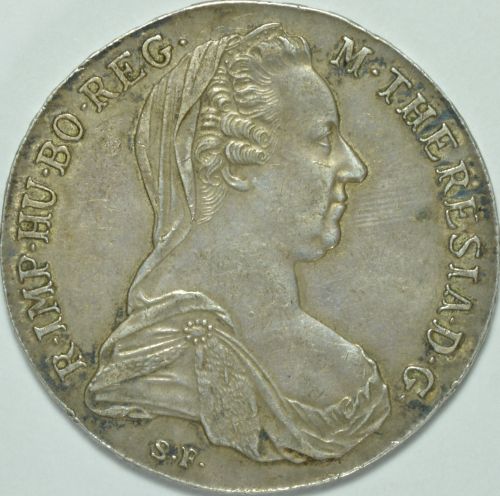 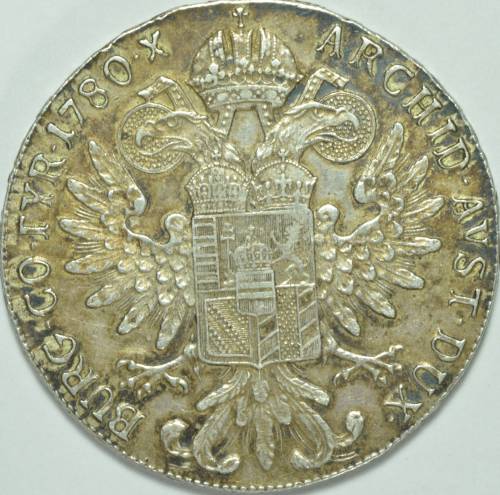 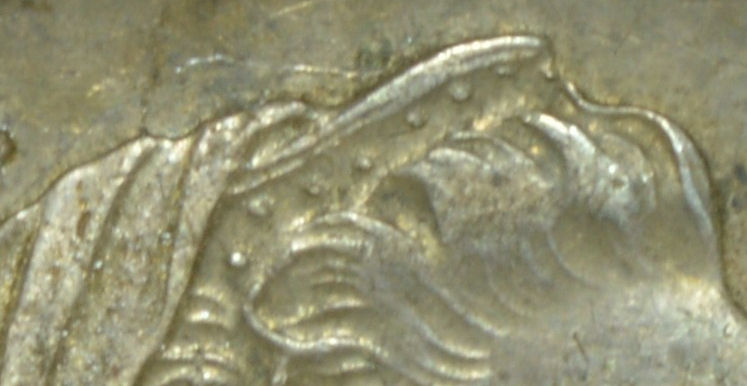 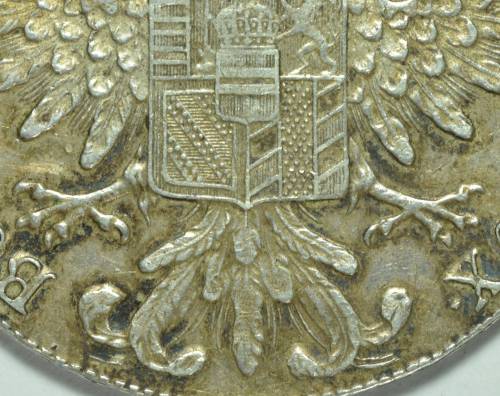       |
|
Pillar of the Community
Hong Kong
1270 Posts |
Quote:
3)The edge lettering of this coin is particular neat and slim when compared with other restrike in 19th Century. Sorry, there is a typo, I mean 20th Century. |
| |
Replies: 416 / Views: 99,874 |








 First Page
 Previous Page


 Posted 04/01/2013 06:20 am


