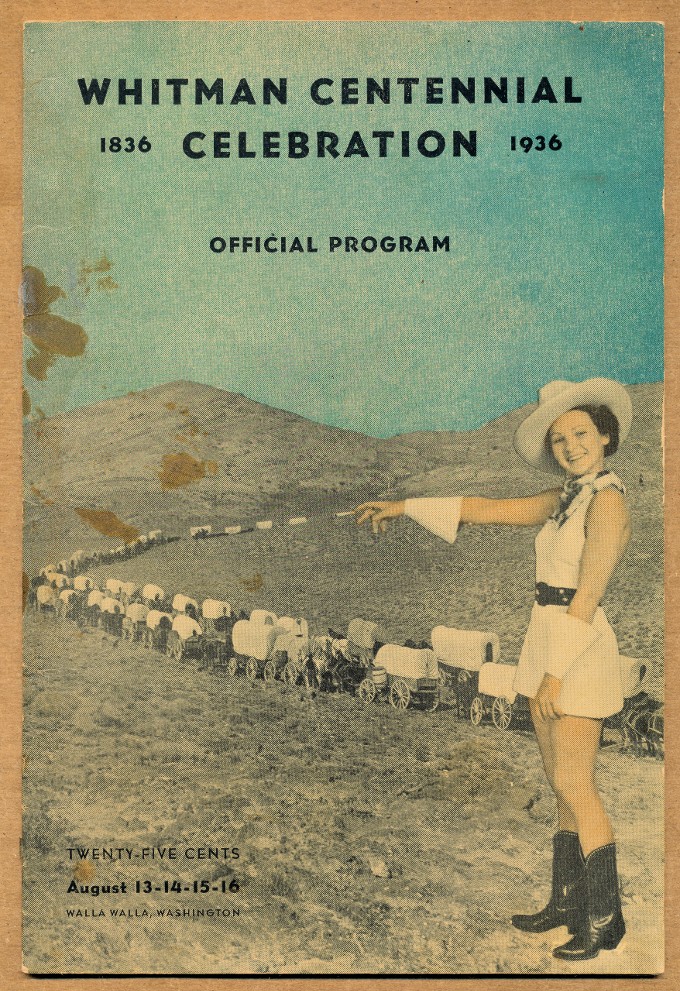
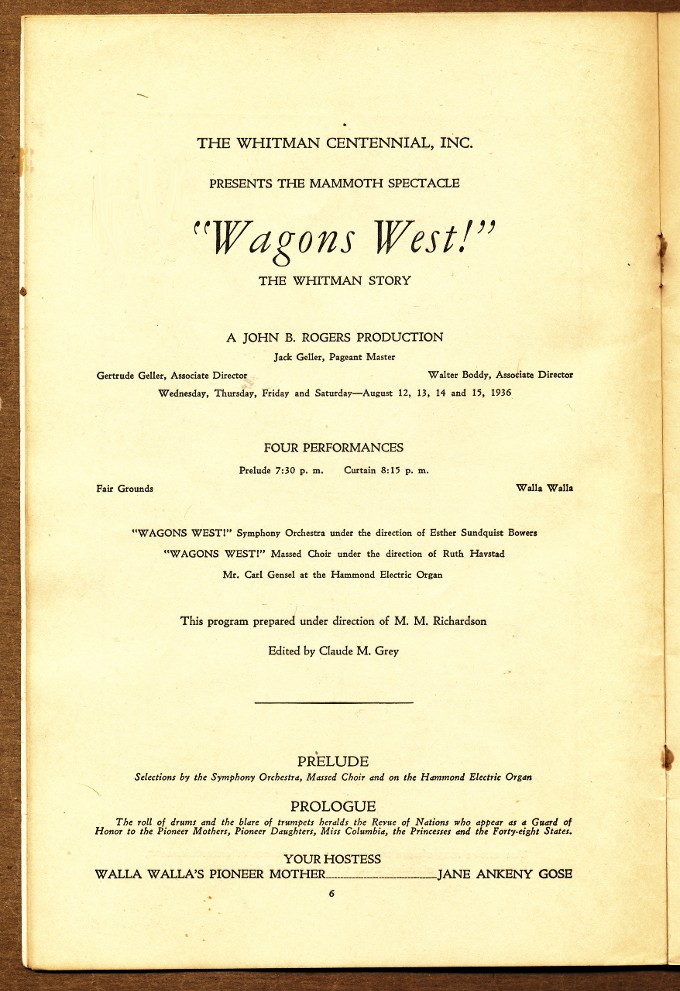
Do you have a Whitman Centennial half-dollar in your US commemorative collection?
A bill to authorize a half-dollar coin to mark the 100th anniversary of the arrival of Marcus and Narcissa Whitman in the Walla Walla Valley of present-day Washington and their subsequent founding of the Waiilatpu Mission was introduced in the 74th US Congress in March 1936, first in the House, then in the Senate.
Marcus Whitman, a physician by training, and his wife Narcissa were Christian missionaries who were determined to carry their message to the native inhabitants (the Cayuse) of what was then the Oregon Country. Their story is far too long to relate here, other than to say they completed their westward journey from New York, were able to build the first homes and schools in the region and establish their mission and bring their message to the Cayuse.
They were killed, along with eleven others, in 1847 as a result of Dr. Whitman's unsuccessful treatment of the Cayuse when a measles epidemic swept through the region -- about half of the tribe died. There are many great sources of information about the Whitmans and their Mission on the internet, one is the National Park Service site here:
http://www.nps.gov/whmi/index.htm.The commemorative coin was sponsored by a group called Whitman Centennial, Inc. The group was formed in 1935 to plan the centennial celebration and to raise funds to purchase the land where the original mission was built. A mintage of 25,000 half-dollar coins with standard specifications was sought. The original text of the bill included language that would have allowed the Whitman Centennial group to request batches of coins over an open-ended timeframe (ala the Oregon Trail Memorial bill). Such language was struck from the bill by the House Committee on Coinage, Weights and Measures before it reported the bill out of committee and recommended its approval.
The Senate Committee on Banking and Currency considered the bill and also reported it out with a significant revision to its original language: the recommendation that commemorative medals be struck rather than coins. The Committee's recommendation was in line with the stance of the Treasury Department and that of President Roosevelt who, in a letter to the Committee, stated "I think the practice of striking special coins in commemoration of historical events and permitting the sponsoring organizations to sell them at a profit is a misuse of our coinage system."
In the end, it was a bill that specified the striking of a medal rather than a coin that was approved by Congress and signed into law by the President. The Whitman Centennial group was not happy with this outcome and, ultimately, did not engage the US Mint to strike a commemorative medal.
They did, however, work out an arrangement with the Oregon Trail Memorial Association to purchase a group of 4,000 of the 10,000 1936-dated coins to be struck at Philadelphia. They subsequently marketed these coins as the "Centennial of the Whitman Mission" edition of the Oregon Trail series and sold them for $2.00 each; the price was 40 cents more than what was being charged by the Association for the balance of the coins.
The Whitman Centennial group was successful in its efforts to raise the money it needed in order to purchase the land it desired and the result is today's Whitman Mission National Historic Site, a part of our National Park System. I can't help but wonder if the group's efforts would have been even more successful if it had a commemorative medal struck by the US Mint to sell alongside the Oregon Trail Memorial half-dollars it secured? I would have bought at least one of each!
In absence of a medal, here's a nice 1936 Oregon Memorial Trail half dollar - maybe it is one of the coins sold to the Whitman Centennial organization!
1936 Oregon Trail Memorial Half Dollar - Obverse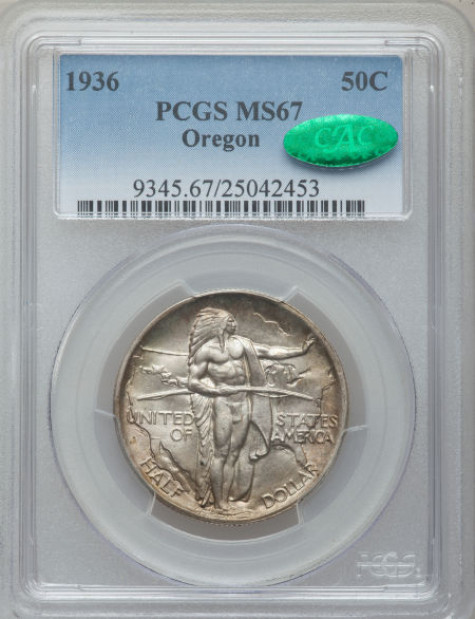 1936 Oregon Trail Memorial Half Dollar - Reverse
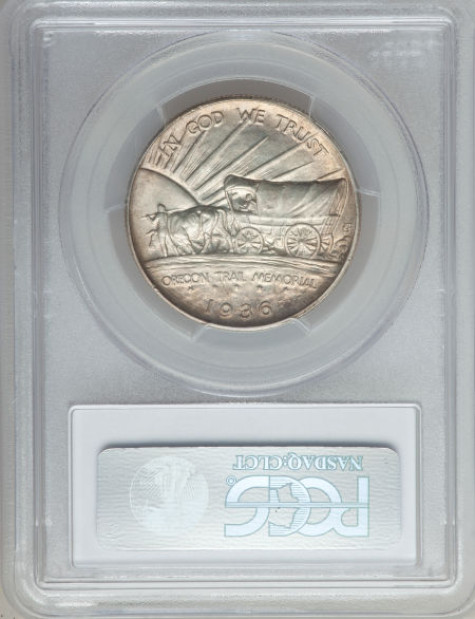 Images courtesy of Heritage Numismatic Corporation Auctions, Inc.






 Posted 07/24/2013 11:53 pm