| Author |
 Replies: 396 / Views: 20,213 Replies: 396 / Views: 20,213 |
|
|
|
Moderator
 United States
196100 Posts |
Quote:
I think this might be my last thaler  Quote:
Kingdom of Bavaria - Ludwig II (1864-1886) - 1868 "Madonna" Thaler A nice example for your finale!  |
|
Bedrock of the Community
United States
79345 Posts |
Great final coin! Errers and Varietys.
|
|
Pillar of the Community
United States
5010 Posts |
Bacchus2 that was a streak of gorgeous thalers you had there!
|
|
Pillar of the Community
United Kingdom
2932 Posts |
Quote:
Bacchus2 that was a streak of gorgeous thalers you had there! Thanks - I put these together about 13 or 20 years ago - I wouldn't fancy having to buy them now. I realised I have 2 more thalers to go that I missed. Reuss-Greiz (Elder Line) - Heinrich XX (1836-1859) 1858 Thaler Another one with quite a small mintage of only 9,500. 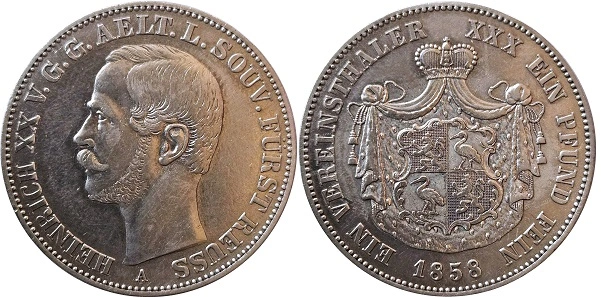 Edited by Bacchus2
03/21/2026 07:29 am
|
|
Bedrock of the Community
United States
79345 Posts |
Nice coin, Bacchus2. Errers and Varietys.
|
|
Pillar of the Community
United Kingdom
2932 Posts |
And finally for the thalers (I think) Kingdom of Hannover - Ernst August (1837-1851) 1851 Thaler This is a "Mining Thaler" (Ausbeutetaler), struck from silver mined in the Harz Mountains. The reverse legend "BERGSEGEN DES HARZES" translates to "Blessing of the Harz Mines." Ernst August was a very conservative ruler who rescinded the liberal constitution upon his arrival, a move that led to the famous protest of the "Göttingen Seven." He died in 1851, the same year this coin was struck. The reverse coat of arms displays the Guelphic Lion and the White Horse of Hannover, symbols that also appear on British coins of the Georgian era. Ernst August was the fifth son of George III and he was unpopular in London due to his reactionary politics, but in Hannover, he was seen as a strong, independent monarch who brought the royal court back to the city. 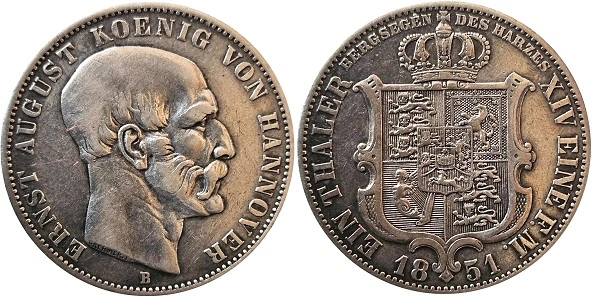 |
|
Bedrock of the Community
United States
79345 Posts |
Nice coin and good information. Errers and Varietys.
|
|
Moderator
United States
196100 Posts |
Nice examples! |
|
Pillar of the Community
United Kingdom
2932 Posts |
Free and Hanseatic City of Lübeck - (under Mayor Dr. Karl Ludwig Roeck) - 1908 3 Mark As a "Free City," Lübeck did not feature a monarch on its coinage; instead, it used the double-headed eagle. The motto Concordia Domi Foris Pax is a merchant-republic sentiment. It emphasizes that trade depends on internal stability and international peace. Unlike the Prussian eagle, which is single-headed, Lübeck used the double-headed eagle of the Holy Roman Empire, a traditional right granted to Free Imperial Cities to signify they were subject only to the Emperor, not any local Duke. The mintage of 33,334 looks odd, but it is the recorded number. Likely, this odd number arose from the city ordering a specific value of silver to be minted, which resulted in a fractional count of coins. 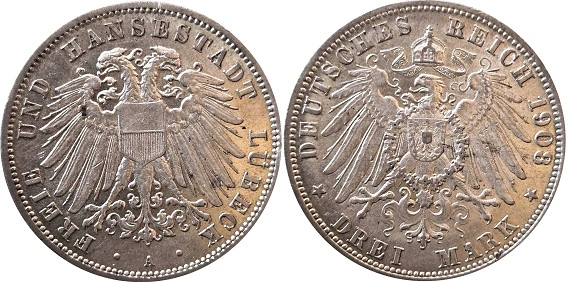 |
|
Moderator
United States
196100 Posts |
Quote:
Free and Hanseatic City of Lübeck - (under Mayor Dr. Karl Ludwig Roeck) - 1908 3 Mark Excellent! |
|
Bedrock of the Community
United States
79345 Posts |
Nice addition. Errers and Varietys.
|
|
Pillar of the Community
United Kingdom
2932 Posts |
Todays add is Free and Hanseatic City of Hamburg - (under Mayor Dr. Nicolaus Ferdinand Haller) 1909 3 Mark Hamburg was allowed to retain its city crest on the obverse of its silver 2, 3, and 5 Mark coins, while the reverse displayed the Imperial Eagle, symbolizing the city's dual identity as a sovereign republic within a larger empire. In 1909, Hamburg was the third largest port in the world. 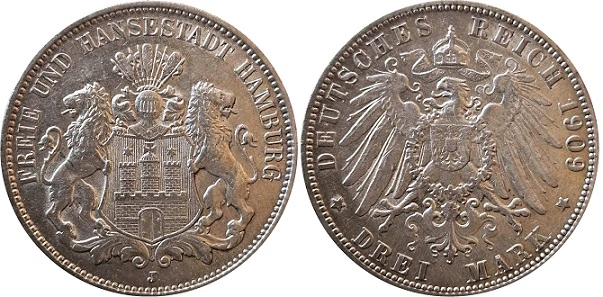 |
|
Moderator
United States
196100 Posts |
Quote:
Free and Hanseatic City of Hamburg - (under Mayor Dr. Nicolaus Ferdinand Haller) 1909 3 Mark Very nice! |
|
Moderator
United States
196100 Posts |
Time for me to add some content.  1910 Germany 1 Pfennig KM#10 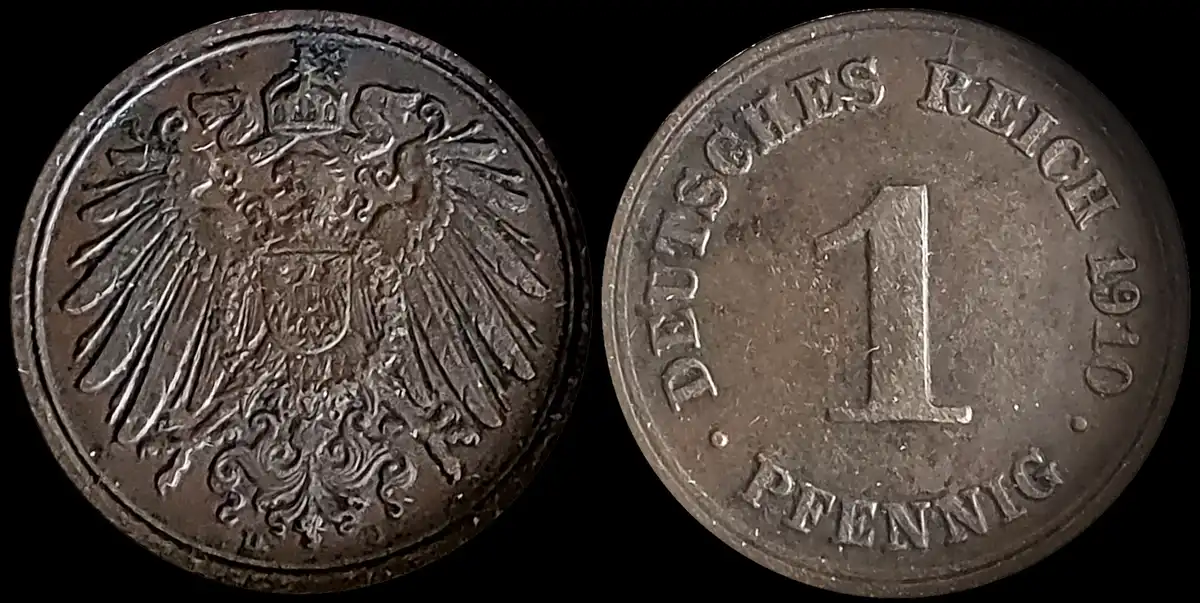 |
|
Moderator
United States
196100 Posts |
1968 East Germany 1 Pfennig KM#8 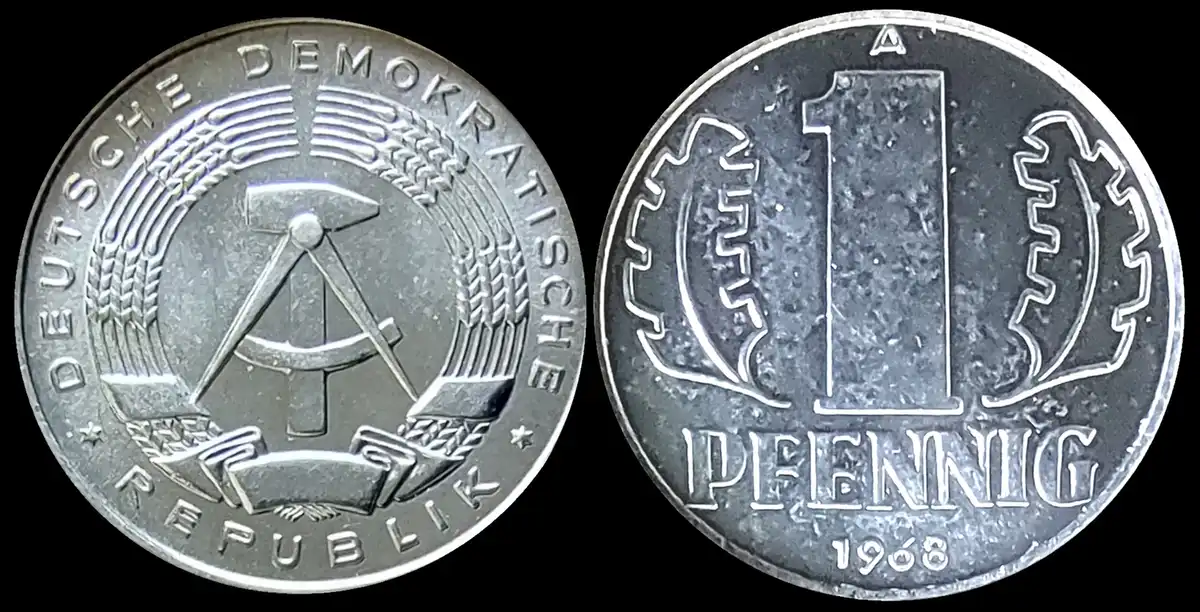 |
| |
Replies: 396 / Views: 20,213 |







 First Page
 Previous Page


 Posted 03/12/2026 11:38 pm





