Excellent attitude, vn3100.
That's how you become a numismatist.
Don't clean the coins. Full stop. Just don't. Originality is
imperative in coin collecting, and as you gain experience you'll understand how easy it is to detect cleaning of any type, even a non-invasive method like ultrasound. You'll learn the relationship between level of wear and expected "patina" (read: grubbiness

), and the small signs of a past cleaning like minute amounts of remaining grub in the nooks and crannies. A coin whose surfaces have been altered loses much of its' numismatic value in the eyes of collectors.
Of course, like all rules there are exceptions here. These, however, must be learned on a case-by-case basis; there is but one general exception: PVC damage. Some coin storage flips have been made using softened PVC plastic - flips and album pages - and the plasticizers used to soften the PVC outgas chemicals which attack the metals of the coin. This is visible as a greenish deposit on the coin (in early stages, possibly a clear/whitish haze), and it
must be treated when found or it will eventually destroy the coin. Fortunately, there's a perfect solution in the form of acetone, an organic solvent which is chemically incapable of affecting the coin's metal while being a deadly enemy of PVC damage. Here's an example of a coin I treated:
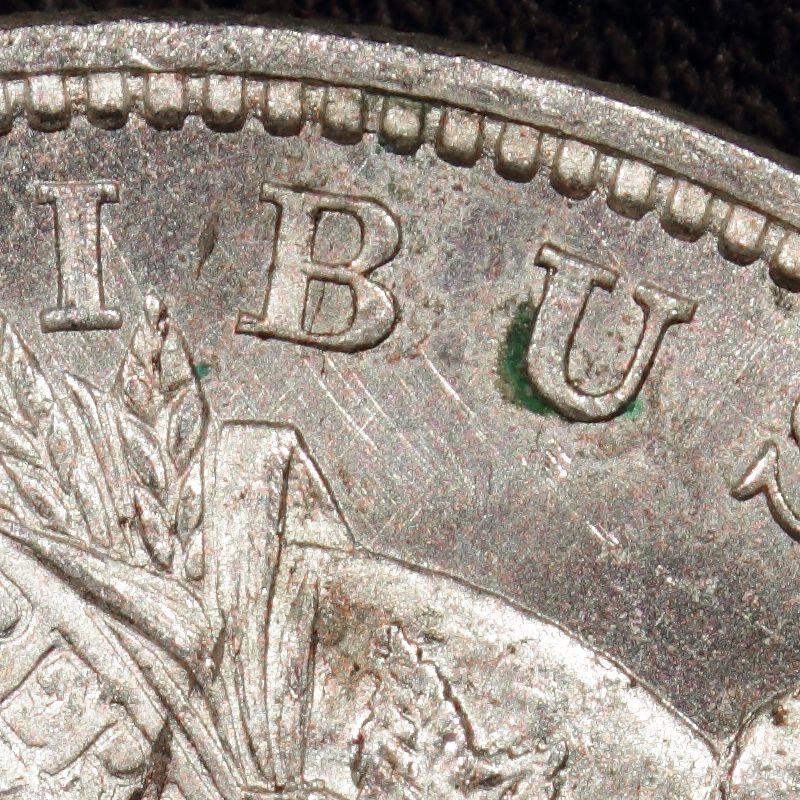
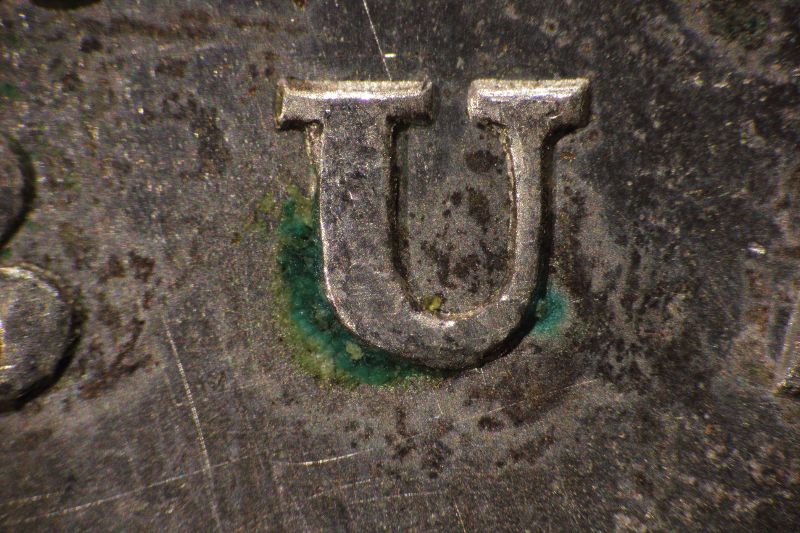
That's what PVC infestation looks like. This is what it looks like after the acetone is done with it:
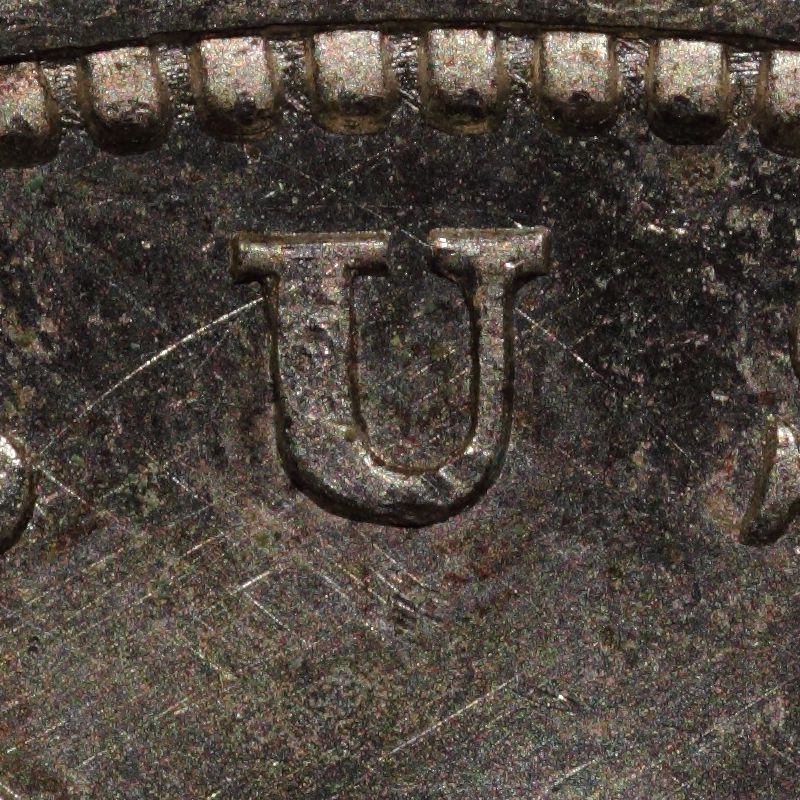
This was an extreme case. If you're sharp, you can see the permanent damage caused by the PVC, but in this case it's a very small area and it was just getting to the point of being permanent.
With all that said, the natural "toning" process of silver - tarnishing, to those who don't like it (poor sods
) - also creates such a color on the surface of a coin. So, if you see it, don't necessarily panic. Get images up here, and we'll look at it case-by-case to see what's necessary.








 First Page


 Posted 05/09/2014 06:16 am


