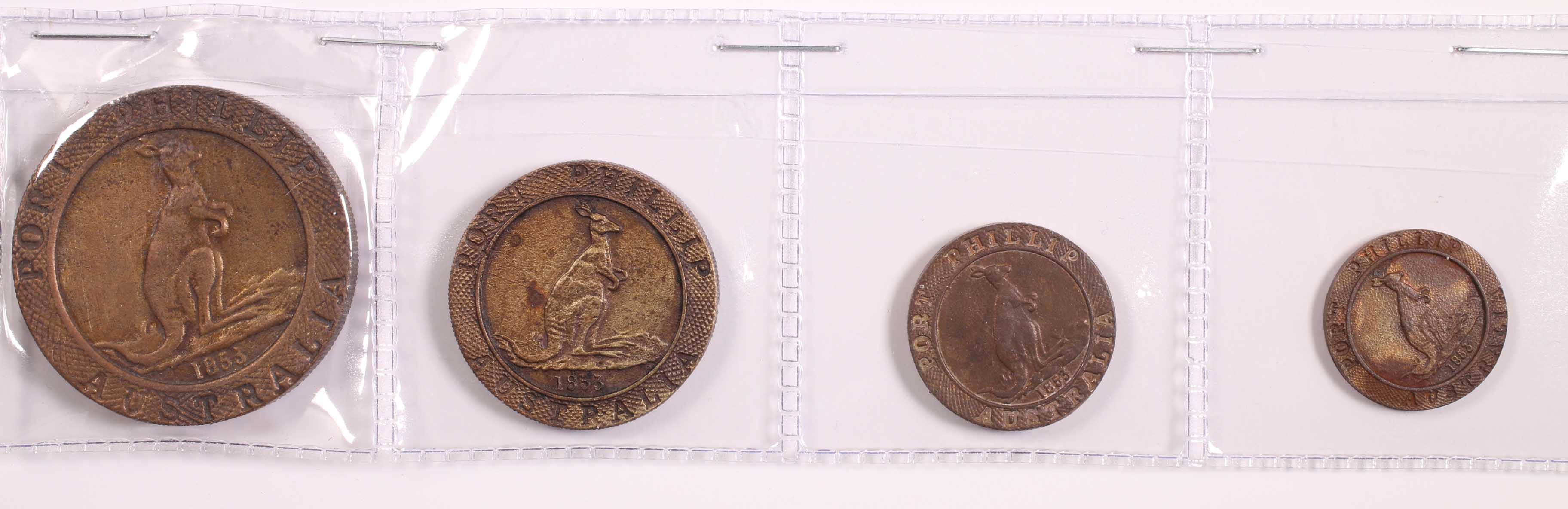
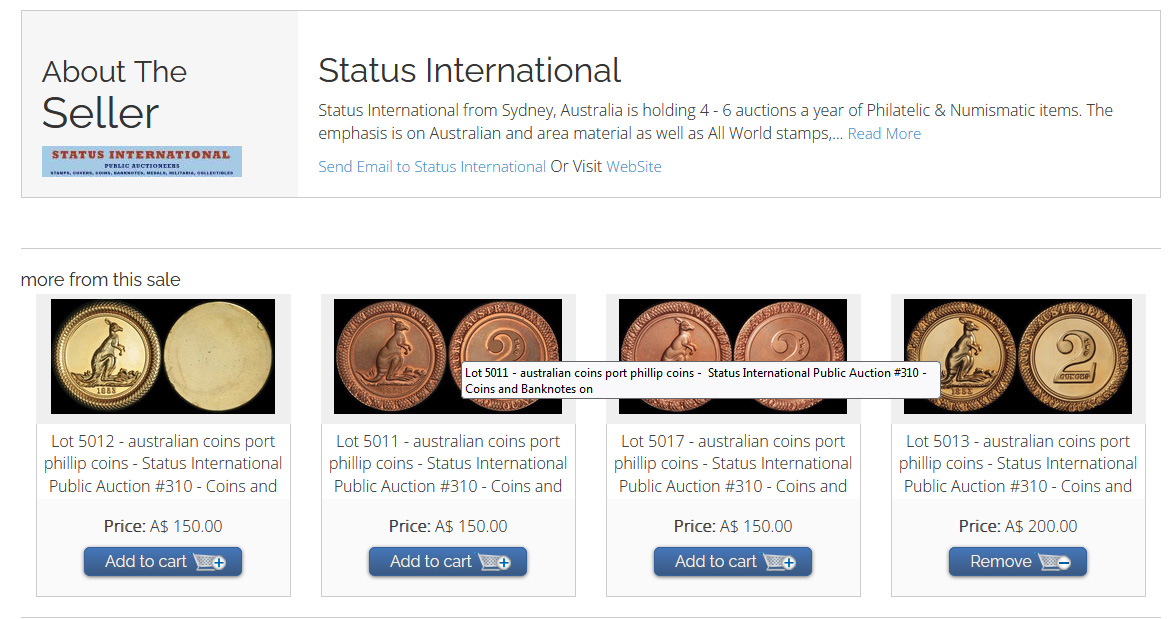
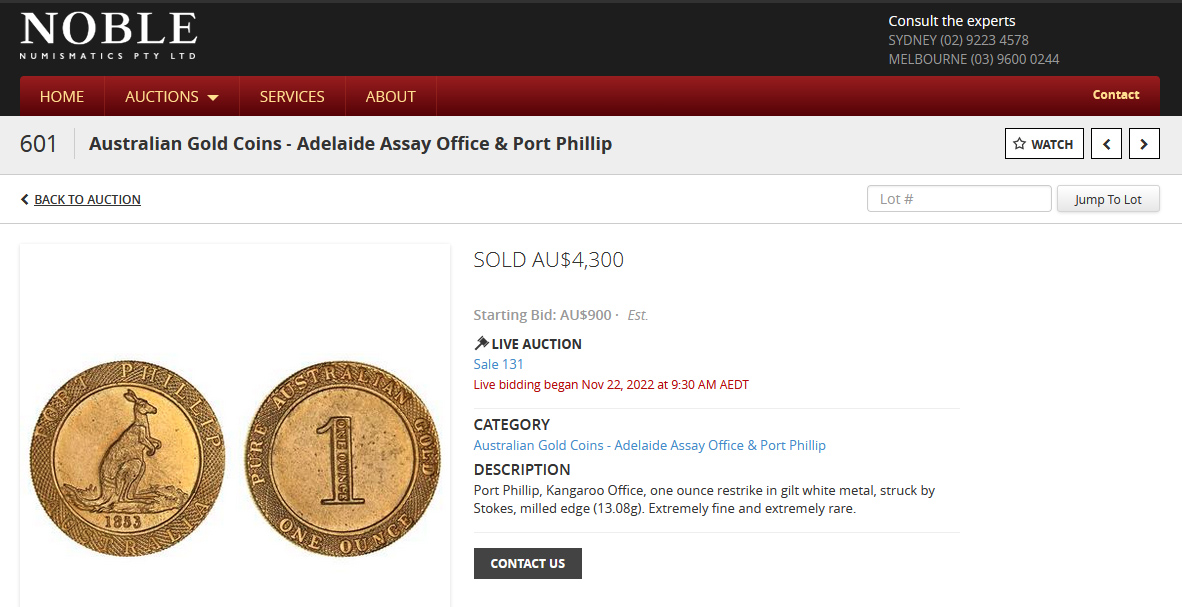
This is a Stokes.
Stokes purchased the Kangaroo Office press and stock when the store went bust.
In around 1917 he did some restrikes of the Kangaroo issues in gilt white metal.
Quite nice but just restrikes. Restrikes of the Kangaroo issue tokens using the same dies as the originals. A lot of what Gee did was restrikes from original or repaired dies or dies made from an electroplate.
I did bid on the Stokes last night and it quickly blew past the estimate and then past what I was prepared to pay. Ended up costing the buyer over $5k; for a gilt white metal restrike.
Why would you even bother you might ask of that?
Instead of getting involved in a bidding war I just bought a Gee which looks great and will look like the real deal once gold plated. The Gee also has that X factor of being dated 1854. An 1854 date just invites a colourful story, just like the 1853s have.
The real thing, a Kangaroo Office 2oz, is over a million. There are a handful of them.
A Stokes is about $5k and climbing in value. Not a lot of those.
A Gee is a couple of hundred. Not a lot of those.
None of them are from a mint or are State sanctioned.
They are all just tokens.
They all look pretty much the same on a cursory viewing.
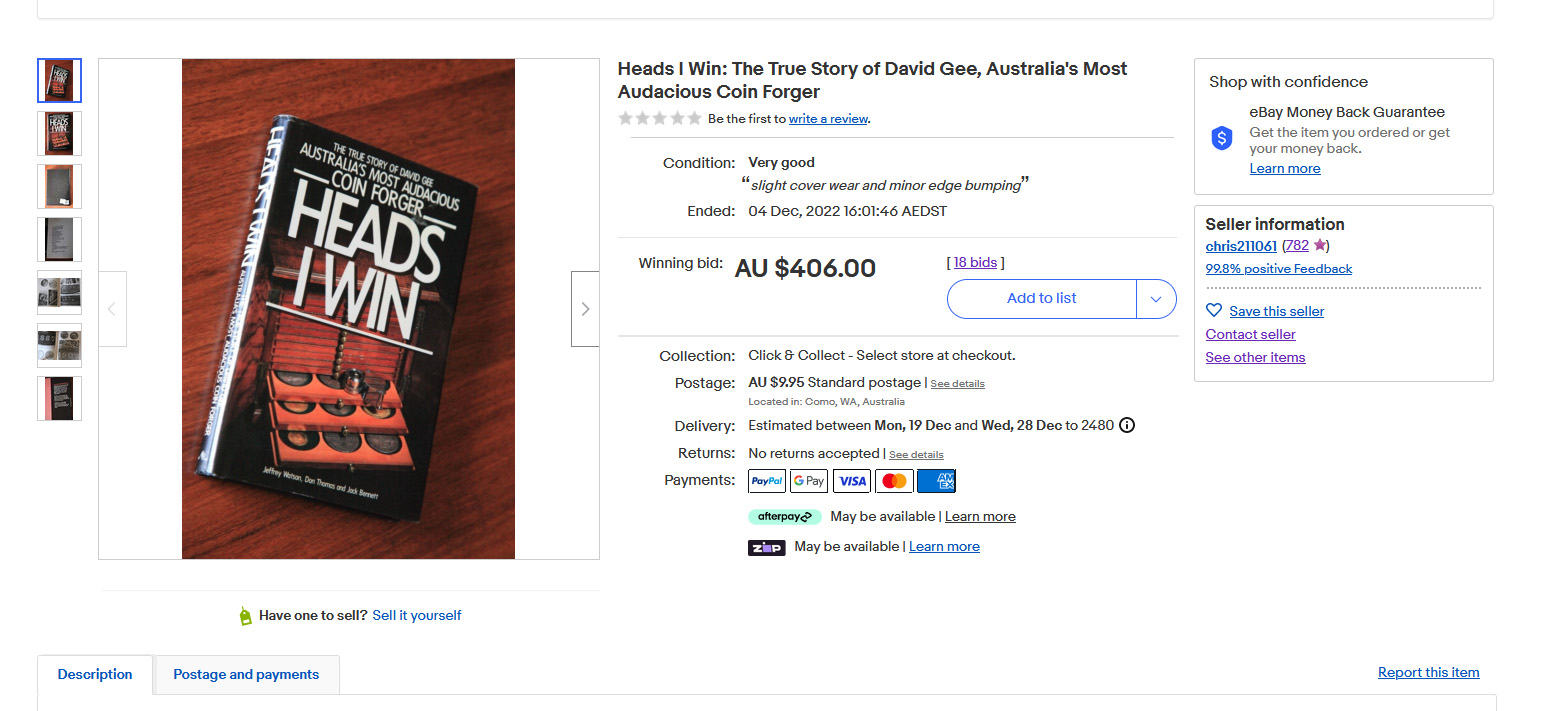
The Gee has the best story because it opens with the Kangaroo Office story, it has the Stokes story in the middle and then for the finale it has the Gee story.
That is why I bothered with the 2 ounce bronze 1854 Gee Kangaroo Office.
A nice gilt and it will look the goods. It has the full story gilt or not. Maybe I wont gilt.
I have items that are about the investment, not much of a story with a lot of them. Low mintage, the first of its type, first/last prefix note, the top PCGS pop and so on. boring.
Say you have a 1930 penny; lots of value but not a lot of story.
The Gees are a whole different kettle of fish.
A lot of Gees' work relates to coins with big stories.
The Stokes.
Why did the buyer bother?
Because it is a Stokes. And Gees are Gees.








 First Page
 Previous Page


 Posted 11/23/2022 03:05 am