Coin Community Family of Web Sites Join Thousands of Coin, Bullion, & Money Collectors
Coin, Banknote and Medal Collectors's Online Mall Vancouvers #1 Coin and Paper Money Dealer 300,000 items to help build your collection! Join Thousands of Coin, Bullion, & Money Collectors Royal Estate Auctions - $1 Coin AuctionsRoyal Canadian Mint products, Canadian, Polish, American, and world coins and banknotes. Specializing in Modern Numismatics


Username:
Password:
Save Password
Forgot your Password?


This page may contain links that result in small commissions to keep this free site up and running.

Welcome Guest! Registering and/or logging in will remove the anchor (bottom) ads. It's Free!

1940 5c Cud On Reverse (Canadian Nickle)

To participate in the forum you must log in or register.
Author Previous TopicReplies: 7 / Views: 1,624Next Topic  
Valued Member

United States
214 Posts
 Posted 08/02/2015  04:54 am Show Profile   Bookmark this topic Add aswag to your friends list Get a Link to this Message Number of Subscribers
Here is a 1940 George VI nickle with what looks like a Cud on the reverse left of "K.G.". There is a coin pictured on Coins And Canada with a die crack in this area (it may not be the same die but it at least suggests that is a typical area for die cracks -- I collect KGV 5c so I'm too familiar with what is typical for this series)

http://www.coinsandcanada.com/coins...ts-1937-1952
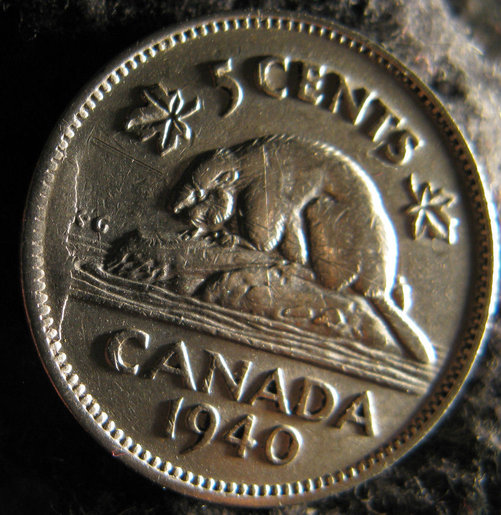
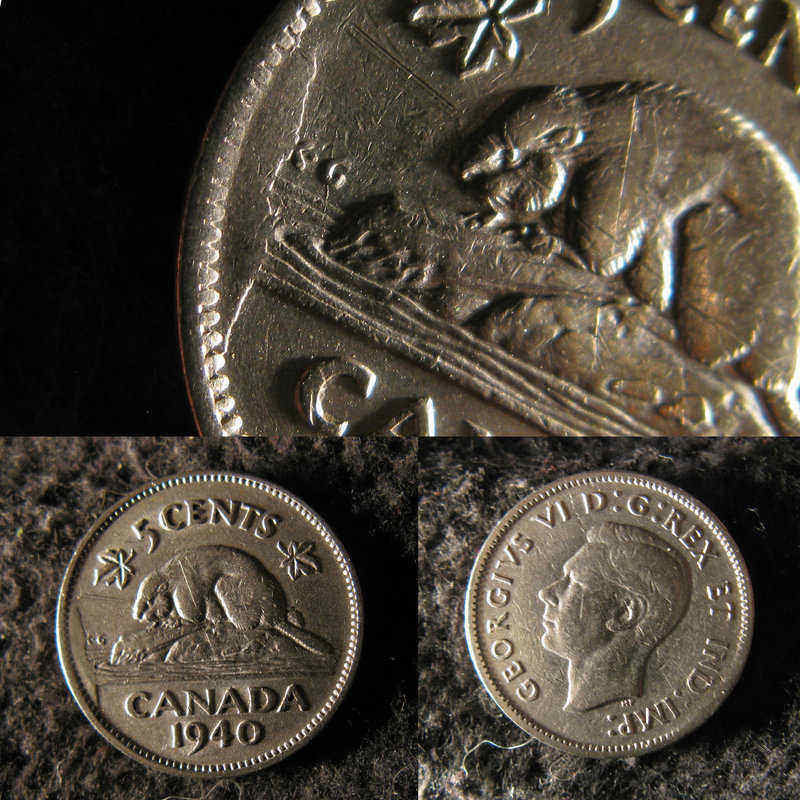
1940-5c-Cud-On-Reverse-Canadian-Nickle

1940-5c-Cud-On-Reverse-Canadian-Nickle
Pillar of the Community
kanga's Avatar
United States
5825 Posts
 Posted 08/02/2015  09:52 am  Show Profile   Bookmark this reply Add kanga to your friends list Get a Link to this Reply
I believe it should correctly be called a "die crack".
It's well on its way to becoming a " Cud" BUT that won't be the correct term until it totally breaks off.
Pillar of the Community
Canada
1223 Posts
 Posted 08/02/2015  11:36 am  Show Profile   Bookmark this reply Add Hounddog Bill to your friends list Get a Link to this Reply
It sort of fits between a die crack and a Cud how about a retained broken die.

Cheers, Bill
Valued Member
Strach-Man's Avatar
Canada
491 Posts
 Posted 08/02/2015  1:58 pm  Show Profile   Bookmark this reply Add Strach-Man to your friends list Get a Link to this Reply
Sweet coin great find
Pillar of the Community
DEVLEC's Avatar
Canada
3234 Posts
 Posted 08/02/2015  9:11 pm  Show Profile   Bookmark this reply Add DEVLEC to your friends list Get a Link to this Reply
I would call it possibly a "Retained Broken Die" because a portion of the die face has broken loose or has separated from the die.

It's still held by the collar.
Rest in Peace
wert's Avatar
1988 Posts
 Posted 08/02/2015  9:18 pm  Show Profile   Bookmark this reply Add wert to your friends list Get a Link to this Reply
It is raised...Can it be a Cud..?

Robert


1940-5c-Cud-On-Reverse-Canadian-Nickle
Pillar of the Community
eddio's Avatar
Canada
1330 Posts
 Posted 08/02/2015  10:24 pm  Show Profile   Bookmark this reply Add eddio to your friends list Get a Link to this Reply
i vote Cud
Valued Member
United States
214 Posts
 Posted 08/03/2015  03:09 am  Show Profile   Bookmark this reply Add aswag to your friends list Get a Link to this Reply
There is a US website cuds-on-coins.com that is devoted to Cuds.

The short definition is that Cuds are the result of die breaks at the die's edge/margin http://cuds-on-coins.com/die-breaks/ ...

"The vast majority of large die breaks occur at the die's margin. The sharp junction between die neck and die face is particularly prone to failure. Any die break that involves the rim and at least a little bit of the field is called a " Cud".

I think the coin I posted may be what they would call a " Retained Cud".

Their definitions of a Retained Cud are http://cuds-on-coins.com/retained-cuds/ ...

"A Retained Cud is a marginal die break that that has not fallen out."

Operationally, they say "the simplest form of what a Retained Cud is; a die crack that is from rim to rim and has a portion of either the field or a portion of a design element(s) contained within and has a lateral or vertical displacement."

But how does one determine "vertical movement". Does the fact that the denticles are filling up constitute vertical movement?

Note the weakness on the obverse opposite the " Retained Cud" on the posted coin.
Edited by aswag
08/03/2015 09:48 am
  Previous TopicReplies: 7 / Views: 1,624Next Topic  

To participate in the forum you must log in or register.


Disclaimer: While a tremendous amount of effort goes into ensuring the accuracy of the information contained in this site, Coin Community assumes no liability for errors. Copyright 2005 - 2026 Coin Community Family- all rights reserved worldwide. Use of any images or content on this website without prior written permission of Coin Community or the original lender is strictly prohibited.
Contact Us  |  Advertise Here  |  Privacy Policy / Terms of Use

Coin Community Forum © 2005 - 2026 Coin Community Forums
It took 0.31 seconds to rattle this change. Forums