| Author |
 Replies: 76 / Views: 14,383 Replies: 76 / Views: 14,383 |
|
|
|
Pillar of the Community
681 Posts |
Has anyone had success using Photoshop Elements 12 for stacking?
|
|
Pillar of the Community
 Canada
2784 Posts |
Go-Rebels.I use elements 13 in Photoshop. it works good as far as I can tell. I would think element 12 would not be much different.
|
|
Pillar of the Community
Canada
2784 Posts |
Go-Rebels I saw a nice setup with a fluorescent ring around the lens but wouldn't a flexible LED strip work as well, be easier to setup and allow for greater flexibility?
can you get a picture of this setup. possibly a link. I would interested in that. I have never heard tell of that. but it would work. I know some of the other member would be interested as well. thank you
|
|
Pillar of the Community
 United States
4051 Posts |
Quote:
Wow nice piece of kit but at US$250.00 I think a US$35.00 Microscope stand with an added XY stage for US$20.00 ( plus postage) is a very economical alternative. I hadn't really taken notice how expensive those purpose built stages are... explains why the Photomacrography forum thread on microscope focus blocks is so popular Well, it's not really fair comparing new vs used/surplus. The XYZR stands are actually extremely cheap for what they do. I also have integrated a goniometer under the XYZ and ended up removing the R stage as I can't really use precision rotation capability. Precise XY is more important to me. I have a number of other XYZ setups based on microscope stages and focus blocks, but I find the "inexpensive" Chinese components to give better overall functionality. Plus, they are modular and can be integrated in various ways as a standard platform. Contact me for photographic equipment or visit my home page at: http://macrocoins.com |
|
Pillar of the Community
Canada
2784 Posts |
Go-Rebels I found the leds you are talking about. that is interesting. you can tie them in a knot. they wont break or separate. the only different is you have to buy. a low voltage dimmer switch it have to be wired on the low voltage side thank for the suggestion. very easy to build a ring light this way.
|
|
Pillar of the Community
Canada
2784 Posts |
well did another focus stack. I know I have to find a piece of metal. I think that is the only way to get rid of the reflection of my lens. I think to also this piece of metal will help a lot with the Sanoto light box. here is the image its a double strike 1968 nickel dollar 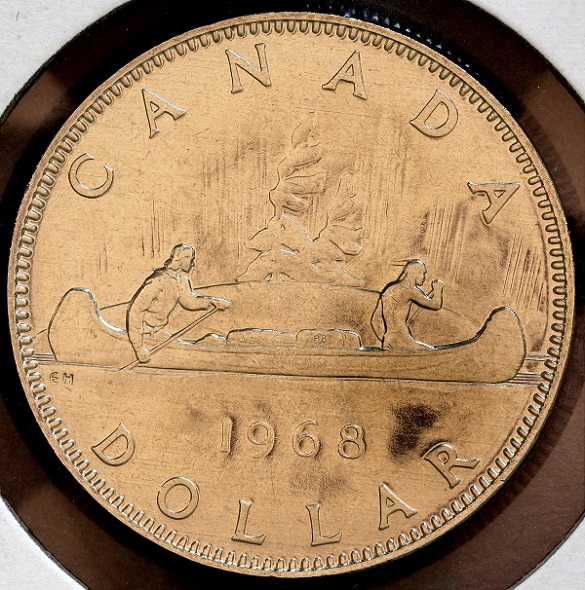 |
|
Pillar of the Community
681 Posts |
|
|
Pillar of the Community
Canada
2784 Posts |
question. focus stacking with layers. would it be better. to focus the coin at the bottom first or farthest point away from the lens. then slowly work ones way to the highest point. when that point is in focus. so when the layers are stacked on top. the last photo is the final focus. does that make senses. all suggestion greatly appreciated. soon I will have all the pieces. to make this thing work. this is a great way to check coins
|
|
Pillar of the Community
United States
9395 Posts |
Quote:
would it be better. to focus the coin at the bottom first or farthest point away from the lens. then slowly work ones way to the highest point. when that point is in focus. so when the layers are stacked on top. the last photo is the final focus. does that make senses With Zerene Stacker, it's not supposed to matter. It will automatically pick the image where the coin is largest, and start from there, working back to the smallest. Normally, it's best to start at the closest/farthest point from the coin and work towards the farthest/closest, going all in one direction or the other (not changing directions). With a telecentric lens, I suppose it doesn't matter? |
|
Pillar of the Community
2087 Posts |
I use the stack shot rail and just out of instinct I set the stacking sequence to work against gravity. Rocky: I believe you have a Hasselblad macro lens... if that is correct you may be interested in this adapter( if you still have the A7rII) when it comes out( it is telecentric apparently) http://www.kipon.com/en/articledetail.asp?id=97 |
|
Pillar of the Community
 United States
4623 Posts |
Quote:
question. focus stacking with layers. would it be better. to focus the coin at the bottom first or farthest point away from the lens. then slowly work ones way to the highest point. when that point is in focus. so when the layers are stacked on top. the last photo is the final focus. does that make senses. all suggestion greatly appreciated. soon I will have all the pieces. to make this thing work. this is a great way to check coins I cheat. I use a StackShot rail with Helicon Remote ( http://www.heliconsoft.com/) which controls the rail and has a function that highlights what is in focus with a light blue overlay. So I push it one or two steps beyond the highest (lowest) point and set the end points. It has a function where you specify either the step size or the # of shots and it calculates the other. Then I just let it rip. -----Burton 50+ year / Life / Emeritus ANA member (joined 12/1/1973) Life member: Numismatics International, CONECA Member: TNA, FtWCC, NETCC, EveryCountry (online) coin club Owned by three cats and a wife of 40+ years (joined 1983) Author: 3rd Edition of the Sample Slabs book, https://www.sampleslabs.info/ |
|
Pillar of the Community
2087 Posts |
Quote:I cheat. I use a StackShot rail with Helicon Remote http://www.heliconsoft.com/) which controls the rail and has a function that highlights what is in focus with a light blue overlay. Your describing "Focus Peaking" a function that is built into many Mirror-less still cameras as well as video cameras. I do exactly the same as you with both my Olympus and sony cameras( both give me the option of picking which color highlights the parts that are in focus). It is, as you describe, a great aid in stacking. However I wouldn't call it "cheating". Many HMDI monitors ( for interchangable lens cameras and video cameras) also provide focus peaking Edited by austrokiwi
08/06/2016 10:45 am
|
|
Pillar of the Community
Canada
2784 Posts |
ray question: XYZ setups based on microscope stages and focus blocks, but I find the "inexpensive" Chinese components to give better overall functionality. Plus, they are modular and can be integrated in various ways as a standard platform.
ray do you mean the square block that travels up and down. as you turn the screw in one direction or the other. that is a z stage right. is that what you are meaning in your statement above. you had posted one of them some time ago.
|
|
Pillar of the Community
Canada
2784 Posts |
ok burton I understand. wow that sound excellent. I am finding that with this high mag. ok example I have found some silver dollars. there is 4 ridges that represent 4 individual strikes from the dies. what I do to see them. the block that ray posted sigma koki. I set the coin on that. I angle the coin slightly. there are the ridges. I will use focus stacking. to show these ridges. they are so tight. but this way one can see them. I am waiting to get RAF to build a special tube ring so I can use a relay lens. mounted to the camera. that will complete my setup.
|
|
Pillar of the Community
United States
4051 Posts |
Quote:
ray question: XYZ setups based on microscope stages and focus blocks, but I find the "inexpensive" Chinese components to give better overall functionality. Plus, they are modular and can be integrated in various ways as a standard platform.
ray do you mean the square block that travels up and down. as you turn the screw in one direction or the other. that is a z stage right. is that what you are meaning in your statement above. you had posted one of them some time ago. Yes, the cheap Chinese Z-stages work very well, and cost ~$50-$75. I have integrated a few of these into systems and they perform splendidly. |
| |
Replies: 76 / Views: 14,383 |






 First Page
 Previous Page


 Posted 02/18/2016 10:22 am





