| Author |
 Replies: 15 / Views: 1,568 Replies: 15 / Views: 1,568 |
|
|
Valued Member
Canada
170 Posts |
This may seem like a stupid question but does any one collect fake coins? Personally I think it would be kinda neat to have a fake coin in my collection that a scammer made thinkin he/she would fool me. Just a thought  |
|
|
|
Pillar of the Community
Australia
1529 Posts |
I have a few fake ones like the 1930 Penny,1916 Mule Half Penny for precisely the same reasons as you have.They serve as reminders to me of the minefield I find myself in whenever I buy predecimals or rarities.  |
|
Pillar of the Community
United States
954 Posts |
I have one of those 2 headed quarters. |
|
Pillar of the Community
Australia
3841 Posts |
Yes I do. I actually wanted to do a study of such counterfeited coins but jesus, even counterfeit rubles sell at insane prices. 1839 Borodin ruble 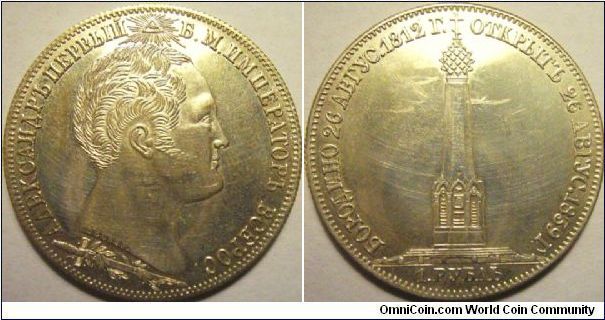 1914 Gangut ruble 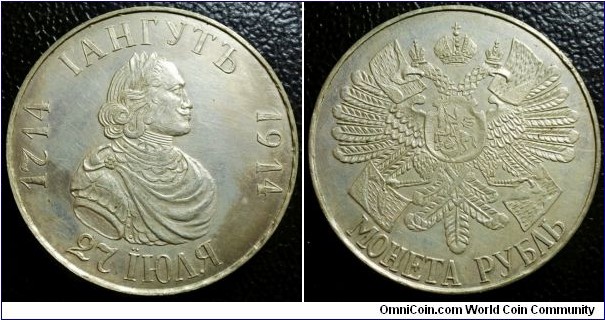 |
|
Pillar of the Community
United States
1247 Posts |
I believe they even have a name for it--Black Cabinet Coins?
Edited by longnine009
10/29/2005 09:19 am
|
|
Pillar of the Community
United States
2724 Posts |
We have hundreds of fakes that are used for education purposes. All are now properly marked as "copies" to comply with the law, and to make sure that no collector falls for them.
|
|
Forum Kid
Kuwait
1523 Posts |
I don't have any fakes, but ND could ya post up some pics and tell how to determine the difference between fake and Original.
Thanks!
TKD - TheKidCollector
|
|
Valued Member
 Canada
170 Posts |
Ya that would be helpful. and its interesting to see that people do have some. I think I might look for one for my collection. (ill be sure to mark it as a fake)
|
|
Valued Member
United States
187 Posts |
I have a small collection of fake Trade dollars. They're neat. ND, I understand the reason you marked them copy. But, for collecting purposes I'd rather have a fake "not" marked as a copy. Jerry |
|
Pillar of the Community
United States
867 Posts |
I have a small collection of plastic coins (read: little kid play money) that I've fished out of the coin counter at work. That's the closest I have to any fake coins.  Rachel [:p] |
|
Pillar of the Community
United States
2724 Posts |
|
|
Valued Member
Canada
170 Posts |
How can you tell there fake?
|
|
Pillar of the Community
Australia
3841 Posts |
Depending on the degree of counterfeit coins, most of the counterfeit coins could be easily noticed by their weight. Rarely are there many coins that could pass the miligram test. Usually counterfeit coins' weight aren't the same as an original one and more likely the alloy too is not the same. The early 20th century coins were counterfeited so that they could pass off coins without their full metal value content. So there are times where genuine coins that are supposely minted in precious metals, but which the counterfeit coins were minted in some other cheap metal, if not with slight alloy of such precious metals. Most of the time, you should be able to tell the difference of a genuine and a counterfeit by the weight alone unless your coin has been jewellery damaged or holed. A deviation of more than 1 gram is NOT acceptable, unless the mint made a serious error in striking the coin in a different planchet.
Another method of checking out the difference of a counterfeit and a genuine is by the color and the details of the coin itself. Suppose if you get a somewhat "unc" coin without major scratches, without much scratches etc and thick gross outline, that is a particular example of a casted copy coin. This is one of the more common coin as it takes a cast from an original coin and tries to make a counterfeit coin out of it. But as it's a cast copy, details are lost. But of course, that was done in the early 20th century and the level of sophisication in counterfeiting has increased. Nowadays, it's theorically possible to "copy" a design by using computers to do high-end graphics but that fortunately, technology has not hit that high yet. What one could do is to take a high resolution graphics and compare it to the coin that you have. By this, you should be able to compare and hopefully have almost all elements similar. If you get different results, it could be possible that you have found a varation, but it's quite difficult to find out honestly, unless the same coin has passed the earlier tests that I have mentioned.
I think that's what I could think of the moment... feel free to add in more points :)
My partial coin collection http://www.omnicoin.com/collection/gxseriesMy numismatics articles and collection: http://www.gxseries.com/numis/numis_index.htmRegularly updated at least once a month. |
|
Valued Member
United States
363 Posts |
I suppose another method is to alter the date of a common coin to a scarcer key date. A 3 becomes an 8; a 1 becomes a 4....etc.  But, maybe those aren't classified so much as counterfeits as altered coins; still something to watch out for. Edited by adobero1
10/29/2005 11:26 pm
|
|
Forum Dad
 United States
24225 Posts |
|
|
Pillar of the Community
United States
2724 Posts |
quote:
Originally posted by ojo
How can you tell there fake?
The best way to know a fake, is to know what is real. After you have examined many coins, you get a feel for the weight, look, size, and characteristics. It is really a learned behavior. Now some fakes can be quite deceptive, and take research to discover. |
| |
Replies: 15 / Views: 1,568 |
|







 Posted 10/28/2005 8:17 pm





