Quote:
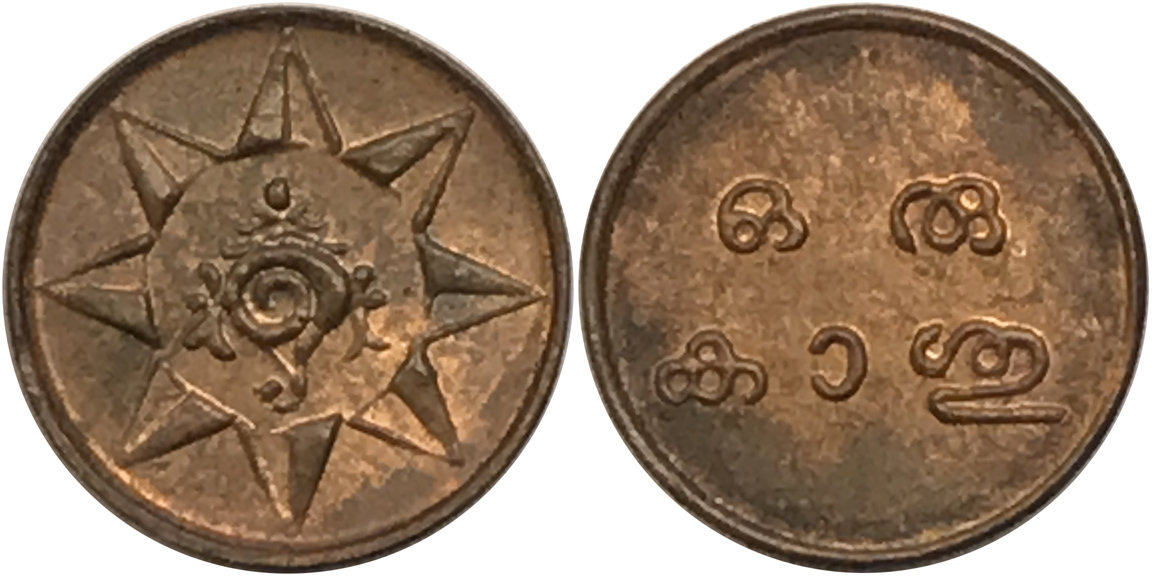
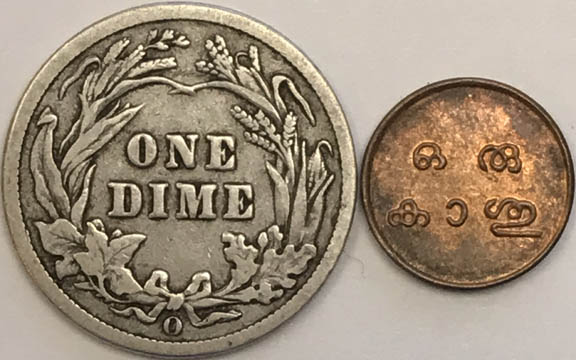
Travancore (India) 1 Cash ND (1901-1910)
Lovely little copper, @Hondo Boguss!

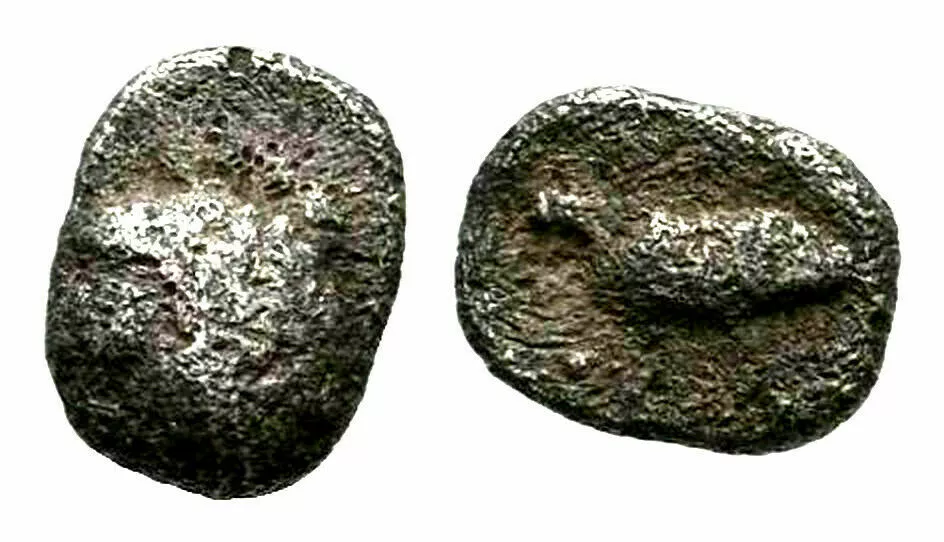
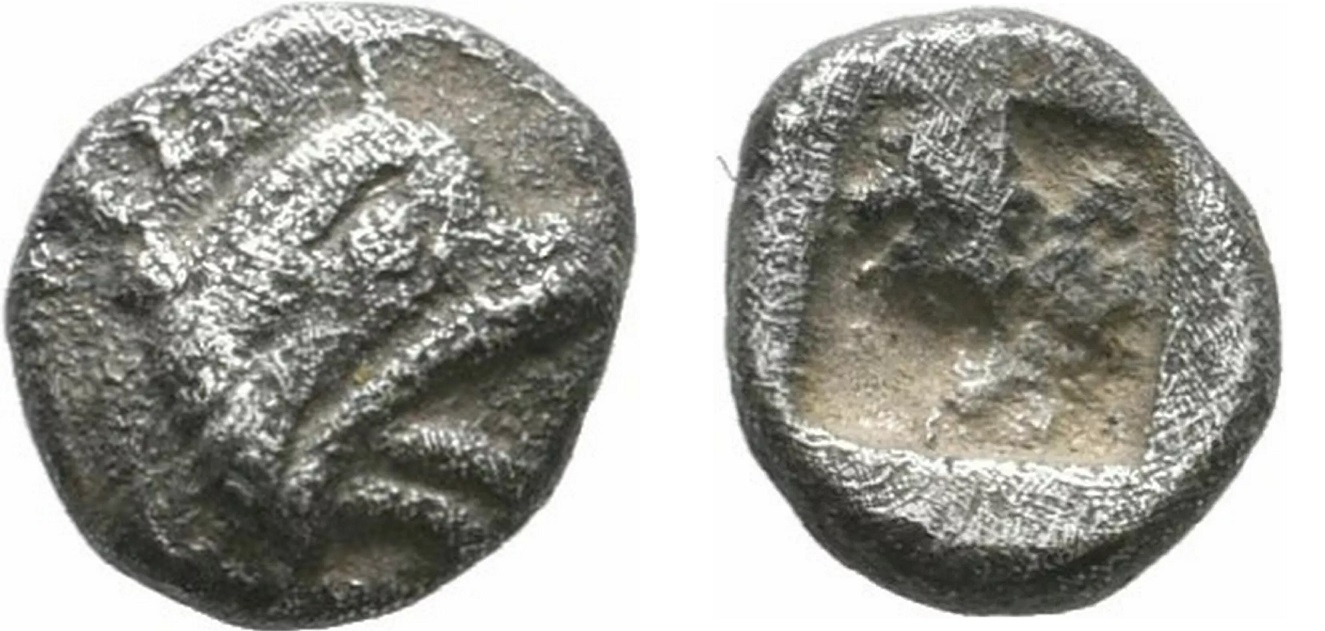
And those are beautiful ancient Greeks, @arkadyn!
On the question on how the ancient Greeks carried around their coins - large or small - I would think they were mostly carried in pouches or purses. The pouch could be worn on a belt, since ancient Greek clothing did not have pockets. Pouches, though, have been used since (at least) the Bronze Age.
And why did they bother with such tiny coins? A tetartemorion was 1/4 of an obol, or 1/24 of a drachma - a very small amount of money. It was enough for a piece of bread, some salt, or maybe enough lamp oil for one evening, but mostly it was used as smallchange. Given as change at the market - "Sale! Only 23/24 drachma for a jug of Kos wine!" - or used when splitting the bill at the tavern. So there was a need - just like for the US 1 cent coin . . .
Sizewise, the tinyness was a consequence of the silver standard used for coinage. An Attic drachma should weigh 4.3 grams, and a tetartemorion consequently 1/24th thereof, or 0.18 grams. Only later, around the 4th century BC, did copper become accepted as a metal for coinage, and then small denominations could be realized as larger coins.
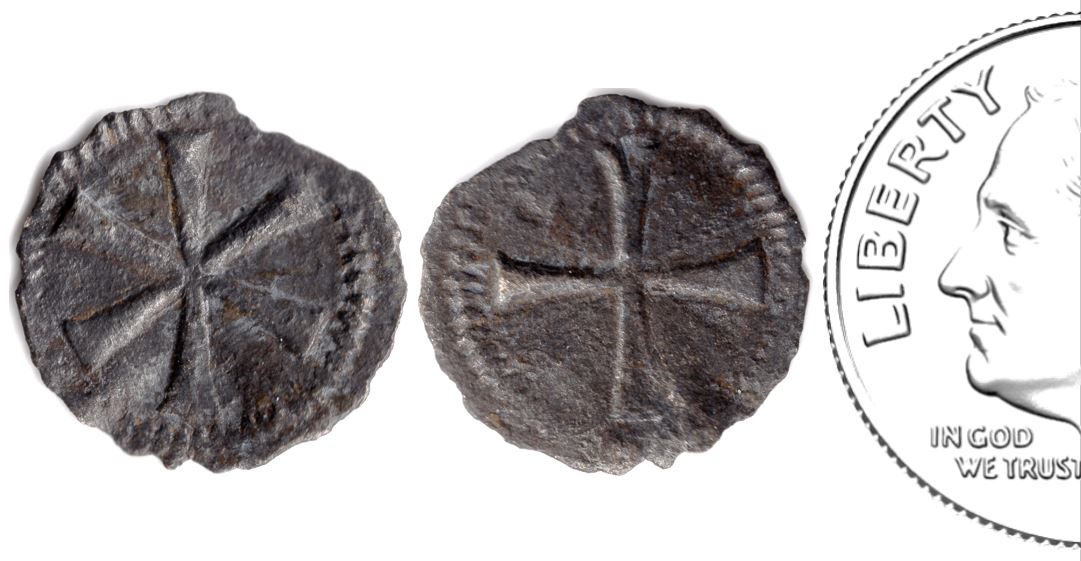
Here is a rather insignificant Medieval coin from the bishopric of Le Puy, France. It dates from around 1100, weighs 0.23 g and measures 13 mm. It was valued at 1/4 denier, the smallest denomination minted in France at the time. Like the tetartemorion, used for the tiniest of purchases and as smallchange (and for alms giving).







 First Page
 Previous Page


 Posted 10/04/2024 12:02 pm