| Author |
 Replies: 31 / Views: 4,342 Replies: 31 / Views: 4,342 |
|
Pillar of the Community
United States
3360 Posts |
The striations run the same direction on Obverse and Reverse. There is also a bit of delamination beginning around/on the top of Lincoln's head. I am showing a close up of a couple of the areas, but it is the same over the entire coin. I would describe the color as yellow/gold. The coin weighs 3.16g. I am looking for opinions about this coin. 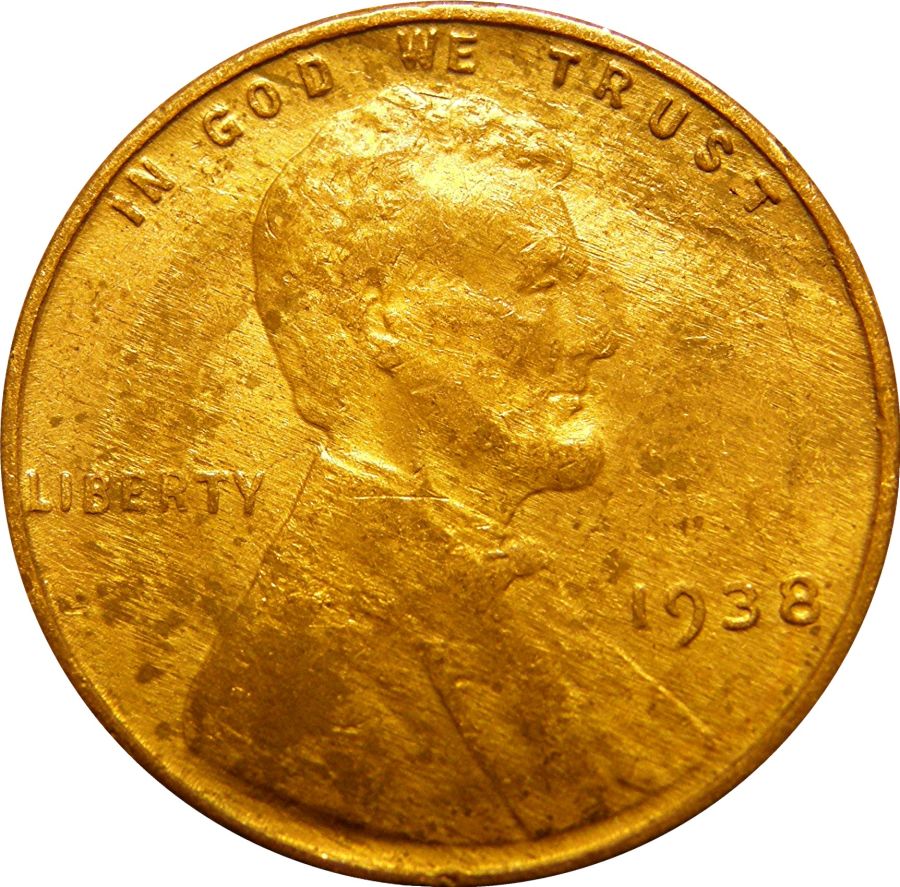 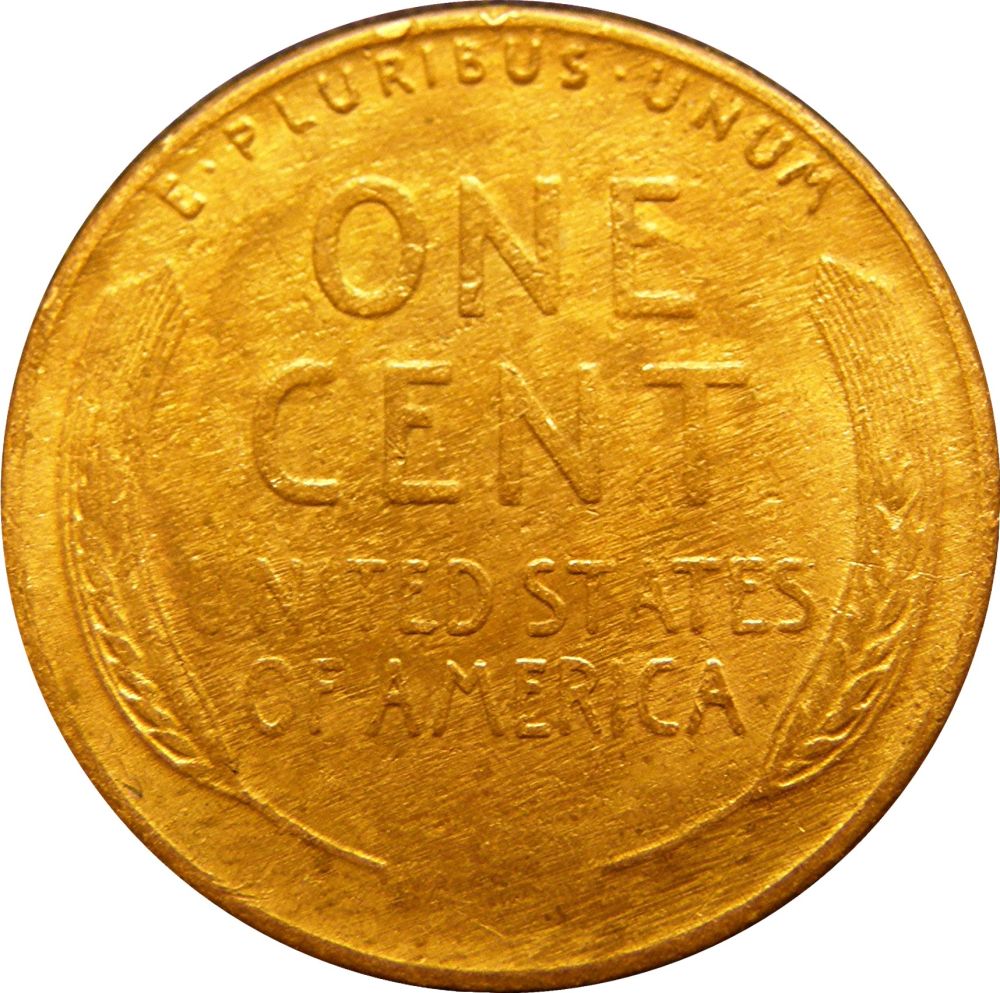 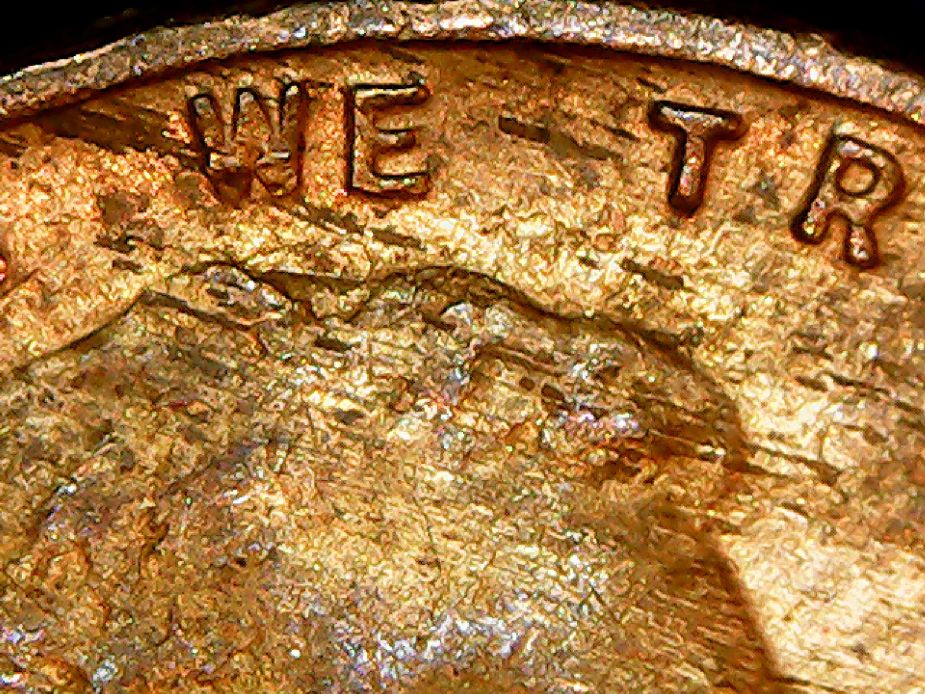 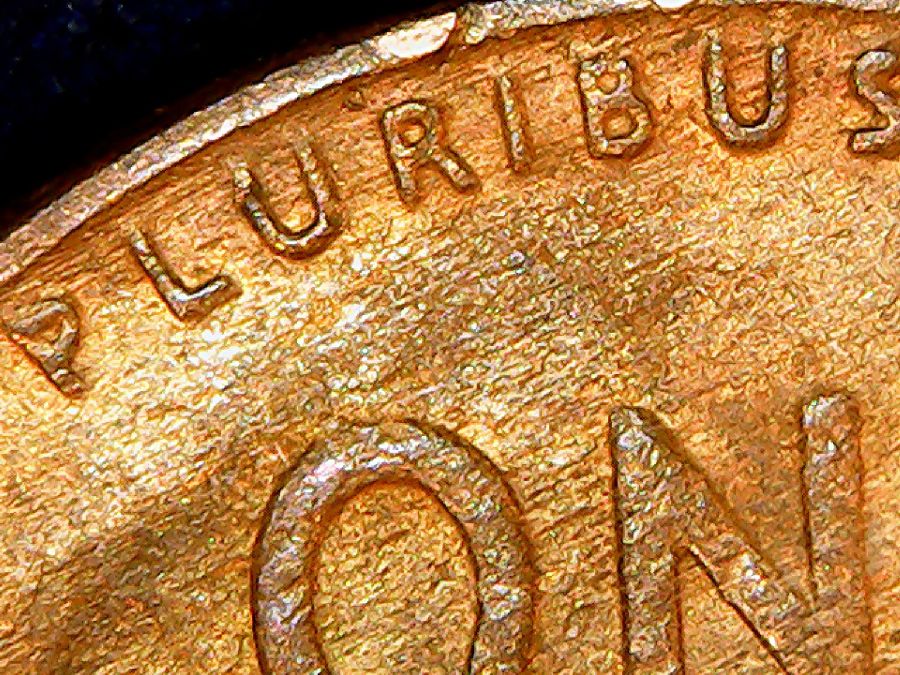 |
|
|
|
Valued Member
United States
403 Posts |
First responder here. I'm not an expert but perhaps can offer some assistance until the more experienced can arrive. To me, the parallel striations appear pre-strike due to grove continuations across fields and devices, as well as in protected areas. I understand that striations on planchets may be common but are usually obliterated during the strike unless that strike is weak. UNITED appears weak, suggesting this, but don't know if laminations would also be more common. The uneven striation distribution to the left of Lincoln's head is odd, unless that is an area of very weak strike pressure.
|
|
Valued Member
United States
424 Posts |
This is called a "woody". It is a type of natural toning that happens mostly to old LWC because the metals were not properly or completely mixed. The delamination is happening because of the same reason. There are several collectors that seek for Lincoln cents just like this. I have a few in my collection, mostly by accident. |
|
Pillar of the Community
Canada
4227 Posts |
Improper alloy mixture, common with this ear. I like it.
|
|
Valued Member
United States
54 Posts |
Wow, I have a lot to learn. My first impression was that the coin is remarkably clean for a '38 and was sure to be damage due to cleaning with something a little abrasive. Based on woody's I've seen, I never would've guessed this would be one. One of these days I'm going to guess more right than wrong - might be a while though. I'll keep reading.  |
|
Bedrock of the Community
United States
62064 Posts |
Is your coin under weight? The reverse rims look very weak.
|
|
Pillar of the Community
 United States
3360 Posts |
Quote:
Is your coin under weight? The reverse rims look very weak. I gave the weight in OP as 3.16g. |
|
Valued Member
United States
403 Posts |
Yes, the weight is consistent with an unworn, unburnished cent of that year. I was curious if the striations on this coin are incuse (grooved into the fields) or texturally flat. Do "woodies" include both types of striations?
|
|
Pillar of the Community
United States
3360 Posts |
Quote:
Yes, the weight is consistent with an unworn, unburnished cent of that year. I was curious if the striations on this coin are incuse (grooved into the fields) or texturally flat. Thanks for thinking about this. The striations are not flat. |
|
Pillar of the Community
United States
3656 Posts |
I had one very similar to that a few weeks back you can check out the post here https://goccf.com/t/253523ruling was woody & lamination (de-lamination) |
|
Valued Member
United States
403 Posts |
I see there have been many prior discussions about woodies. The forum glossary on them (i.e., woodgrain), however, doesn't seem to address this type, where pre-strike incuse striations in the planchet cause the effect, rather than flat toning. CoinCents' 1958-D seems to fit into this category too.
|
|
Pillar of the Community
United States
3360 Posts |
The portion of this cent which resembles what I have thought of as a "Woody" is the area at the top of the head and the corresponding area on the Reverse. I see the striations as something different than an "improper alloy mix". I suspect that it is related to the process of rolling before blanks are cut. There is speculation in the literature, especially with respect to Morgans, about the cause and mostly seems to be just that - speculation!
I am also curious about the color and suspect it is a Brass planchet, but I do not really know what that means (!)
Edited by Pete2226
04/09/2016 3:41 pm
|
|
Valued Member
United States
403 Posts |
Ultimately we can only speculate as to the cause that happened so long ago. As many have said, this is essentially a quality control issue that gives headaches at the Mints and delight in numismatic circles. IMO, a woody is a woody if it looks woodgrained and the cause is pre-strike. There's a spectrum of eye-appeal but usually little marginal value. A brass planchet would be another matter, verifiable by chemical analysis but few have the resources for that. Your coin mass of 3.16 g would likely preclude brass, however, as brass generally has a density significantly lower than the copper alloy used in this series.
|
|
Pillar of the Community
United States
3360 Posts |
Quote:
Your coin mass of 3.16 g would likely preclude brass, however, as brass generally has a density significantly lower than the copper alloy used in this series. I have done some calculations, and I could be wrong, but I come up with a Brass Cent being approximately 0.14g lighter than a Copper Cent. In my experience in weighing cents, I find that a variance of +/- 0.04g is not at all uncommon. So, I am not convinced that the weight removes this Cent from consideration of it being Brass. Assuming, however, that it is not Brass, what would be the explanation for the color? |
|
Bedrock of the Community
United States
62064 Posts |
It may have just been a weak strike then. The weight sounds correct.
|
|
Valued Member
United States
403 Posts |
The nominal mass of an unworn 1938 cent is 3.11 g with a total variance of about 0.04 g as you said. Your cent at 3.16 g is on the upper edge of tolerance. The normal alloy has a density of about 8.8 g/cc. Depending on composition, brass will have a density between 8.4 g/cc and 8.7 g/cc, so an unworn brass cent should weigh between 2.98 g and 3.09 g. Taking variance into consideration, this expands to 2.94 g and 3.13 g. Your cent is 0.03 g beyond the tolerance... not a lot, but significant. The lighter colored brass would also be on the low side of the range.
So why the light color? I don't know. In general, do weak strikes translate to lighter colored coins? Color is dependent not only on chemical composition and toning but also surface roughness on the micro to nano scales. Solid strikes obliterate striations, so it's not far-fetched to speculate that surface roughness and color are also influenced.
|
| |
Replies: 31 / Views: 4,342 |










 Posted 04/09/2016 09:24 am


