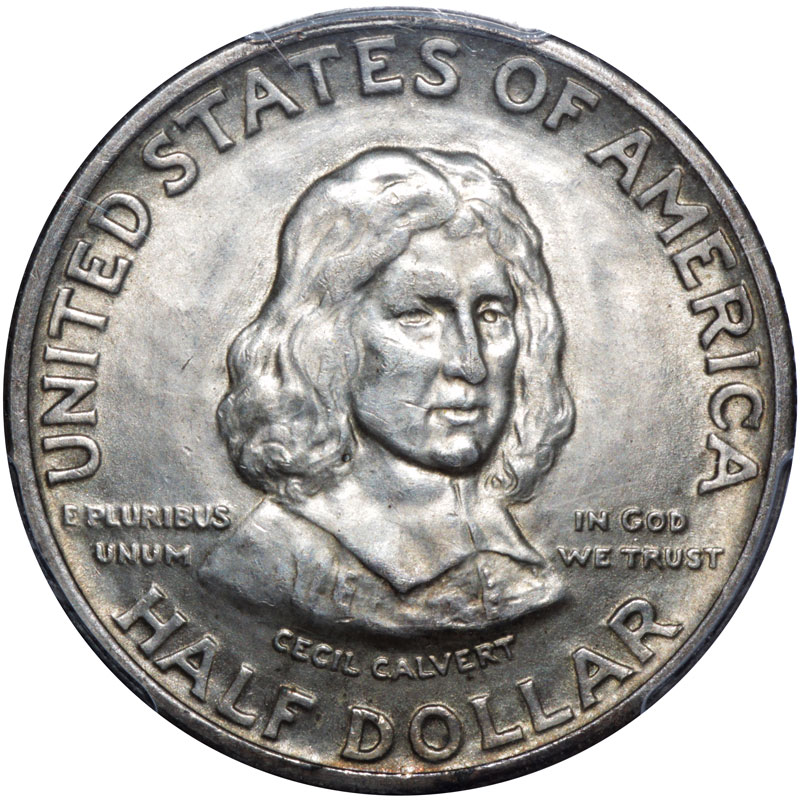
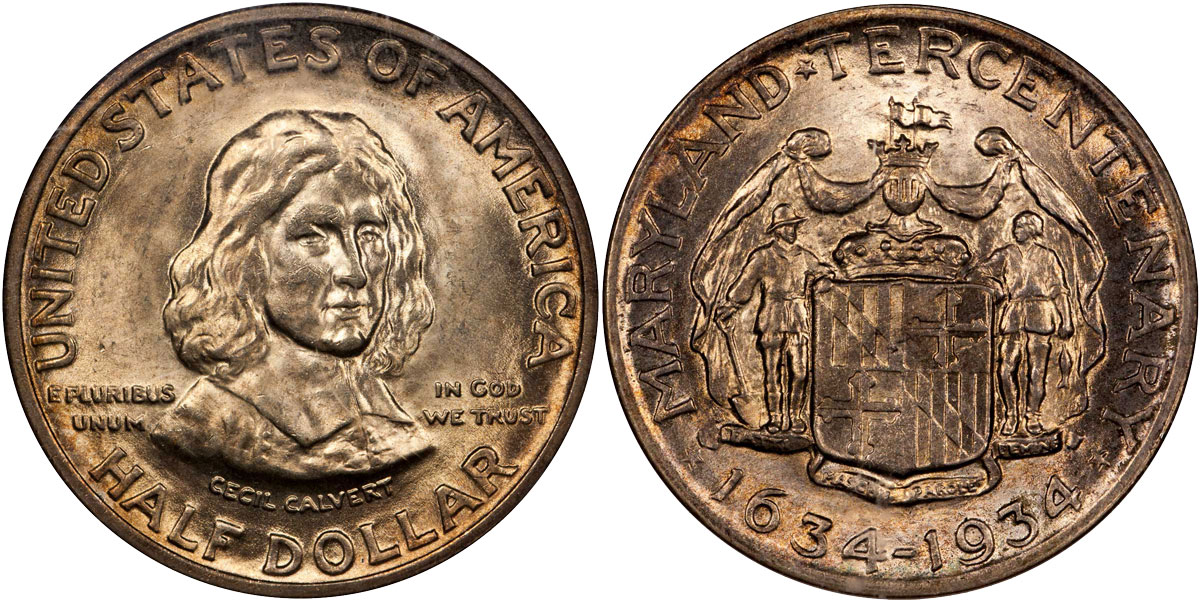
I thought I would update my brief original post about the Maryland Tercentenary half dollar (found here:
1934 Maryland Half Dollar), with a bit more discussion of the development of the coin's design.
Legislation authorizing the Maryland half dollar was signed into law by President Franklin Delano Roosevelt on May 9, 1934 - more than four months into Maryland's tercentenary year! The late date of approval immediately put the Mint on a compressed production timeline and greatly restricted the time allowed for preparing the coin's design.
Fortunately, the Maryland Tercentenary Commission had engaged Hans Schuler to design the coin in advance of its approval. The Commission's foresight enabled Schuler to be far along in preparation of the coin's models when the half dollar was approved and enabled him to provide the designs to the Mint for review on May 10th.
Read More: Commems CollectionSchuler was a talented German-born (1874) sculptor who came to the US in 1880. He was a noted sculptor of medals and monuments, with many of the latter being erected in and around Baltimore. Schuler was also a teacher, and served as the Director of the Maryland Institute from 1925 until his death in 1951.
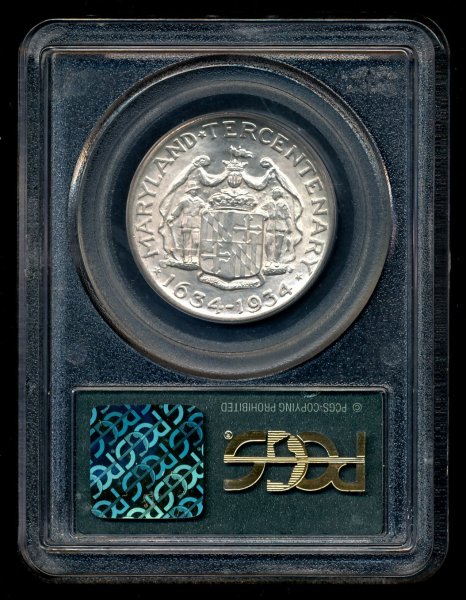
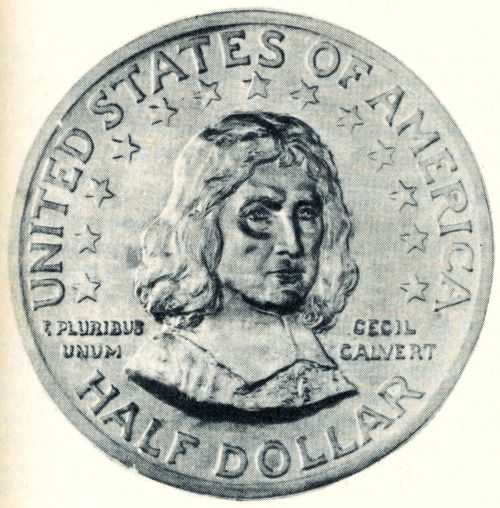
The artist's original designs featured a portrait of Cecil Calvert, Second Baron of Baltimore on the obverse and the Maryland Seal on the reverse - much as is seen on the issued coin. (See below for images of Schuler's original models.)
Several revisions were suggested, however, by the Commission of Fine Arts (CFA) and US Mint staff. Among these was the removal of an arc of 13 stars above Cecil Calvert's portrait on the obverse. It was noted that while thirteen stars are often used on
US coins as a symbolic reference to the original 13 states, they were out of place on the Maryland coin as the piece was commemorating the colonial Province of Maryland rather than the State.
Also suggested was the moving of "In God We Trust" from the coin's reverse to the obverse. In the original models, the position of the motto atop the Seal made it appear as if it was part of the Seal (which it is not). The Commission suggested keeping the coin's reverse focused on Maryland and using the obverse to meet all US-related coinage requirements. The repositioning of the motto forced the move of "Cecil Calvert" from its original location to the right of Calvert's portrait to a position directly below it.
Schuler was fine with these suggested changes and went so far as to note that he felt they made for a better overall design. I agree! I think the changes made for a cleaner overall design with a less cluttered feel.
Schuler did not, however, feel the same about one of the other requested changes. The CFA considered the large, plain collar Schuler used for Calvert to be more "Puritan" in design vs. the fancier "Cavalier" style collar seen in multiple contemporary portraits of Cecil and his brother Leonard. They suggested the collar be revised. Schuler countered these criticisms by citing as the basis for his design the circa 1670 portrait of Cecil by Gerard Soest. Schuler was steadfast on the portrait's original design and, as a result, the coin we are all familiar with today retains the simple collar design.
All in all, I believe Schuler's "collaboration" with the CFA and Mint was a success. The suggested revisions regarding the coin's stars and motto made sense and improved the coin's overall appearance, while Schuler's decision to maintain the simple style of Calvert's collar in no way detracted from the design seen on the final coin
Portrait of Cecil Calvert by Gerard Soest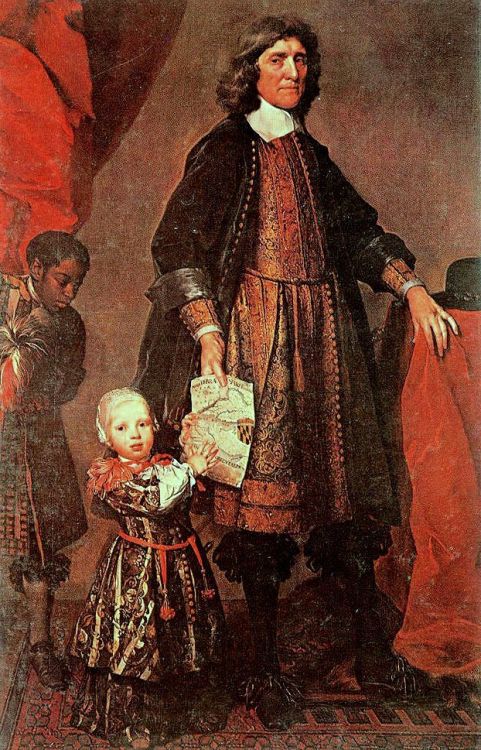 1934 Maryland Commemorative Half Dollar - Obverse
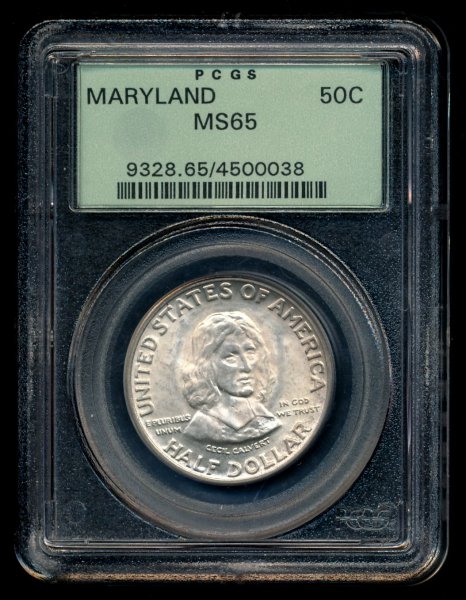 1934 Maryland Commemorative Half Dollar - Reverse
 Original Model for Obverse
 Original Model for Reverse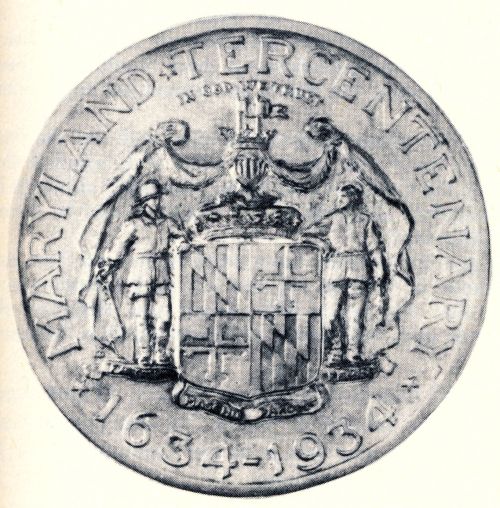
Note: The images of the original models for the Maryland Half Dollar are taken from
An Illustrated History of US Commemorative Coinage by Don Taxay; the images in the book are taken from material in the US National Archives.







 Posted 09/27/2016 6:00 pm