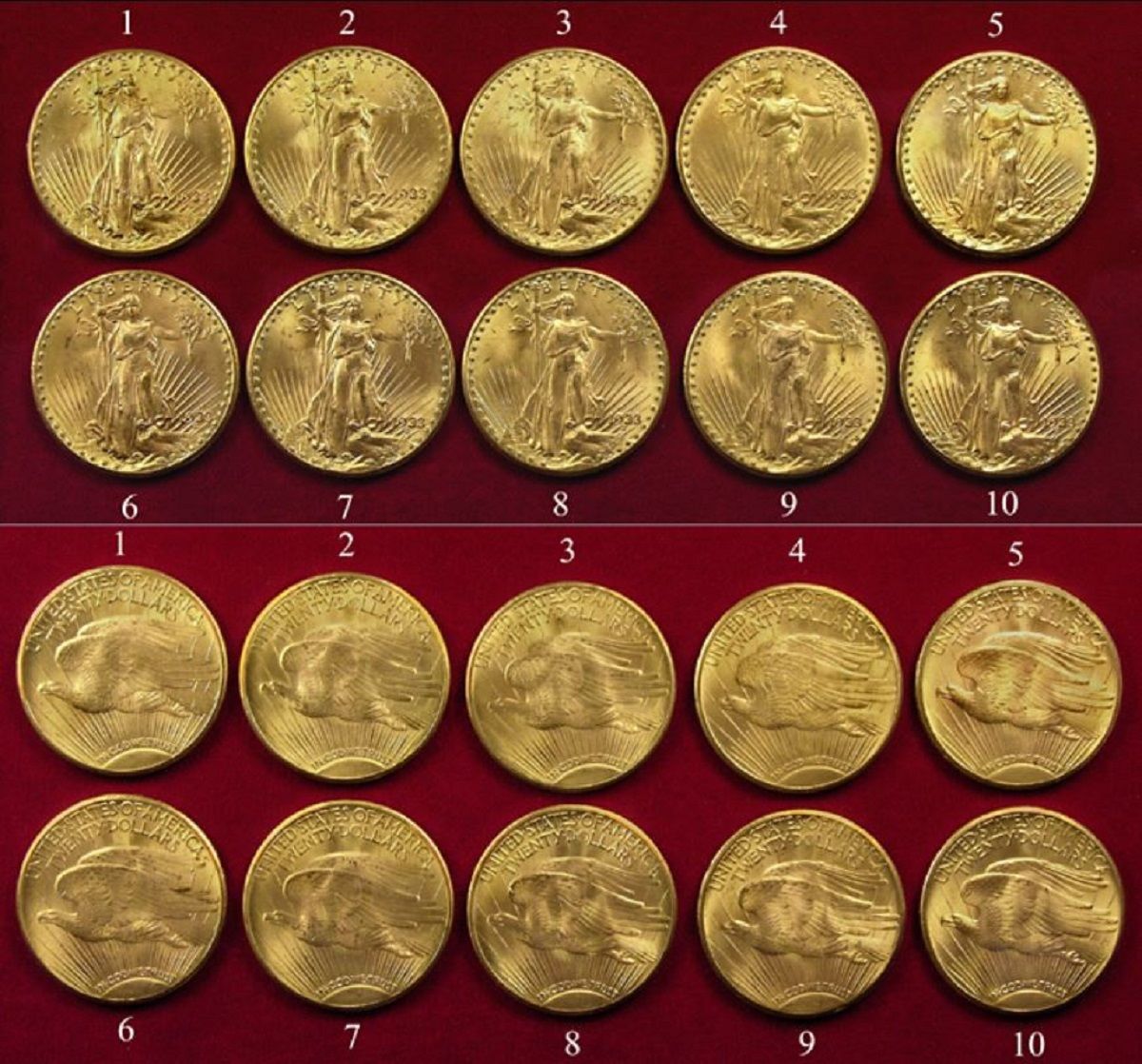
The 1933 double eagle is a United States 20-dollar gold coin. Although 445,500 specimens of this Saint-Gaudens double eagle were minted in 1933, none were ever officially circulated and all but two were ordered melted down. However, 20 more are known to have been rescued from melting by being stolen, and found their way into the hands of collectors. 19 of these were subsequently recovered by the Secret Service, who destroyed nine of them, making this one of the world's rarest coins.
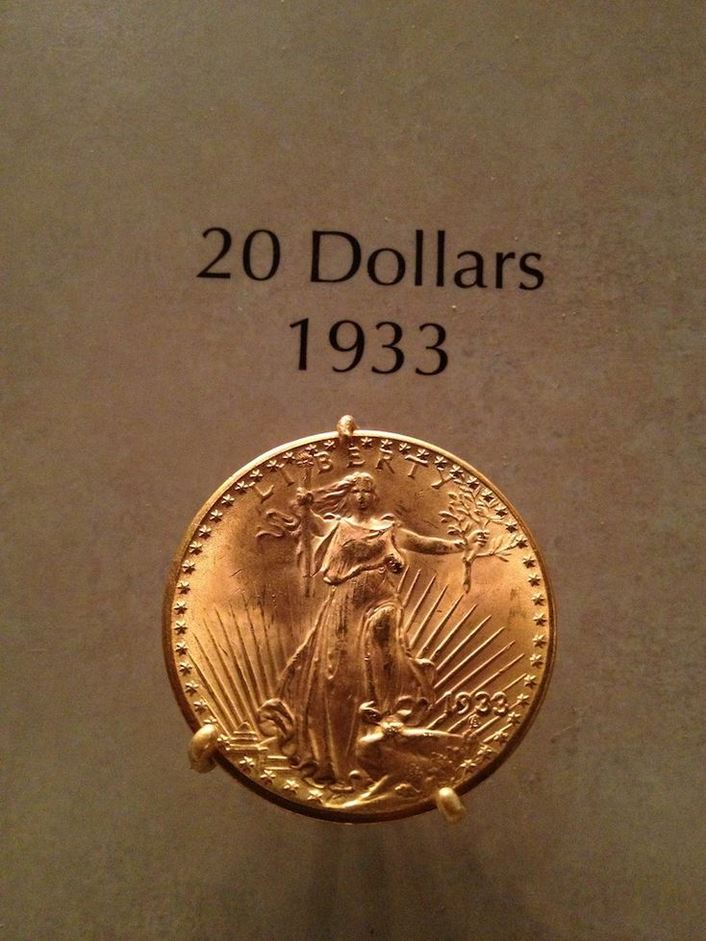
The two intentionally spared coins are in the U.S. National Numismatic Collection (picture below), one is in the hands of a private owner who paid US$7.59 million for it in 2002-the second-highest price paid at auction for a single U.S. coin-and ten others are held in Fort Knox.
IN NECESSARIIS UNITAS - IN DUBIIS LIBERTAS - IN OMNIBUS CARITAS THE MAN IN THE ARENA, Theodore Roosevelt at the Sorbonne Paris on April 23, 1910: "It is not the critic who counts; not the man who points out how the strong man stumbles or where the doer of deeds could have done better. The credit belongs to the man who is actually in the arena, whose face is marred by dust and sweat and blood, who strives valiantly, who errs and comes up short again and again, because there is no effort without error or shortcoming, but who knows the great enthusiasms, the great devotions, who spends himself in a worthy cause; who, at the best, knows, in the end, the triumph of high achievement, and who, at the worst, if he fails, at least he fails while daring greatly, so that his place shall never be with those cold and timid souls who knew neither victory nor defeat." My coin website:https://fairfaxcoins.com
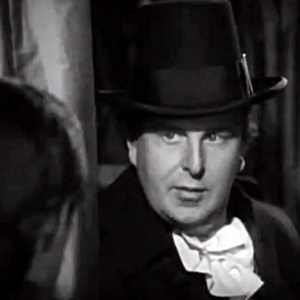
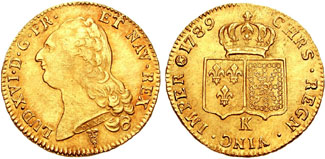
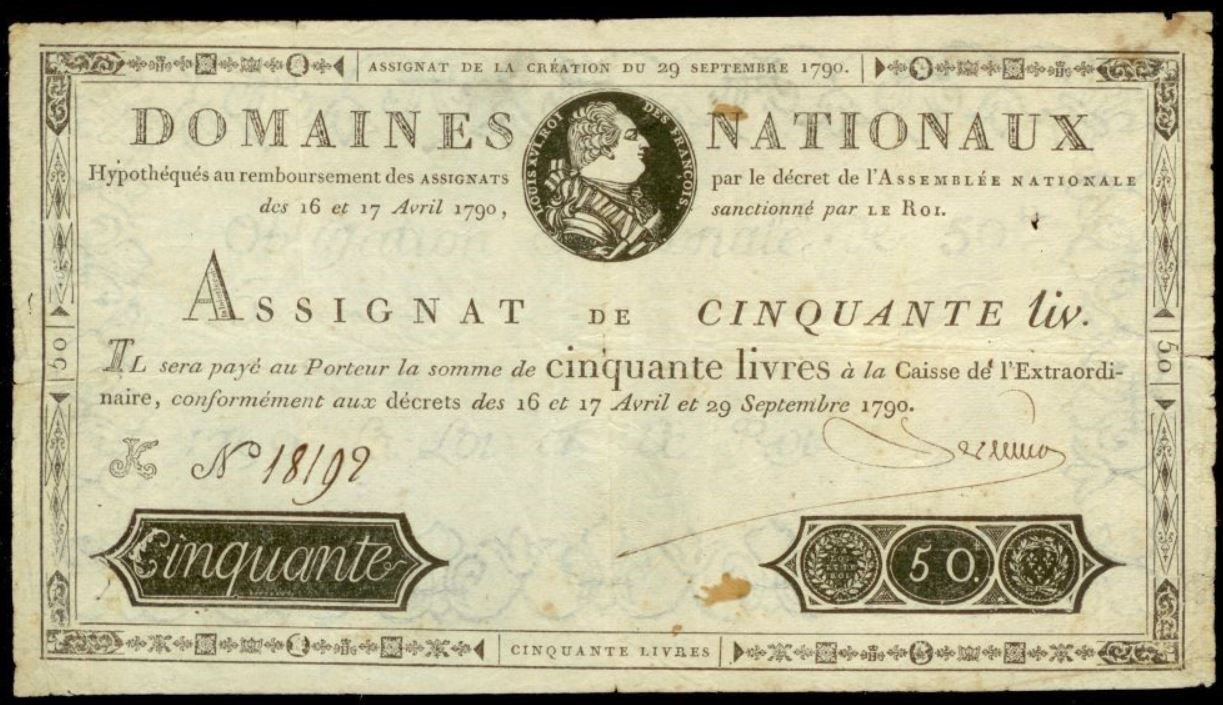
I watch a lot of Turner Movie Classic TMC channel. I recalled being fascinated by a couple coins in movies. One was in the Marie Antoinette 1938 movie. The scene was The Flight to Varennes. King Louis XVI and the Queen were trying to escape and his portrait on a coin got him caught. He only had a gold piece to pay a toll of some sort for the carriage. Which was a very unusual way to pay. No exact change lane or EZ Pass here which got him and the queen caught. The coin he tried to use looked like this. He also was recognized by the image of him on the assignats. I believe that to be paper money or stamps.
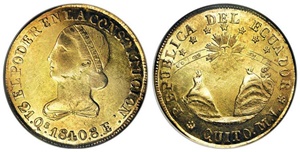
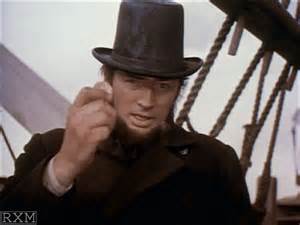
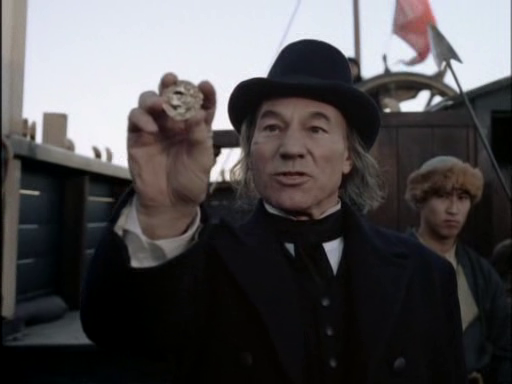
Another movie is either of couple versions of Moby Dick where Captain Ahab puts out a reward of a gold Ecuadorian 8 Escudos doubloon, minted in Quito, Ecuador and he nails it to a sail mast for the one who finds the great white whale. Graded but comes back "holed" in AU details.
Go to 2:00 for a shorter watch but I love this movie.
Got to put some of these in the queue. Here is a Louis XVI Assignat:
IN NECESSARIIS UNITAS - IN DUBIIS LIBERTAS - IN OMNIBUS CARITAS THE MAN IN THE ARENA, Theodore Roosevelt at the Sorbonne Paris on April 23, 1910: "It is not the critic who counts; not the man who points out how the strong man stumbles or where the doer of deeds could have done better. The credit belongs to the man who is actually in the arena, whose face is marred by dust and sweat and blood, who strives valiantly, who errs and comes up short again and again, because there is no effort without error or shortcoming, but who knows the great enthusiasms, the great devotions, who spends himself in a worthy cause; who, at the best, knows, in the end, the triumph of high achievement, and who, at the worst, if he fails, at least he fails while daring greatly, so that his place shall never be with those cold and timid souls who knew neither victory nor defeat." My coin website:https://fairfaxcoins.com
Thanks for the recommendations. I watched the American Buffalo movie, which wasn't exciting, but it was fun seeing the psychology of coin owners being explored. It is also the only movie where I've seen a Red Book being referred to. And Dustin Hoffman flipping through it no less. Cheers.
IN NECESSARIIS UNITAS - IN DUBIIS LIBERTAS - IN OMNIBUS CARITAS THE MAN IN THE ARENA, Theodore Roosevelt at the Sorbonne Paris on April 23, 1910: "It is not the critic who counts; not the man who points out how the strong man stumbles or where the doer of deeds could have done better. The credit belongs to the man who is actually in the arena, whose face is marred by dust and sweat and blood, who strives valiantly, who errs and comes up short again and again, because there is no effort without error or shortcoming, but who knows the great enthusiasms, the great devotions, who spends himself in a worthy cause; who, at the best, knows, in the end, the triumph of high achievement, and who, at the worst, if he fails, at least he fails while daring greatly, so that his place shall never be with those cold and timid souls who knew neither victory nor defeat." My coin website:https://fairfaxcoins.com
I love Dennis Franz in that movie. A good bit of Andy Sipowicz NYPD Blue in that character too. A lot of bad language tho coming out of Hoffman's mouth.
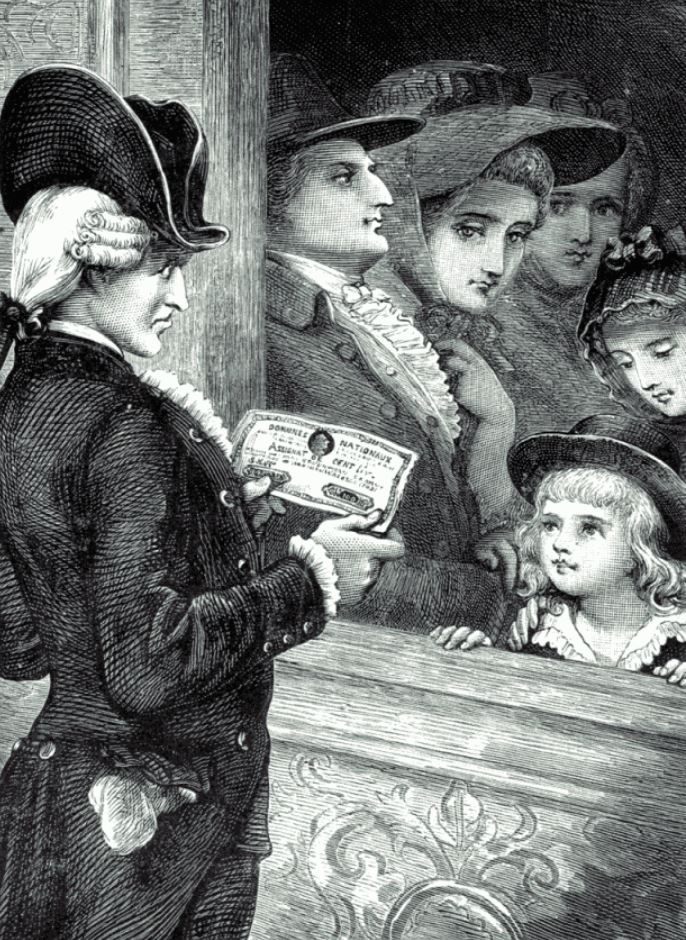
Drouet comparing the face on the assignat with the face of Louis XVI fleeing Paris with family during the French Revolution. The assgnat in the engraving is of the same type but for 100 livres.
IN NECESSARIIS UNITAS - IN DUBIIS LIBERTAS - IN OMNIBUS CARITAS THE MAN IN THE ARENA, Theodore Roosevelt at the Sorbonne Paris on April 23, 1910: "It is not the critic who counts; not the man who points out how the strong man stumbles or where the doer of deeds could have done better. The credit belongs to the man who is actually in the arena, whose face is marred by dust and sweat and blood, who strives valiantly, who errs and comes up short again and again, because there is no effort without error or shortcoming, but who knows the great enthusiasms, the great devotions, who spends himself in a worthy cause; who, at the best, knows, in the end, the triumph of high achievement, and who, at the worst, if he fails, at least he fails while daring greatly, so that his place shall never be with those cold and timid souls who knew neither victory nor defeat." My coin website:https://fairfaxcoins.com
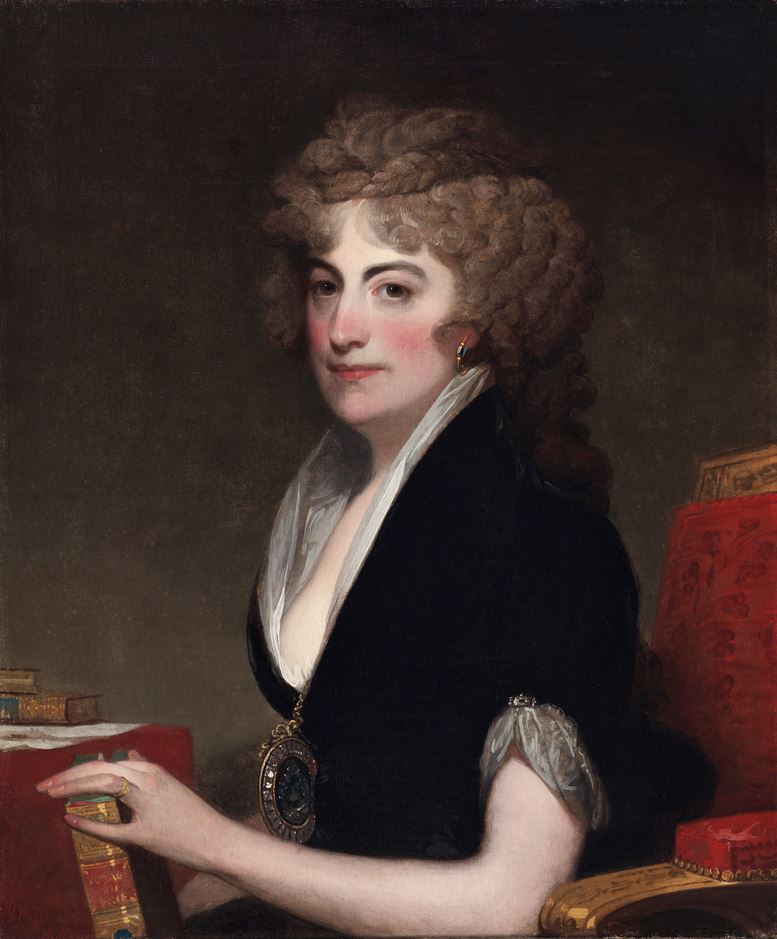
Lady Ann Willing Bingham (Aug 1, 1764— May 11, 1801) was an American socialite from Philadelphia, regarded as one of the most beautiful women of her day. She was the eldest daughter of Thomas Willing, president of the First Bank of the United States, the wife of the wealthy William Bingham, mother-in-law of Alexander Baring, 1st Baron Ashburton, and correspondent of Thomas Jefferson among others.
Her correspondence with Jefferson led to the construct of the Bill of Rights. Through many letters, she convinced Jefferson that the Constitution would not last and the individual citizens would have their rights impeded from the interests of the majority. Jefferson was finally convinced and in turn presented her ideas to James Madison (may not have used her name due to the nature of the ideas origin) and Madison agreed to the proposal. Madison then proposed the Individual Bill of Rights and Bingham's ideas were adopted by Congress.
Bingham was also the model for multiple portraits by painter and Presidential portraitist Gilbert Stuart. Legend has it that Bingham was therefore the model for Lady Liberty on the American "Draped bust" coinage (multiple denominations) during the first decade of the 19th century, but this has not been proven.
IN NECESSARIIS UNITAS - IN DUBIIS LIBERTAS - IN OMNIBUS CARITAS THE MAN IN THE ARENA, Theodore Roosevelt at the Sorbonne Paris on April 23, 1910: "It is not the critic who counts; not the man who points out how the strong man stumbles or where the doer of deeds could have done better. The credit belongs to the man who is actually in the arena, whose face is marred by dust and sweat and blood, who strives valiantly, who errs and comes up short again and again, because there is no effort without error or shortcoming, but who knows the great enthusiasms, the great devotions, who spends himself in a worthy cause; who, at the best, knows, in the end, the triumph of high achievement, and who, at the worst, if he fails, at least he fails while daring greatly, so that his place shall never be with those cold and timid souls who knew neither victory nor defeat." My coin website:https://fairfaxcoins.com
The greatest silver rush in U.S. history didn't happen because of a strike in a mine shaft —it happened in Washington, D.C. right across the street from the White House. It was the release of the U.S. Treasury Hoard from 1961 to 1964, and for coin collectors it was every bit as exciting and important as the California Gold Rush of 1849.
Nearly 500 million Morgan and Peace dollars were known to exist in the late 1950s. Approximately half were in the hands of the public; and many rested in the vaults of banks and the mints. But over 200 million were stored in 60-pound bags containing 1,000 coins each in U.S. Treasury vaults in Washington, D.C. The coins were waiting for release, and in the early 1960s they were released in epic fashion.
THE ORIGIN OF THE U.S. TREASURY HOARD
To discover how the coin rooms in the U.S. Treasury in Washington became overflowing with bags and bags of silver dollars, one must go back over 100 years. With the passage of the Bland-Allison Act in 1878, Morgan silver dollars — named for designer George T. Morgan — began pouring out of the U.S. Mints in Carson City, Philadelphia, New Orleans and San Francisco.
The Bland-Allison Act directed the mints to strike silver dollars using silver from the famous Comstock Lode, but by 1893 there was little demand for silver dollars. Most Americans preferred paper money instead of carrying around heavy silver dollars, so mint bags starting piling up in storage.
U.S. Mints were stuffed to overflowing and what to do with the dollars was becoming a major issue. Morgan silver dollars continued to be minted until 1904, when the Comstock Lode was finally exhausted. By this time, most of the coins were shipped from the mints to the Treasury Building in Washington.
In 1918, Congress passed the Pittman Act to replenish the government's reserves of silver bullion by melting millions of Morgan silver dollars in the Treasury vaults. As a result, over 270 million Morgan silver dollars were melted — almost half the entire mintage from 1878 to 1904. The dollars melted under the Pittman Act substantially reduced the availability of many of the dates minted from 1900 to 1904. Since these dates were the last coins placed in the Treasury, they were the first to be taken from the vaults.
The Pittman Act also required the government to purchase more silver to replace the melted coins, so the Morgan silver dollar was briefly revived in 1921. It was replaced later in the year with the Peace Silver Dollar, which celebrated world peace after World War I. The Peace Silver Dollar was minted every year until 1928, when the silver supply ran out again. Small numbers of Peace Silver Dollars were also issued in 1934 and 1935.
Meanwhile a small trickle of coins in the 1930s and 1940s flowed out of the U.S. Treasury cash room into the hands of collectors. That trickle turned into a flood in the late 1950s and early 1960s. From 1958 to 1960 nearly 58 million silver dollars were released by the Treasury. This figure jumped to 31 million alone in 1963 and in the first three months of 1964, more than 25 million silver dollars were drawn from Treasury vaults, at which point the vaults were closed.
THE GREAT SILVER RUSH
When news spread that the Treasury was selling off its vast hoard of silver dollars at face value, coin collectors from all over the nation swarmed to Washington for a raid on the dwindling supply in hopes of finding scarce dates and mint marks. Collectors lined up for blocks around the Treasury Building and jammed its corridors and cash room. "Prospectors" with their newly acquired dollars sprawled into any available space, using benches, chairs and window sills to quickly sort through their dollars. Sorting even went on in the washrooms. Reminiscent of the old Western gold rush days, rumors of "finds" spread like wildfire. One popular rumor was that someone had purchased a 1,000-coin bag containing Morgans bearing valuable dates and mint marks for $1,000 and then turned around and sold it to a dealer for $75,000.
Side businesses sprang up amid the circus-like atmosphere outside the Treasury. Four college students, with the consent of the crowd, began to enforce some sense of discipline by making all arrivals sign lists, and issuing slips with place numbers on them. In the pre-dawn hours before the Treasury opened each morning, low-numbered slips were selling for as much as $75. Despite this attempt at discipline, the usual decorum of the Treasury was seemingly shattered. Sidewalk campers, line crashers, littering and noisy haggling among those willing to part with their purchases on the Treasury steps in return for a quick profit from another even more eager collector finally prompted the Treasury to put an end to the silver dollar sales.
THE END OF THE RUSH
The end officially came on March 26, 1964, when, as described by The Wall Street Journal, "Treasury Secretary Douglas C. Dillon drove the money changers out of his temple." According to Treasury Department officials, it was clear that the distribution of dollars was not occurring in a very dignified way. The end drew a cry of frustration from collectors. The sales were stopped with 2,900,000 silver dollars left at the bottom of the Treasury's vaults. The end brought a frantic surge in buying from those who had just bought and the line became a frenzied outdoor marketplace.
THE GSA SALES
The Treasury's supply of silver dollars dwindled until only about 3 million coins remained, most of them having come from the Carson City Mint, which ceased coining operations for good in June 1893. The Treasury Secretary exercised an option and from that time (1964) on, persons redeeming Silver Certificates would receive only bullion in exchange. The Treasury froze the stock of old silver dollars until the government could make a decision about what to do with the remaining stash. The silver dollars were transferred to the West Point Silver Bullion Depository in New York for safekeeping.
In 1970, Congress authorized the General Services Administration to sell the hoard of silver dollars to the public. Officials devised a mail bid system, with minimum prices for each dollar established, and limits placed on the quantity any bidder could buy. The proceeds from the sales, in excess of expenses, would go into the national treasury. Plans Forged for Sale
The sorting process began. A team of GSA workers organized the nearly 2.9 million Carson City Morgan silver dollars and less than 30,000 silver dollars (some of the "Peace" variety) from other mints into categories in accordance with the coins' perceived condition ratings. With guidance from a committee of numismatic experts, the GSA staff relegated the coins they deemed better quality to the "Uncirculated" category. More than 2 million Carson City silver dollars received this distinction. Into a second group, which the GSA team called "Mixed Carson City," went approximately 690,000 pieces, considered by the sorters to rate as Uncirculated but inferior in some way because of oxidation-caused patina, unsightly abrasions, or a combination of both. The third category, consisting of less than 100,000 coins, was created for Carson City dollars that GSA workers viewed as Circulated, in other words having signs of wear from service in commercial circles. Some of the coins from this "Mixed Circulated Carson City" section have baffled collectors in ensuing decades, because their quality is every bit as good, if not better, than ones seen in the "Uncirculated Carson City" category. The GSA reserved a fourth category for the approximately 85,000 - 95,000 Circulated silver dollars that did not come from the Carson City Mint. And finally, the GSA designated a classification for the 300 or so rejects, which it labeled "Not Salable."
With the categories established, final tallies were taken for each, and handsome plastic slabs were manufactured for the coins in the top three tiers, with the remainder being placed in thin, flexible Mylar plastic sleeves, encased in blue envelopes. The more stylish plastic slabs, some with the word UNCIRCULATED on them and some without the word, were placed in black boxes lined with a light-blue velvet-like material and personalized with a message from President Nixon. Cards inscribed with a brief synopsis of how the silver dollars were made of Comstock bullion, minted in Carson City (if appropriate), and preserved and sold by the U.S. government completed the package.
The GSA launched a massive publicity and advertising campaign, which included the mailing of hundreds of thousands of enticing brochures (most of which are collectibles today). The Nevada State Museum in Carson City published a book about the history of the Carson City Mint called Mint Mark "CC", and collaborated on the production of a documentary, .900 Fine, which served as a great audio-visual introduction to how Carson City silver dollars came into existence. The Sales
The GSA launched the first sale of Carson City silver dollars on Nevada's birthday, October 31, 1972. Dubbed "The Great Silver Sale," it offered about 1.7 million of the three most common dates in the Carson City Morgan silver dollar series: 1882-CC, 1883-CC, and 1884-CC. The GSA established the minimum bid at $30 per coin, with limits placed on the quantity each household could order. This sale netted only about 700,000 coins sold.
With approximately 1 million silver dollars left over from the first sale, the GSA tried again, this time with "The Great Silver Sale - Extension," which commenced on February 14, 1973 and ended on April 30, 1973. This second attempt, which was technically an extension, fared worse than the first one, with a dismal total of 10% of the silver dollars offered sold.
A second sale, with the romanticized name "The Coins Jesse James Never Got," lasted from June 1, 1973 to July 31, 1973. A greater assortment of dates and condition ratings gave bidders more choices in this sale. The offering included a selection of some of the better dates from 1878-CC to 1885-CC, as well as the 1890-CC and 1891-CC. Buyers could choose from minimum bids ranging from $3 to $30, with category names such as "The Potluck," "The Silver Bonanza," and "'CC' Triple Choice." Bidders snatched some 453,000 silver dollars out of this sale, which still left the government holding about 1.7 million pieces.
Nearing the end of the first twelve months of the campaign, the GSA held what it called a "30-Day Surplus Dollar Sale," which covered the period between October 1, 1973 and October 31, 1973. This event featured 1880-CC, 1881-CC, and 1885-CC silver dollars, all with minimum bids of $60 apiece. This resulted in approximately 213,000 coins sold.
The fourth sale, conducted during February 1974, offered 3,609 of what the GSA considered the rarest date in the Carson City Morgan silver dollar series, the 1879-CC. This group sold out quickly.
To cap off the GSA's efforts in the 1970s, prolific publicity announced "The Last of a Legacy" sale, which began on April 1, 1974 and ended June 30, 1974. The government hoped to clean out its vault filled with nearly 1.4 million silver dollars with this last big push. Bidders could choose from coins at the $15, $30, and $60 levels. In the end, buyers absorbed slightly less than 420,000 silver dollars, leaving approximately 1 million in the Treasury's reserve.
Problems escalated in the sixth sale, which the GSA named "90% Silver, 100% History" and scheduled for February 8, 1980 to April 8, 1980. The rapidly rising price of silver bullion in early 1980 and a seemingly disoriented plan, confounded the GSA during this sale. The practically 925,000 silver dollars it offered sold out though, within two weeks of the commencement of the sale.
This left about 55,000 silver dollars to dispose of by the time the GSA announced the seventh and final sale, which happened during July 1980. Bidders consumed the remaining 1880-CC, 1881-CC, and 1885-CC silver dollars in the hoard.
All seven sales grossed in the neighborhood of $100 million. It's incomprehensible to estimate the total impact of the GSA sales, not only in monetary value but in how they influenced the numismatic world, and more specifically the Carson City coin market. If the Treasury had melted down the nearly 2.9 million "CC" silver dollars instead of offering them for sale to the public, the total population of "CC" coins (all denominations) would have decreased by about 72.5%. Many of the dates in the Carson City Morgan dollar series would be rarer to exorbitantly scarcer. The 1884-CC and 1885-CC come to mind. There's no doubt that the GSA's sale of the hoard brought the Carson City Mint and its coins to the forefront of the numismatic scene, and that its enduring legacy has breathed life into this special niche of the hobby.
Collectors today are passionate about Carson City Morgan silver dollars in their original GSA packaging. The fact that hundreds of thousands of these dollars have been removed from the government slabs, and the black boxes and accompanying cards have been discarded, adds to allure of pursuing a collection of GSA Morgans. Fortunately, Numismatic Guaranty Corporation (NGC) began grading GSA dollars in their original government slabs in 2004. NGC's census report of coins graded provides us with a valuable tool in analyzing the rarity of the different dates in the GSA Carson City series, especially as the coins ascend the grading scale.
Interest in GSA Carson City silver dollars should increase substantially in the future, and even more so as we approach the 50th anniversary of the launch of the first GSA sale in 2022.
IN NECESSARIIS UNITAS - IN DUBIIS LIBERTAS - IN OMNIBUS CARITAS THE MAN IN THE ARENA, Theodore Roosevelt at the Sorbonne Paris on April 23, 1910: "It is not the critic who counts; not the man who points out how the strong man stumbles or where the doer of deeds could have done better. The credit belongs to the man who is actually in the arena, whose face is marred by dust and sweat and blood, who strives valiantly, who errs and comes up short again and again, because there is no effort without error or shortcoming, but who knows the great enthusiasms, the great devotions, who spends himself in a worthy cause; who, at the best, knows, in the end, the triumph of high achievement, and who, at the worst, if he fails, at least he fails while daring greatly, so that his place shall never be with those cold and timid souls who knew neither victory nor defeat." My coin website:https://fairfaxcoins.com
The E-Sylum: Volume 9, Number 36, September 3, 2006, Article 17
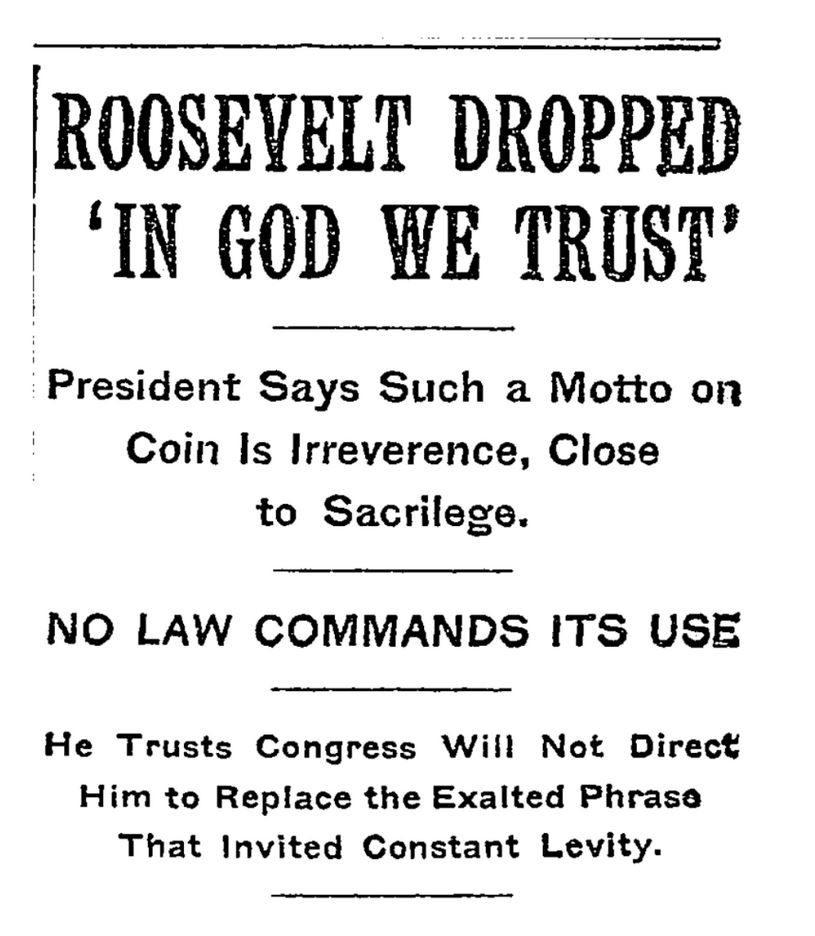
[THEODORE] ROOSEVELT AND THE "IN GOD WE TRUST" MOTTO
"During his presidency, Roosevelt hired a renowned sculptor, Augustus Saint-Gaudens, to fashion new coins. Roosevelt believed the nation's coin designs at the time "lacked sufficient imagination," said David Lebryk, the U.S. Mint's acting director.
Saint-Gaudens designed new $10 "eagle" and $20 "double eagle" gold coins with raised images of an eagle and Lady Liberty. The words "In God We Trust," which had been put on coins since the Civil War, were deliberately omitted.
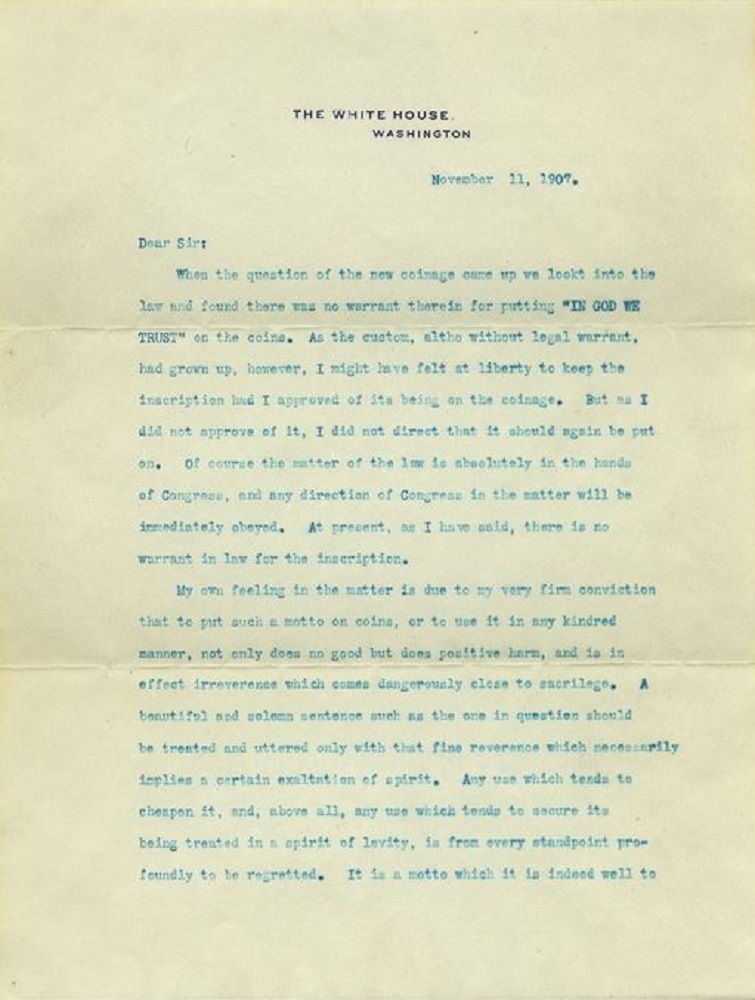
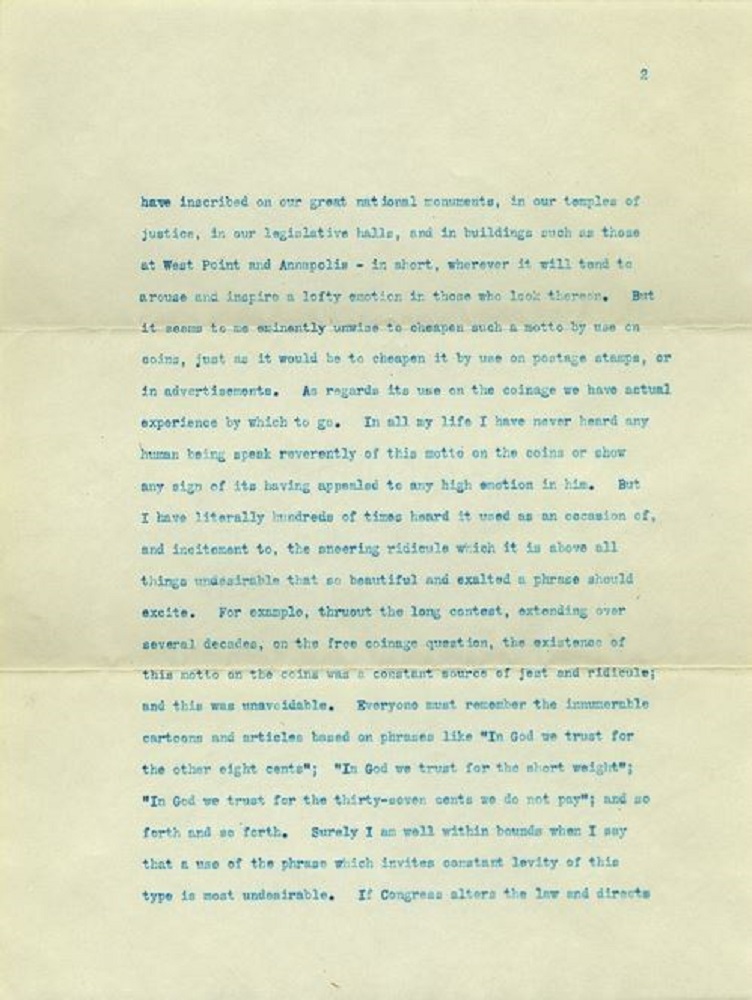
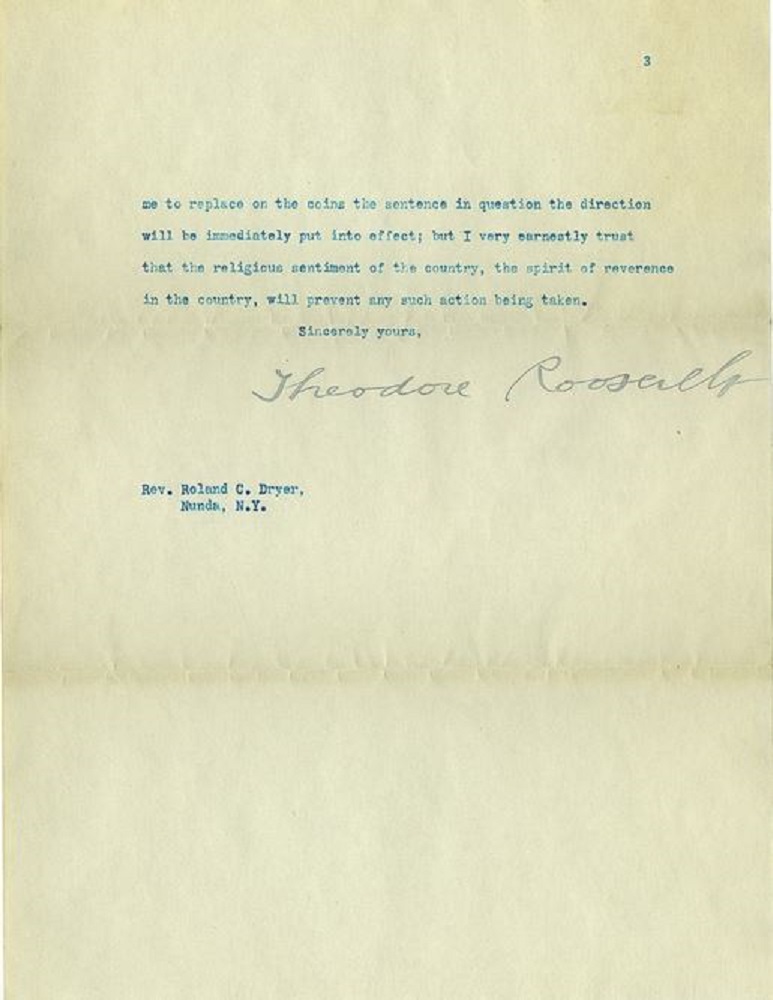
In one letter to a New York minister, Roosevelt said he believed to put those words on coins amounted to "irreverence, which comes dangerously close to sacrilege."
"It seems to me eminently unwise to cheapen such a motto by use on coins, just as it would cheapen it by use on postage stamps, or in advertisements," Roosevelt said in the letter, which he wrote in November 1907.
Saint-Gaudens thought the motto was ridiculous, said Clay Jenkinson, a visiting Roosevelt scholar at Dickinson State University scheduled to speak at Wednesday's ceremony in the character of Roosevelt.
"Roosevelt felt that money is money, and God is God, and that they don't belong on the same thing," Jenkinson said. "Saint-Gaudens objected because he thought it was just kind of a knuckleheaded motto. He wanted a more dignified coinage."
Wayne Homren, Editor
********************
One of the two known copies of the letter referenced by David Lebryk was sold by Heritage on November 3, 2005 for $43,125. From The Phillip H. Morse Collection of Saint-Gaudens Coinage.
IN NECESSARIIS UNITAS - IN DUBIIS LIBERTAS - IN OMNIBUS CARITAS THE MAN IN THE ARENA, Theodore Roosevelt at the Sorbonne Paris on April 23, 1910: "It is not the critic who counts; not the man who points out how the strong man stumbles or where the doer of deeds could have done better. The credit belongs to the man who is actually in the arena, whose face is marred by dust and sweat and blood, who strives valiantly, who errs and comes up short again and again, because there is no effort without error or shortcoming, but who knows the great enthusiasms, the great devotions, who spends himself in a worthy cause; who, at the best, knows, in the end, the triumph of high achievement, and who, at the worst, if he fails, at least he fails while daring greatly, so that his place shall never be with those cold and timid souls who knew neither victory nor defeat." My coin website:https://fairfaxcoins.com
IN NECESSARIIS UNITAS - IN DUBIIS LIBERTAS - IN OMNIBUS CARITAS THE MAN IN THE ARENA, Theodore Roosevelt at the Sorbonne Paris on April 23, 1910: "It is not the critic who counts; not the man who points out how the strong man stumbles or where the doer of deeds could have done better. The credit belongs to the man who is actually in the arena, whose face is marred by dust and sweat and blood, who strives valiantly, who errs and comes up short again and again, because there is no effort without error or shortcoming, but who knows the great enthusiasms, the great devotions, who spends himself in a worthy cause; who, at the best, knows, in the end, the triumph of high achievement, and who, at the worst, if he fails, at least he fails while daring greatly, so that his place shall never be with those cold and timid souls who knew neither victory nor defeat." My coin website:https://fairfaxcoins.com
Quote: "Roosevelt felt that money is money, and God is God, and that they don't belong on the same thing," Jenkinson said. "Saint-Gaudens objected because he thought it was just kind of a knuckleheaded motto. He wanted a more dignified coinage."
IN NECESSARIIS UNITAS - IN DUBIIS LIBERTAS - IN OMNIBUS CARITAS THE MAN IN THE ARENA, Theodore Roosevelt at the Sorbonne Paris on April 23, 1910: "It is not the critic who counts; not the man who points out how the strong man stumbles or where the doer of deeds could have done better. The credit belongs to the man who is actually in the arena, whose face is marred by dust and sweat and blood, who strives valiantly, who errs and comes up short again and again, because there is no effort without error or shortcoming, but who knows the great enthusiasms, the great devotions, who spends himself in a worthy cause; who, at the best, knows, in the end, the triumph of high achievement, and who, at the worst, if he fails, at least he fails while daring greatly, so that his place shall never be with those cold and timid souls who knew neither victory nor defeat." My coin website:https://fairfaxcoins.com
Disclaimer: While a tremendous amount of effort goes into ensuring the accuracy of the information contained in this site, Coin Community assumes no liability for errors. Copyright 2005 - 2026 Coin Community Family- all rights reserved worldwide. Use of any images or content on this website without prior written permission of Coin Community or the original lender is strictly prohibited. Contact Us | Advertise Here | Privacy Policy / Terms of Use








 First Page
 Previous Page



 Posted 04/29/2017 4:01 pm