| Author |
 Replies: 814 / Views: 111,809 Replies: 814 / Views: 111,809 |
|
|
|
Pillar of the Community
United States
789 Posts |
Quote:
Page 181 of the 1794 Philadelphia City Directory shows the United States Mint at 29 North Seventh Street. It looked like this: 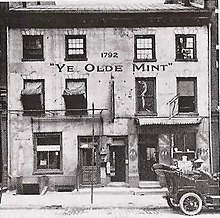 I think that's George Washington's car. |
|
Bedrock of the Community
 United States
11966 Posts |
Everyone knows George Washington drove a bus.  |
|
Bedrock of the Community
United States
11966 Posts |
A rare photo of Dr. William Sheldon. First Early American Coppers (EAC) Convention held in New York City on December 28, 1967. Left to right: Gordon Wrubel, Dorothy Paschal, Ed Janis (President of the NY Numismatic Society) and Dr. William Sheldon. 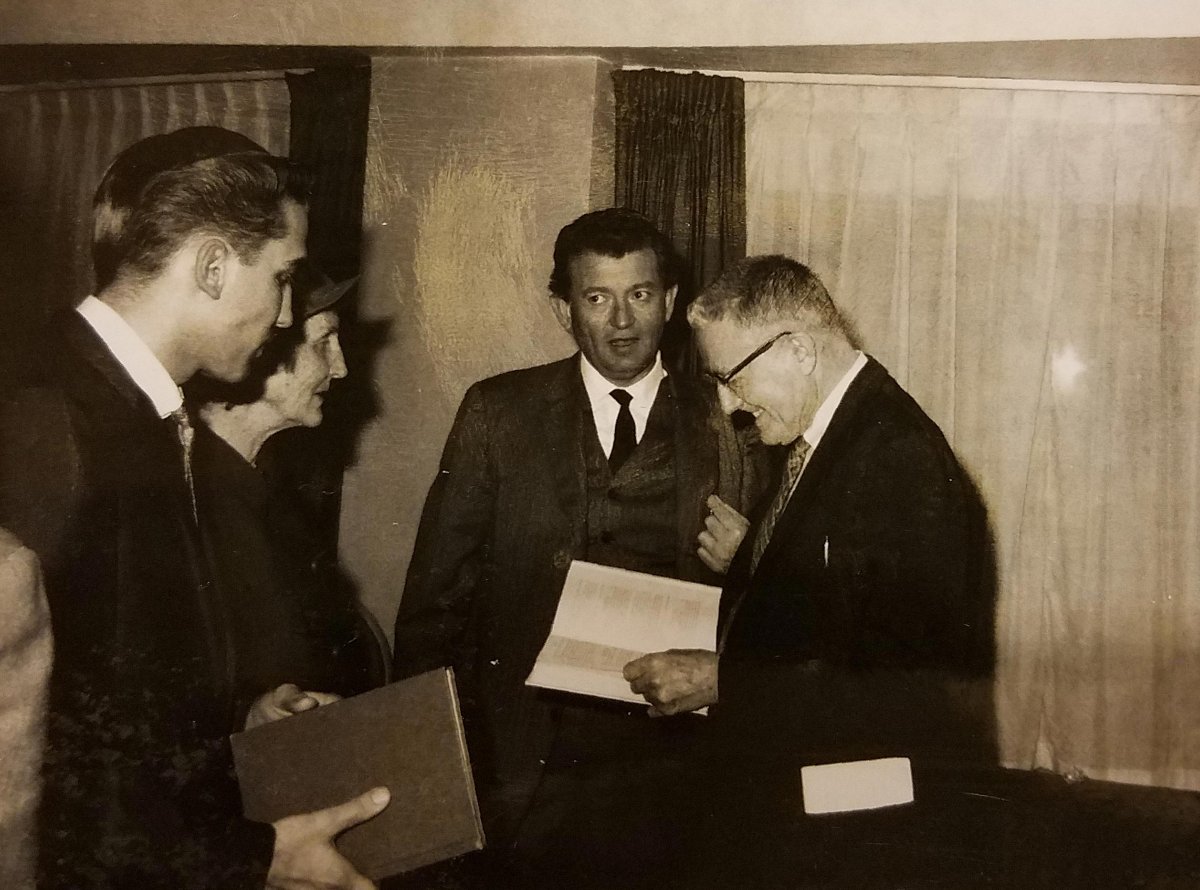 |
|
Moderator
 United States
195559 Posts |
Very nice!  |
|
Valued Member
United States
84 Posts |
Very interesting thread. Thanks for posting!
|
|
Bedrock of the Community
United States
11966 Posts |
Thanks for reading! |
|
Pillar of the Community
 United States
3098 Posts |
My daughter is a historical researcher who has been studying female inmates at San Quentin Prison in California in the 19th Century. She came across this article, from the San Francisco Examiner on September 30, 1881, about a woman who had been arrested for trying to pass counterfeit gold eagles. She was later pardoned by President Chester Alan Arthur. My daughter showed me the article and said she loved the slang used for trying to pass counterfeits - "shoving the queer". 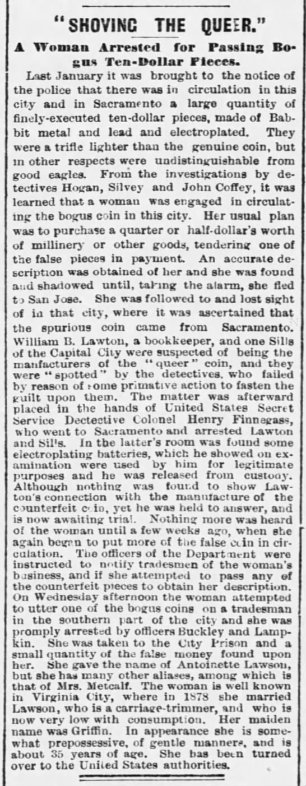 Paul Bulgerin
|
|
Moderator
United States
195559 Posts |
Very interesting! |
|
Bedrock of the Community
United States
11966 Posts |
Reviving this old thread and hoping to add more interesting things found in our numismatic journey. I ran across this snippet of an article written by Brian Koller, which was part of a larger piece he wrote titled: "Early Mint Proposals," which he wrote some time ago. Exciting story about the bribery scandal surrounding the issuance of the Fugio Cents.
Fugio Cents and the 1780s State Copper Coinages
By Brian Koller
In the absence of a Federal Mint, several states (Connecticut, Massachusetts, and New Jersey) and one future state (Vermont) authorized copper coinage. Private New York coiners struck coppers without government sanction. These coppers were approximately equal in value to the future U.S. large cent. There was no silver or gold coinage during the 1780s, with the exception of rare private issues such as the Chalmers shillings and Brasher doubloons.
The Continental Congress did authorize a copper issue: the Fugio "cent." The Continental Congress had "a very large quantity of rough copper" in storage and deemed unusable. In 1781, Benjamin Dudley, the jack-of-all-trades employed by Robert Morris, inspected the copper and determined it to be "the purest copper" and highly malleable. He told Continental agent John Bradford that if Congress wanted "to strike a parcel of coppers for a currency he can make the apparatus and go through the whole process."
The Continental Congress did not take Dudley up on his offer. Six years later, at a time when state-authorized copper coinage was at its peak, the Continental Congress solicited offers from private firms to coin the Federal copper holding. They received bids from Peter Allaire, Bridgen and Waller, James Jarvis, Mathias Ogden, and Joseph Hopkins. Edward Bridgen was a London merchant and correspondent with Benjamin Franklin. Ogden, a former Colonel in the Revolutionary Army, operated a private mint in Elizabethtown making New Jersey coppers.
On April 9, 1787, Samuel Osgood and Walter Livingston reported to the Continental Congress that they evaluated the bids and concluded that "the propositions of the whole which in the judgment of this Board, deserve the most attentive consideration are those of Mr. James Jarvis, and Mr. Mathias Ogden." They were "in favor of Mr. Jarvis' Plan."
American numismatic folklore has it that Jarvis won the Fugio "cent" contract because of a bribe. In 1988, Walter Breen wrote that "James Jarvis had given Col. William Duer, head of the Board of Treasury, a $10,000 bribe. Duer manipulated matters so that Jarvis got the contract instead [of Ogden]."
There are problems with this tale. $10,000 was a vast amount of money in 1787, equivalent to hundreds of thousands of dollars today. Further, Jarvis' proposition was approved by a committee. He would have had to bribe, or otherwise influence, a majority of members.
In any event, Jarvis won the contract. He was a majority owner of the Company for Coining Coppers, in business since 1785 striking Connecticut state coppers. Jarvis made the mistake of trusting his father-in-law, Samuel Broome, to supervise coinage operations while Jarvis travelled to Europe in the hopes of securing further supplies of copper. Jarvis was unsuccessful, since he could only offer promissory notes.
Broome effectively embezzled the Federal copper and used it to strike Connecticut state coppers, which were lighter in weight than Fugio "cents," and thus more profitable to coin. A small portion of the promised Fugio coppers were delivered to the Continental Congress on May 21, 1788, but there were no subsequent deliveries. The Continental Congress voided Jarvis' contract on September 16, 1788. Broome tried to employ Alexander Hamilton as his attorney, but Hamilton declined. Jarvis, Broome, and coiner Abel Buell fled to Europe to avoid prosecution.
IN NECESSARIIS UNITAS - IN DUBIIS LIBERTAS - IN OMNIBUS CARITAS THE MAN IN THE ARENA, Theodore Roosevelt at the Sorbonne Paris on April 23, 1910: " It is not the critic who counts; not the man who points out how the strong man stumbles or where the doer of deeds could have done better. The credit belongs to the man who is actually in the arena, whose face is marred by dust and sweat and blood, who strives valiantly, who errs and comes up short again and again, because there is no effort without error or shortcoming, but who knows the great enthusiasms, the great devotions, who spends himself in a worthy cause; who, at the best, knows, in the end, the triumph of high achievement, and who, at the worst, if he fails, at least he fails while daring greatly, so that his place shall never be with those cold and timid souls who knew neither victory nor defeat." My coin website: https://fairfaxcoins.com |
|
Moderator
United States
195559 Posts |
Very interesting! |
|
Bedrock of the Community
United States
11966 Posts |
The Joseph Wright 1792 Judd-13 White Metal Quarter Dollar PatternThis is just one of four examples. This is the one found in the archives of the New York Historical Society and is the finer of two in private hands, the other two are in museums. It is graded AU58 by NGC. Sold in April 2021 for $1.26 million. 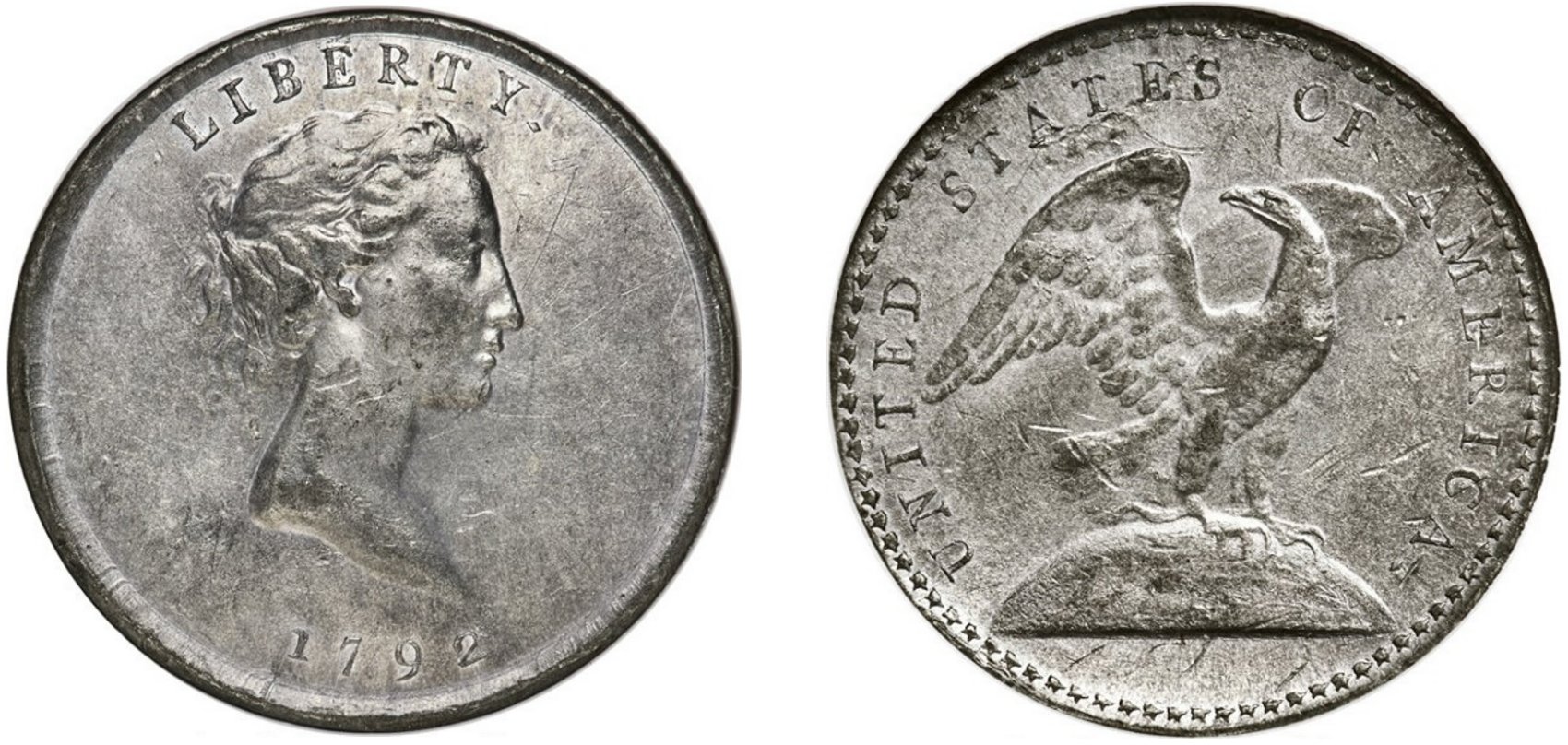 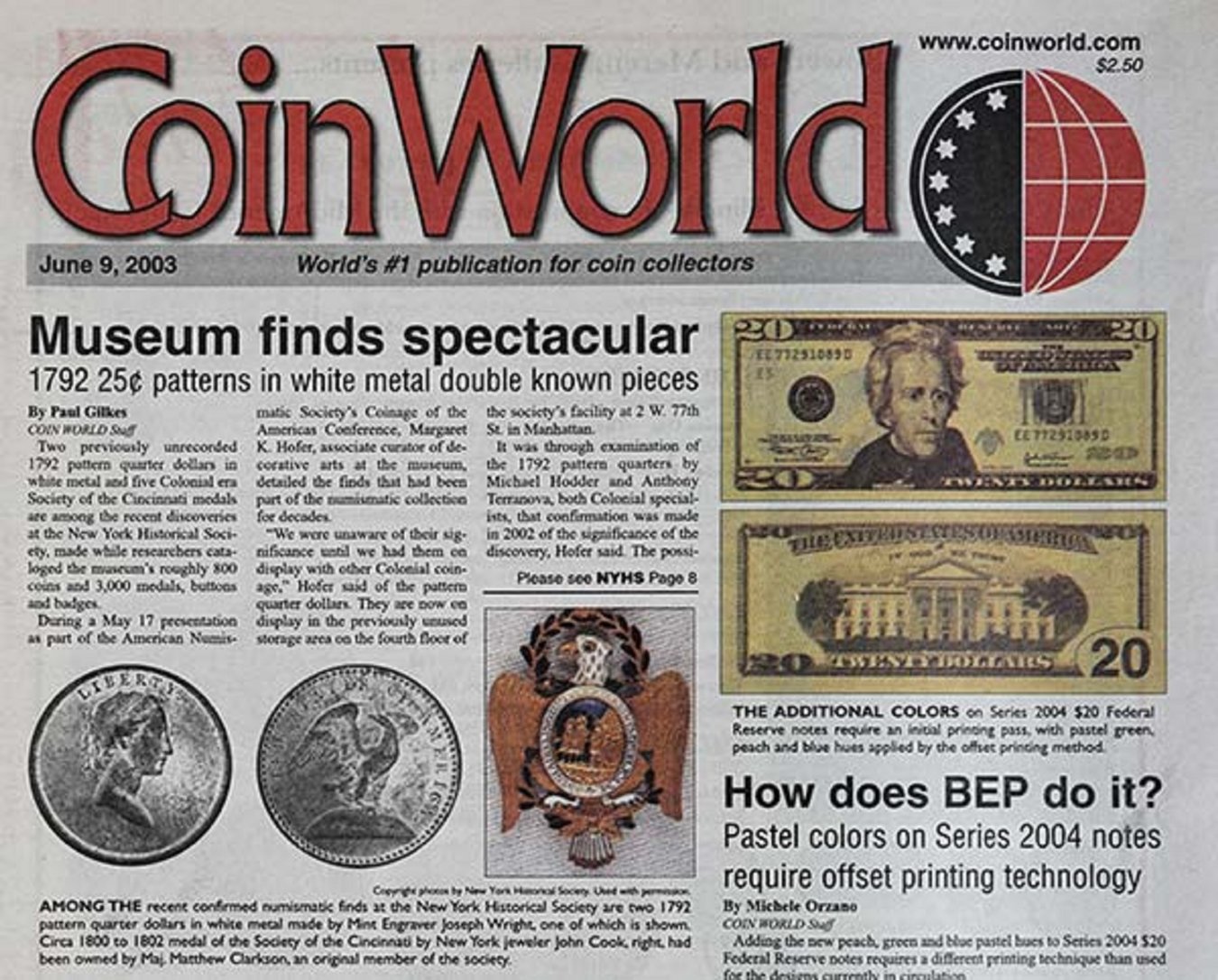
IN NECESSARIIS UNITAS - IN DUBIIS LIBERTAS - IN OMNIBUS CARITAS THE MAN IN THE ARENA, Theodore Roosevelt at the Sorbonne Paris on April 23, 1910: " It is not the critic who counts; not the man who points out how the strong man stumbles or where the doer of deeds could have done better. The credit belongs to the man who is actually in the arena, whose face is marred by dust and sweat and blood, who strives valiantly, who errs and comes up short again and again, because there is no effort without error or shortcoming, but who knows the great enthusiasms, the great devotions, who spends himself in a worthy cause; who, at the best, knows, in the end, the triumph of high achievement, and who, at the worst, if he fails, at least he fails while daring greatly, so that his place shall never be with those cold and timid souls who knew neither victory nor defeat." My coin website: https://fairfaxcoins.com |
|
Moderator
United States
195559 Posts |
Fascinating! |
|
Bedrock of the Community
United States
11966 Posts |
Hall of Fame
- Chicago Coin Club -
Member 3
William Forrester Dunham
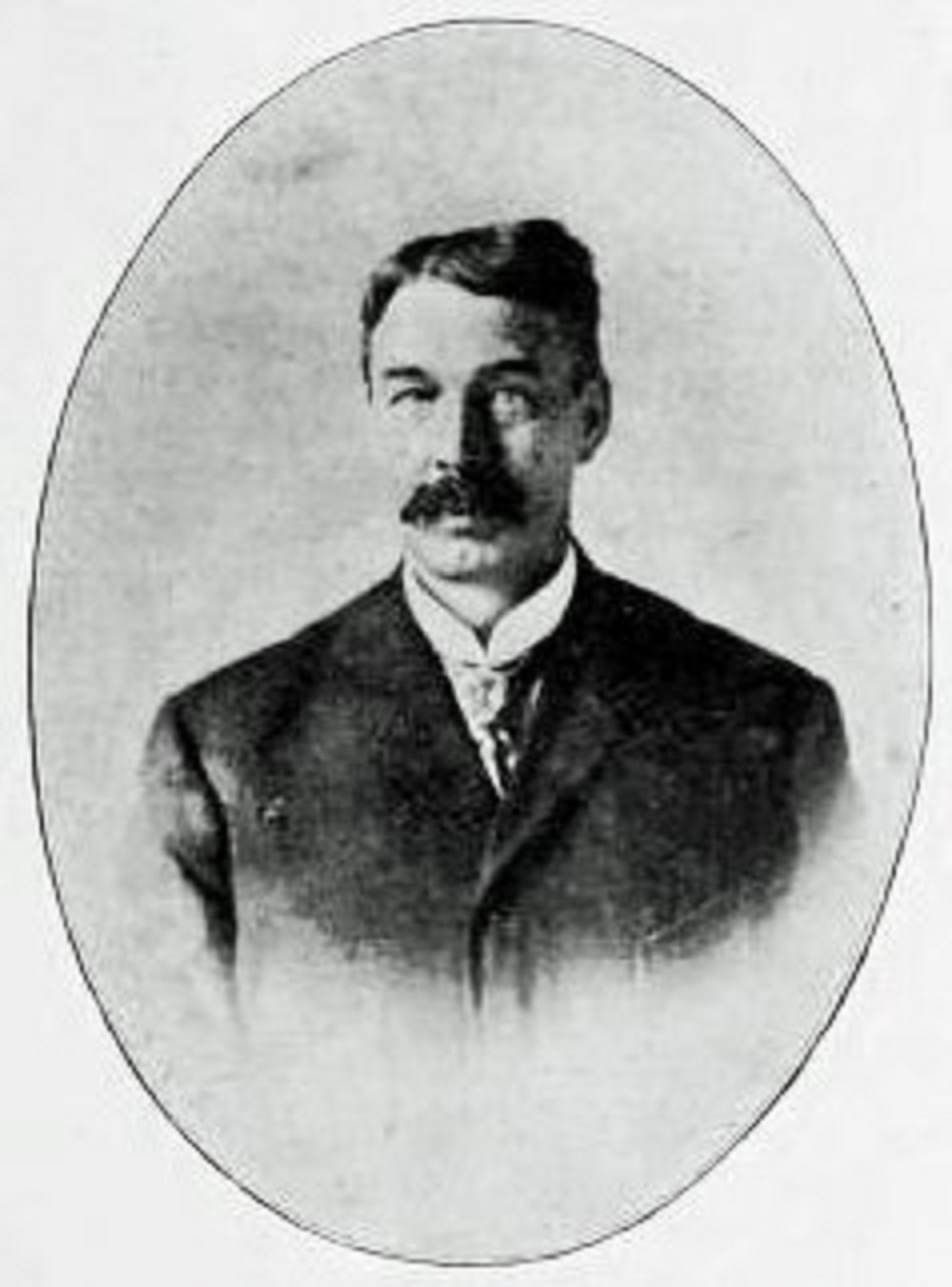
(Image courtesy of Newman Numismatic Portal.)Though he seems never to have held elective office in the Chicago Coin Club, Charter Member 17 (February or March 1919) William Forrester Dunham was an avid booster. That very year he minted aluminum tokens inscribed WILLIAM F. DUNHAM/ ONE/ MILL/ 1919// GEORGE WASHINGTON/ ONE/ DISME/ 1792, using them as a premium to encourage others to join: for annual dues of one dollar, members received a free souvenir One Mill token in addition to the club Bulletin. Prior to the formation of the Club, he was President of the Chicago Numismatic Society in 1905 and 1907, Chairman of the American Numismatic Association Board of Governors in 1909, and a Governor in 1915. Mr. Dunham (Oct. 3, 1857 - Oct. 12, 1936), a graduate of the University of Illinois, tried his hand at teaching school, then entered the grocery business. He later became wealthy as a druggist in Chicago and member of the Chicago Stock Exchange. His collecting interests stretched from Greek, Roman, and Japanese coins to United States coins, Hard Times Tokens, encased postage stamps, and Papal medals. In 1904 he bought the Dexter specimen of the 1804 dollar for $1,100, and in 1906 snared the H.P. Smith example of the 1822 half eagle for $2,165. Both coins were shown at the 1920 ANA convention in Chicago. (His remaining collection of U.S. coins was almost complete.)He was the author of Easy Finding List of Hard Times Tokens (1910) and Check List of Encased Postage Stamps (1915), both still useful. A life member of the Art Institute of Chicago, he gave his collections of Greek, Roman, and Japanese coins and Papal medals to them. But he was more possessive of his United States coins: per Lee Hewitt (Hall of Fame No. 6) in 1961, citing J. Henri Ripstra (Hall of Fame No. 1), who was present, "the agent of the late J. P. Morgan . offered Mr. Dunham $40,000.00 for the 1822 half eagle — at that time $10,000.00 was the highest price that had ever been paid for a U.S. coin — and Dunham turned it down with the comment that Mr. Morgan with all his millions did not have enough money to buy that coin." (In his catalog entry for the 1822 half eagle, B. Max Mehl gives $35,000 as the final offer.) With the rest of his U.S. coins, it remained in the Dunham Collection until his death. Of B. Max Mehl's 1941 catalog of the Dunham Collection, John W. Adams wrote, "A+; Landmark Sale: .Definitive for encased postage, pattern dimes."
Courtesy of the Chicago Coin Club Gotta love a guy who told J.P. Morgan that you don't have enough money to buy my coin. 
IN NECESSARIIS UNITAS - IN DUBIIS LIBERTAS - IN OMNIBUS CARITAS THE MAN IN THE ARENA, Theodore Roosevelt at the Sorbonne Paris on April 23, 1910: " It is not the critic who counts; not the man who points out how the strong man stumbles or where the doer of deeds could have done better. The credit belongs to the man who is actually in the arena, whose face is marred by dust and sweat and blood, who strives valiantly, who errs and comes up short again and again, because there is no effort without error or shortcoming, but who knows the great enthusiasms, the great devotions, who spends himself in a worthy cause; who, at the best, knows, in the end, the triumph of high achievement, and who, at the worst, if he fails, at least he fails while daring greatly, so that his place shall never be with those cold and timid souls who knew neither victory nor defeat." My coin website: https://fairfaxcoins.comEdited by numismatic student
04/23/2022 12:25 pm
|
|
Pillar of the Community
United States
4507 Posts |
It appears that the Dunham 1822 example in 1941 sold privately to Charles O. Williams, a Cincinnati insurance executive. That coin later passed to Josiah K. Lilly of pharmaceutical fame, and was donated with the Lilly Collection of gold coins to the National Numismatic Collection in the Smithsonian Institution.
The finest example of the three known 1822 half eagles and privately held is graded AU50 by PCGS that Virgil Brand acquired it in 1899, and it entered the collection of Louis Eliasberg Sr. in 1945, later selling to D. Brent Pogue at a 1982 auction of Eliasberg's gold coins, for $687,500. It recently sold at auction on 3/25/21 for 8.4 million. Hanson bid on the coin, but did not win the example.
The other known example is also house at the National Numismatic Collection in the Smithsonian Institution.
Edited by Slider23
04/23/2022 1:50 pm
|
|
Moderator
United States
195559 Posts |
Very interesting! |
| |
Replies: 814 / Views: 111,809 |
To participate in the forum you must log in or register.
Disclaimer: While a tremendous amount of effort goes into ensuring the accuracy of the information contained in this site, Coin Community assumes no liability for errors. Copyright 2005 - 2026 Coin Community Family- all rights reserved worldwide. Use of any images or content on this website without prior written permission of Coin Community or the original lender is strictly prohibited.
Contact Us | Advertise Here | Privacy Policy / Terms of Use
|
| Coin Community Forum |
© 2005 - 2026 Coin Community Forums |
| It took 0.52 seconds to rattle this change. |
 |
|






 First Page
 Previous Page


 Posted 06/24/2019 9:43 pm





