Coin Community Family of Web Sites Join Thousands of Coin, Bullion, & Money Collectors
Royal Canadian Mint products, Canadian, Polish, American, and world coins and banknotes. Vancouvers #1 Coin and Paper Money Dealer Specializing in Modern Numismatics Royal Estate Auctions - $1 Coin AuctionsJoin Thousands of Coin, Bullion, & Money Collectors 300,000 items to help build your collection! Coin, Banknote and Medal Collectors's Online Mall


Username:
Password:
Save Password
Forgot your Password?


This page may contain links that result in small commissions to keep this free site up and running.

Welcome Guest! Registering and/or logging in will remove the anchor (bottom) ads. It's Free!

Counterfeit Ancient Chinese Coins

To participate in the forum you must log in or register.
Author Previous TopicReplies: 8 / Views: 5,735Next Topic  
Pillar of the Community
TypeCoin971793's Avatar
United States
6370 Posts
 Posted 01/22/2017  7:19 pm Show Profile   Bookmark this topic Add TypeCoin971793 to your friends list Get a Link to this Message Number of Subscribers
Yesterday, I made an appointment to visit Bob Reis and get some tactile experience with the counterfeits he owns, as well as give him the chance to look at my coins. He received me into his house (He does not have a brick-and-mortar store) in a most professional and friendly way. I would highly recommend doing business with him if you ever get the chance.

In looking at his counterfeits, Bob taught me many tips and guidelines for differentiating fake from genuine. As I have said before, the first step is to get a gut feeling about the style. This includes the caligraphic style, overall quality of manufacture, patina, general fabric, and how the coin feels in-hand. This comes from looking at hundreds to thousands of coins, so it is not an easy thing to acquire. If you get a bad gut feeling from the start, it is likely not good, and you are probably best to stay away. If you have a good gut feeling (Or the coin has good "shen"), then it is worth a closer look. The next step is to see how nice it looks. Anything that looks nice and perfect should be treated with the utmost suspicion. Perfection is not natural, so stay away until you find one with defects. But this is not foolproof. There are some defective fakes out there, and they can be very convincing. The next area to look at is the patina. If it is smooth and relatively monotone, then avoid it. Processes in nature, such as patination, are random, and it is unnatural to have such a high degree of order on a coin. Also, this order is very attractive, so counterfeiters know to give a perfect, smooth patina and make the characters stand out in order to increase the desirability of their product. Genuine coins often have a random coloration to their patina as well as some filling/covering of the characters. The last thing is the metal quality. Ancient coins have had their metal crystallize, so they should not have a resonant ring to them when dropped or hit. However, genuine coins are likely to break, so these tests are generally not recommended. All of the fakes I handled, save one, had some kind of metallic resonance when dropped or hit. However, this is not universal. There are some logical deduction methods as well, which I will elaborate on later.

While I was showing Bob my coins, the was suspect of a few, which I was suspect as well, and he condemned a couple coins that surprised me. I disagree with him on some of those, but some others I need more experience with the type to affirm or deny Bob's conclusions. But overall, I have done well in picking authentic specimens.

At the end of my visit, I asked to buy a few of Bob's fakes for my own reference purposes and to possibly use as educational tools. There is one more that I want to buy that was incredibly deceptive (fooled us both). I will show them here and explain how we both came to the conclusion that they were fake.

1. Square-Shouldered Hollow-Handle Spade

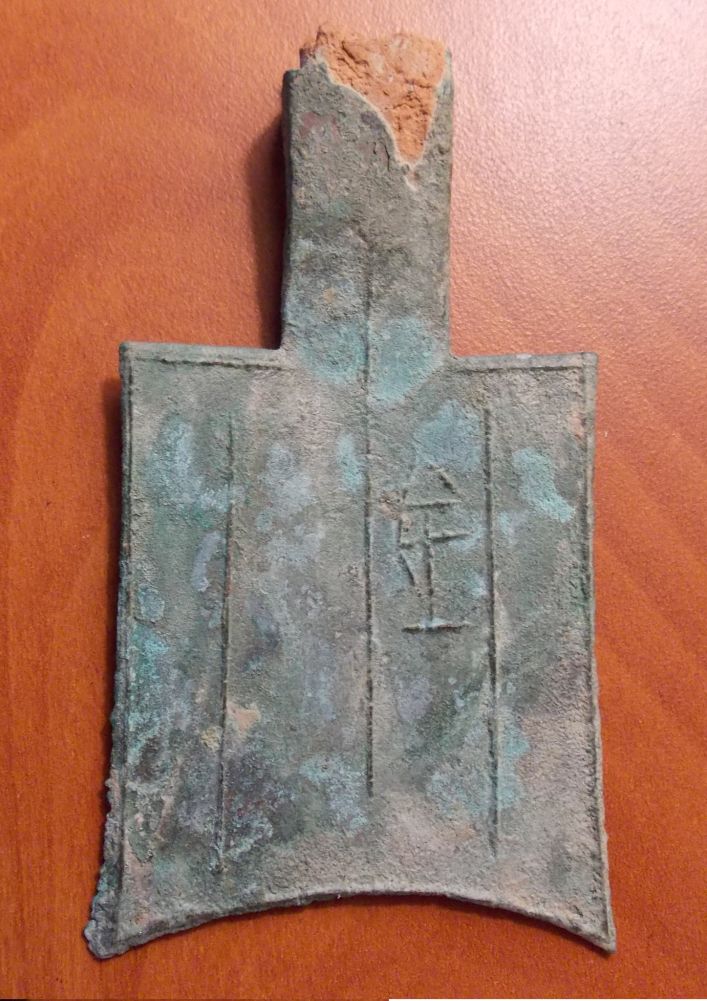
I got this one because it was the most deceptive of the group style-wise. All of the lines are very sharp, and the spade has a look of being hand-made. On all of the others, the characters were fuzzy, soft, and/or fat to some degree (avoid these!). As you can see, the patina is very smooth and mostly monochromatic, which is bad because of the reasons above. There is some color variation, but not much. It also feels very thin and powdery to the touch. This is a red flag because you want patina to be solidly-bound to the coin. The edges are a little too crisp, but it is within reason. The head is an interesting story, here is some logic. If real, this coin would have been found in the ground. Therefore there would be dirt in the handle. And if it is dirt, then it would crumble away relatively easily. However, the dirt is VERY hard (like fired clay; all of the fake spades were like this), and it sticks above the handle. If the handle was not there, then how was the dirt/clay molded in the shape of the head past where the head is? Makes no sense, so therefore it is unnatural, and thus it is fake. It has a very metallic ring to it when hit and dropped, and it does not break, meaning it is sturdy new metal. Conclusion: Fake.
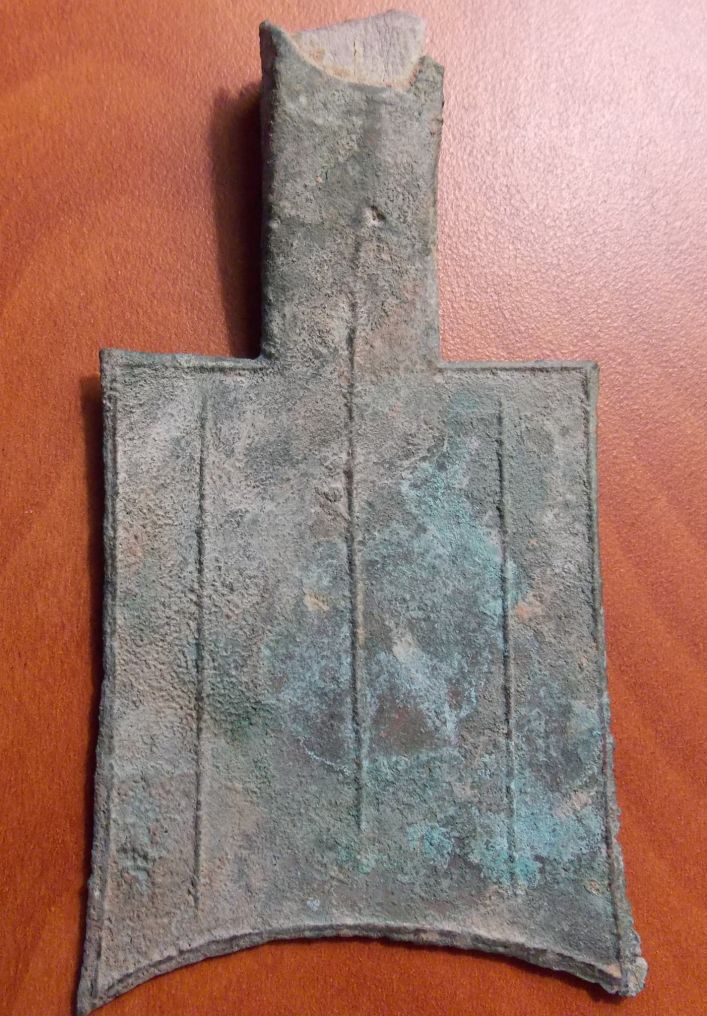
Counterfeit-Ancient-Chinese-Coins

Counterfeit-Ancient-Chinese-Coins

Interestingly, this coin has the same character as my hollow-handle. Fortunately, it is from a different mould as the character is a little different.

2. Large-Size Square-Foot Flat-Handle Spade with "Ears"

I got this one because it is very deceptive, would fill a hole in my collection I could never afford to fill, and it has a pedigree to the David Fisher collection. Bob bought the entirety of Fisher's collection, and found that the collection had several fakes in it, this being one of several I examined. There were a couple others that were extremely deceptive (One I still think might be genuine), and I would not have immediately labelled them as such without knowing Bob's condemnation of them.

In looking at it, the style is wrong. The rims are very thick, and the characters have a thick lifelessness to them. The patina looks incredible, though it comes off with only my fingernail. The most condemning evidence was that it was a mould match to a known fake sold by Vincent Vong, a scam artist who specialized in selling fake artifacts.

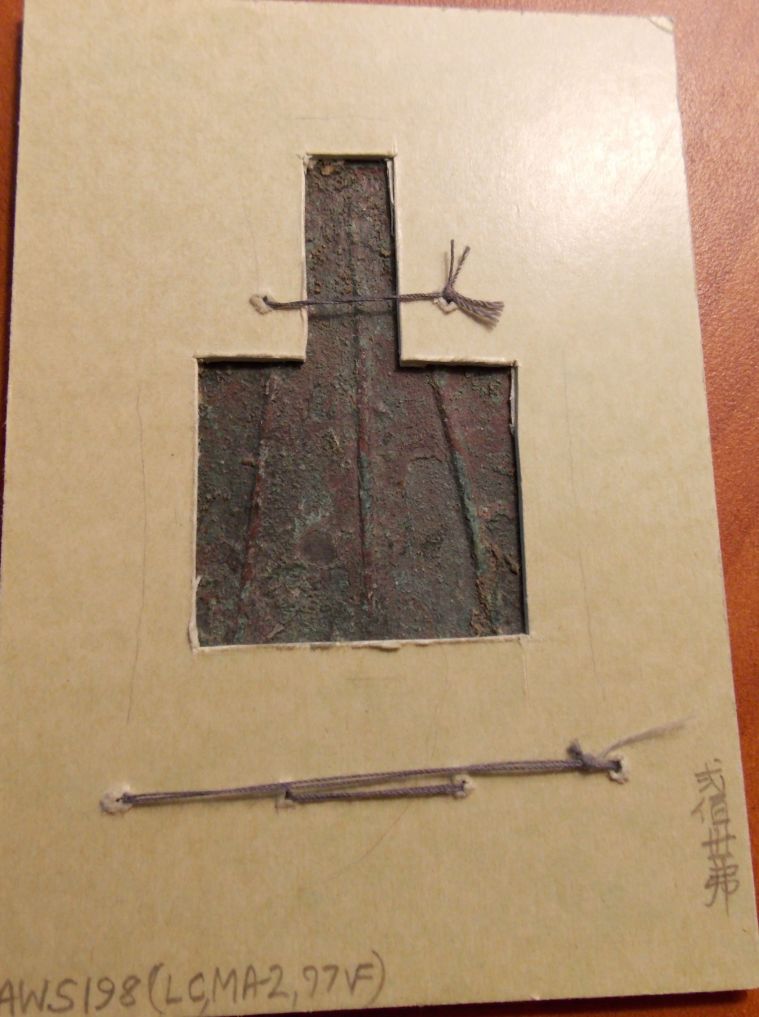
Counterfeit-Ancient-Chinese-Coins

Counterfeit-Ancient-Chinese-Coins

3. Large-Size Pointed-Foot Flat-Handled Spade

This one is the least deceptive of the group. It looks like it was cast to look worn, to the edges, lines, and characters have an uncharacteristic roundness to them. Also the coin appears to have had most of its patina stripped. Was it cleaned and the rest of the patina still there because it was too tough to get off? No, because my fingernail can remove it. That means the patina was removed and a new one was applied. That makes no sense, other than that the coin is a fake and the current patina is the only one it got.
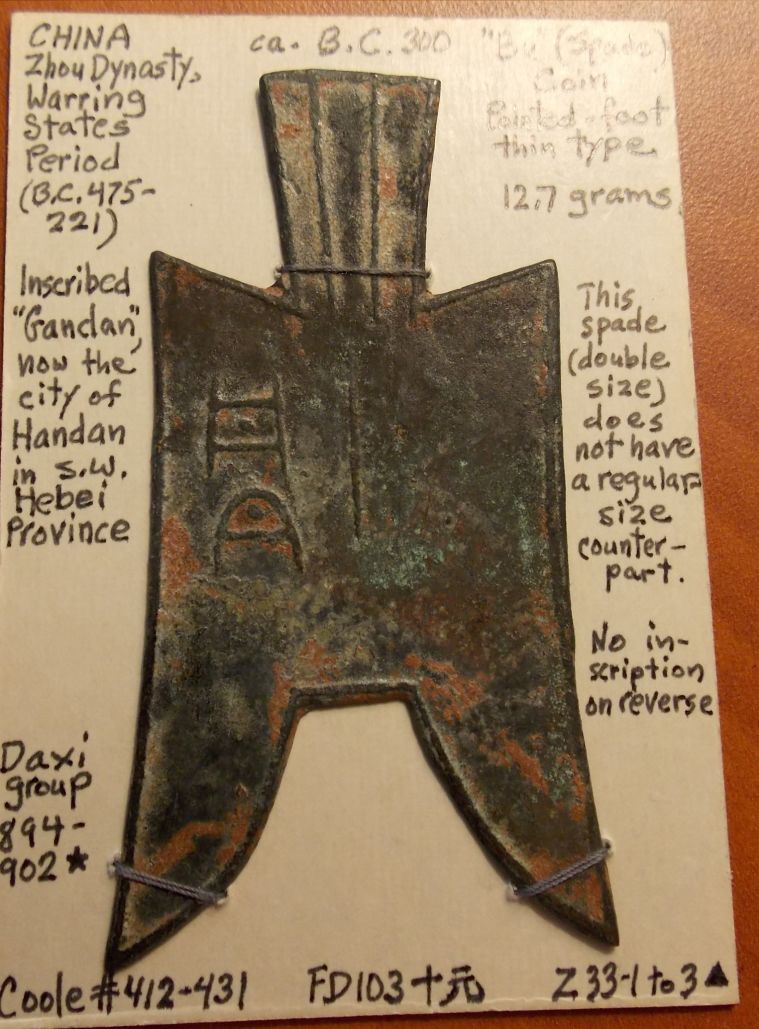
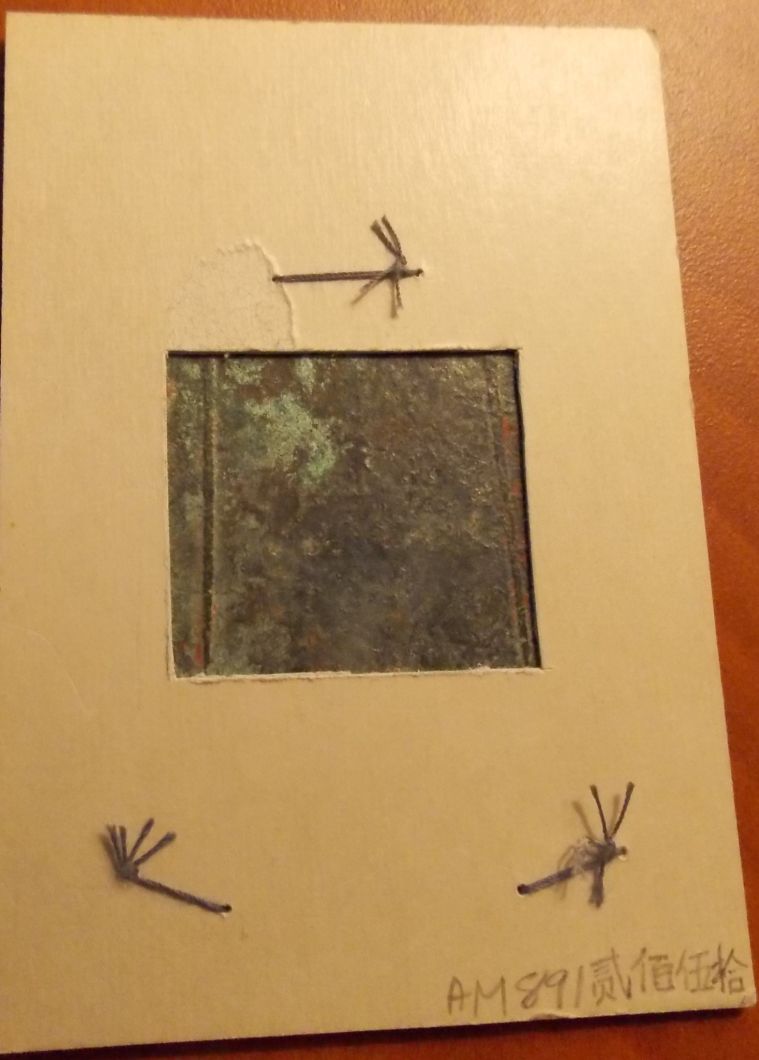
Counterfeit-Ancient-Chinese-Coins

Counterfeit-Ancient-Chinese-Coins

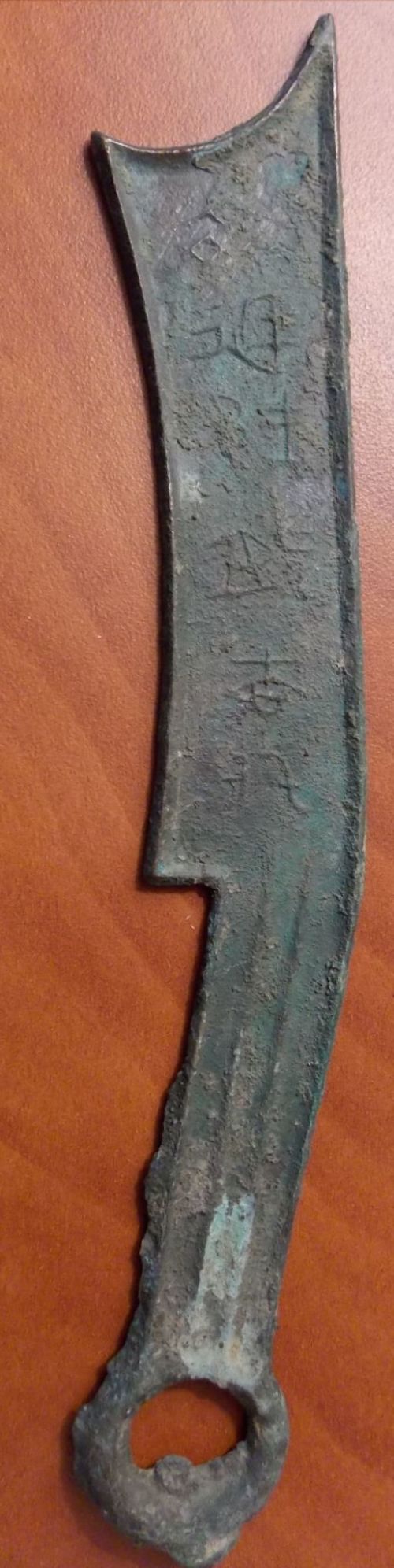
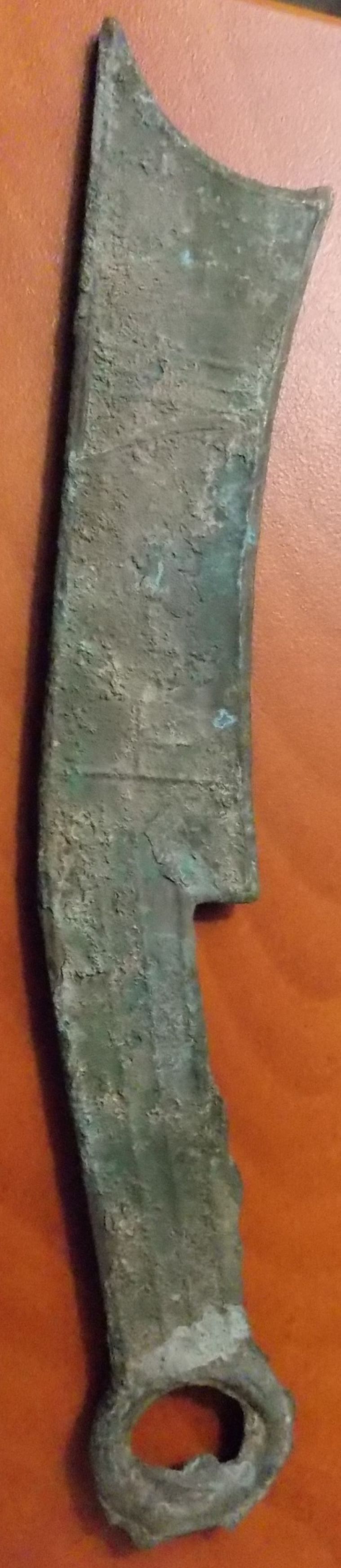
4. Six-Character Qi Knife

These are very rare, and if genuine, would be worth at least $15,000. When I held it, it felt light. These knives are very heavy and robust, meaning it was not a good sign. Also, it was too perfect, though the patina was better. The characters were also softer than usual and didn't have the handmade crudeness to them like I would expect to see. The lines on the handle seemed very thick and mushy, also atypical of this type. The patina flakes off easily with my fingernail and it is flaking around the rims of the reverse, making it look very odd. The condemning evidence was that it was a mould match to Fisher's specimen, which was broken. I looked at the break with a loupe, and I saw no metallic crystalization whatsoever, which meant the metal was modern. Since the knoves were so similar, one can only assume that they came from the same set of modern moulds.
Counterfeit-Ancient-Chinese-Coins

Counterfeit-Ancient-Chinese-Coins

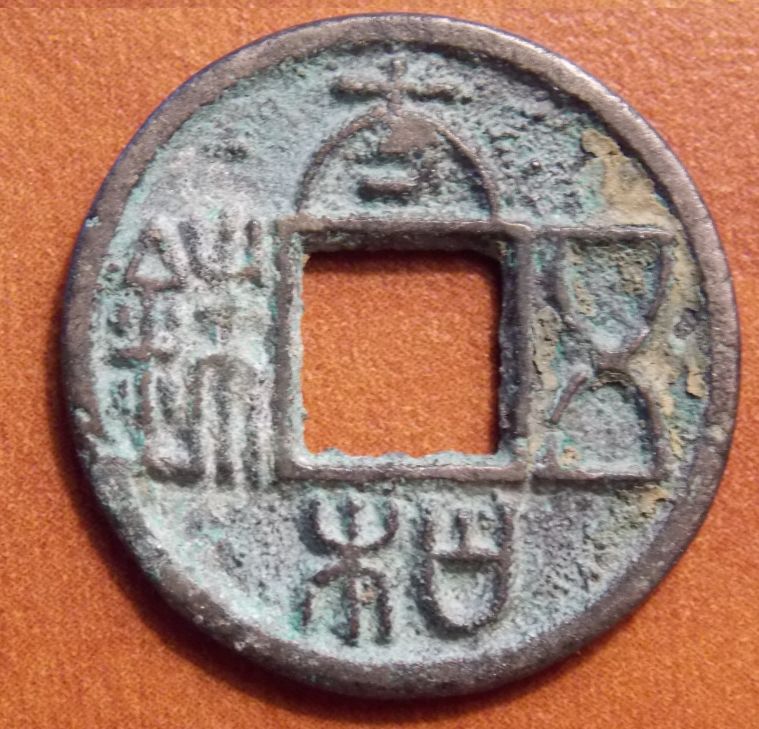
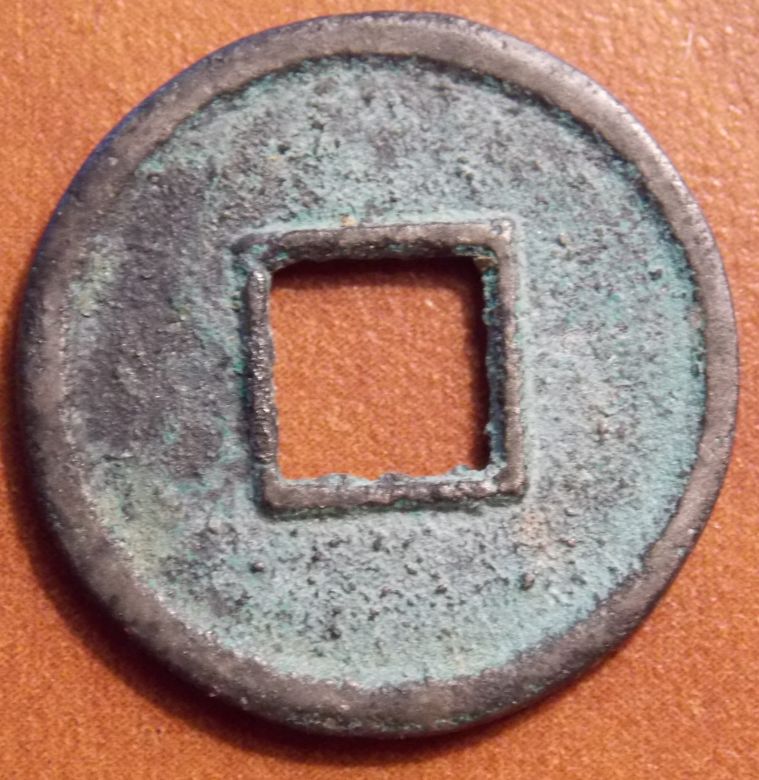
5. Northern Wei Dynasty "Tai He Wu Zhu" (495 AD)

Bob gave me this one to research since we could not come to a consensus about it. He felt it was fake, while I gave it the benefit of the doubt. I am leaning towards counterfeit, but I will post an analysis later.
Counterfeit-Ancient-Chinese-Coins

Counterfeit-Ancient-Chinese-Coins

*** Moved by Staff to a more appropriate forum. ***


Moderator
Learn More...
echizento's Avatar
United States
23731 Posts
 Posted 01/22/2017  7:31 pm  Show Profile   Bookmark this reply Add echizento to your friends list Get a Link to this Reply
Very informative as usual.
Valued Member
Doctorwho2485's Avatar
New Zealand
292 Posts
 Posted 01/22/2017  8:44 pm  Show Profile   Bookmark this reply Add Doctorwho2485 to your friends list Get a Link to this Reply
Hi Guys what do you think about these Chinese ones: http://www.trademe.co.nz/antiques-c...47289690.htm.

http://www.trademe.co.nz/antiques-c...47289693.htm.

Also very awesome Topic TypeCoin971793
Pillar of the Community
TypeCoin971793's Avatar
United States
6370 Posts
 Posted 01/22/2017  8:46 pm  Show Profile   Bookmark this reply Add TypeCoin971793 to your friends list Get a Link to this Reply
Both are genuine but way overpriced.

I'm glad you enjoyed the topic!
Rest in Peace
Crazyb0's Avatar
10197 Posts
 Posted 01/22/2017  8:53 pm  Show Profile   Bookmark this reply Add Crazyb0 to your friends list Get a Link to this Reply
Fascinating! But don't think i'll be getting into Chinese ancients anytime soon, sounds one like me would very easily be taken to the cleaners...have a WHOLE lot to learn here!
Moderator
Learn More...
Spence's Avatar
United States
34426 Posts
 Posted 01/22/2017  10:02 pm  Show Profile   Bookmark this reply Add Spence to your friends list Get a Link to this Reply

Quote:
have a WHOLE lot to learn here!


(about me)
"If you climb a good tree, you get a push."
-----Ghanaian proverb

"The danger we all now face is distinguishing between what is authentic and what is performed."
-----King Adz
Pillar of the Community
DavidUK's Avatar
United Kingdom
2624 Posts
 Posted 01/23/2017  06:26 am  Show Profile   Bookmark this reply Add DavidUK to your friends list Get a Link to this Reply
Interesting article, good to hear the thought process even if knowledge about spade coins is unlikely to directly benifit me.

They say one must "know your limits" and I believe this to be true...with no oppertunity to build up the experience of handling the volume of coins necessary to serve an apprenticeship I think a little knowledge can be dangerous. This is something I have demonstrated in a couple of posts recently where I have answered logically based on what I know only to find out I was some way off.

Valued Member
AnYangMan's Avatar
Netherlands
91 Posts
 Posted 01/23/2017  12:28 pm  Show Profile   Bookmark this reply Add AnYangMan to your friends list Get a Link to this Reply
What a great and informative topic Thomas! And an equal write-up. I guess it is coins like these that put people off of collecting ancient Chinese coinage. Such a shame, it really is one of the most interesting areas of numismatics (in my humble opinion at least).

That being said, I'm afraid I have to correct you on one tiny thing. You mention that the socket, the handle, of the hollow-head spade, was filled with clay, and that this would be a bad sign. However, the fill-up of this socket is not due to it being buried, in which case the dirt would indeed be crumbling, but rather because this clay was part of the mould. When we find these spades, the handles are often in great condition, rarely shattered. This is because of the way these spades were made.

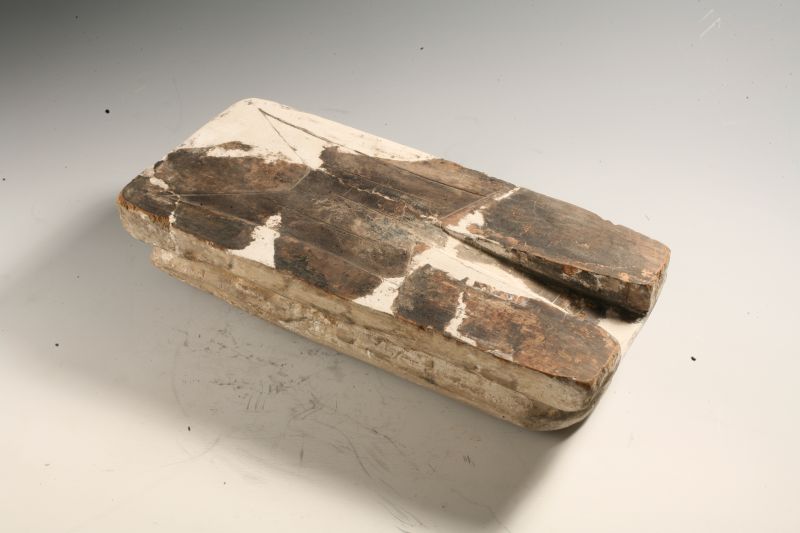
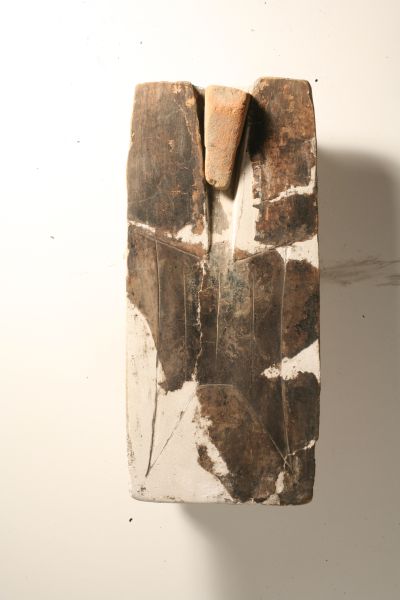
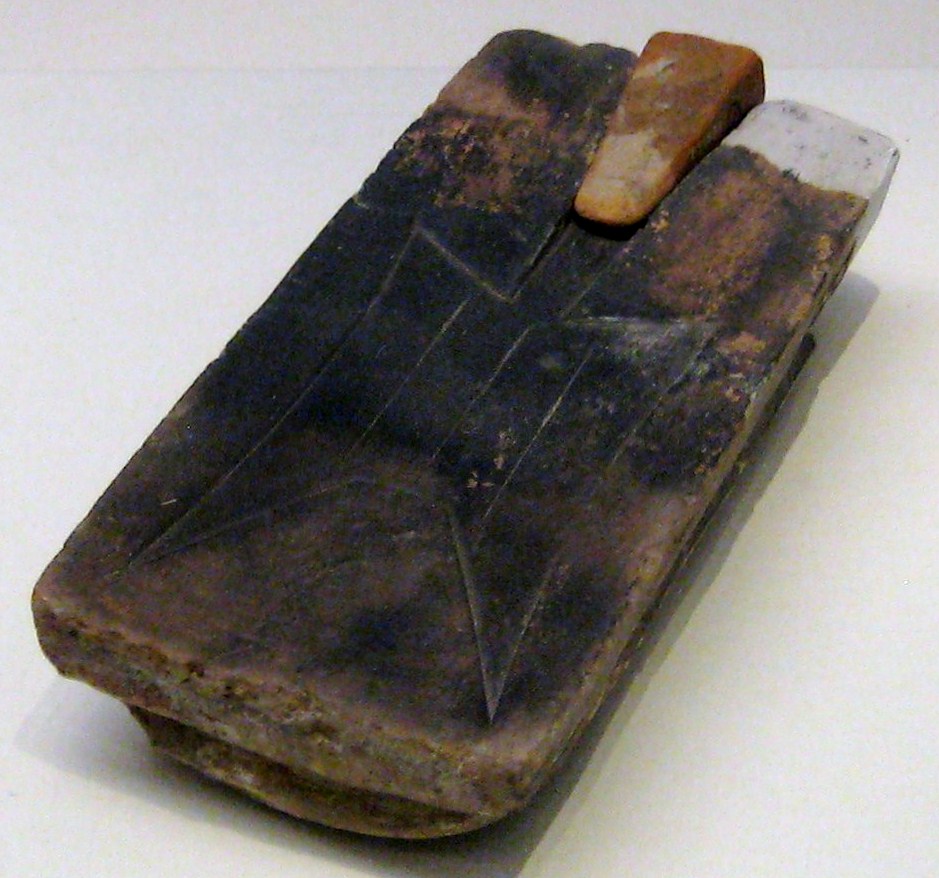
A few years ago, the ancient city of Xintian, modern day Houma, was excavated. Xintian used to be the capital of the Jin state, famous for most-likely being the issuers of the (pointed-foot) hollow head spades. Amongst the sites excavated where the fabled bronze workshops of Houma. Not only where a great number of furnaces responsible for casting the bronze ritual vessels so typical for this period found, but also part of the workshop(s) responsible for casting these hollow-head spades. Apparently, a couple of bronze-cowrie moulds have been found here as well, as well as moulds for these pointed-foot hollow-head spades. A couple of such moulds are on display at various Chinese museums:
Counterfeit-Ancient-Chinese-Coins Counterfeit-Ancient-Chinese-Coins

Counterfeit-Ancient-Chinese-Coins

Unfortunately, both moulds are only partial, but luckily, a couple of important features can still be seen. One, these moulds are made of pottery. It is said that other types were sometimes cast in moulds carved in stone, thus giving the coin a slightly smoother surface, compared to their counterparts from terracotta moulds. Secondly, it can easily be seen why these were called hollow heads. The thin, yet sturdy 'body' is perhaps only a mm or two thick, the head however, loads thicker. This does provide a problem when casting though; if these were simply cast in these moulds, the molten bronze would fill up the entire head, thus making it a not-hollow-head-spade. As you can see in the pictures I have placed here, a clay triangle is included with each mould. This clay triangle was inserted in the top, thus creating a hollow head, when one only looks at the bronze. This triangle was left inside the coin, and nearly every specimen has such a clay filling the top. The reason it is hard like fired clay, is . well. because . it should be fired clay. During circulation, the clay often wore out, but I have yet to see a specimen without at least a bit of clay in its head. You may have seen these hollow-head spades with a tiny hole in the handle? Well, I can't say I have handled (pun intended) too many of these hollow-heads, but I suspect that incorrect placement of this clay "filling" is the cause of this casting defect. I could well be wrong though. Anyway, this clay should be inside nearly all genuine specimens, and that the fact that it is a little hard isn't a bad sign. If it is rock solid on the other hand, it is a bad sign.

Nevertheless, the fact that the clay protrudes above certain broken-off parts of the handle does make me suspicious as well. But the fact that there is clay actually means we can authenticate it with a near 100% certainty. All you need is 200 bucks for a thermoluminescence test. Or 250.000 to buy the machine required ;). As you said, the Handan spade is probably the least deceptive fake. I could easily pick out this one and the "eared" spade as being fake. But the Hollow-head and Qi-knife fooled me until I read your explanation. And even though I am not an expert on later cash, I am still interested in what you might have to say about the northern Wei cash.

Anyway, did you walk away buying anything? Perhaps your own coin back :)?

Mika

Ps. The spades that the doctor posted are from the same seller who posted that Best666666 Wang knife a while ago. I would be careful.
Pillar of the Community
TypeCoin971793's Avatar
United States
6370 Posts
 Posted 01/27/2017  8:45 pm  Show Profile   Bookmark this reply Add TypeCoin971793 to your friends list Get a Link to this Reply

Quote:
That being said, I'm afraid I have to correct you on one tiny thing. You mention that the socket, the handle, of the hollow-head spade, was filled with clay, and that this would be a bad sign. However, the fill-up of this socket is not due to it being buried, in which case the dirt would indeed be crumbling, but rather because this clay was part of the mould. When we find these spades, the handles are often in great condition, rarely shattered. This is because of the way these spades were made


Believe it or not, that's how I originally thought they were made. Then I asked Scott Semans how to authenticate these hollow-handles, and he said the 'dirt in the handle needed to be crumbly.' I just assumed I was wrong, and adjusted my thinking accordingly.
  Previous TopicReplies: 8 / Views: 5,735Next Topic  

To participate in the forum you must log in or register.


Disclaimer: While a tremendous amount of effort goes into ensuring the accuracy of the information contained in this site, Coin Community assumes no liability for errors. Copyright 2005 - 2026 Coin Community Family- all rights reserved worldwide. Use of any images or content on this website without prior written permission of Coin Community or the original lender is strictly prohibited.
Contact Us  |  Advertise Here  |  Privacy Policy / Terms of Use

Coin Community Forum © 2005 - 2026 Coin Community Forums
It took 0.39 seconds to rattle this change. Forums