| Author |
 Replies: 500 / Views: 48,629 Replies: 500 / Views: 48,629 |
|
|
|
Pillar of the Community
Canada
9376 Posts |
1924 Germany 10 Marks 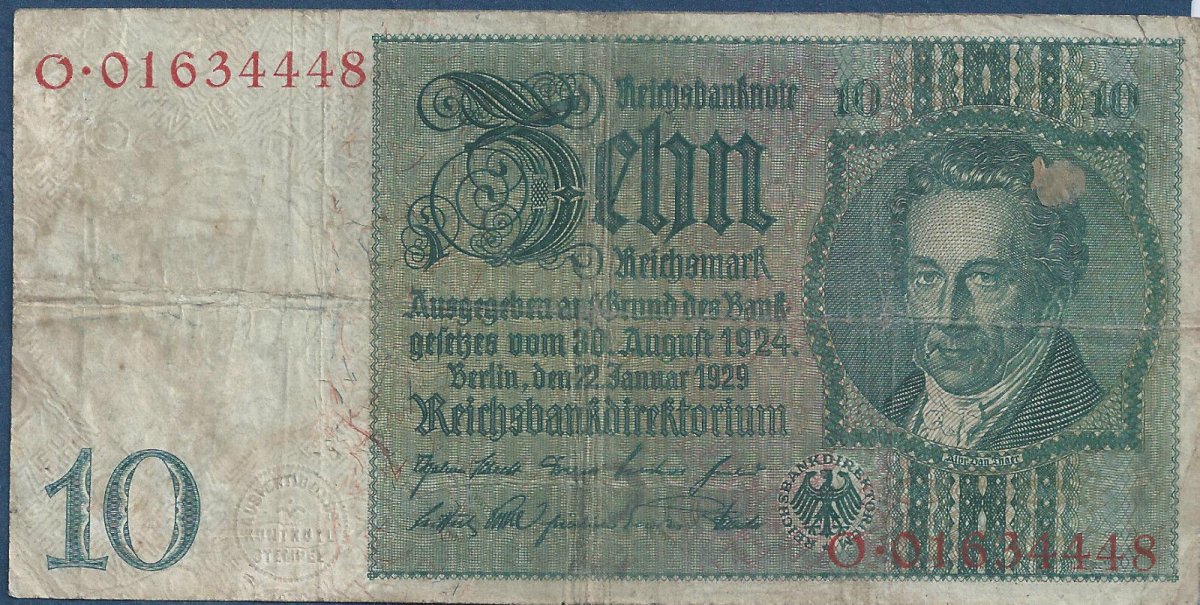 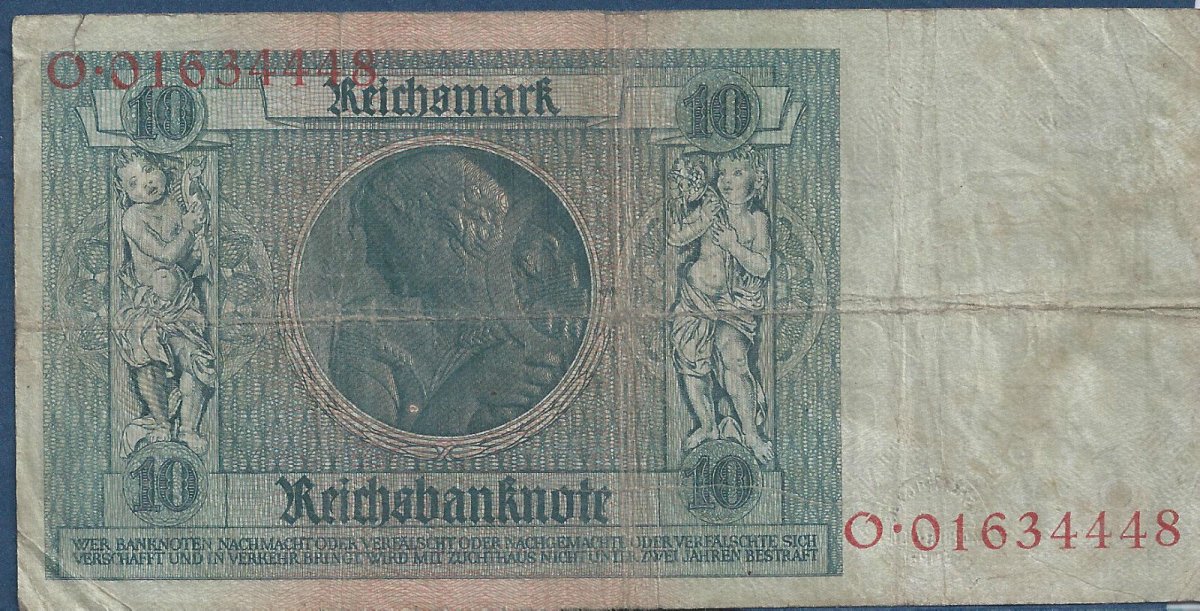 |
|
Pillar of the Community
United Kingdom
2624 Posts |
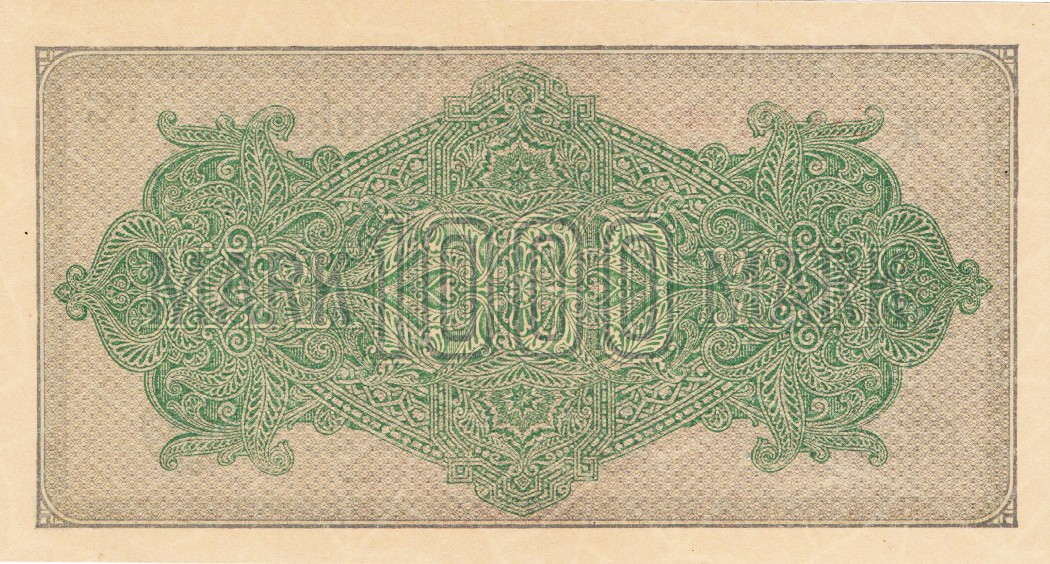
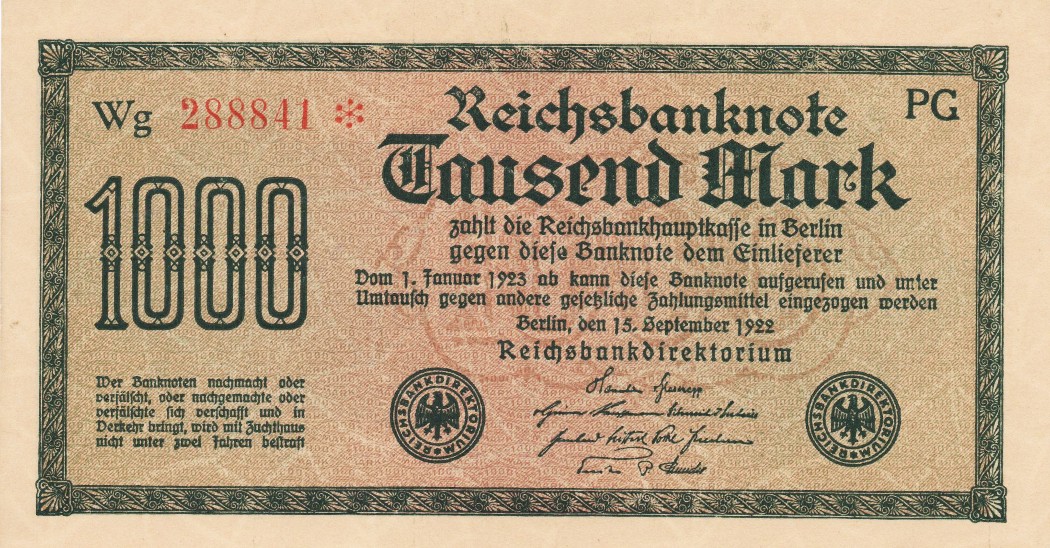
1923 Germany hyper-inflation money. 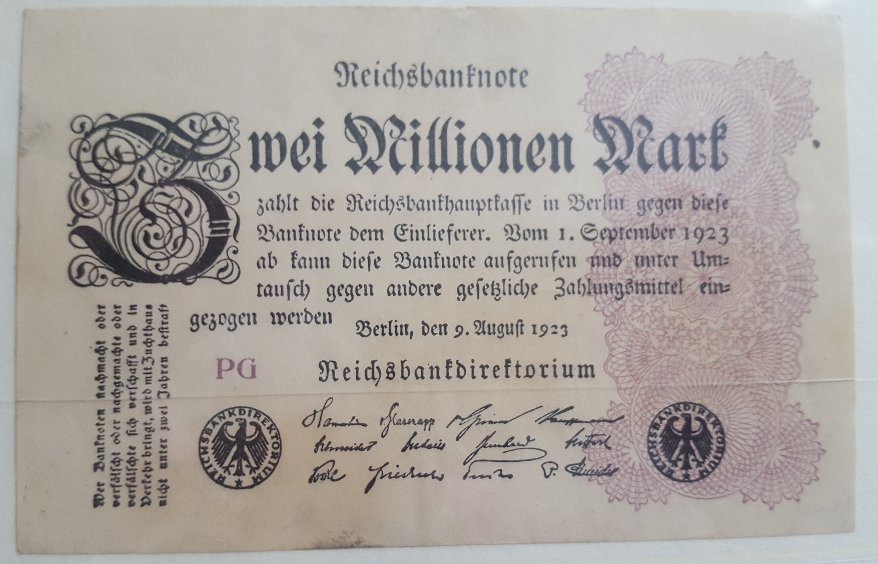 |
|
Pillar of the Community
United Kingdom
516 Posts |
Oh good, 1923 - Notgeld time! Grevesmühlen 50 Pfennig 1923 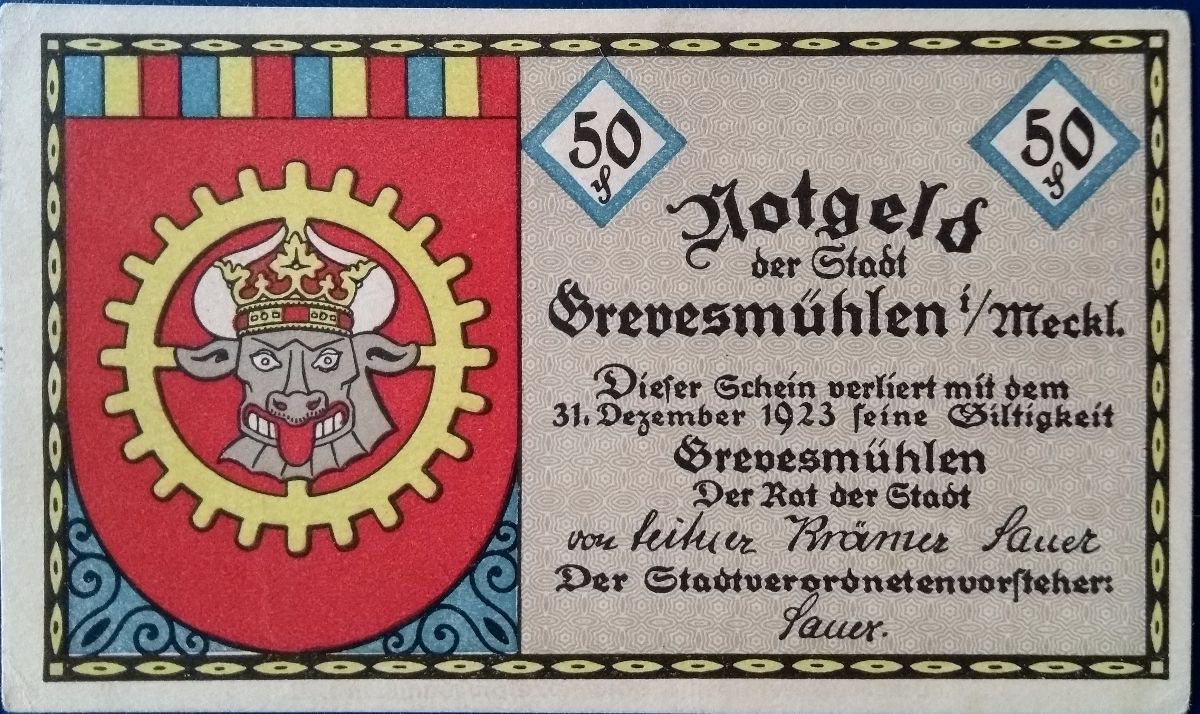 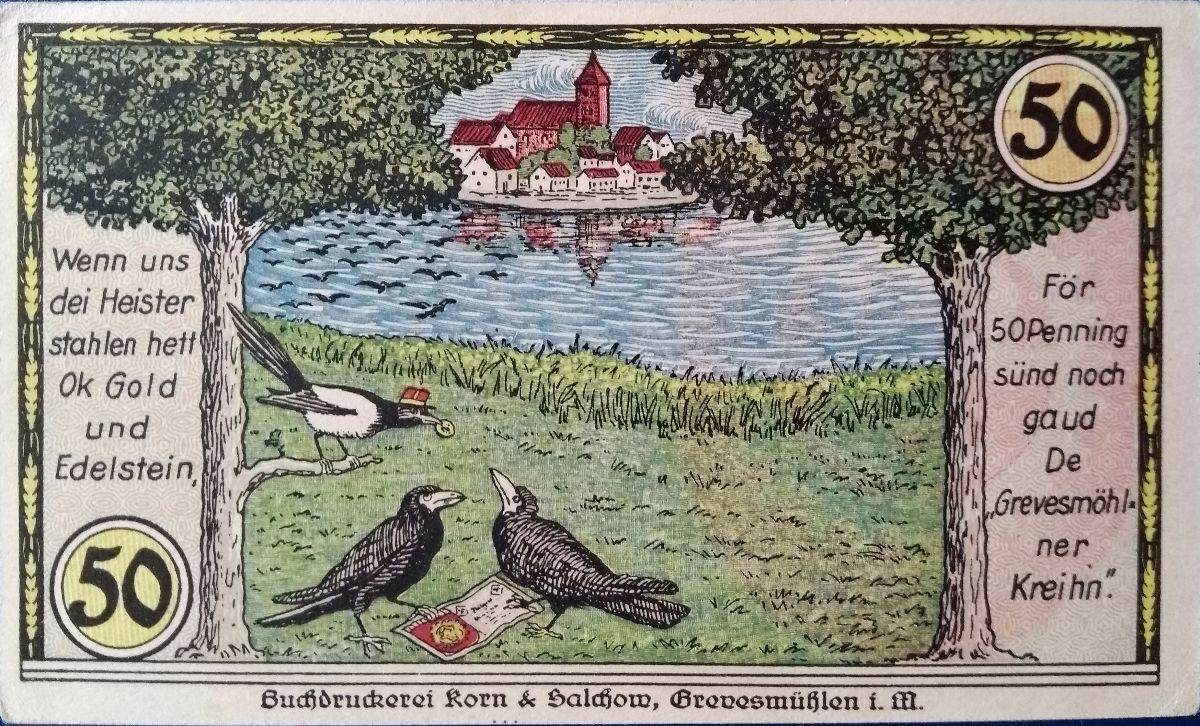 |
|
Pillar of the Community
United Kingdom
2624 Posts |
1923 Horse blanket USA banknote 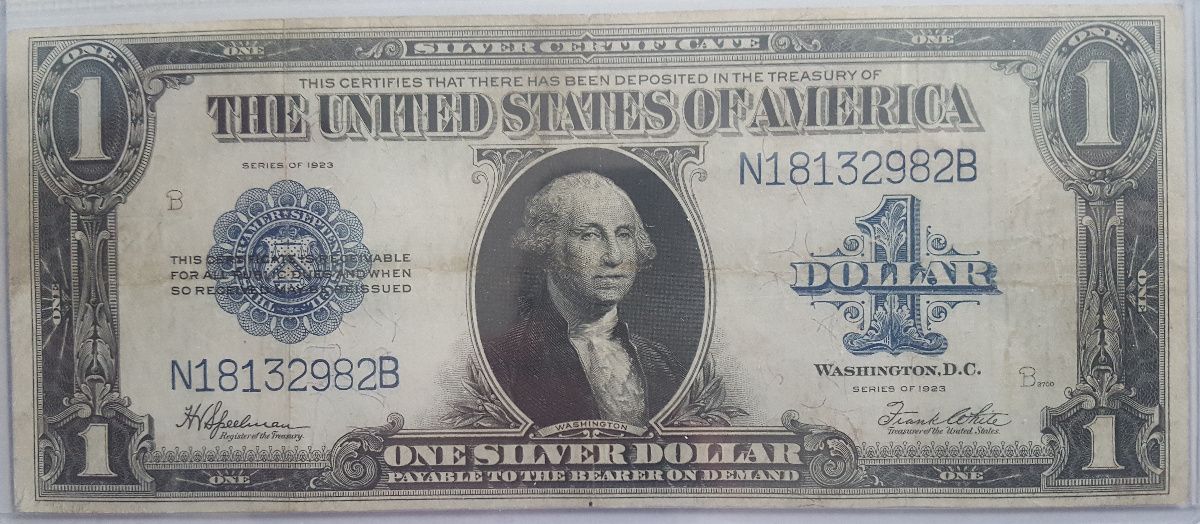 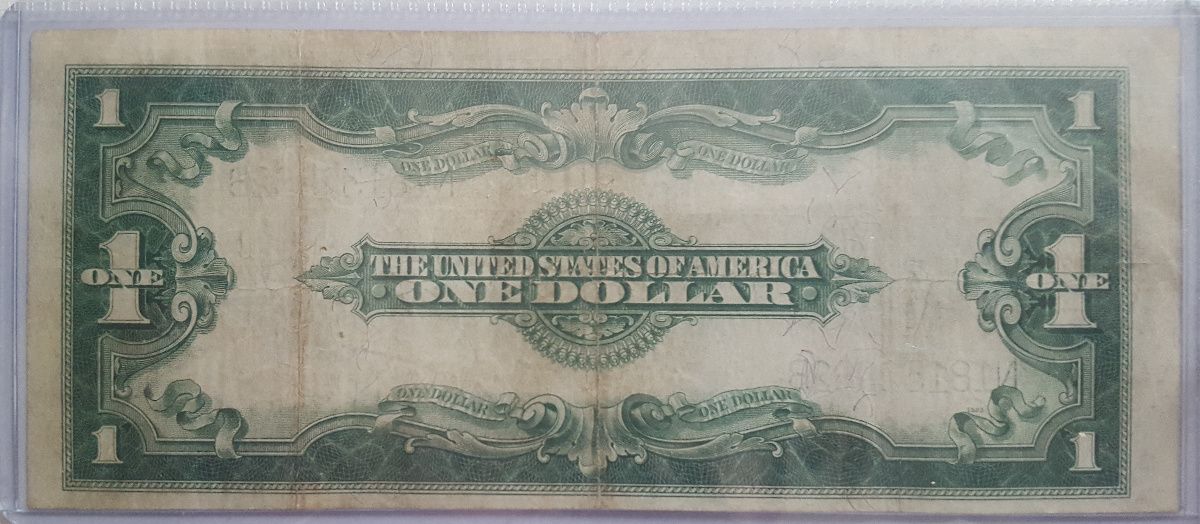 |
|
Pillar of the Community
Canada
5285 Posts |
Paderborn (Germany) Now we are getting into my favorite period, the Notgeld era, and this is one of my favorites. 500 Marks-this is one of the leather issues-NCLT of its day. 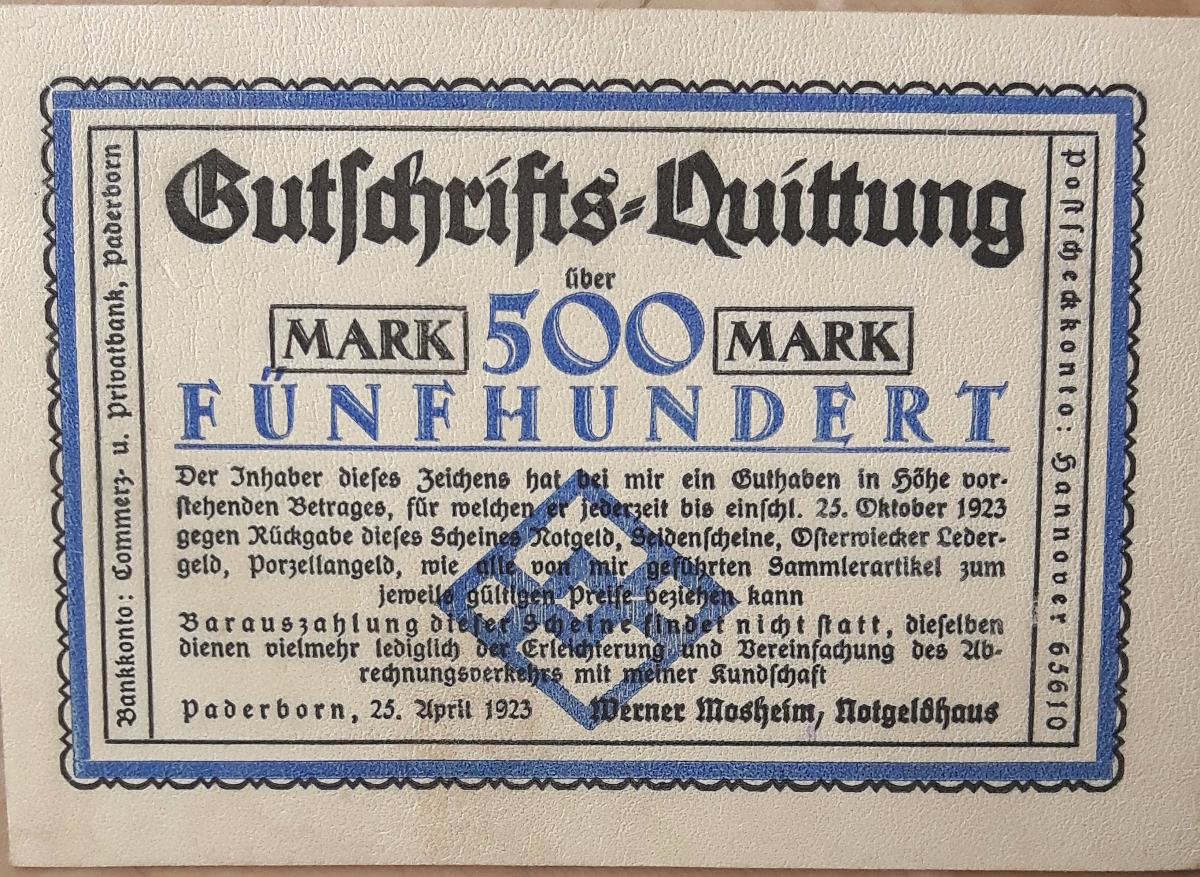 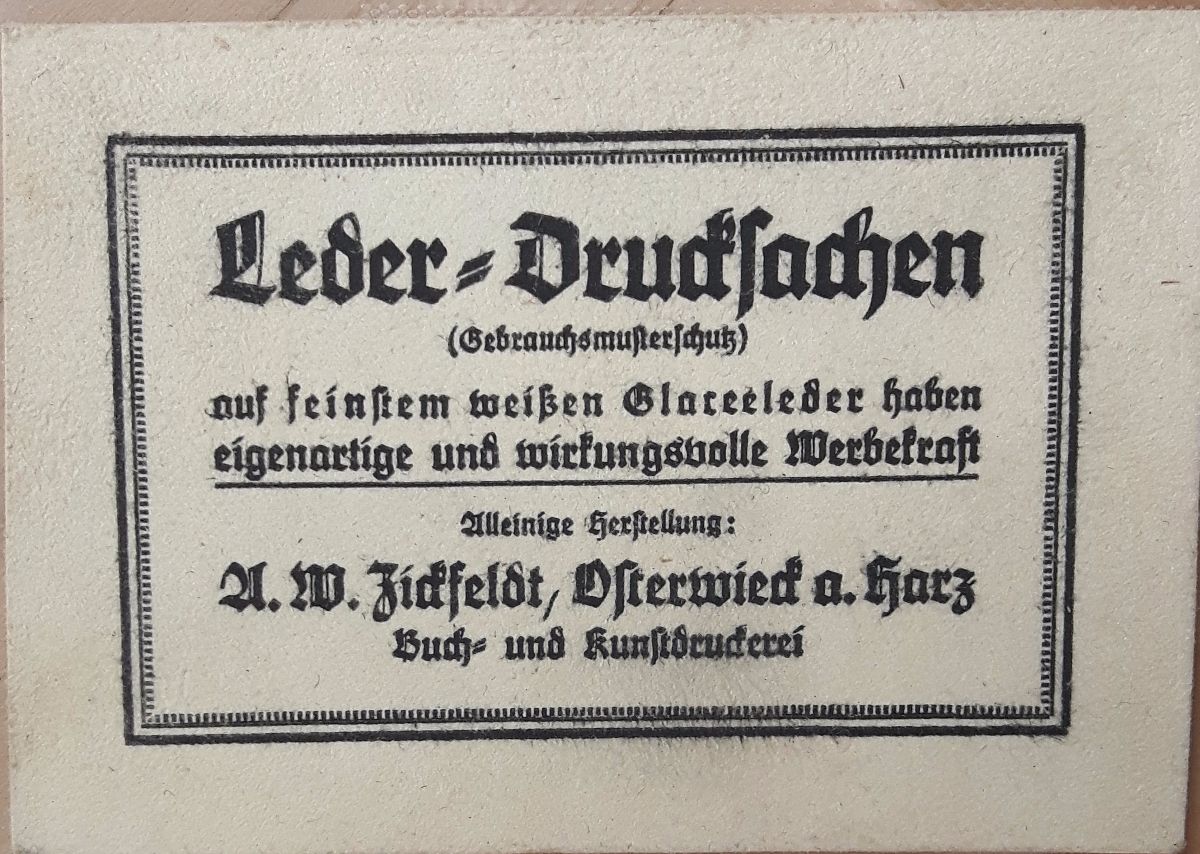 Edited by oriole
09/27/2017 5:11 pm
|
|
Pillar of the Community
United Kingdom
516 Posts |
 nice one, oriole |
|
Pillar of the Community
United States
1865 Posts |
1923 US dollar. 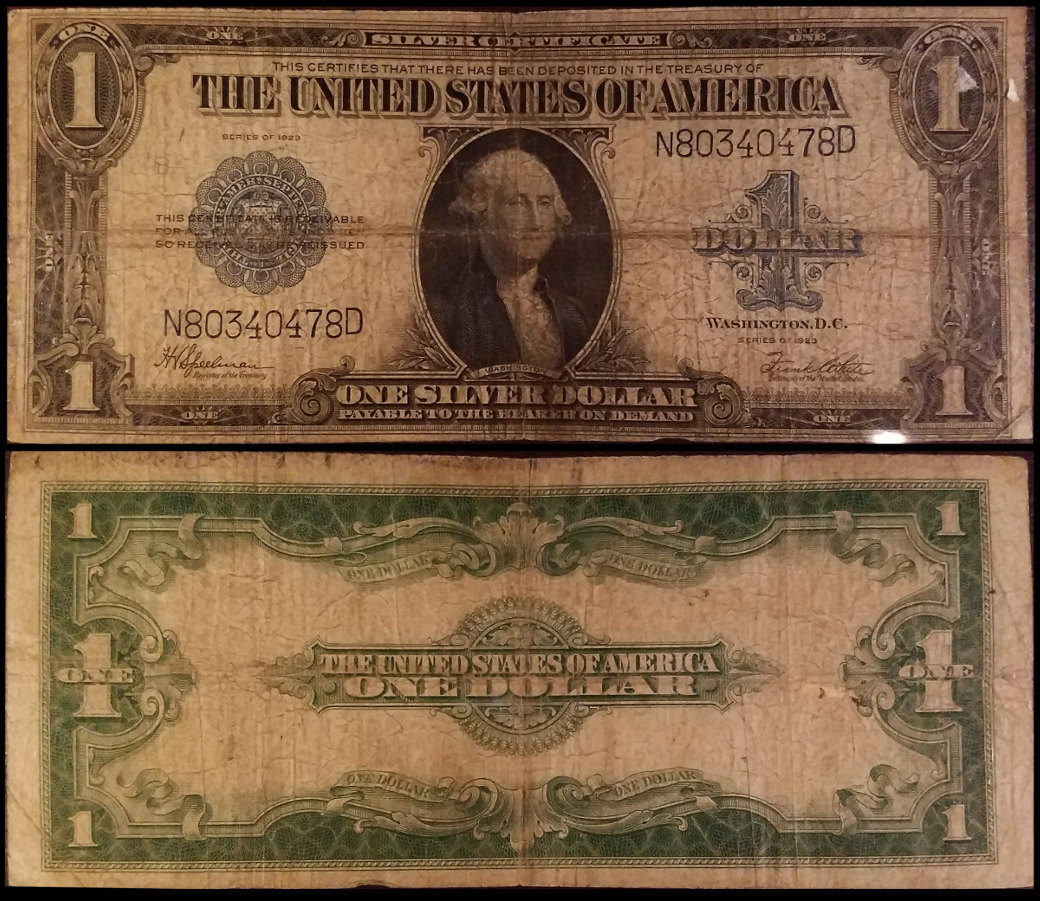 |
|
Pillar of the Community
Canada
5285 Posts |
More from 1923, this time Bielefeld. These are NCLT too. The purple markings are not defects, but are ink stamps, as issued. The first one is made of Linen. 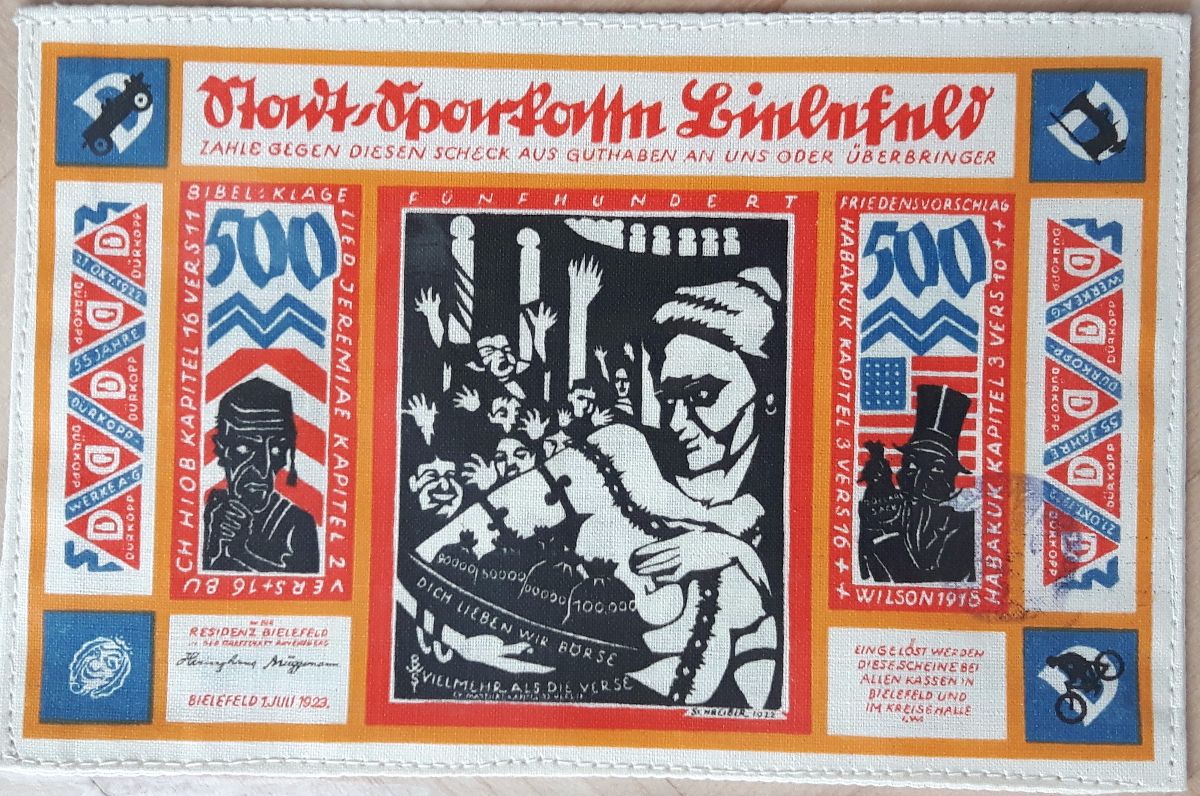 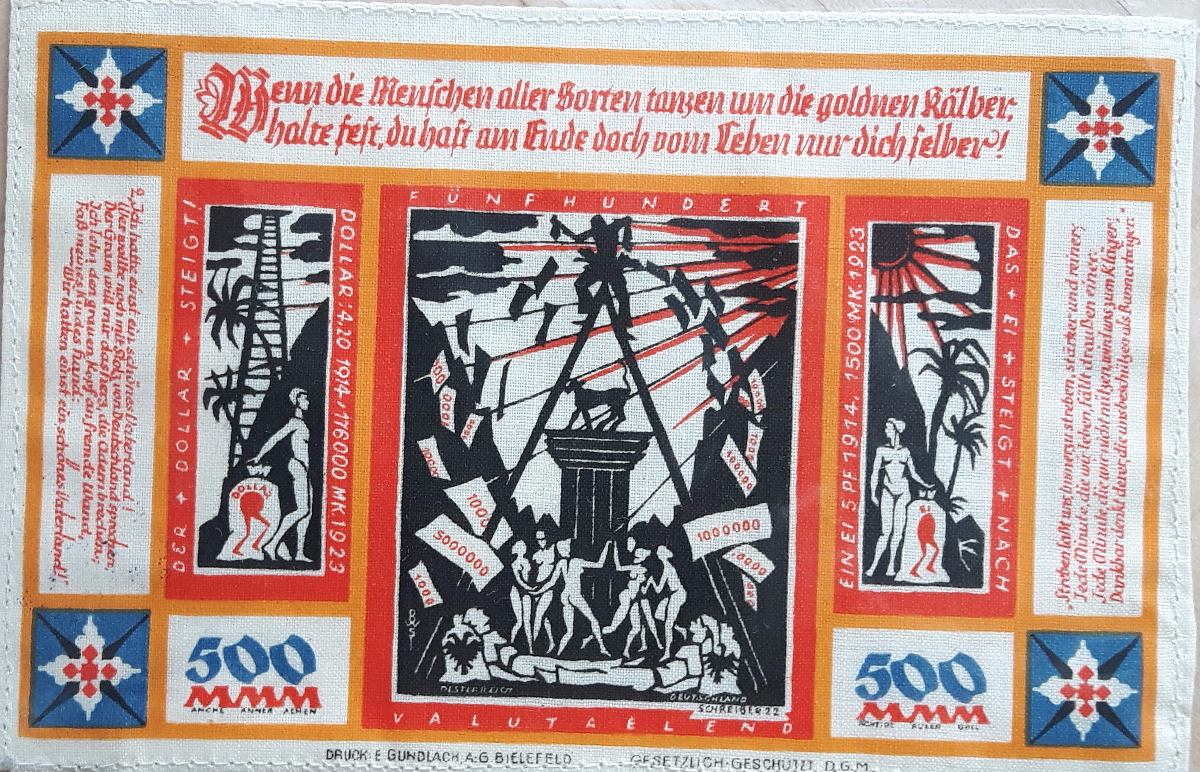 The second one is uniface and made of Jute-similar to what Potato sacks used to be made of, I think. 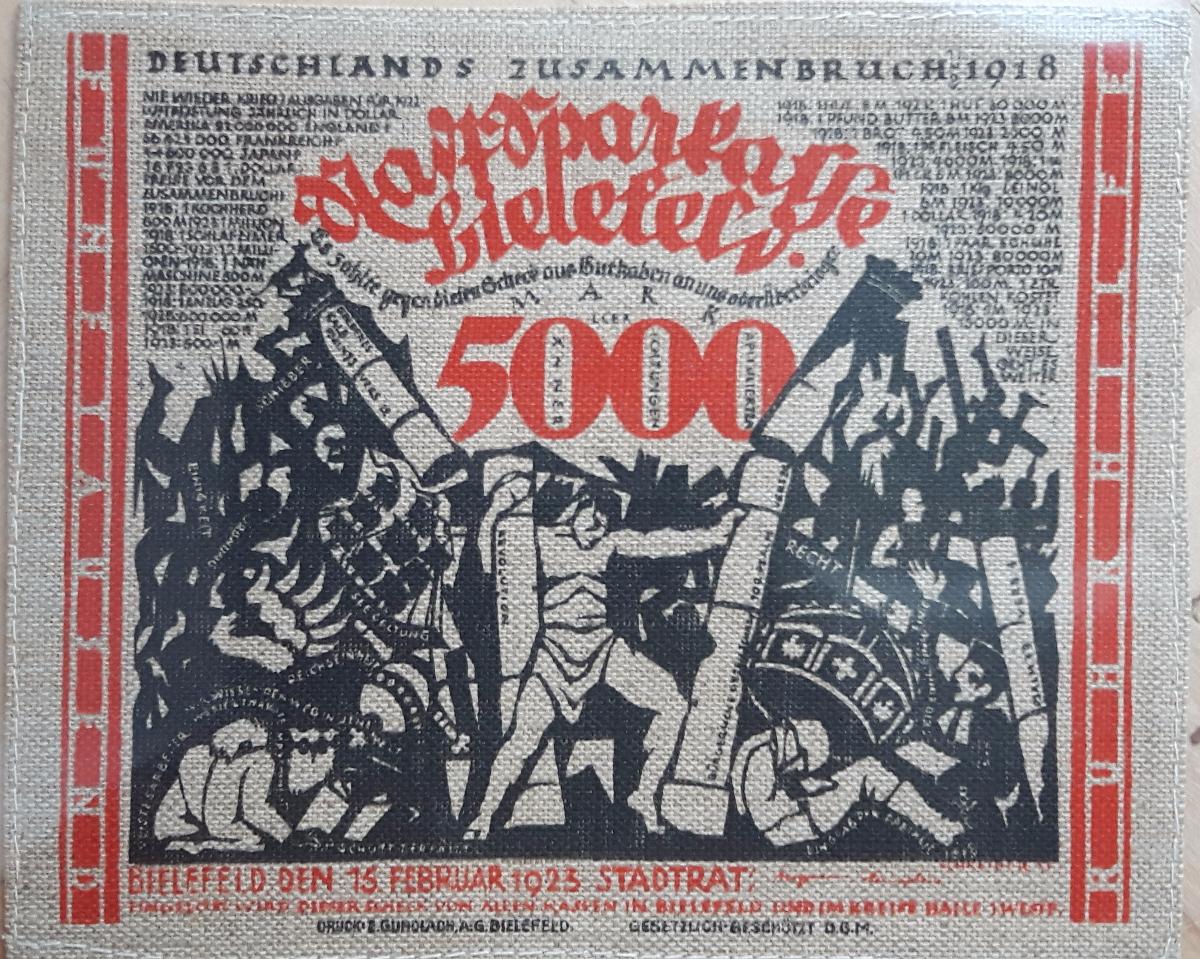 Both notes are heavily laden with political commentary. If any one is interested I can post the words and a rough translation. Edited by oriole
09/27/2017 6:47 pm
|
|
Bedrock of the Community
Canada
11922 Posts |
1923: 25 cents from Canada. 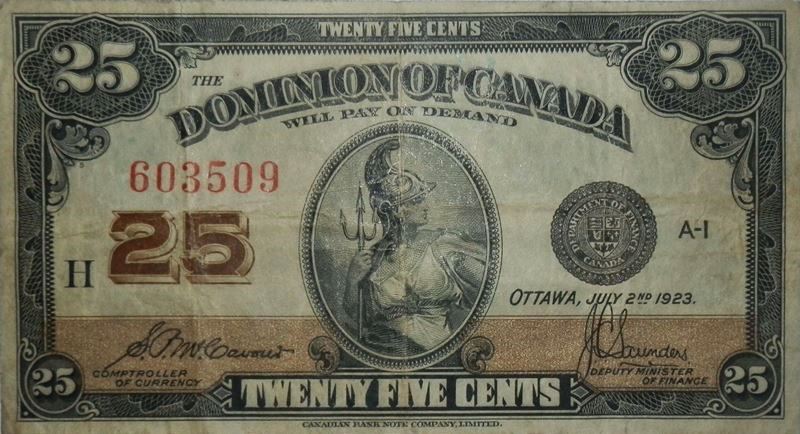 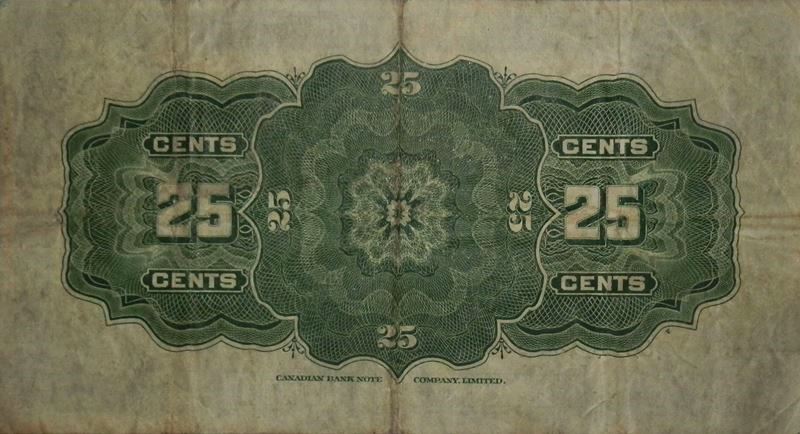 Quote:
Both notes are heavily laden with political commentary. If any one is interested I can post the words and a rough translation. Sure! What do they say?  |
|
Pillar of the Community
United Kingdom
2624 Posts |
1922 Austria 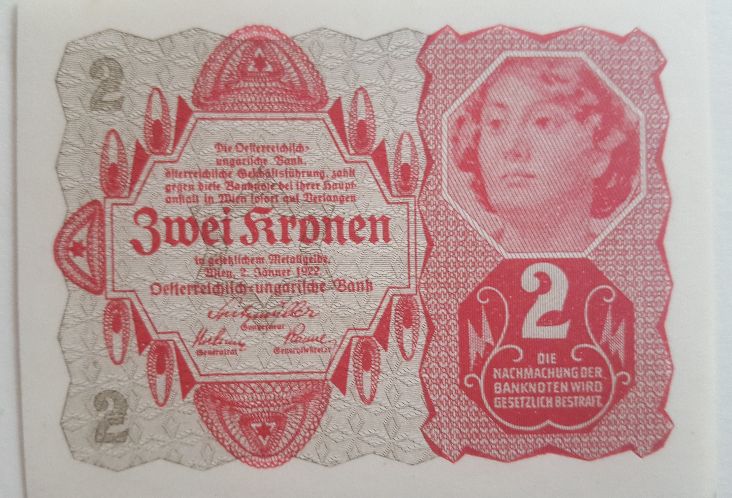 |
|
Pillar of the Community
Canada
5285 Posts |
As requested, here is an explanation of the linen notes. I only illustrated one of the series of 3:
This is a series of three 500 mark notes made of Linen, issued by Bielefeld. The notes did not circulate, as 500 marks was almost worthless on the date they were issued. The series is similar to the ones catalogued as Grabowski-Mehl #103.16, except that the date is July 1, 1923, not October 21, 1922. They are listed at €20 each in the catalogue. The front of each of the three notes is identical. The back of each of the three notes is almost identical, except that each has different sets of text in the right and left sidebars. As is typical of the notes of Bielefeld, they have many complex images with strong religious and political themes dealing with WWI and the aftermath, particularly the treaty of Versailles.
The backs of the notes have different texts in the sidebars. On the left sidebars is a series of three extracts from an author named (I believe) Johanna Wolff. They are numbered 1, 2 and 3. Here is the German followed by a rough English translation:
1. Ich hatte einst ein schönes Vaterland,
Da liegt mein Saitenspiel, ich habs zerschlagen;
Wenn sie mich draußen nach der heimatfragen,
Ich winke müde, müde mit der hand
Und sage abgewandt:
Ich hatte ein schönes Vaterland.
1. I once had a beautiful homeland,
There lies my lyre, I have broken it;
If they ask me outside about the homeland,
I wave tiredly, tiredly with my hand and say turned away:
I had a beautiful homeland.
2. Ich hatte einst ein schönes Vaterland
Wer wollte noch mit Stolz von Deutschland sprechen;
Der Gram will mir das herz, die Odem brechen;
Ich lehn den grauen Kopf an fremde Wand,
Faß meines kindes hand:
Wir hatten einst ein schönes Vaterland
2. I once had a beautiful homeland
Who wanted to speak with pride of Germany;
Grief will break my heart and spirit;
I lean my gray head on the unfamiliar wall,
Holding onto my children's hand:
We once had a beautiful homeland
3. Und dennoch lieb ich dich mein Deutsches Land!
Wach auf mein kind, für Deutschland sollst du leben
Um die zertretne Heimat aufzuheben
Deutsch sind wir beide, Sohn! Frei seis bekannt;
Trotz Schmach und Schand, Wir haben doch ein
Deutsches Vaterland
3. And yet I love you my German Land!
Awake my child, for Germany shall you live
and the trampled homeland will be lifted up
We are both German, son! Free be known;
Despite reproach and shame, we still have a German Fatherland
On the right sidebars: the numbers refer to the number on the right sidebar. The original German is followed by a rough English translation, except for #3:
1.Deutsch sein heißt gut sein, treu sein und echt, kämpfen fur freiheit, Wahrheit und Rech. German means good, loyal and true, to fight for freedom, truth and justice
2.Streben laßt uns, Immerzu streben, stärker und reiner;
Jede Minute, die wir leben, fällt draußen einer.
Jede Minute, die wir nicht nützen, wird uns zum Kläger;
Dankbar denkt derer, die unsbeschützen als Bannerträger
Let us strive, constantly striving, stronger and purer;
Every minute, that we live, falls outside.
Every minute, that we are not useful, will make us those plaintiffs;
Thankfully thinking of those, our protectors like standard bearers.
3.A quotation from the Holy Bible 1 Corinthians 9:9 "For it is written in the law of Moses: "Do not muzzle an ox while it is treading out the grain. Is it about oxen that God is concerned?""
Front (the side with the signature and date of July 1, 1923), common Imagery
The central illustration is the figure of a woman carrying bags of money, exposing her breast while men look on with lust. Underneath is some text: "Dich lieben wir börse, vielmehr als die verse", which means
"We love you, bourse, rather than the verse"
The verse in question is indicated below the figure in small letters below, and is a quotations from the Holy Bible, Matthew 23:17, which says: "You blind fools, which is greater, the gold, or the temple that makes the gold sacred?"
The left illustration is an impoverished looking man, and around the illustration are references to two verses of the Holy Bible: Jeremiah 2:16 "Also, the men of Memphis and Tahpanhes have shaved the crown of your head", and Job 16:11 "God has turned me over to evil men and thrown me into the clutches of the wicked"
The right illustration is a figure representing President Woodrow Wilson, holding a "dollar sack"
Above it says "Frieden vorschlag" (Peace Proposal) and below "Wilson 1918". Around this figure are two references to the Holy Bible: Habbakuk 3:16 "I heard and my heart pounded, my lips quivered at the sound, decay crept into my bones, and my legs trembled. Yet I will wait patiently for the day of calamity to come on the nation invading us", and Habbakuk 3:10 "The mountains saw you and writhed; Torrents of water swept by; the deep roared and lifted its waves on high".
Back, Common imagery
The central illustration is of naked people trampling over stricken Germany and Austria, dancing around a statue of a golden calf. Above the calf is the figure of someone with a bag, money coming out of his pockets and floating to the ground.
The left illustration is a naked figure passing by a sack of Dollars; the sky is cloudy and there are palm trees and a ladder going into the sky. Around the figure it says "The dollar rises", dollar 4.2 mark 1914, 118,000 Mark 1923 (The notes catalogued Grabowski-Mehl 103.16 say 4650 Mark 1922).
The right illustration is a naked figure beside a sack of Pounds, the sky is sunny and there are palm trees in the background. Around the figure it says: "The egg rises afterwards. An egg, 5 pf. 1914, 1500 Mark 1923 (the notes catalogued Grabowski-Mehl 103.16 say 30 Mark 1922).
The words at the top of the back say:
"Wenn die menschen aller sorten tanzen um die goldnen kalber, halte sest, du hast am ende doch vom leben nur dich selber", which mean: "If people of all kinds dance to the golden calf, stop, you have at the end of your life only yourself." The reference here is to the story in the Holy Bible in the book of Exodus.
|
|
Pillar of the Community
Canada
5285 Posts |
Here is a rough explanation and translation of the 500 mark note in Jute:
This is another of the detailed issues of Bielefeld that is heavy in political and religious references. The coarseness of Jute makes some of the letters a little difficult to read. The central figure is of a man pushing two pillars apart, likely representing Samson.
Top: Deutschlands Zusammenbruch 1918 (Germany's collapse 1918) Below „Stadtsparkasse Bielefeld" Es zahlie gegen diesen Scheck auf Gut haben an uns oderuberbringen . Payable against this check from our assets to the bearer. The first letters of the word "Mark" together with the letters within the zeros of the number 5000, form these words: (a)xnner, (r)ichtungen, (k)apitilierten; ax handler(?), to sentence, to capitulate
Top left and right corners: Nie wiederkriege? Ausgaben fur 1922...Werdstung jahrlich in dollar Never again war? Expenditures for 1922.. annually in dollars America 82,000,000 England 56,421,000 France 44,6000,000 Japan 16,793,000 Price for the collapse. (This has prices of various items in 1918 vs.1923, 14 items, including the dollar, 4.2m 1918.-50,000 mark 1923.) In dieser weise geht es weiter. In this way it continues.
Left: Pillar: Goldnes Kalb Psalm 73 v. 12 (This is what the wicked are like, always carefree, they increase in wealth) and revolution. To the left of the left pillar is a chaotic mix of figures and objects with various words:
Schieber (profiteer); Einigkeit (unity); Ordnung (order); Seegeltung (value of the sea); Reichs einheit (unity of the empire); Schutt zerfallt (disintegrated rubble); and A person holding a book for an owl, around it „geistesarbeiter wissen den weg in den welt" (Guest workers know their way in the world.)
Right: Two pillars: "Burgerliche gesellshaft" (Citizen's society) Psalm 102 v. 26(or 24) (they will perish but you will remain, they will all wear out like a garment, like clothing you will change them and they will be discarded); and Psalm 77 v. 4 (You kept my eyes from closing; I was too troubled to speak). Also on the right there are images and words: Recht (justice); Fallen soldier under crown, and below soldier „Eingrab der freiheit", (bury freedom) Man on ground with "sein einig einig einig" on his arm (to be united, united, united)
#8195;
|
|
Pillar of the Community
United Kingdom
2624 Posts |
Wow, good write up but that's pretty heavy going ^^ Here's a $10 gold certificate from 1922... not an exceptional example but still a cool note I think. 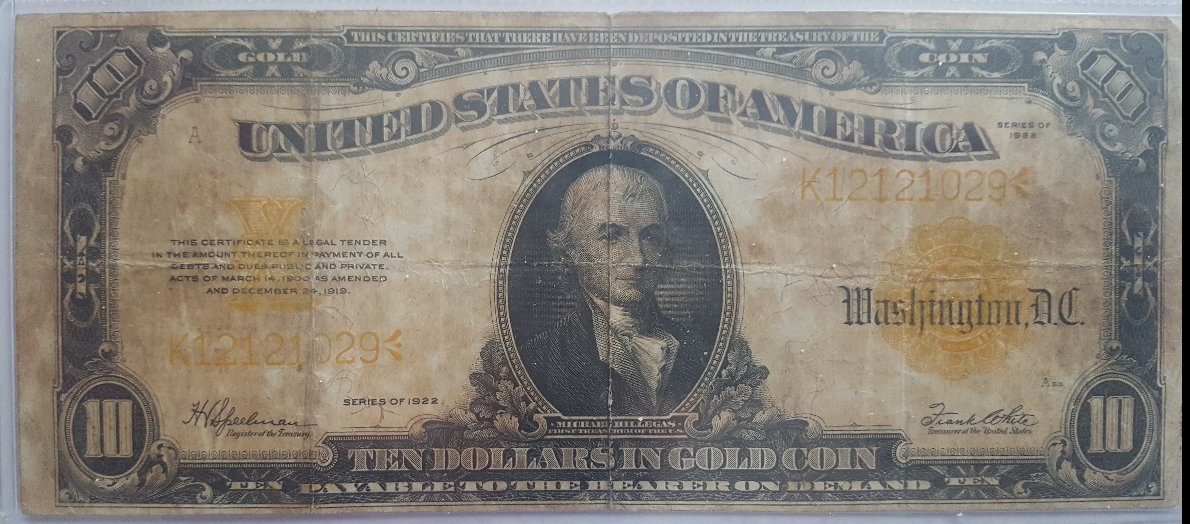 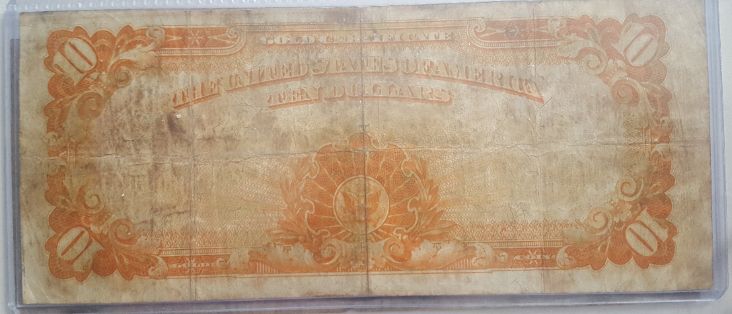 Edited by DavidUK
09/28/2017 09:14 am
|
|
Pillar of the Community
Canada
5285 Posts |
@DavidUK, yes, it is pretty heavy stuff. There was a huge amount of anger and resentment in Germany after WWI, and unfortunately we know where that led to.
A lot of the notgeld is much lighter stuff, so I will post some of that in due course.
Edited by oriole
09/28/2017 11:19 am
|
|
Bedrock of the Community
United Kingdom
18180 Posts |
|
| |
Replies: 500 / Views: 48,629 |
To participate in the forum you must log in or register.
 
- Commems Collection Classic: What If? 1884 US Metric System Coinage
- Canada 1898 10-Cents. Possible Repunched Letters.
- 1787 George Clinton 1/2-P
- 2010 P James Buchanan $1 Coin Error On Rim?
- 1916-T German East Africa 15 Rupien, NGC MS-66, Erwin Warth Collection
- Roman Republic Denarius, Flaminia
- 668-669 A.d. Mezezius Av Solidus, PCGS MS-66, Tyrants Of The Golden Horn Collection
- Long Table 252. Pergamene Temple Coinage And Bronze In The Name Of Philetaerus
- Got At A Garage Sale For 25 Cents. Unsure What It Is, And What Value
- 1936 P LWC WDDO-003 FS-103
- 2023 P BC Quarter With Die Chip On The Wing
- 2023 P Ek Quarter With Reverse Die Chip
- How Much Are Worn Dimes From 1960 And 1945 Worth?
- 2003 P Greasy Illinois Quarter
- Fish Gills On Liberty's Neck, Possible Unlisted 1921 Peace Dollar VAM?
- Mexico 1983 Libertad PR-68 DCAM
- 2026-P Innovative Dollar - With A Rather Nice Rim Cud
- Identify And Price Coin Different Language Please Help, I Have No Idea Origination Or Value.
- Video ANA Academy: Civil War Tokens And Tradesmen's Cards By Hetrich & Guttag, Manley Library
- Video: ANS Book Club, "florentine Florin: Politics & Culture Of Money In The Middle Ages"
Disclaimer: While a tremendous amount of effort goes into ensuring the accuracy of the information contained in this site, Coin Community assumes no liability for errors. Copyright 2005 - 2026 Coin Community Family- all rights reserved worldwide. Use of any images or content on this website without prior written permission of Coin Community or the original lender is strictly prohibited.
Contact Us | Advertise Here | Privacy Policy / Terms of Use
|
| Coin Community Forum |
© 2005 - 2026 Coin Community Forums |
| It took 0.36 seconds to rattle this change. |
 |
|





 First Page
 Previous Page


 Posted 09/27/2017 02:05 am