| Author |
 Replies: 15 / Views: 15,864 Replies: 15 / Views: 15,864 |
|
|
New Member
United States
3 Posts |
These were part of a small collection I recently bought. What rule of thumb is there for how coins with holes are graded? Does a hole make them totally worthless? Is the effect of a hole uniform across all coins? I know these in the pictures wouldn't be very valuable even without the holes, but this is a question I've had for a while and I think these are the only coins I have with holes. 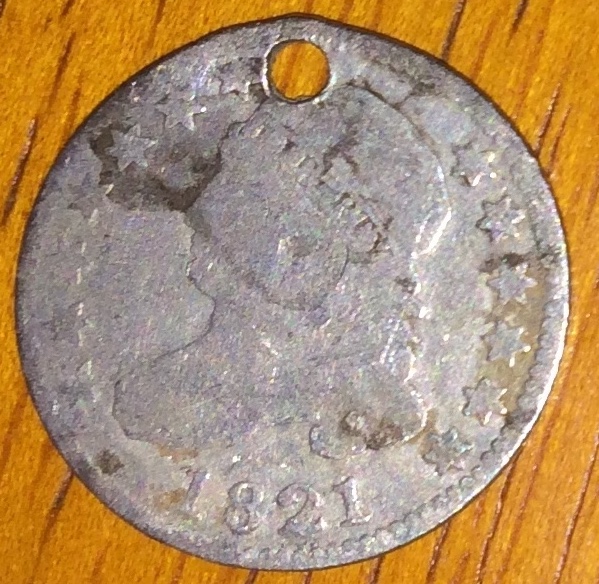 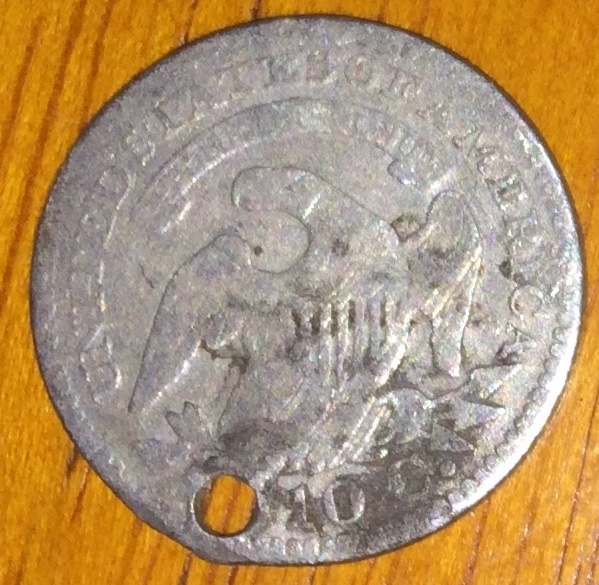 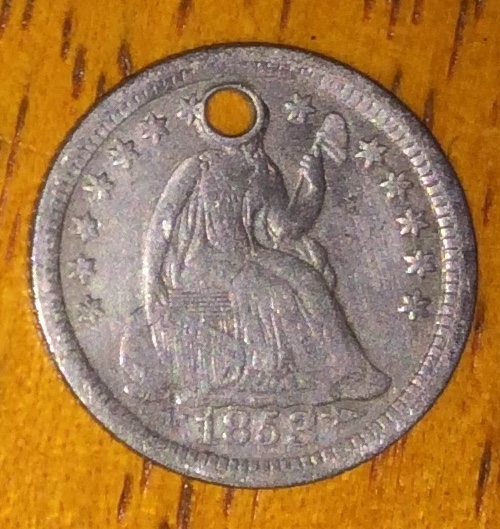 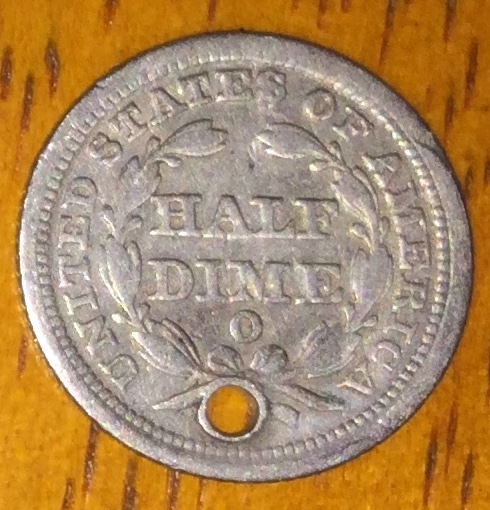 |
|
|
|
Pillar of the Community
United States
505 Posts |
Depends on if it's a mint error or not. Those are not, it looks like they were punched out using a heavy duty leather puncher to turn them into pendants for a necklace. This 'nearly' kills the numistical value. However! Some collectors may still be interested.
Welcome to the CCF! Great question, others will have further insight for ya.
|
|
Pillar of the Community
United States
7734 Posts |
Unless the coin is very rare the hole pretty much destroys the numismatic value. A holed common date Indian cent is only worth a few cents. On the other hand, a common date holed Seated dollar might bring 50 to 75$.....a scarce date holed Seated dollar might bring several hundred dollars. A lot depends on the size and location of the hole. There are people that repair holed coins. They actually fill in the hole and reengrave the missing details. The bigger the coin, the easier it is to repair. There are people that collect holed coins, too.. I know of a Dansco 7070 that has nothing but holed coins in it. As far as I know there is no set guide for determine value of a holed coin. Value is determined by the seller and buyer. |
|
Pillar of the Community
United States
505 Posts |
What I said but like I figured more insight. Lots of detail. I learned something myself! Thanks west.
|
|
Bedrock of the Community
United States
94367 Posts |
I leaned a hole lot too.  to the CCF! |
|
Rest in Peace
United States
17900 Posts |
As mentioned, the value is significantly reduced. If the coin was in heavily circulated condition in addition to the hole, it really needs to be rare to have much value.
Collectors just entering the hobby might have an interest in a holed coin that they intend to upgrade later. Most more experienced collectors probably wouldn't have much interest in anything other than a super rarity, and cheap, even then.
|
|
Pillar of the Community
United States
1450 Posts |
I had a AU 1938-D LWH dollar on which some idiot had scratched a name. The coin was worth melt value.
|
|
Formerly coinlover1899
 United States
3058 Posts |
Quote:
I had a AU 1938-D LWH dollar on which some idiot had scratched a name. The coin was worth melt value. I can assure you that your 1938 D half dollar in AU condition was worth more than melt. It sheets at $190. If you still have it don't sell it for melt, ask for a premium, someone will buy it if the premium isn't to high. www.InGodWeTrustCoins.com
|
|
Bedrock of the Community
United States
94367 Posts |
|
|
Bedrock of the Community
United States
37206 Posts |
These would be termed "fillers" or "culls".
|
|
Pillar of the Community
United States
7842 Posts |
|
|
Pillar of the Community
United States
1346 Posts |
Great addition to a key ring!
|
|
New Member
United States
1 Posts |
New user. I don't know if your still active. I collect nothing but coins with holes. They call them love tokens. I'd buy them if you didn't want them. Thanks
|
|
Pillar of the Community
Canada
5296 Posts |
As a rule of thumb, I value coins with minor defects at one grade lower, major defects 2-3 grades lower or even more. A hole that that is a major defect, and I would say roughly 10% of the value of an undamaged coin.
of course, this doesn't mean that I would buy them.
|
|
Valued Member
United States
104 Posts |
I can assure you, PCGS does share your grading approach! Sadly
|
|
Valued Member
United States
104 Posts |
|
| |
Replies: 15 / Views: 15,864 |
|










 Posted 08/23/2017 3:06 pm


