
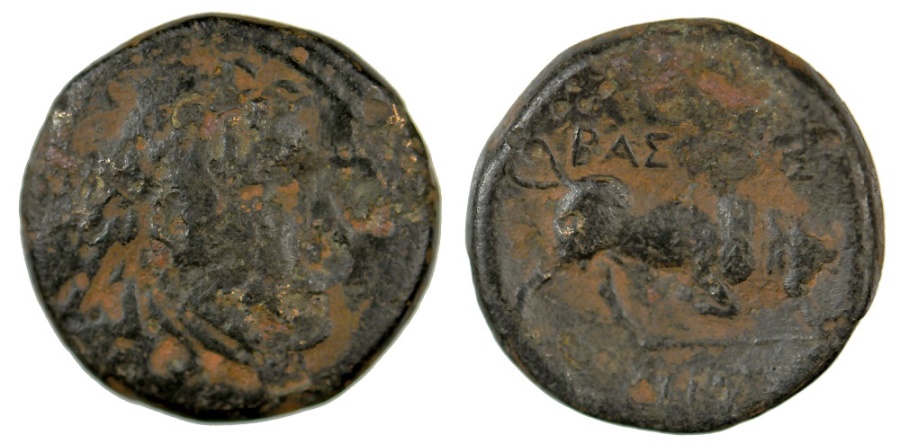
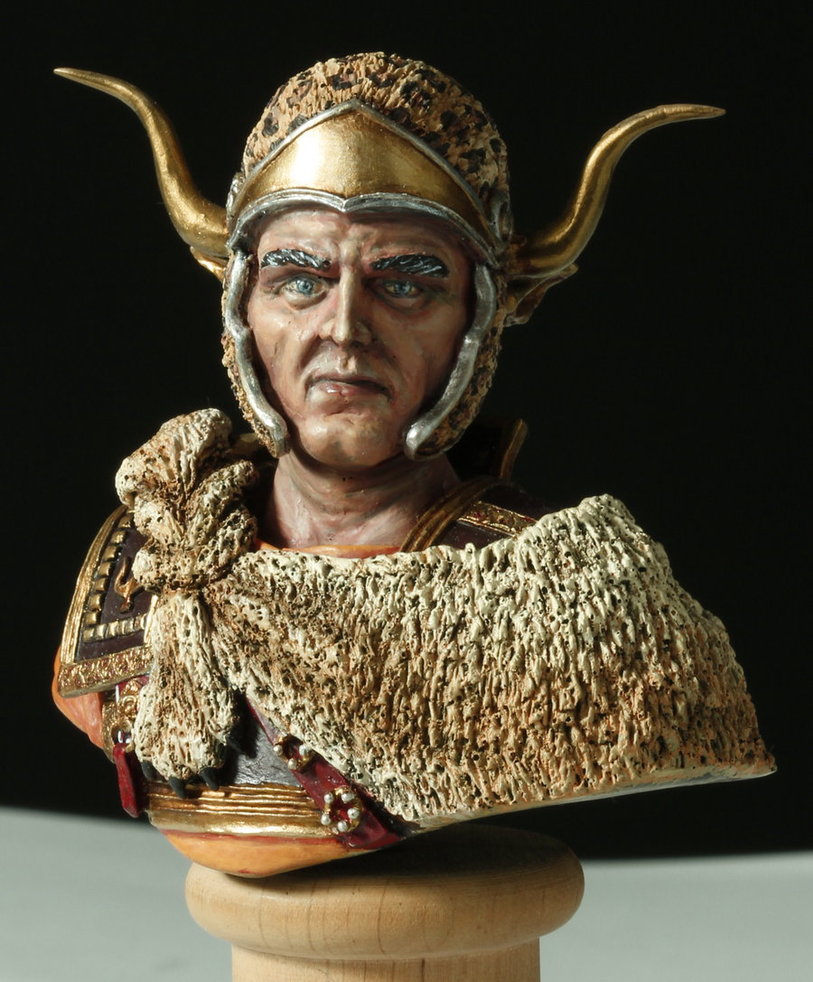
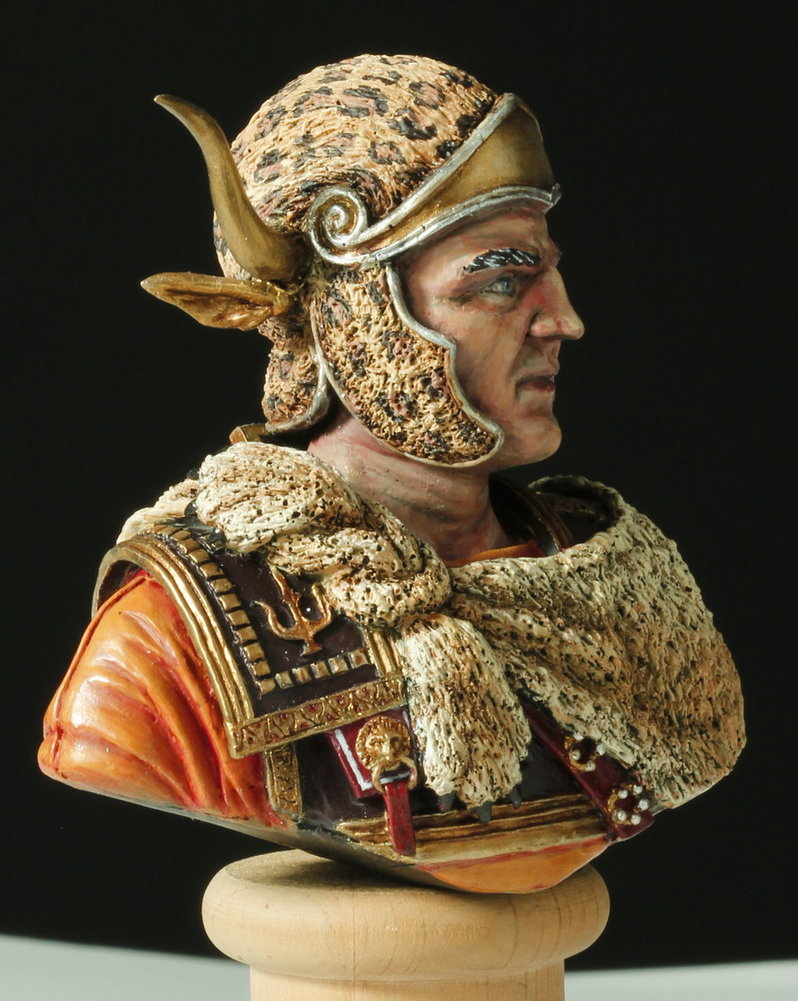
Everyone Got this very nice ancient Greek coin of Seleucus I Nicator last week too. More about him: Seleucus I Nicator[A] / (c. 358 BC - 281 BC; Ancient Greek: Seleukos ; Nikát;r; "Seleucus the Victor") was one of the Diadochi. Having previously served as an infantry general under Alexander the Great, he eventually assumed the title of basileus and established the Seleucid Empire over much of the territory in the Near East which Alexander had conquered.
After the death of Alexander in June 323 BC, Seleucus initially supported Perdiccas, the regent of Alexander's empire, and was appointed Commander of the Companions and chiliarch at the Partition of Babylon in 323 BC. However, after the outbreak of the Wars of the Diadochi in 322, Perdiccas' military failures against Ptolemy in Egypt led to the mutiny of his troops in Pelusium. Perdiccas was betrayed and assassinated in a conspiracy by Seleucus, Peithon and Antigenes in Pelusium sometime in either 321 or 320 BC.
At the Partition of Triparadisus in 321 BC, Seleucus was appointed Satrap of Babylon under the new regent Antipater. But almost immediately, the wars between the Diadochi resumed and Antigonus forced Seleucus to flee Babylon. Seleucus was only able to return to Babylon in 312 BC with the support of Ptolemy. From 312 BC, Seleucus ruthlessly expanded his dominions and eventually conquered the Persian and Median lands. Seleucus ruled not only Babylonia, but the entire enormous eastern part of Alexander's empire.
Seleucus' wars took him as far as India, where, after two years of war (305-303 BC), he made peace with the Indian Emperor Chandragupta Maurya, and exchanged his eastern satrapies in the Indus River Valley for a considerable force of 500 war elephants, which would play a decisive role against Antigonus at the Battle of Ipsus in 301 BC and against Lysimachus at the Battle of Corupedium in 281 BC.
Seleucus' victories against Antigonus and Lysimachus left the Seleucid dynasty virtually unopposed in Asia and in Anatolia. However, Seleucus also hoped to take control of Lysimachus' European territories, primarily Thrace and Macedon itself. But upon arriving in Thrace in 281 BC, Seleucus was assassinated by Ptolemy Ceraunus, who had taken refuge at the Seleucid court with his sister Lysandra. The assassination of Seleucus destroyed Seleucid prospects in Thrace and Macedon, and paved the way for Ptolemy Ceraunus to absorb much of Lysimachus' former power in Macedon. Seleucus was succeeded by his son Antiochus I as ruler of the Seleucid empire.
Seleucus founded a number of new cities during his reign, including Antioch (300 BC) and in particular Seleucia on the Tigris (ca. 305 BC), the new capital of the Seleucid Empire, a foundation that eventually depopulated Babylon. Death and legacy
Seleucus now held the whole of Alexander's conquests except Egypt and moved to take possession of Macedonia and Thrace. He intended to leave Asia to Antiochus and content himself for the remainder of his days with the Macedonian kingdom in its old limits. He had, however, hardly crossed into the Thracian Chersonese when he was assassinated by Ptolemy Keraunos near Lysimachia in September (281 BC).
It seems certain that after taking Macedonia and Thracia, Seleucus would have tried to conquer Greece. He had already prepared this campaign using the numerous gifts presented to him. He was also nominated an honorary citizen of Athens.
Antiochus founded the cult of his father. A cult of personality formed around the later members of the Seleucid dynasty and Seleucus was later worshipped as a son of god[clarification needed]. One inscription found in Ilion (i.e., Troy) advises priests to sacrifice to Apollo, the ancestor of Antiochus' family. Several anecdotes of Seleucus' life became popular in the classical world. The coin is a Seleukos I Nikator, 312-280 BC. Sardis mint, AE half-unit. 19.3mm. Winged head of Medusa right with serpents in hair / BA#;EYKOY above and beneath bull butting right; Sigma;I between hind legs. Houghton SC 6.1; Newell, WSM, 1357; SNG Spaer, 67; BMC 65. Here's the pics.
 Remove Greek letter code, tey don't work here





 Posted 12/07/2017 10:51 pm





