|
This page may contain links that result in small commissions to keep this free site up and running.

Welcome Guest! Registering and/or logging in will remove the anchor (bottom) ads. It's Free!
To participate in the forum you must log in or register. | Author |
 Replies: 750 / Views: 66,882 Replies: 750 / Views: 66,882 |
|
|
|
Moderator
  United States
34542 Posts |
Here is another Drachm from the Western Satraps. This one was issued under the authority of King Bhartrdaman in Saka 211 (289 AD): 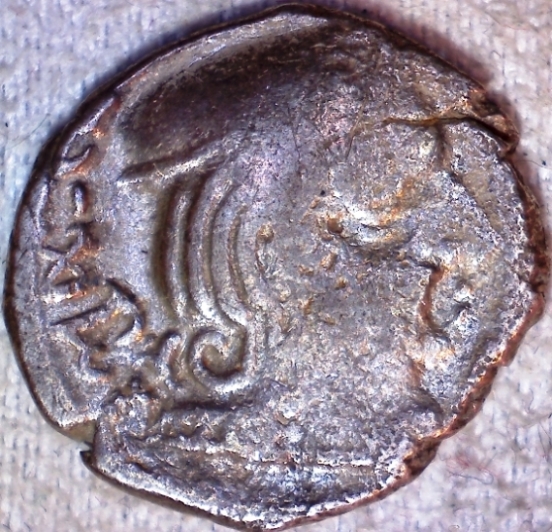 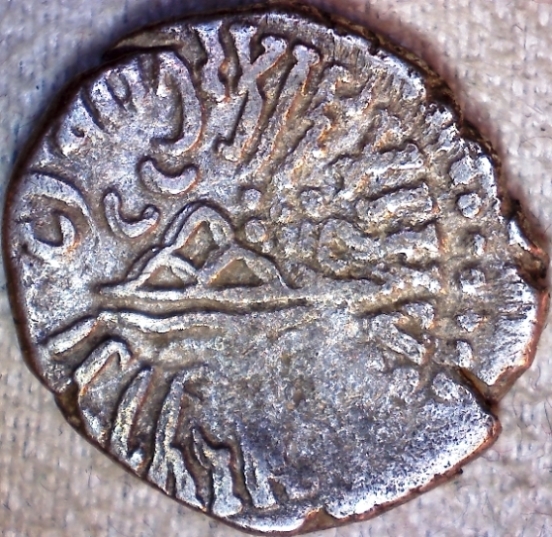 "If you climb a good tree, you get a push."
-----Ghanaian proverb
"The danger we all now face is distinguishing between what is authentic and what is performed."
-----King Adz
|
|
Moderator
United States
34542 Posts |
And here is an other Tet from Alexandria. This one was issued by Probus in the years 280-281: 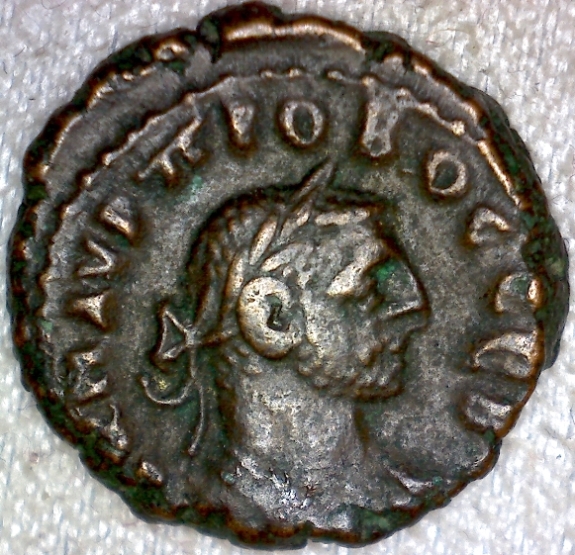 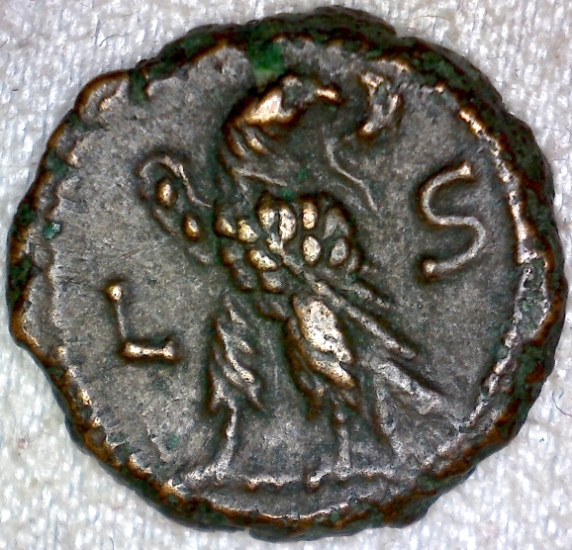 "If you climb a good tree, you get a push."
-----Ghanaian proverb
"The danger we all now face is distinguishing between what is authentic and what is performed."
-----King Adz
|
|
Pillar of the Community
United States
979 Posts |
There is a series of coins from Siscia issued for Maximianus and Diocletian with a secret code. In 1872, the Viennese numismatist Joseph Van Kolb was the first person (at least recorded in modern times) who figured out the meaning of these coins. Diocletian and Maximianus claimed lineage with the gods; which is why the reverse legend translates as "Defender/Protector of the Augusti." In the East, Diocletian was in the family of Jupiter and in the West, Maximianus was in the family of Hercules. These coins have the names of the gods incorporated into the reverses. The coins of Diocletian have a reverse with him and Jupiter and the reverses for Maximianus depict him and Hercules. The normal Hercules reverse is leaning on a club, but a rarer type has him holding the club with a lion skin. There is a theory that Diocletian and Maximianus started to proclaim their relationship with Jupiter and Hercules because of the revolt of Carausius. It was "an attempt to impose a divine order on the administering of the Empire, a "cosmic unity" that would automatically exclude any usurper from a place within the Empire." (In Praise of Later Roman Emperors pg 48) It is impossible to prove, but an interesting idea. see: William Seston "Diocletien et la Tetrarchie" Here is a quote from Lactantius, a Christian author of the 4th century, who mocks the Tetrarchy for their affiliation with the pagan gods-- "Where now are the surnames of the Jovii and the Herculii, once so glorious and renowned among the nations; surnames insolently assumed at first by Diocles and Maximian, and afterwards transferred to their successors?" Lactantius LII The first part of the mint mark for this issue reads XXI, which must be a mark of value-- twenty parts copper to one part silver. The next bit is the code, which is in Greek. There were three workshops in the Siscia mint at this time-- workshop A, B and gamma. The workshop (A,B,G) can be in the exergue (bottom) as part of the mint mark or separate, in the left or right field. In the mintmark it is sometimes separated from XXI by a dot. workshop A= I, workshop B= O and workshop gamma = BI I/O/BI for Jupiter (Diocletian) workshop A= HP, workshop B= KOY and workshop Γ = AI HP/KOY/AI for Hercules (Maximianus) Diocletian-- Jupiter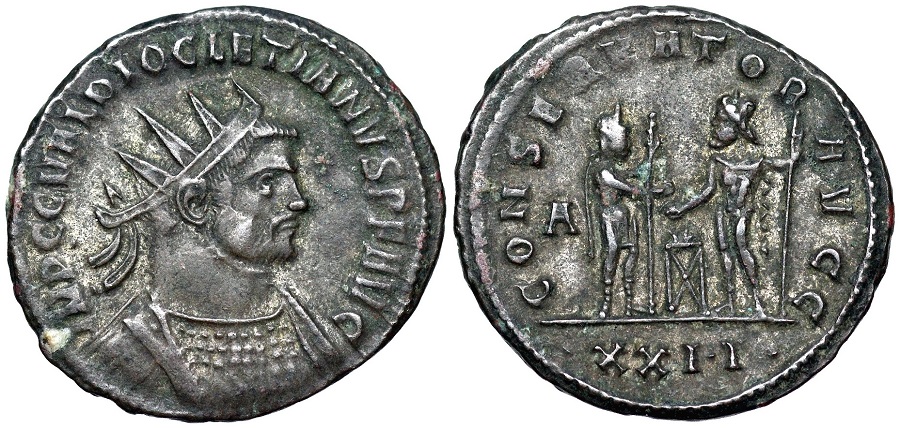 Diocletian A.D. 289- 290 AE Antoninianus 23mm 4.0g IMP C C VAL DIOCLETIANVS P F AVG; radiate and cuirassed bust right. CONSERVATOR AVGG; Diocletian stg. r., and Jupiter stg. l., sacrificing at altar, each holding sceptre; A in left field. In ex. •XXI•I• RIC V Siscia 263 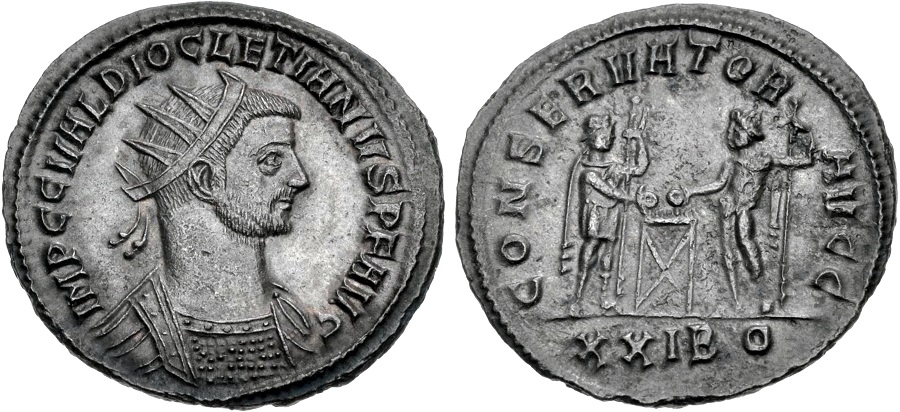 Diocletian A.D. 289- 290 AE Antoninianus 23mm 3.5g IMP C C VAL DIOCLETIANVS P F AVG; radiate and cuirassed bust right, slight drapery over left shoulder. CONSERVATOR AVGG; Diocletian stg. r., and Jupiter stg. l., sacrificing at altar, each holding sceptre. In ex. XXIB•O RIC V Siscia 263 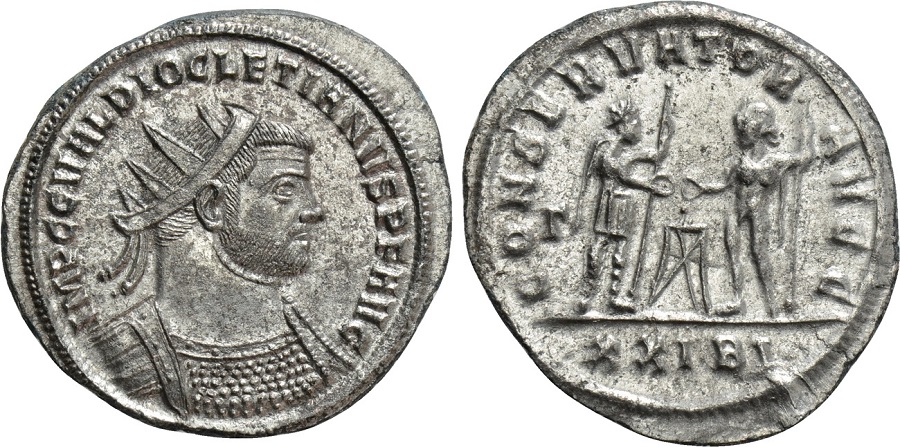 Diocletian A.D. 289- 290 AE Antoninianus 25mm 4.5g IMP C C VAL DIOCLETIANVS P F AVG; radiate and cuirassed bust right. CONSERVATOR AVGG; Diocletian stg. r., and Jupiter stg. l., sacrificing at altar, each holding sceptre; gamma in left field. In ex. XXI•BI• RIC V Siscia 263 Maximianus-- HPKOYAI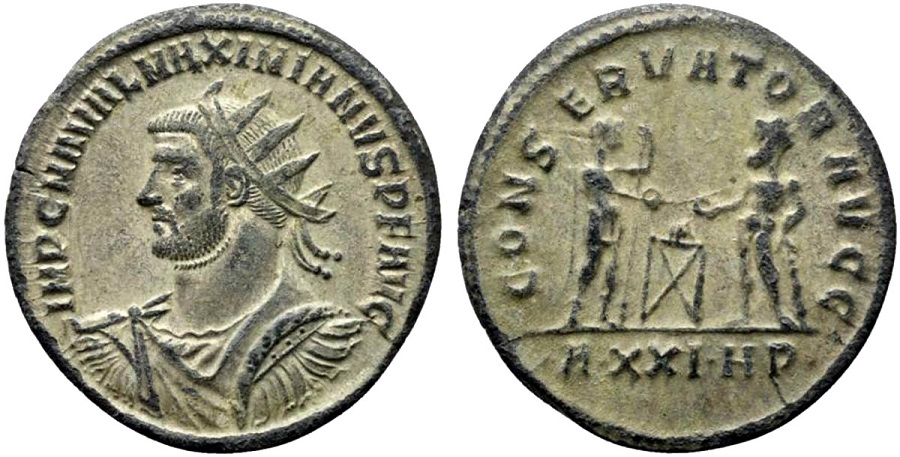 Maximianus A.D. 289- 290 AE Antoninianus 22mm 3.6g IMP C M A VAL MAXIMIANVS P F AVG; radiate, draped and cuirassed bust left. CONSERVATOR AVGG; Maximianus holding sceptre, and Hercules, leaning on club; standing face to face, sacrificing at altar. In ex. •A•XXI•HP• RIC Vii Siscia 580 bust type not listed in RIC 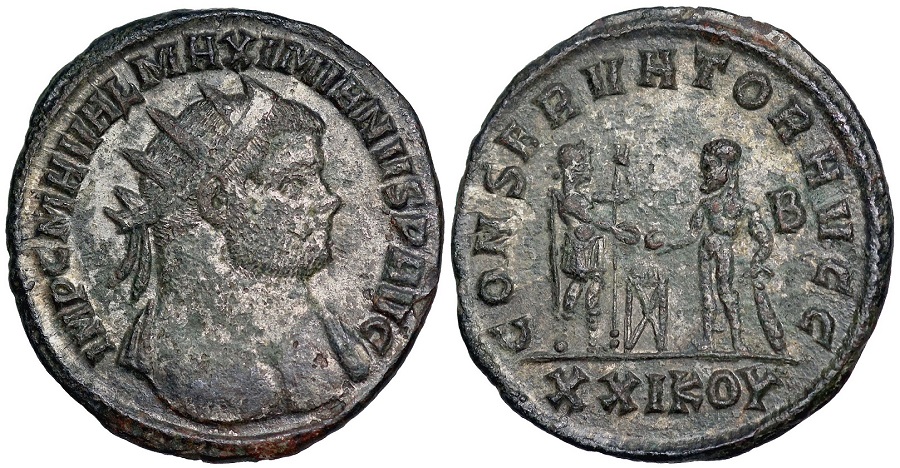 Maximianus A.D. 289- 290 22x23mm 3.7g IMP C M A VAL MAXIMIANVS P AVG; heroic nude bust right, with drapery over shoulders. CONSERVATOR AVGG; Maximianus holding sceptre, and Hercules, leaning on club; standing face to face, sacrificing at altar; B in right field In ex. XXIKOY RIC V Siscia 581 Bust type not listed in RIC 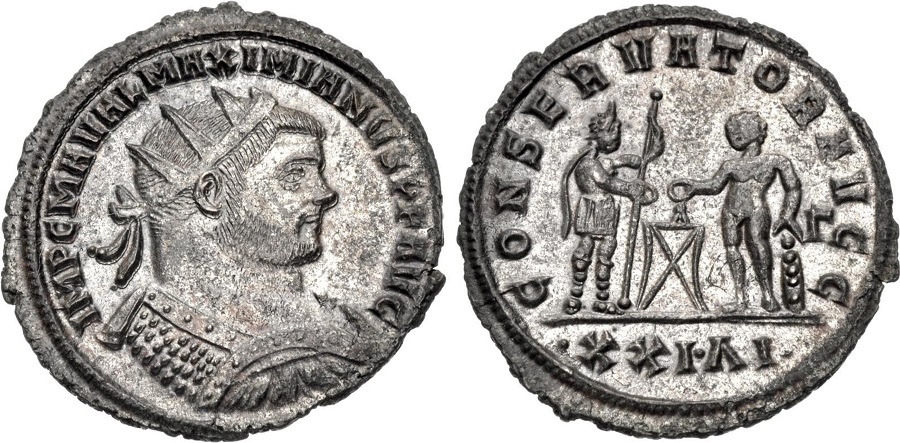 Maximianus A.D. 289- 290 AE Antoninianus 23mm 3.2g IMP C M A VAL MAXIMIANVS P F AVG; radiate and cuirassed bust right, seen from rear. CONSERVATOR AVGG; Maximianus holding sceptre, and Hercules, leaning on club; standing face to face, sacrificing at altar; gamma in right. In ex. •XXI•AI• RIC V Siscia 580 var. (bust type) |
|
Bedrock of the Community
United States
12057 Posts |
Been quite busy today! I have too many coins from the 280s so forgive me if I post them all at once (the nicer ones, anyway) Time is short. Maximianus - ca. 286-287 (Regnal year 2) AE Tetradrachm. 7.2 grams. 18 mm. Milne 4814 Elpis (Spes) standing left with flower, raising hem of skirt 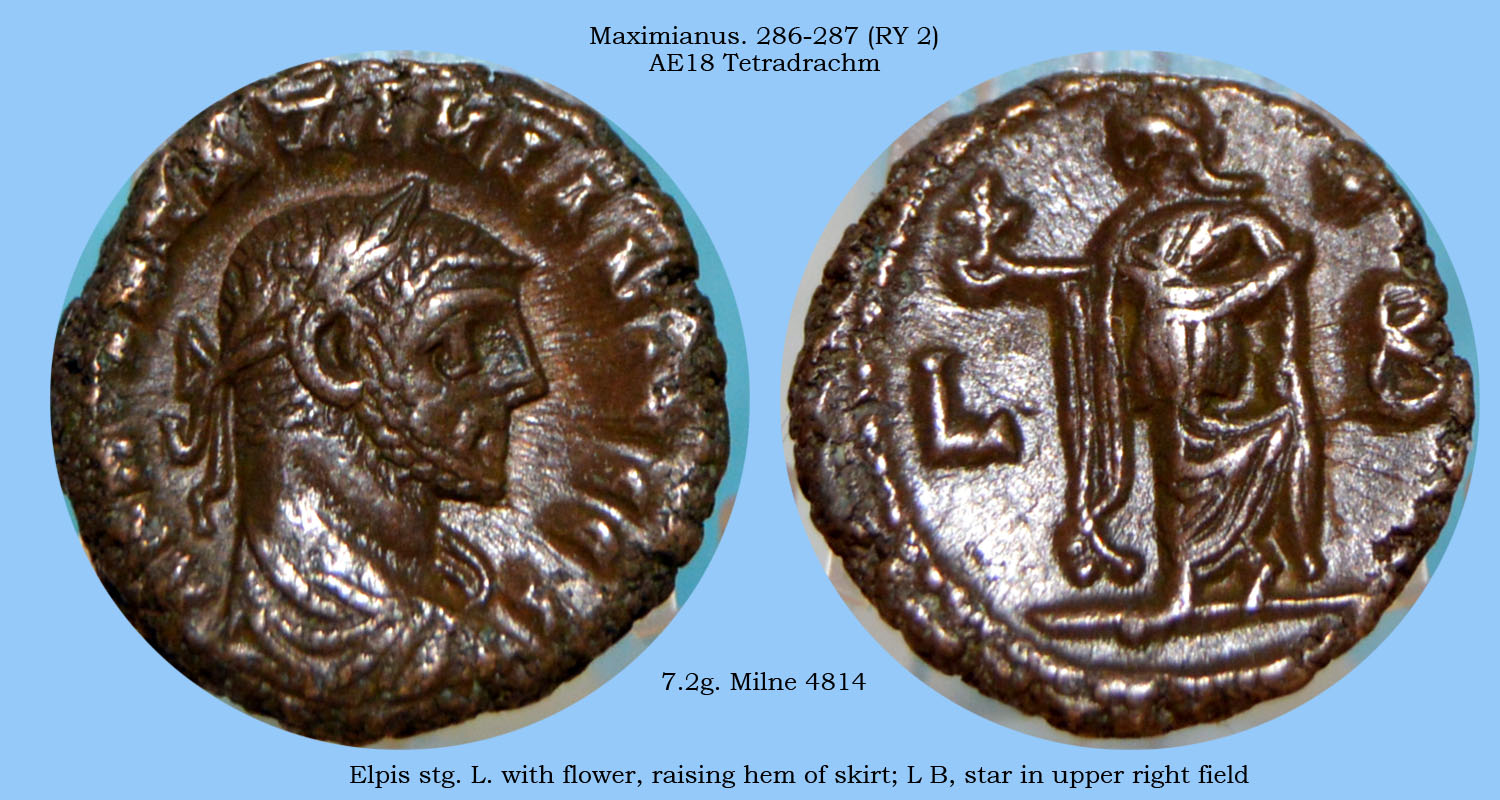 Diocletian - ca. 286-287 (Regnal year 3) AE Tetradrachm. 6.4 grams. 21 mm. Milne 4845 Eagle standing left and facing right, wreath in beak 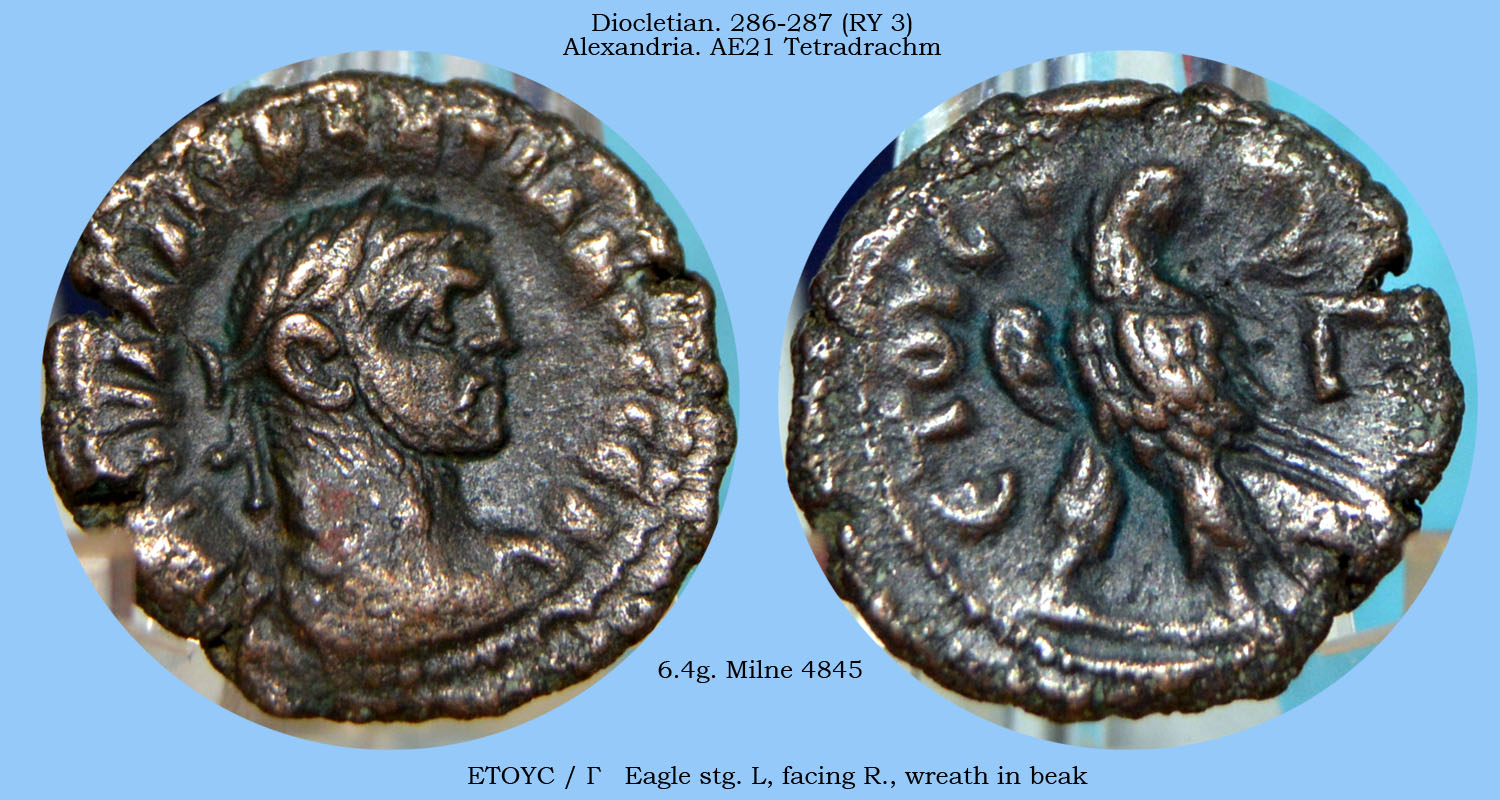 Diocletian - ca. 285. Silvered AE Antoninianus. Antioch (Officina Ε) RIC V Antioch 323e Obv: IMP CC VAL DIOCLETIANVS P F AVG Radiate, draped and cuirassed bust facing right. Rev: IOV ET HERCV CONSER AVGG Jupiter standing right with globe and sceptre facing Hercules standing left, holding Victory, cudgel and lionskin; the letter Ε between. XXI (dot) in ex. 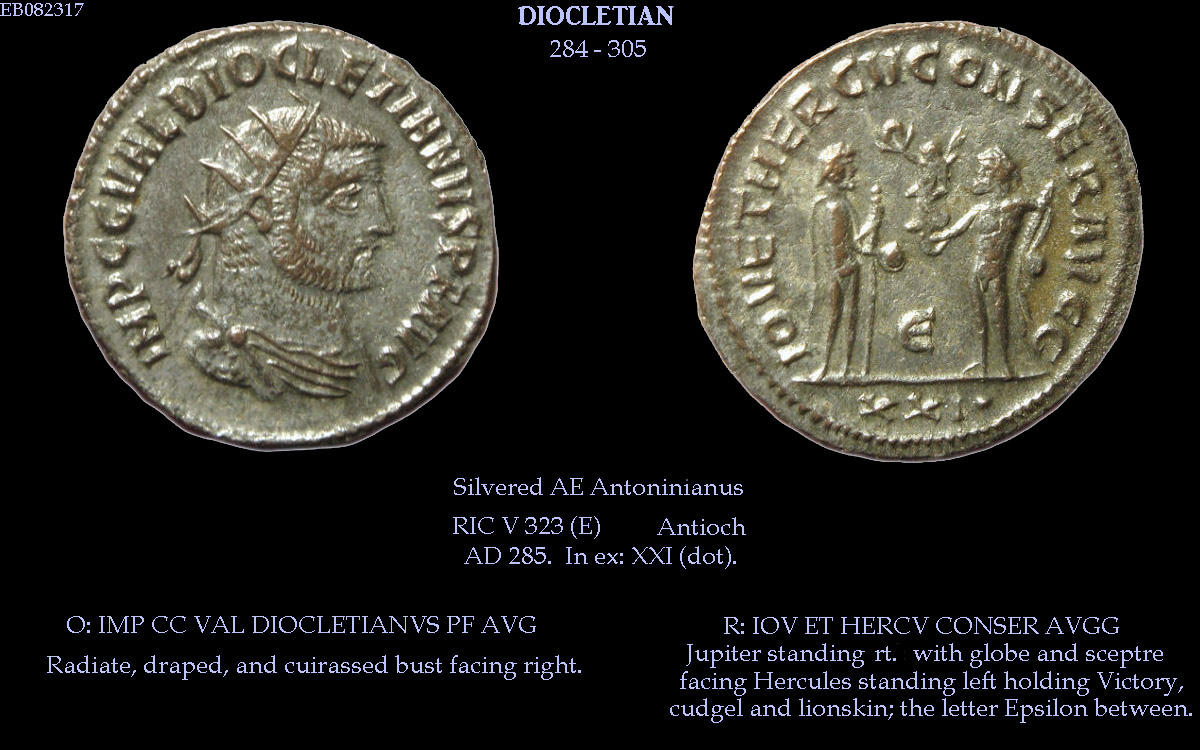 Member ANA - EAC - TNA - SSDC - CCT #890 "Most of the things worth doing in the world had been declared impossible before they were done." -- Louis D. Brandeis Edited by paralyse
12/27/2024 9:24 pm
|
|
Bedrock of the Community
United States
12057 Posts |
Carus. ca. 282-283 AE Antoninianus. Tripolis. RIC V Carus 128 Obv: IMP C M AVR CARVS P F AVF Radiate and draped bust right Rev: VIRTVS AV-GG Carus, draped and cuirassed, standing right, holding scepter in right hand, receiving globe from Jupiter (or Carinus?) standing left, holding scepter in left hand, TR between. XXI in ex. 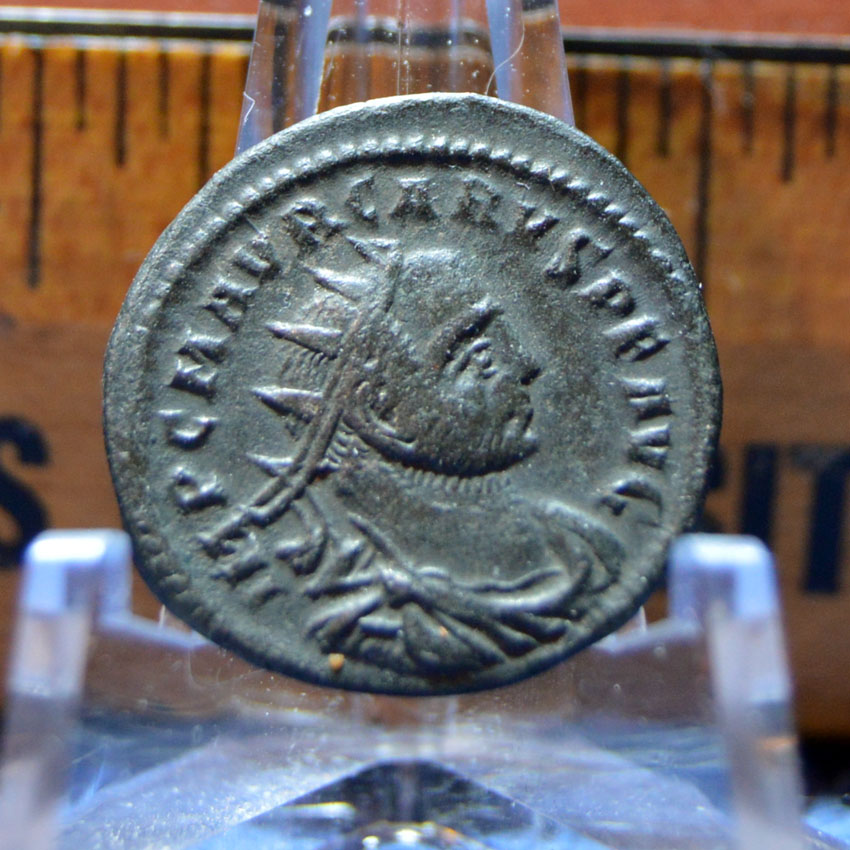 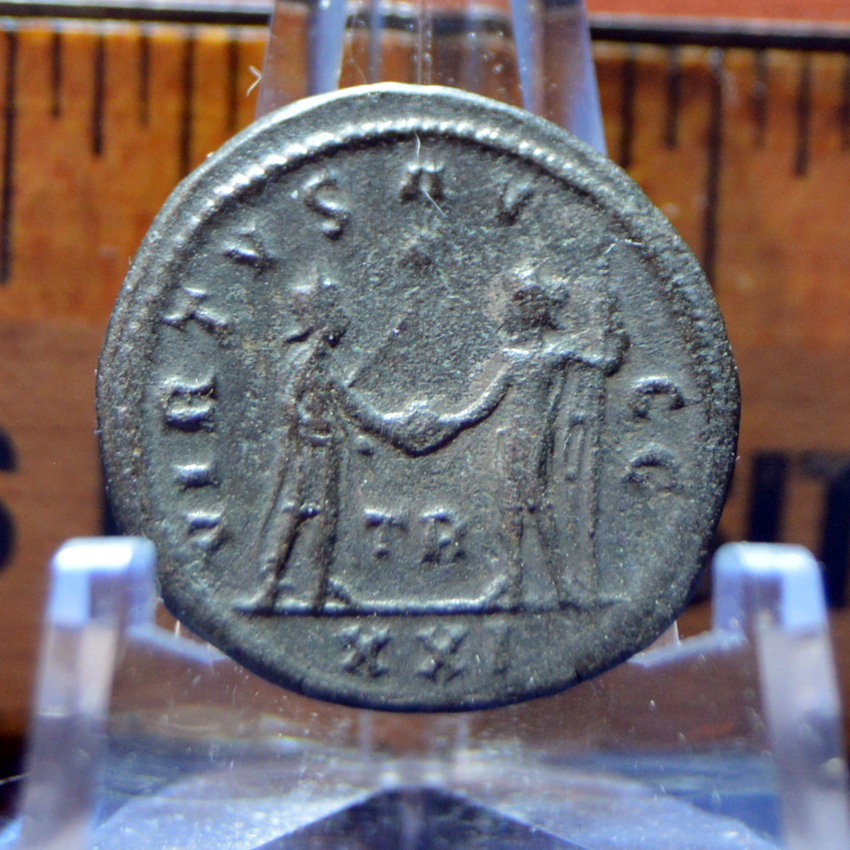 Numerian. ca. 283-284 AE Antoninianus. Rome (KAS) 20.3mm. RIC V.2 Numerian 422 Obv: IMP C NVMERIANVS P F AVG Radiate, draped & cuirassed bust right. Rev: VNDIQVE VICTORES Emperor standing left with globe, holding scepter in left hand and globe in right hand; two captives seated at his feet. Mint mark KAS in ex. 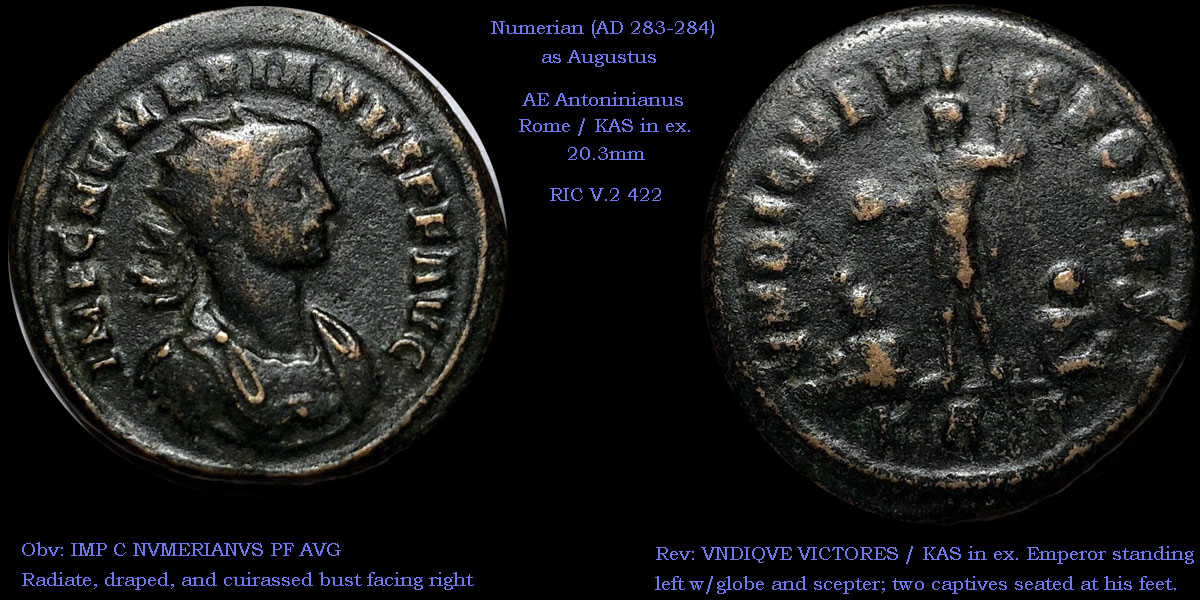 Member ANA - EAC - TNA - SSDC - CCT #890 "Most of the things worth doing in the world had been declared impossible before they were done." -- Louis D. Brandeis Edited by paralyse
12/27/2024 11:27 pm
|
|
Pillar of the Community
United States
979 Posts |
Maximianus Herculius claimed that he was related to Hercules and here are some coins that reference the relationship. 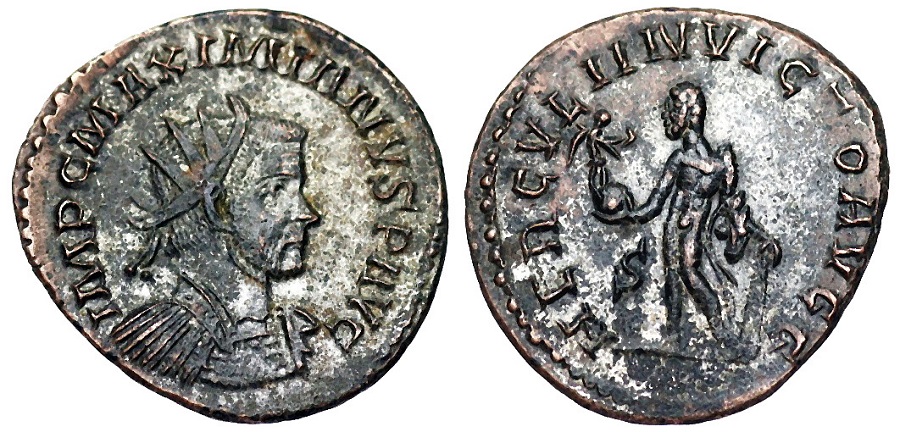 Maximianus A.D. 289 Antoninianus 21mm 3.7gm IMP C MAXIMIANVS P AVG; Radiate and cuirassed bust right. HERCVLI INVICTO AVGG; Hercules stg. l., holding Victory on globe, club and lion's skin; in left field S. RIC Vii Lyon 369 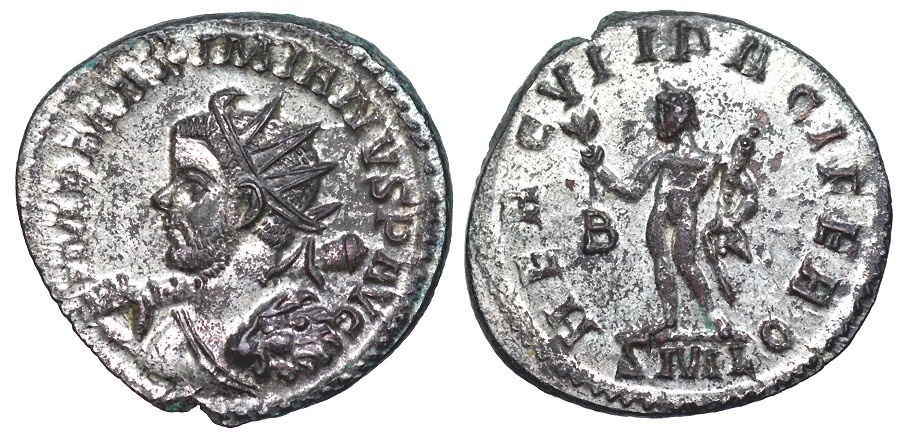 Maximianus A.D. 288 Antoninianus 21x22mm 3.6g IMP MAXIMIANVS P AVG; Radiate, bare bust wearing baldric, lion's skin across shoulder and carrying club. HERCVLI PACIFERO; Hercules stg. l., holding branch, club and lion's skin; in left field B. In ex. SML RIC Vii Lugdunum 375; Bastien 130 (2 ex.) spelling error-- the L in HERCVLI is an I the catalogue descriptions for this type list it as cuirassed; but Maximianus is actually bare chested and wearing a baldric. 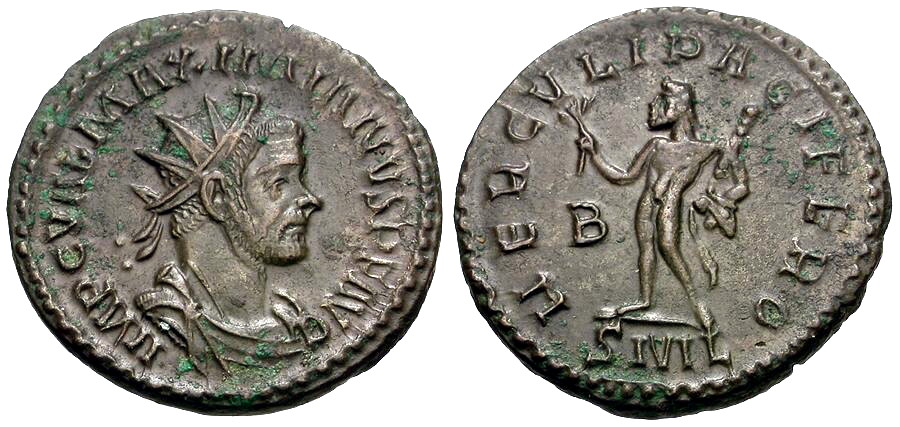 Maximianus A.D. 287-289 Antoninianus 21mm 3.9g IMP C VAL MAXIMIANVS P F AVG; radiate, draped and cuirassed bust right. HERCVLI PACIFERO; Hercules standing left, holding olive branch, club and lion-skin; B in left field. In ex. SML RIC Vii Lugdunum 372 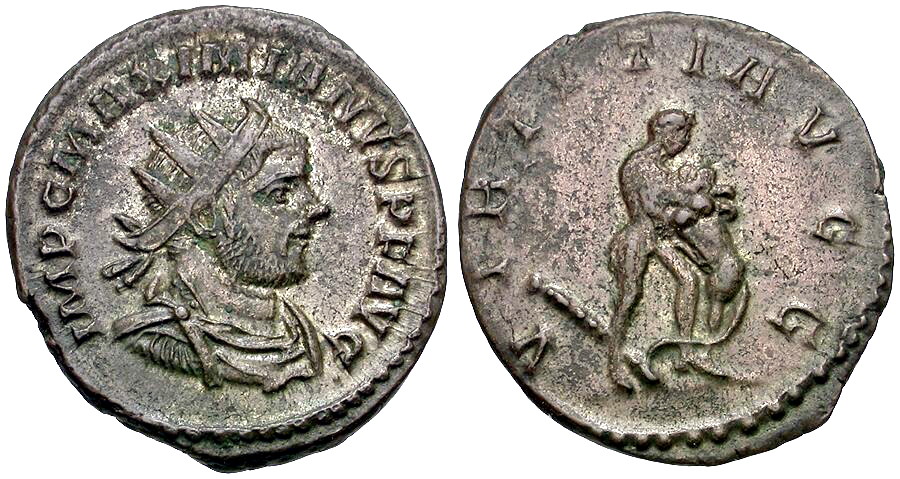 Maximianus A.D. 289 Antoninianus 22mm 3.6g IMP C MAXIMIANVS P F AVG; radiate, draped and cuirassed bust right. VIRTVTI AVGG; Hercules stg. r., strangling lion, club thrown behind him. RIC Vii Lyons 454 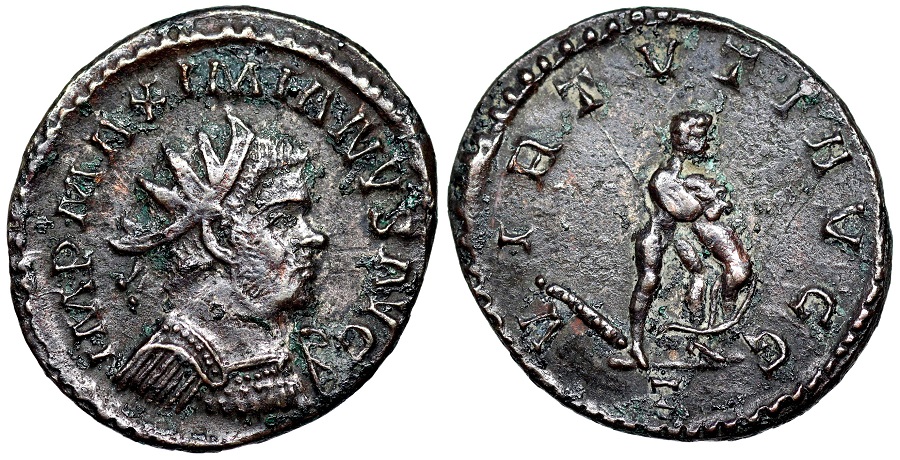 Maximianus A.D. 289 #1236; Antoninianus 21x23mm 3.7gm IMP MAXIMIANVS AVG; radiate and cuirassed bust right. VIRTVTI AVGG; Hercules stg. r., strangling lion, club thrown behind him. In ex. T cf. RIC Vii Lyons 456; cf. Bastien 226 This coin is not in RIC for the T in exergue. It is not listed in Bastien either, though he does mention in a footnote for #226 that an example was noted in the Nieder-Rentgen hoard (pg 42) 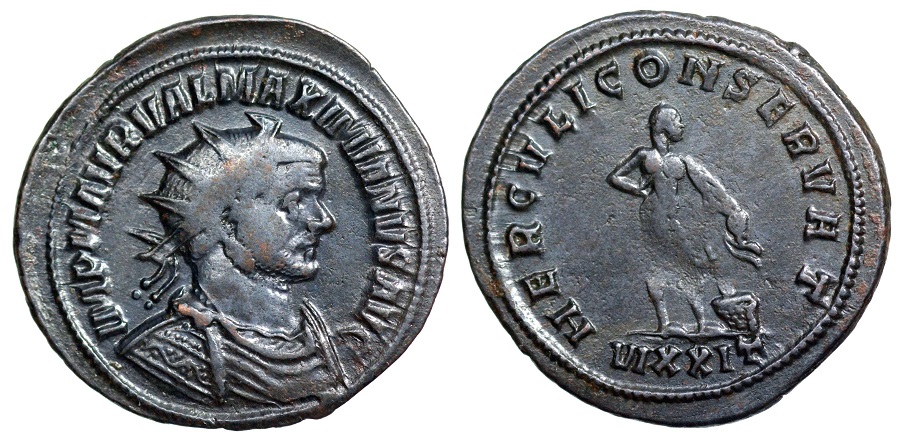 Maximianus A.D. 285- 288 Antoninianus 23x24mm 3.6gm IMP M AVR VAL MAXIMIANVS AVG; Radiate, cuirassed and draped bust right. HERCVLI CONSERVAT; Hercules stg. r., holding club with lion's skin, on rock. In ex. VIXXIT RIC Vii Ticinum 547 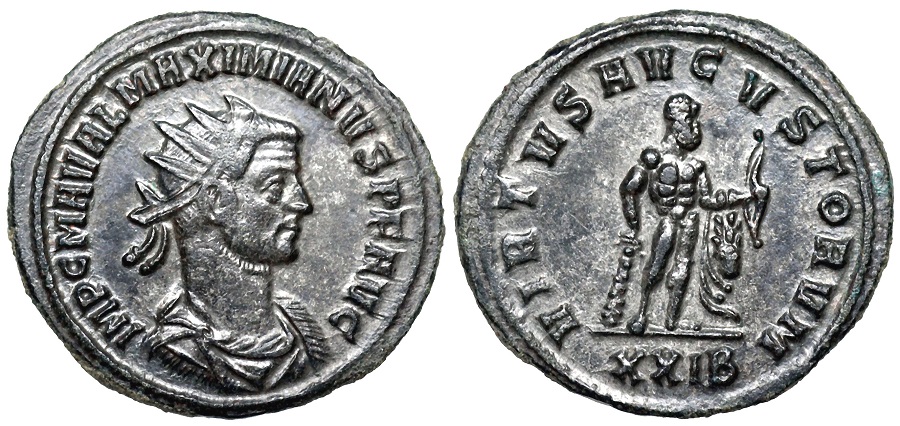 Maximianus A.D. 287 Antoninianus 22x24mm 4.5gm IMP C M A VAL MAXIMIANVS P F AVG; radiate, draped and cuirassed bust right. VIRTVS AVGVSTORVM; Hercules stg. r., leaning on club, holding lion's skin and bow. In ex. XXIB RIC Vii Cyzicus 591 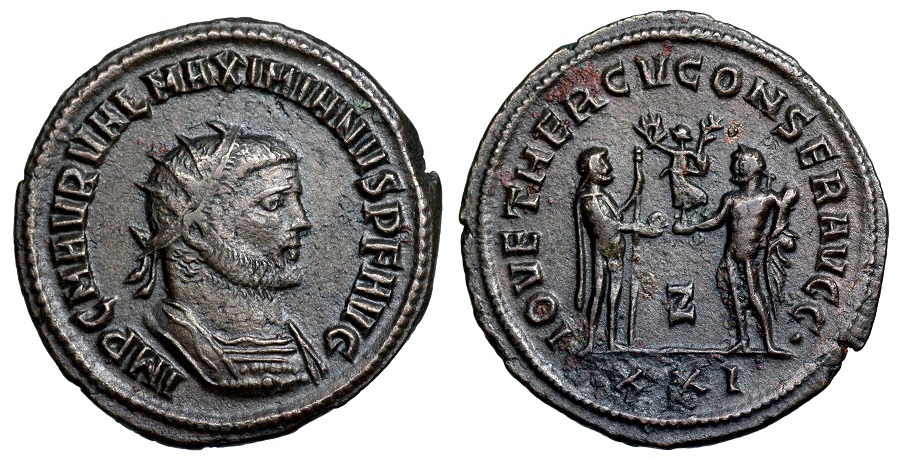 Maximianus A.D. 285- 295 Antoninianus 22x23mm 3.4g IMP C M AVR VAL MAXIMIANVS P F AVG; radiate and cuirassed bust right. IOV ET HERCV CONSER AVGG•; Jupiter standing right, holding globe and sceptre, facing Hercules standing left, holding victory, club and lion's skin; between them Z. In ex. XXI RIC Vii Antioch 622 |
|
Pillar of the Community
 Sweden
2124 Posts |
276 CE, antoninianus, Tacitus, RIC V Tacitus 61. IMP CL TACITVS AVG / SPES PVBLICA, Lugdunum, 3rd officina (C). 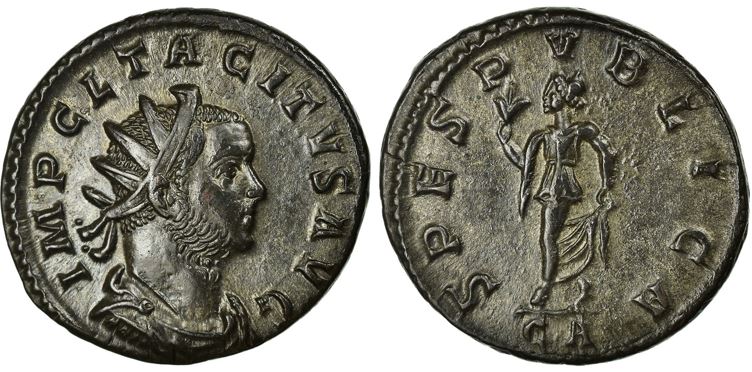 |
|
Moderator
United States
34542 Posts |
That is a great start to the 270s @era. I'm interested to see what else is posted today.
"If you climb a good tree, you get a push."
-----Ghanaian proverb
"The danger we all now face is distinguishing between what is authentic and what is performed."
-----King Adz
|
|
Pillar of the Community
United States
979 Posts |
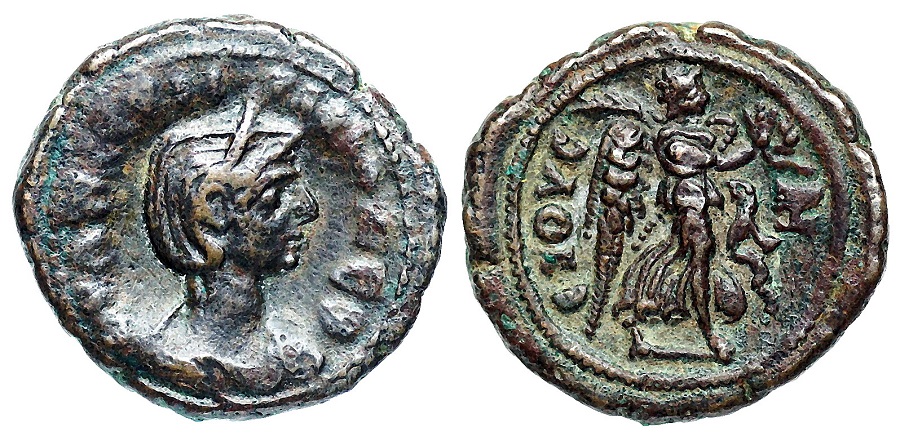 Severina A.D. 274- 5 Alexandria, Egypt #1236; Tetradrachm 21x22mm 7.0g OVΛΠ CEVHΡINA CEB; diademed and draped bust right. ETOVC; Nike advancing right with wreath and palm branch over shoulder; Z in right field. Emmett 3968 Wife of Aurelian |
|
Bedrock of the Community
United States
12057 Posts |
Only going to do two for now. I will see if anyone else wants to post before I post others. Tacitus. ca. 275-276. AE Antoninianus. 21.1mm, 4.0g Rome mint RIC VI Tacitus 84c (corr.) Obv: IMP C M CL TACITVS AVG Radiate, draped & cuirassed bust right Rev: CLEMENTIA TEMP Clementia standing left, draped, legs crossed; leaning on column and holding scepter XXIZ in ex. 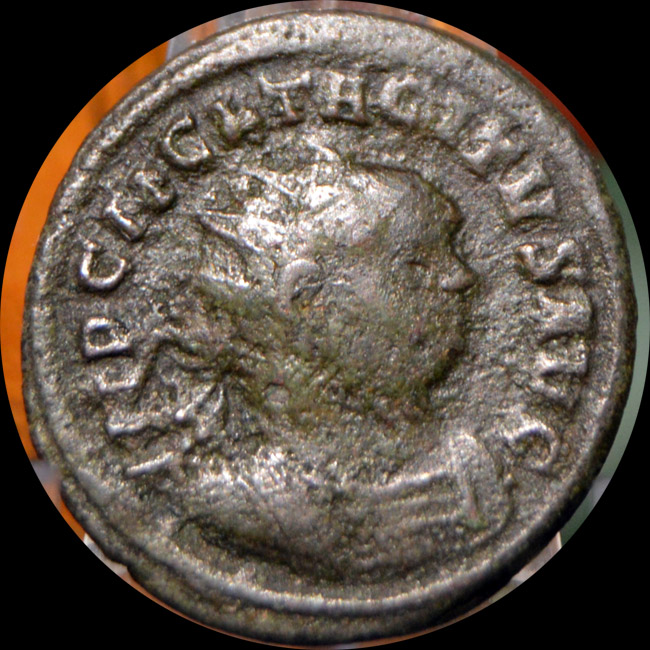 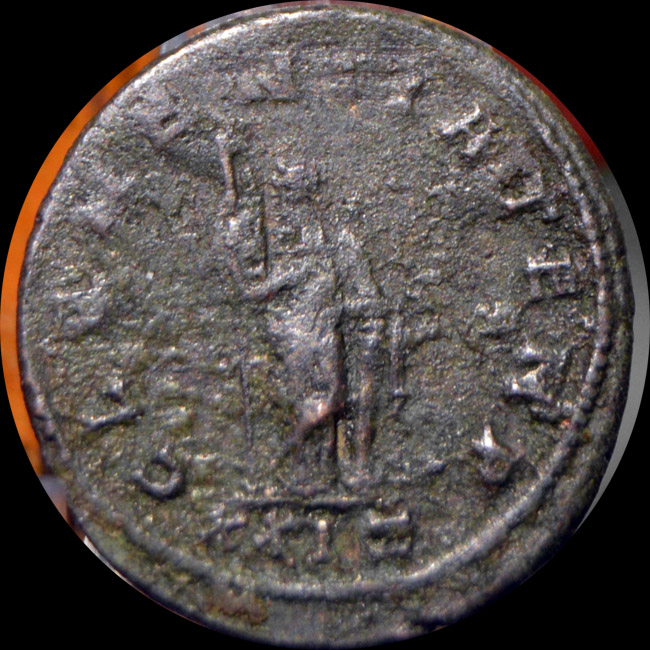 Probus. ca. 276-282 AD AE Antoninanus. 22.0mm, 5.8g Rome mint. RIC V.2 157 Obv: IMP PROB-VS AVG Radiate, helmeted and cuirassed bust left, holding spear and shield Rev: ADVEN-TVS AVG. Emperor on horseback riding left, holding scepter and raising right hand, a bound captive before the horse. R crescent digamma in ex. 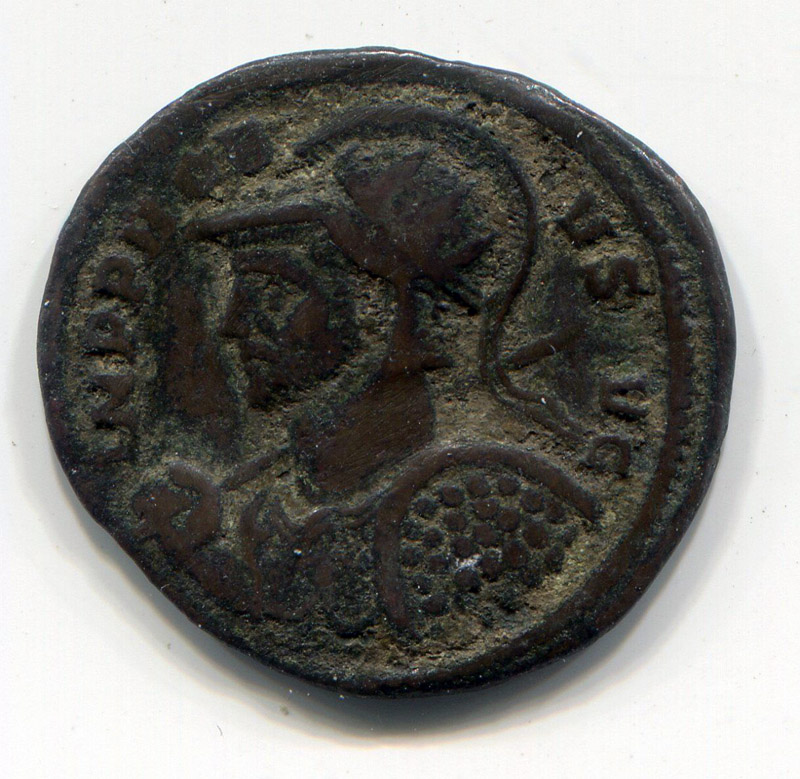 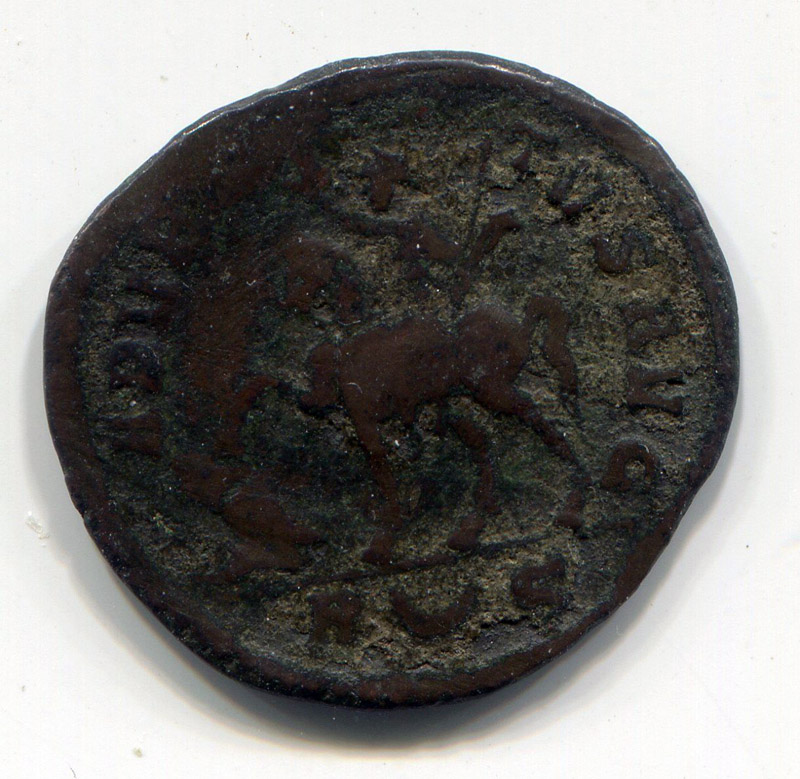 Member ANA - EAC - TNA - SSDC - CCT #890 "Most of the things worth doing in the world had been declared impossible before they were done." -- Louis D. Brandeis |
|
Moderator
United States
34542 Posts |
Quote:
I will see if anyone else wants to post before I post others. Yep that is fine, but please get them posted before the end of the day as we will move backward to the 260s tomorrow. We are truly in uncharted territory as the first version of this thread never got this far. "If you climb a good tree, you get a push."
-----Ghanaian proverb
"The danger we all now face is distinguishing between what is authentic and what is performed."
-----King Adz
|
|
Moderator
United States
195207 Posts |
Fantastic examples!  |
|
Bedrock of the Community
United States
12057 Posts |
I've got two Aurelian x Vabalathus but one is ugly and I can't find my photos of the other so we'll forgo those for now. Aurelian. 270-275 AD. AE Antoninianus. Siscia mint. RIC V Aurelian 225 I bought this coin in 1996 from a dealer in New Orleans - doesn't seem that long ago, until it does...I was 18 years old and $48 was the most money I'd ever spent on an ancient coin at that point in time. Didn't have a lot left over to buy stuff after that but I still had enough for a sack of beignets so it was all good. Obv: IMP AVRELIANVS AVG Radiate and cuirassed bust right Rev: IOVI CON-SER Emperor standing right w/scepter; receiving globe from Jupiter standing left with scepter Mint *S in ex. 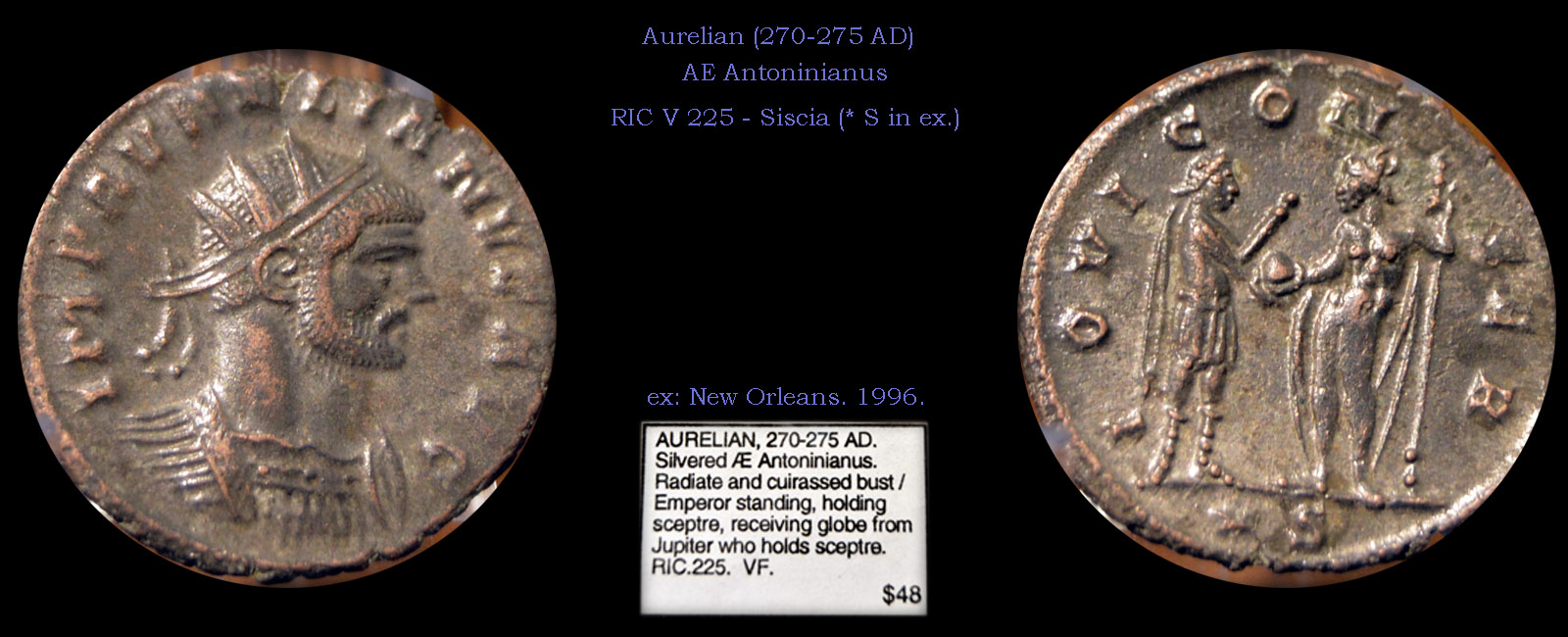 Member ANA - EAC - TNA - SSDC - CCT #890 "Most of the things worth doing in the world had been declared impossible before they were done." -- Louis D. Brandeis Edited by paralyse
12/28/2024 11:15 pm
|
|
Pillar of the Community
Sweden
2124 Posts |
The 260s was the decade of the quite successful usurper emperor Postumus. In 260, Marcus Cassianius Latinius Postumus commanded the army in Gaul. Following a victory over Germanic tribes, there was a dispute over the war booty. The local Roman prefect demanded that it be transferred to his site in Cologne, while Postumus demanded that it be distributed among the soldiers. The conflict was sorted out by the army killing the prefect and proclaiming Postumus emperor, which was quite in line with Roman political procedures at the time. Postumus was in control over a substantial part of the Roman empire: Gaul, Hispania, and Britain. The Gallic Empire is used today to denote this usurper state. Postumus remained in power until 269, when it was his turn to be murdered by the army. A number of more short-lived usurper emperors followed, until 274 when Aurelian put an end to the Gallic Empire. Postumus had a rich coinage of gold aurei, billon antoninianii, and bronze sestertii. There is some uncertainty (or differing opinions) about which mints were used, of the three likely locations Lugdunum, Treveri, and Colonia Agrippina (Cologne). Here is 22.6 g of Postumus bronze. 261 CE, double sestertius, Postumus, RIC V Postumus 123. IMP C M CASS LAT POSTVMVS P F AVG / FIDES MI-LITVM, Treveri? 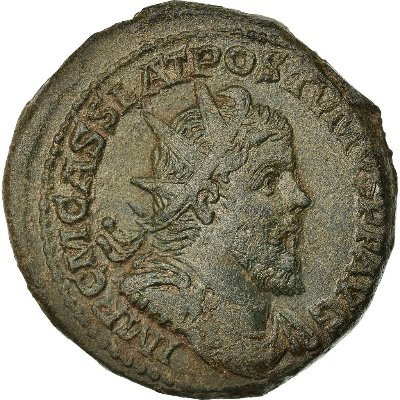 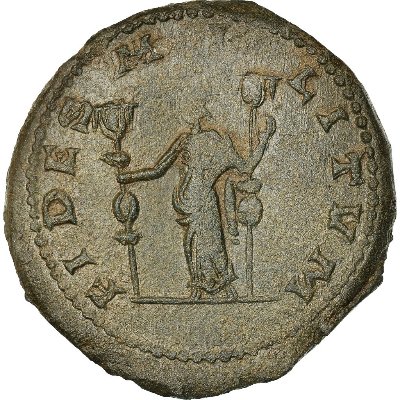 Edited by erafjel
12/29/2024 05:30 am
|
|
Pillar of the Community
United States
979 Posts |
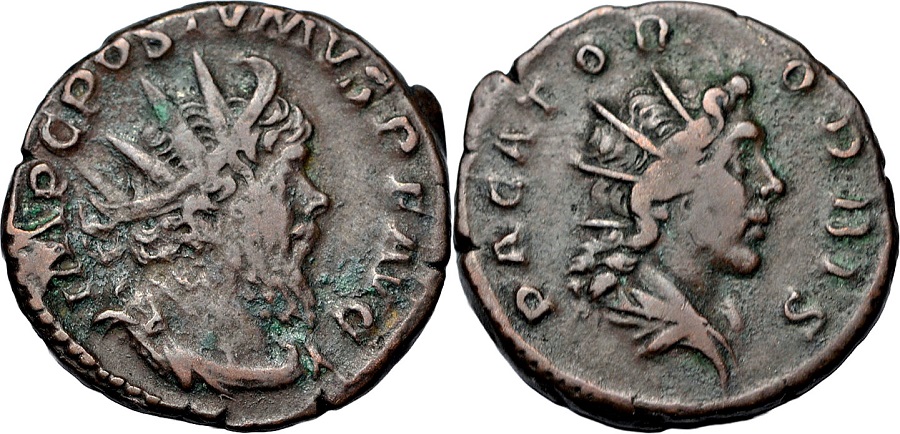 Postumus A.D. 269 AE Antoninianus 20mm 3.6g IMP C POSTVMVS P F AVG; Radiate, draped, cuirassed bust right. PACATOR ORBIS, radiate and draped bust of Sol right. RIC V.4 Cologne 421; Cunetio 2465 |
| |
Replies: 750 / Views: 66,882 |
To participate in the forum you must log in or register.
 
- Help With Identification Please.
- 1969-S Lincoln Cent Machine Doubling Or Double Die Obverse
- 1999 Lincoln Cent - Die Clash
- 1809 Half Cent For Grading
- 1987 - D Lincoln Cent Grade Check
- 1987- D Lhc Possible RPM Or DDO In Date
- You Know What I Want That Final Number To Be
- Bronze Coin To Id. Greek Or Roman?
- A Ridiculously Badly Written Computer Aided Book, Coin Collecting Bible, 2024
- Liberty Head 10/11 Stars Obverse With A Sick Looking Eagle On The Reverse Holed 0.59g 13.06mm
- The Tyrant Collector - PCGS Youtube Interview
- Counterfeit Detection: ANA Video - Introduction, With Brian Silliman And Jim Robinson Ep. 1
- Counterfeit Detection: ANA Video - Mistakes, Risk Factors, And Counterfeits & Alterations, Ep. 2
- Counterfeit Detection: ANA Video - Pimples And Pits, Looking At Cast Counterfeits, Ep. 4
- Counterfeit Detection: ANA Video - What Year Is That Cent? Key Date Coins, Ep. 5
- Counterfeit Detection: ANA Video - Diagnostics Of The 3, 5, And 10 Cent Coins, Ep. 6
- Counterfeit Detection: ANA Video, Counterfeit Quarter Dollar Diagnostics, Ep. 7
- Counterfeit Detection: ANA Video, Counterfeit Classic Commemorative Coins Diagnostics, Ep. 8
- Counterfeit Detection: ANA Video, Counterfeit Silver Dollar Diagnostics, Ep. 9
- Counterfeit Detectection: ANA Video, Classic US Gold Coin Diagnostics, Ep. 10
Disclaimer: While a tremendous amount of effort goes into ensuring the accuracy of the information contained in this site, Coin Community assumes no liability for errors. Copyright 2005 - 2026 Coin Community Family- all rights reserved worldwide. Use of any images or content on this website without prior written permission of Coin Community or the original lender is strictly prohibited.
Contact Us | Advertise Here | Privacy Policy / Terms of Use
|
| Coin Community Forum |
© 2005 - 2026 Coin Community Forums |
| It took 0.56 seconds to rattle this change. |
 |
|
| |
| |





 First Page
 Previous Page


 Posted 12/27/2024 07:10 am


