| Author |
 Replies: 14 / Views: 1,866 Replies: 14 / Views: 1,866 |
|
|
Valued Member
United Kingdom
260 Posts |
Hi, I brought the attached 1904 farthing with a bunch of other coins, so it has only cost me a couple of pence. Can someone please tell me what grade it is. The photos don't really show the level of detail on the coin. Thanks 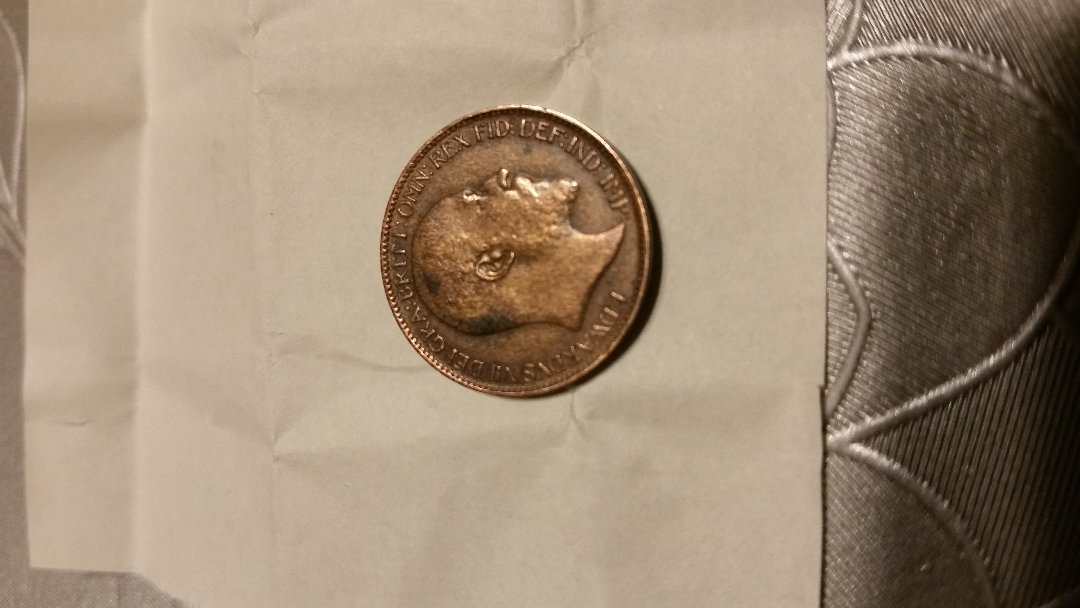 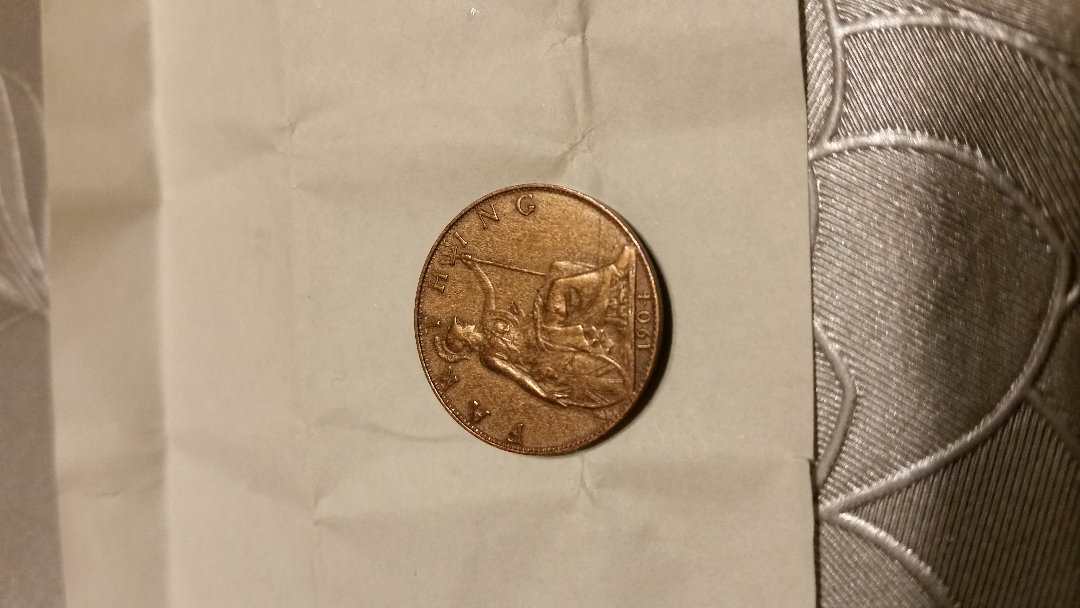 |
|
|
|
Bedrock of the Community
United States
94367 Posts |
Please post larger pics, properly oriented, for the best input.  |
|
Valued Member
United Kingdom
190 Posts |
From those pictures its hard to tell GVF but heavily cleaned however need better pictures especially the reverse.
|
|
Rest in Peace
United States
17900 Posts |
Cut out the background and leave only the coin, properly rotated, in the photo.
|
|
Valued Member
Canada
68 Posts |
 But a GVF based on visible hair on head and face, but not EF as Britannia's fingers are not distinct. |
|
Pillar of the Community
United States
4883 Posts |
Are those traces of the original finish at the rear and near the top of the King's head? Even if so, the overall lack of such hurts it. I'd say there's plenty enough design detail left, though, to allow it to stay in the XF range, at least on the Sheldon scale. Excellent find for what you paid.
I'd echo the need for cropping and reorientation of the photos, however.
Colligo ergo sum
|
|
Bedrock of the Community
Australia
21789 Posts |
British Edwardian Farthings were struck with re cycled obverse dies that were originally used for striking Edwardian gold Half sovereigns. To distinguish the Half Sovereign from the Farthing and so prevent fraud in transactions, farthing blanks were deliberately blackened by The Royal Mint, using a solution of Sodium thiosulfate. The blackening gave the advantage of protecting the coin's surface, much as a deep patina does. As a result, mint state examples of Edwardian Farthings do not patinate any further; they all look just as good as the day they left the Mint, and remain so to this day. The extent to which the blackening has worn off makes them easier to grade. That includes full mint luster. Cartwheeling luster over the black looks rather nice. There is obvious thinning of the blackening on the high points of the design, in this case. I would like sharper pictures to grade this one, but from what I see, gVF would seem about right. With EF (British grade) and above, look for hair detail above the King's ear and high point on the mustache. |
|
Valued Member
 United Kingdom
260 Posts |
Thank you all for the replies, I will try to get some better photos. The coin was brought with a bunch of other coins and a nice surprise to find
|
|
Valued Member
United Kingdom
260 Posts |
Hopefully these photos are better 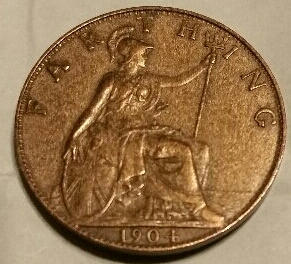 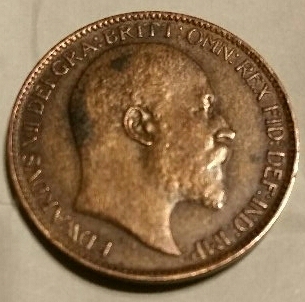 |
|
Pillar of the Community
United Kingdom
701 Posts |
I no longer own any Eddy farthings but here is a Vicky from 1901 ( the 1st year this was done ) with the blackened finish still intact. 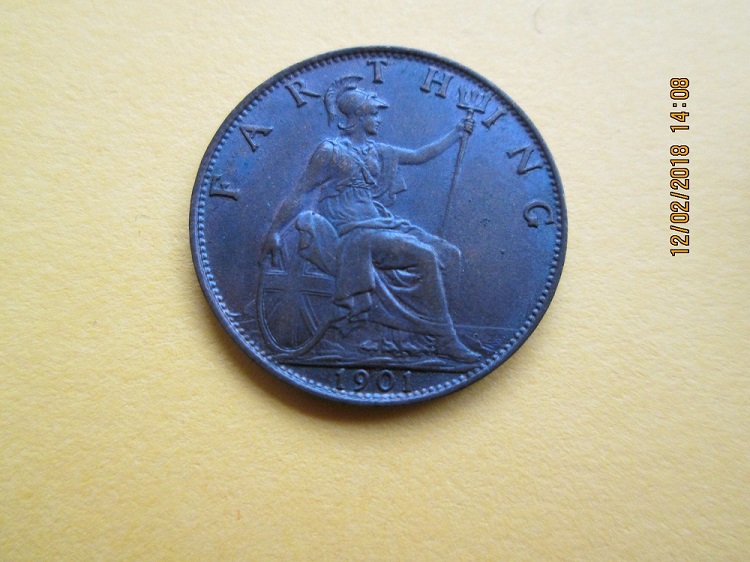 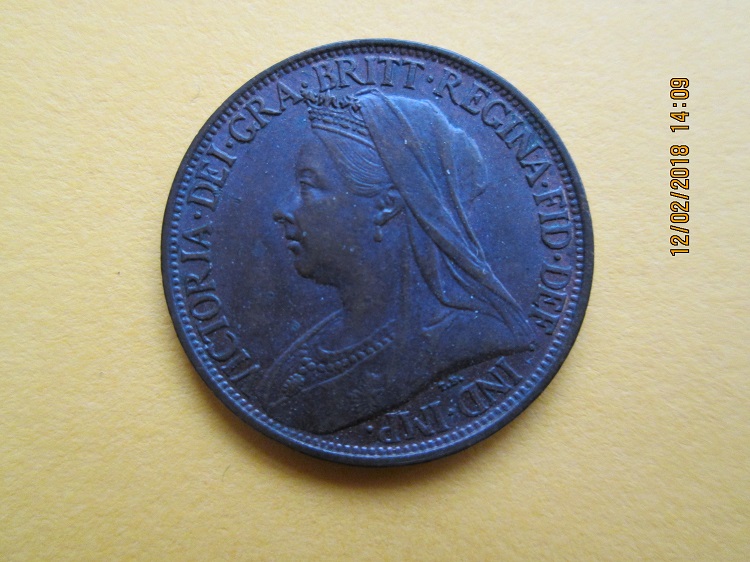 |
|
Pillar of the Community
United States
4883 Posts |
Quote:
I no longer own any Eddy farthings... I have one, a recent "junk" bin find, actually. 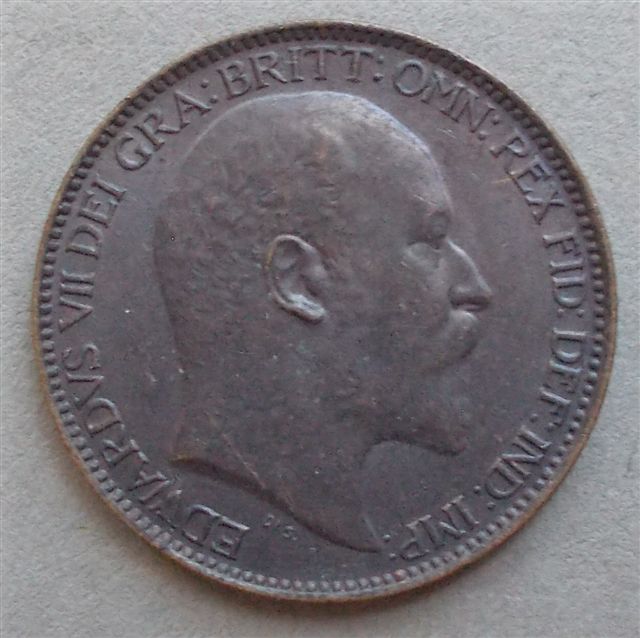 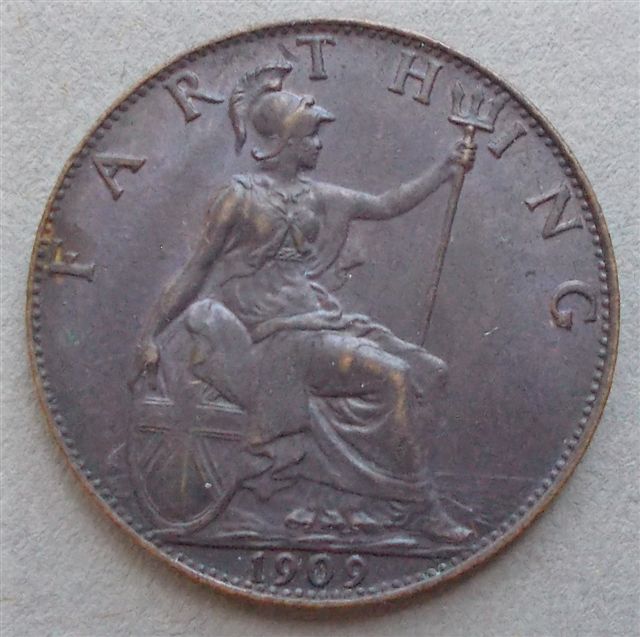 Quote:
...here is a Vicky from 1901 ( the 1st year this was done ) with the blackened finish still intact. My reference book for U.K. coinage states that most of the 1897's were blackened and that from that point forward the practice continued until 1917. It also indicates that some 1901's were in error issued bright. Colligo ergo sum
|
|
Pillar of the Community
United Kingdom
701 Posts |
LOL Cuss, I stumped myself there  I always use Tony Claytons site and the info is there in front of me, clueless as to what I was thinking at the time but it certainly was nothing to do with the info I was reading/ writing  Maybe it was lunch |
|
Bedrock of the Community
United States
94367 Posts |
Original coin looks EF details (cleaned).
|
|
Bedrock of the Community
Australia
21789 Posts |
I agree with Coinfrog, and (British) grading as well.
There is still a lot of detail on the king's mustache and beard.
|
|
Bedrock of the Community
United Kingdom
18733 Posts |
I'll go with GVF, looking at the hair detail.
|
| |
Replies: 14 / Views: 1,866 |
|






 Posted 02/09/2018 4:39 pm





