| Author |
 Replies: 7 / Views: 1,456 Replies: 7 / Views: 1,456 |
|
|
Pillar of the Community
United States
6130 Posts |
Rotating door acquisitions from CNG. First: Mint: Rhagae? Obv: long-bearded bust left wearing diadem; circular border of pellets Rev: beardless archer wearing bashlyk and cloak seated right on throne, holding bow in right hand; empty cloak arm indefinite ending at seat; no border; five-line Greek inscription but with retrograde Σ in ΕΠΙΦΑΝΟΥΣ = ΒΑΣΙΛΕΩΣ ΒΑΣΙΛΕΩΝ ΜΕΓΑΛΟΥ ΑΡΣΑΚΟΥ ΕΠΙΦΑΝΟΥΣ Sellwood 27.1 Var (legend error) 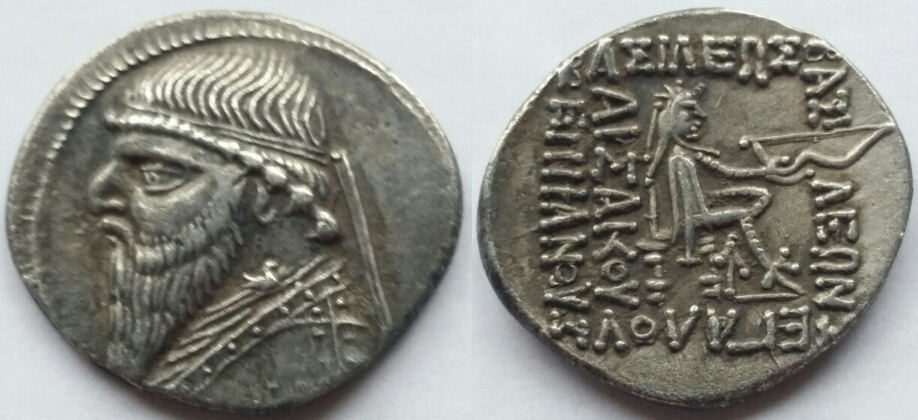 This one may in fact dislodge my current Mithradates II - it's lower grade, but I sort of prefer the toning on this one! |
|
|
|
Pillar of the Community
 United States
6130 Posts |
Coin 2: As above, but with even more spelling errors in the legend: ΒZΙΛΕΩZ ΒΑΣΙΛΕΩ ΜΕΓΑΛΟΥ <ΑΡΣΑΚΟΥ ΕΠHΛΑHΟΥZ 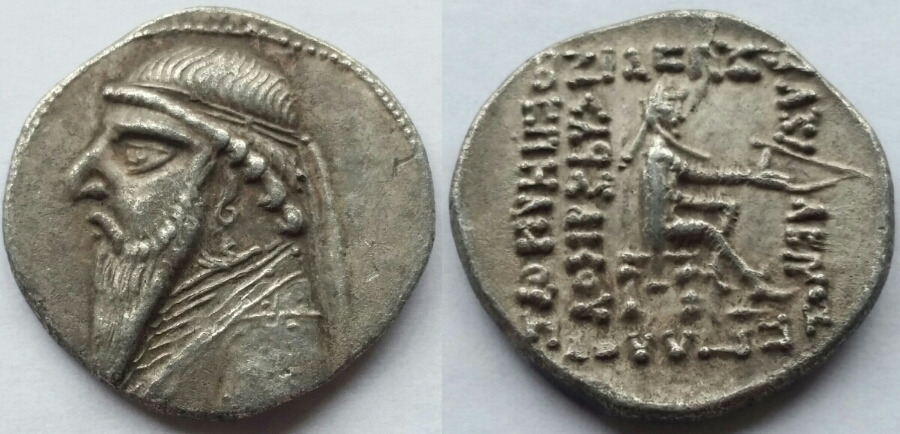 Can't find a reference, but it's a variant of Sellwood 27.X. Any ideas welcome on this one  Edited by Finn235
04/17/2018 12:05 pm
|
|
Moderator
 United States
23731 Posts |
Two beauties, excellent details and clear legends.
|
|
Pillar of the Community
United States
7067 Posts |
Well done, Steve - nice acquisitions. My avatar says that if his arms weren't cropped off the pic at left, he'd be giving these two thumbs up.
|
|
Moderator
United States
34549 Posts |
Great coins! It seems to me that the spelling errors are just evidence of illiteracy on the part of the die cutters. Or do you have another theory?
"If you climb a good tree, you get a push."
-----Ghanaian proverb
"The danger we all now face is distinguishing between what is authentic and what is performed."
-----King Adz
|
|
Pillar of the Community
United States
6130 Posts |
Thanks all!
@Bob, since you are the Parthian guru, any chance you know which Sellwood number that second one correlates to specifically? It has some interesting things going on in the legend (most interesting I believe is the extra symbol before ΑΡΣΑΚΟY) but I couldn't find a good match for it on Parthia.com.
@Spence, I'd have to defer to Bob on the question of language, but to my knowledge, most Parthians had probably little working experience with Greek. It was a formal language used for government matters for them, while most would use Aramaic or another language of a similar family, and I believe they still used Cuneiform to an extent up until about 75 AD. They do make a lot of careless mistakes for not having completely barbarized the legend - perhaps indicative of Greek being a second or third language, but not totally foreign.
|
|
Valued Member
United States
90 Posts |
Finn,
Two excellent Mith II pickups. Congrats. I don't have my copy of Sellwood with me (I'm sure Bob has one in his office and one at home!) but looking at Parthia.com I would say that the first coin you list compares nicely with the second one listed in the Sellwood Type 27 group (27.1) and the second coin looks very much like a 27.1 variant similar to the third or fourth coins from the top of the Sellwood Type 27 coins. I think the reverse of the second coin is retrograde perhaps due in large part to wear (?). I've got a bunch of Mith II coins and most have very clear Greek on the reverse so I believe at this time the Parthian moneyers were very familiar with Greek. It wasn't until much later when the reverses were very low grade, in many cases just plain jibberish although some think Aramaic. I'm sure Bob can shed more light.
Steve S.
|
|
Pillar of the Community
United States
7067 Posts |
Yep, interesting blunders in the legend of that second coin. Apparently retrograde letters are not uncommon in these issues - Parthia.com has a few S.27's with backwards sigmas and rhos. Like Steve (Museumguy) I would call the coin an S.27.1 variant based on legend blunders. I wondered, at first, given the extent of those blunders, whether the coin might be an eastern imitation. There were certainly plenty of contemporaneous eastern imitations of the pre-tiara Mithra II drachms. But the style here is good, better than most of those. So I lean toward this being an official issue from Rhagae. Quote:
extra symbol before ΑΡΣΑΚΟY Yeah, weirdness. Seems to be an extra letter rather than a symbol, though. Finn, you interpret the top legend line as ΒΑZΙΛΕΩZ, but it looks to me like the engraver did not include the alpha (A) after the beta (B), so it looks more like ΒZΙΛΕΩZ. I wonder if he then tried to squeeze in the alpha below the blundered sigma (which he had rendered as a Z rather than Σ) - and in doing so then compounded his mistakes by rendering the dropped alpha as more of a lambda (Λ). Let's face it: this engraver may have used sharp tools for his trade, but he wasn't the sharpest knife in the drawer. Edited by Kamnaskires
04/17/2018 09:06 am
|
| |
Replies: 7 / Views: 1,456 |
|







 Posted 04/16/2018 4:14 pm





