| Author |
 Replies: 14 / Views: 1,873 Replies: 14 / Views: 1,873 |
|
|
New Member
United States
10 Posts |
|
|
|
|
Moderator
 United States
34561 Posts |
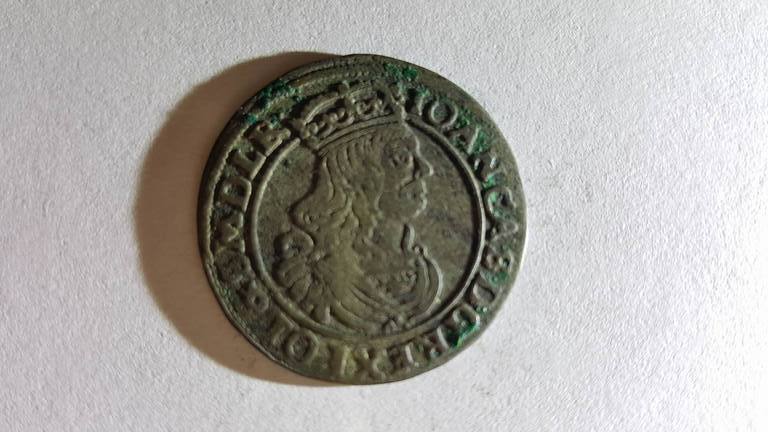
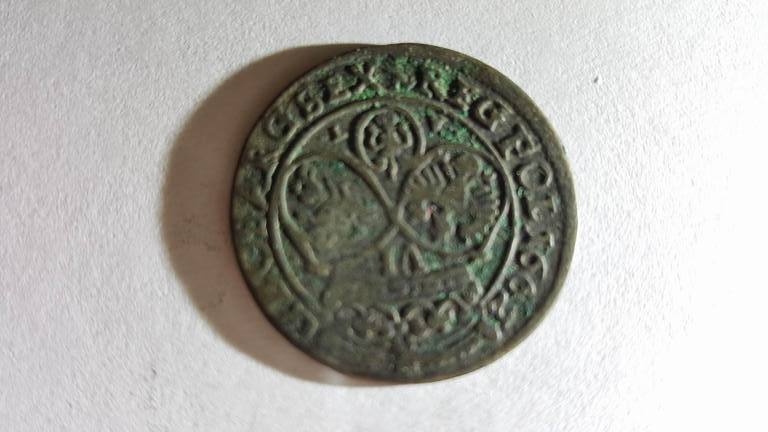
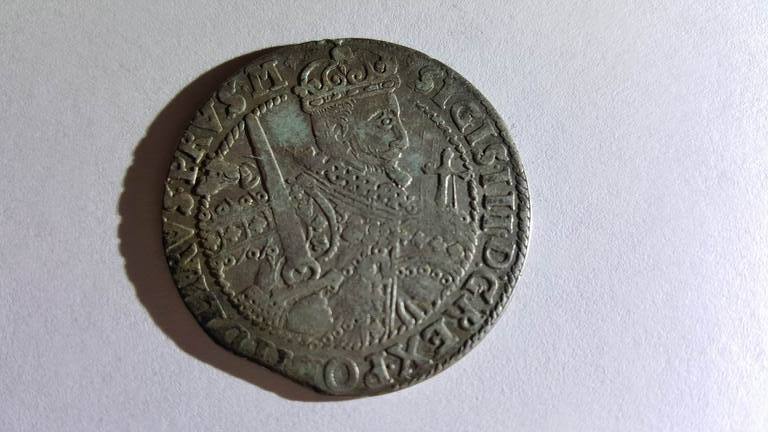
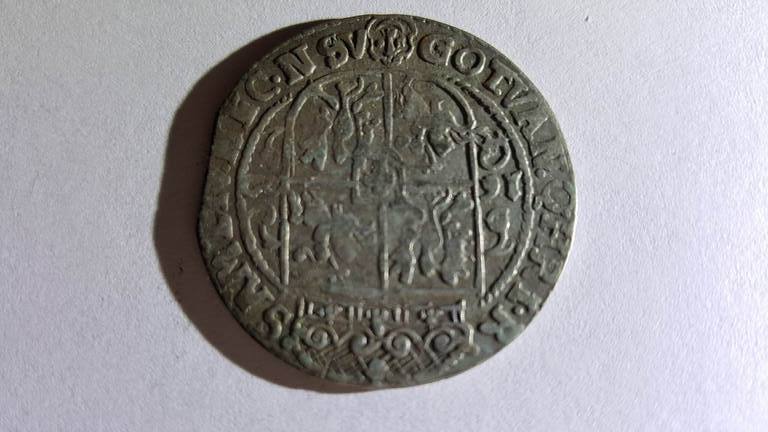
Here is a link with info about your second coin: https://www.NGCcoin.com/price-guide...duid-1545310I believe that the third one is also polish (Sigismund III), but I'll confirm and post another link. Added: Ok, your third coin is either a 1/4 Thaler (28 mm) or 1/2 Thaler (34 mm), depending on the actual diameter. You measured it at 30, which is somewhere in between, but presumably that is an estimate. I can't quite read the date from your pics, but the first two digits are 16, and the last two digits are in the middle right of the reverse (your second pic, but rotated 180 degrees so that the shield is facing upward). I believe that Sigismund III's reign ended in 1632, so those two digits should be lower than 32. Not sure on that first coin, but most likely Indian. "If you climb a good tree, you get a push."
-----Ghanaian proverb
"The danger we all now face is distinguishing between what is authentic and what is performed."
-----King Adz
Edited by Spence
04/25/2018 10:25 pm
|
|
Bedrock of the Community
United States
12477 Posts |
Quote:
I believe that Sigismund III's reign ended in 1632, so those two digits should be lower than 32. It looks like 1622 to me.  In Memory of Crazyb0 12-26-1951 to 7-27-2020
In Memory of Tootallious 3-31-1964 to 4-15-2020
In Memory of T-BOP 10-12-1949 to 1-19-2024
|
|
Pillar of the Community
United States
4963 Posts |
Quote:
It looks like 1622 to me. That's what I'm seeing. |
|
New Member
 United States
10 Posts |
Yes, it looks like 1622 to me, too. Thank you so much to @Spence for the very informative reply! From edge to edge where the coin is completely round, it is exactly 30 mm. Is it possible that there was some variation in the size with which the coin was made? And could you suggest anywhere I might post to find out what the first piece in the series here is? It looks like someone in later years punched a hole in it, to hang it on a chain or something.
|
|
Pillar of the Community
United States
1554 Posts |
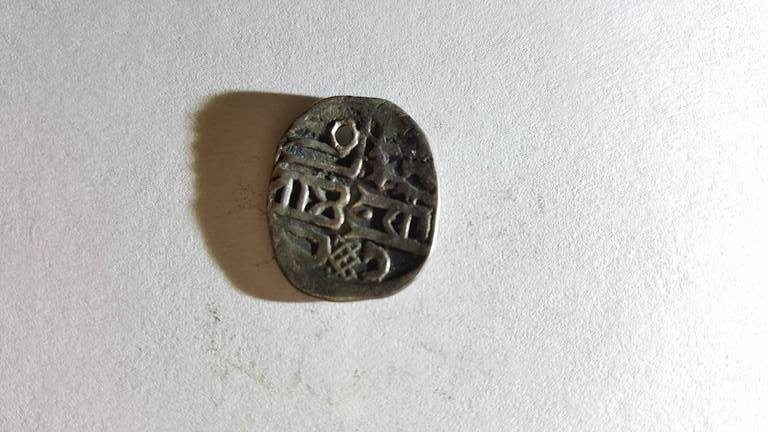
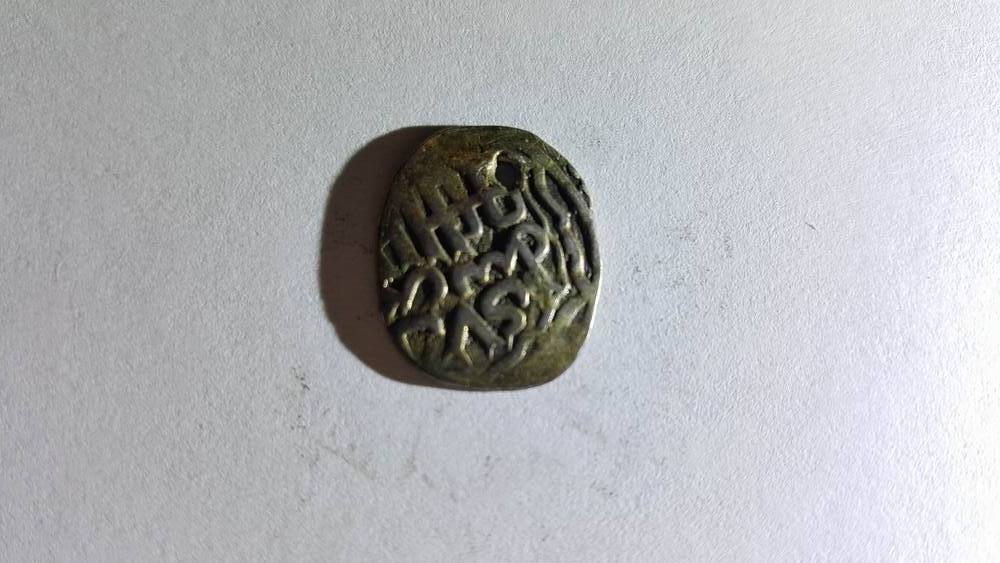
Top: Mongols, Golden Horde, Jani Beg Khan, 1341-1357, AR dirham, Saray al-Jadida mint, dated [7]47 hijri (=AD 1346/7), Steve Album Checklist of Islamic Coins #2027. I wouldn't be surprised if there were some overlap of the circulation zones of Mongol coins in the 14th century and coins of Poland in the 17th century.
Edited by Kushanshah
04/26/2018 07:07 am
|
|
Pillar of the Community
 United States
8056 Posts |
DBinSV, those two Polish coins represent a lot of Polish history!
The third coin pictures King Sigmund III, who ascended the throne of Poland in 1587, when Poland was at the height of its power in late medieval Europe, with territory stretching from the Baltic to the Black Sea. The wording around his portrait says "Sigmund III, by the Grace of God King of Poland, Grand Duke of Lithuania, Russia and Prussia." Sometimes these legends contained hopeful claims, but in this case we have a monarch who was King of Poland-Lithuania (1587-1632), King of Sweden (1594-99), who had Prussia as a vassal state, and who, for a brief time invaded Russia and held Moscow.
The second coin pictures King John Casimir, who reigned from 1648-1668 during a period of decline of Polish influence and prestige in Europe.
As for the first coin, the Mongols frequently attacked Polish territory in medieval times. There is a famous Polish legend about a trumpeter in the tower of the Mariacki church killed by an arrow to the throat while sounding the alarm during the 1241 attack on Krakow (then the capital of Poland).
If your grandmother was of Polish descent, she would have been familiar with both the history and the legend.
Edited by tdziemia
04/26/2018 08:08 am
|
|
New Member
United States
10 Posts |
@Kushanshah, thank you very much for your erudite reply concerning the first of the three coins. May I ask you, please: If I purchase the 2011 edition of Steve Album's Checklist of Islamic Coins, I will find a descriptive entry for this coin in position number 2027? (I take it there is nowhere online to which I could link for this.)
Many thanks to those who have enlightened me about the other two coins! Most appreciated.
|
|
Pillar of the Community
United States
1554 Posts |
@DBinSV Album's Checklist is indispensable for a collector of Islamic coins but it really is only a checklist of types. There are no photos and it presumes the reader has a working knowledge of numismatic Arabic. If you wish to pursue Islamic coins, it is an essential reference. If your interest is only in this coin, perhaps I can help. The entry for Album 2027 is as follows: Jani Beg (Jalal al-Din Mahmud), 742-758/ 1341-13572027 AR dirham (1.56g). struck only at Saray al-Jadida ("New Saray") and nearby Gulistan. Common. "Some Saray al-Jadida dirhams of the early dates of his reign, circa 743-745, bear his name in the Uighur script, usually together with his titles jajal al-din mahmud in Arabic. These title appear from time to time throughout his reign at Saray al-Jadida. Dirhams dated 749 bear the mint name as Saray al-Mahrusa. For posthumous issues dated 767 & 768, see #2045R & 2045S." On your coin, the first image names Jani Beg in Arabic, al-sultan al-'adil / Jani Beg khan. The photo should be rotated 90 degrees clockwise. The reverse (2nd photo) gives the mint and date. Rotate photo 180 degrees. Arabic zarb Sarai al-Jadida The numerals 747 are spread out. The first 7 is at 6 o'clock (off flan), the 4 at 9 o'clock and the second 7 at 12 o'clock. The zeno database has some 450 examples of this type: https://www.zeno.ru/showgallery.php?cat=6785Edited by Kushanshah
04/26/2018 7:10 pm
|
|
New Member
United States
10 Posts |
@Kushanshah, thank you so much for this excellent and invaluable information. It's embarrassing to have positioned the coin incorrectly but I appreciate being corrected, so I can right the images.
My nephew, to whom I am passing along the coins and other family memorabilia, will surely be grateful for the background information. He should enjoy knowing that his great-grandparents were cosmopolitan enough to treasure such a coin.
Would I be correct in presuming that, especially with the hole that was unfortunately punched into it at some point, the piece is of little material value?
|
|
New Member
United States
10 Posts |
One other question, if I may, please, @Kushanshah: Would one side be considered the obverse and, if so, which one?
|
|
Pillar of the Community
United States
1554 Posts |
@DBinSV You would be correct in assuming that the coin's value is primarily sentimental.
Although it's somewhat arbitrary, I would tend to think of the side naming the sultan as the obverse.
Edited by Kushanshah
04/27/2018 01:23 am
|
|
New Member
United States
10 Posts |
Thank you so much, @Kushanshah! You are truly a gentleman and a scholar.
|
|
Valued Member
United Kingdom
367 Posts |
About Polish - Lithuanian coins correct identification from Kopicki catalog:
Szóstak (6 Groszy) Jan II Kazimierz, year 1662, Kraków mint, Kopicki#1662
Ort (during this period about 16 Groszy) Zygmunt III Waza, year 1622, Bydgoszcz mint, Kopicki#1278 and in Shatalin catalog there is about 224 variants for year 1622, so dont ask which variant it is :)
|
|
New Member
United States
10 Posts |
Thank you so much, @geraltttt82!
|
| |
Replies: 14 / Views: 1,873 |
|












 Posted 04/25/2018 10:48 pm


