| Author |
 Replies: 18 / Views: 4,147 Replies: 18 / Views: 4,147 |
|
New Member
United States
6 Posts |
As you know coins are great records of history. I'm new to Ancient coins but am learning
I want to use some ancient coins as teaching tools in the classroom, even if only pictures of coins.
Any suggestions as to ancient Roman, Greek, or Byzantium coins that would be good teaching tools? Perhaps because of who they represent, the symbllism on the coin, "first of" or some other reason?
Thanks!
|
|
|
|
Pillar of the Community
United States
7067 Posts |
Any and all ancient coins can serve as teaching tools. The selection would ideally be made based upon the lesson plan or topic being covered. Politics, famous people from the ancient world, ancient art, mythology, religion, symbolism, etc. - and, of course, the most obvious: monetary history.
I think it best to start with the topic, then select the best coins to illustrate the points being made.
I've used coins in the classroom on several occasions through the years. I know it's a memorable experience for me. Hopefully at least some of my students have thought so too. (Sometimes it's hard to tell!)
|
|
Pillar of the Community
United States
7067 Posts |
I'll add that I think it will be more impactful to pass around actual coins rather than exclusively using reference pics. Make history tangible by having the students hold the coins, and emphasizing that these same coins were held by folks (how ever many) years ago. (Obviously if you use encapsulated coins it defeats the purpose)
|
|
Moderator
 United States
23731 Posts |
There is a lot of material available here that you can use as a teaching aid. Check out the section titled Books, downloads, and websites.
As an introduction Greek and Roman coinage is a good start, with Roman legends being the more easily read. And than if you want to expand to show the Rome and Greece where not the only ancient empires to strike coins.
|
|
Pillar of the Community
United States
6130 Posts |
The possibilities are endless! I could go on for pages on hundred of topics, but before I start to ramble, what exactly are you hoping to teach, and to whom? Are you looking for a fun attention-grabber for elementary school aged kids, or an intensive study for grad students?
|
|
Pillar of the Community
Canada
1269 Posts |
It depends on what you are teaching. Let the material dictate what coins you will use. I also agree that it is a good idea to pass the coins around the classroom. I took my 12 Caesars Collection into a 3rd year Classics course at a university. I talked about the coins while passing them around. the students had a great time. they were amazed that one could own these little pieces of history and hold them in one's hand.
|
|
New Member
 United States
6 Posts |
As I mentioned in my post Anciet Rome, Greece, and Byzantium. College Freshman level Ancient history. We don't spend a lot of time on those periods so we're looking at the basic shifts in those civilizations, rise and fall, conflict, a significant ruler. A good example is the owl of Minerva on the Drachma (wisdom, wise old owl).
If I only have time to show say 5 coins that can best iillustrate those three civilizations, which would you choose? And yes, passing around something real is better than not.
|
|
Valued Member
United States
90 Posts |
Like others above have said, who exactly is your audience and is the idea of showing ancient coins in the classroom part of some existing curriculum on ancient history? I see you are located in southern Virginia. To put things in context for your students (I don't know why but I'm assuming they are on the younger side) you could contact the largest art museum in your vicinity (Virginia Museum of Fine Arts in Richmond) and perhaps consider partnering with them on their distance learning program so the coins you show are more than just shiny objects but can be put in some sort of cultural and/or socio-political context. See this link: https://www.vmfa.museum/learn/distance-learning/ They have a modest ancient collection but on occasion have some terrific exhibits on ancient art. Steve S. |
|
New Member
United States
45 Posts |
Chevy57 - A good organization to contact for this would be Ancient Coins for Education - http://ancientcoinsforeducation.org/ They have been helping teachers with ancient coins and curriculums since 2001, providing online help. They would be a good place to start. Marsha |
|
New Member
United States
6 Posts |
You all are making this way more complicated than it Is.
I stated what my audience is earlier- College freshmen. Taking freshman history
I thought some would be eager to, give suggestions. All I'm looking for is your idea of the best five landmark, iconic Ancient coins that really spotlight an important era, person, event in the Ancient Mediterranean world.
|
|
Moderator
United States
23731 Posts |
Lydia electrum stater, Athens tetradrachm, Alexander III tetradrachm, Any Roman denarius, Constantine the Great Follis, Justinian I folles, and a Manuel I trachy. I hope that's simple enough for you, I know it's more than five types.
|
|
Pillar of the Community
United States
6130 Posts |
For educational purposes, you are going to want to mostly stick to larger coins (5-8mm Greek silvers are extremely difficult to find when dropped on the carpet... ask me how I know that) the Romans made some terrific bronzes, but except for Ptolemaic egypt, you will probably want to stick to silver for Greek. Some recommendations that are impressive, but won't break the bank: Greek: 1) Miletos silver 1/12 stater, c. 500 BC ($20-50) 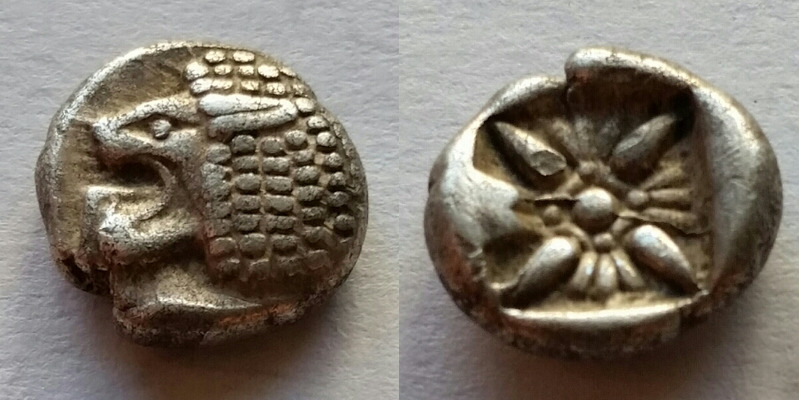 These are by far the most affordable and attractive coins struck prior to 499 BC. They are believed to have been made to pay mercenaries in a rebellion against the Achaemenids; the city was razed to the ground in 499. 2) An attractive silver obol from the Classical period. Tie it in with the lesson that "obol" was a cooking spit - a necessary commodity that could be traded. A drachm (from ΔPAΣΣOMAI, "To Grasp") was worth six obols; the number an adult male could typically hold in a closed fist. I have a fondness for the obols of Kyzikos, which are common, charming, and inexpensive: 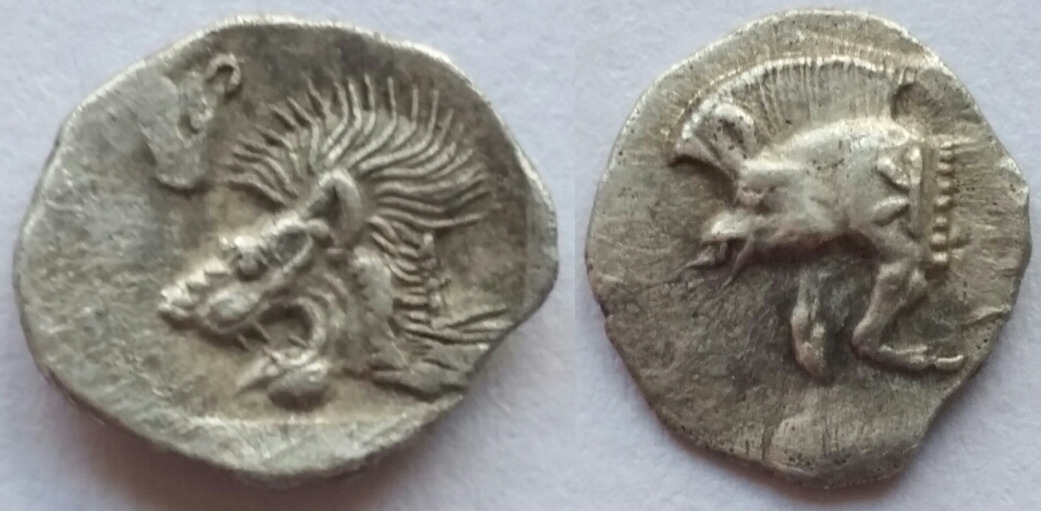 3) A coin of Alexander the Great. You can get a medium-medium-high grade drachm for $40-100, or a lower grade tetradrachm for about $100-150 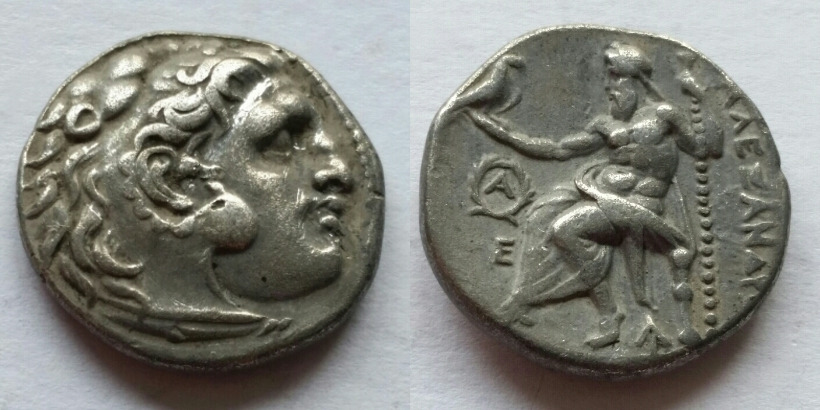 4) A coin of the Seleucid Empire. Lower grade tetradrachms are affordable in reasonable grades; typically not more than 200 until you hit high grades or rare rulers. Here is mine of Antiochus I Soter: 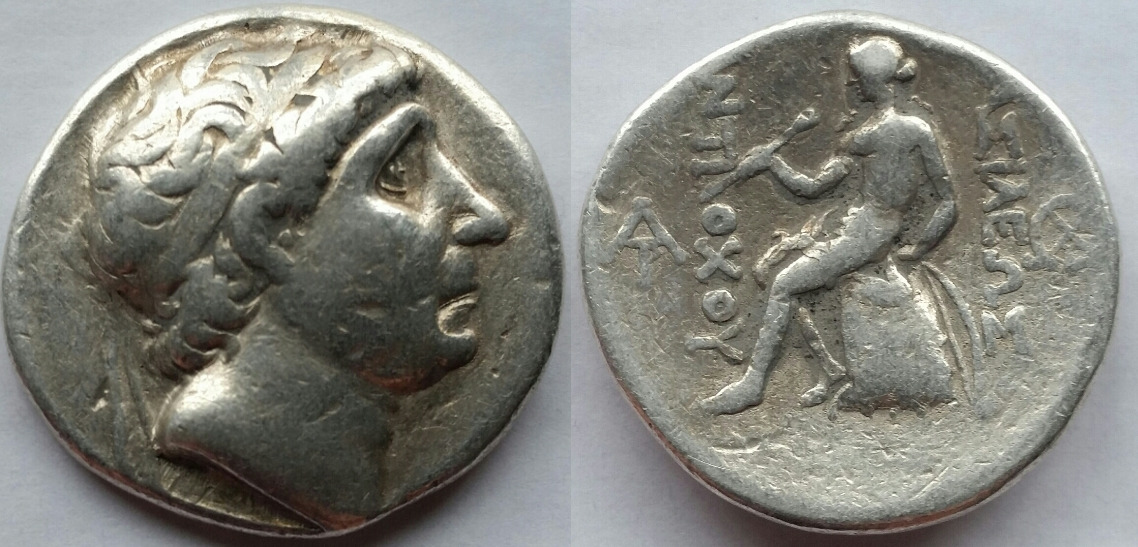 5) A nice, big bronze of Ptolemaic egypt. These come in sizes from about 9mm all the way up to nearly 50mm! Coins in the 32-38mm range are more affordable ($20-50) in middle grades. 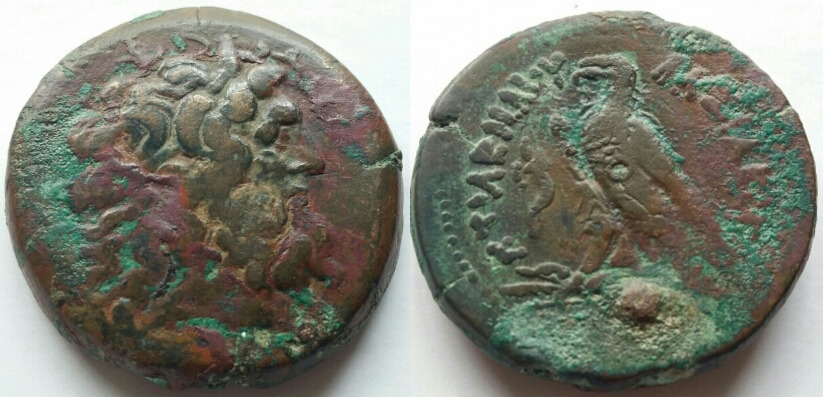 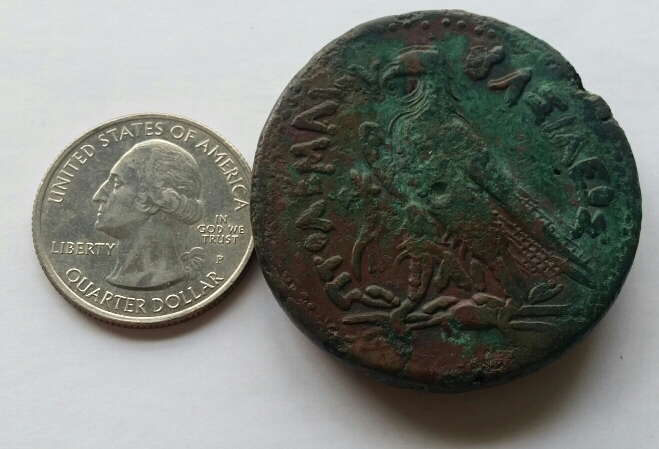 Rome: 1) A nice big early anonymous As (Can be bought for around $50) 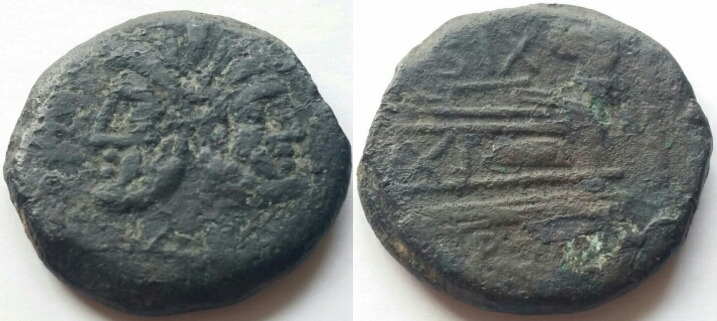 2) Any coin of Augustus (As little as $5 up to thousands) Small bronze with his client king Rhoemetalkes - cost less than $30 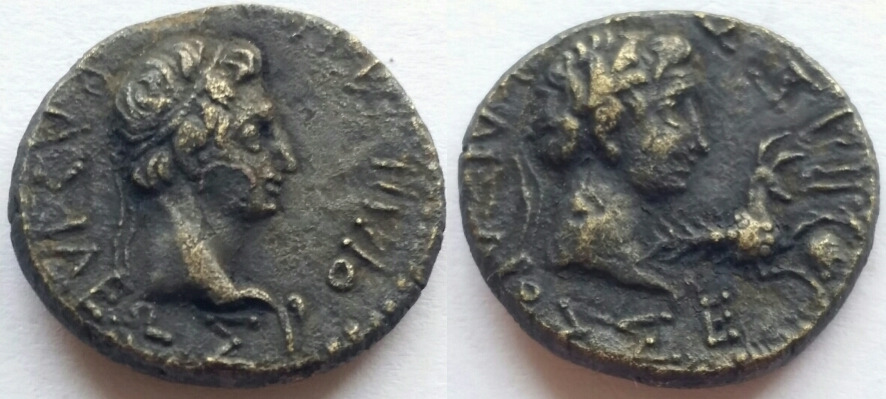 3) Any other coin of the golden age - even high grade denarii can be quite affordable, although sestertii (bigger than half dollar size) are better for passing around Nero ($150) 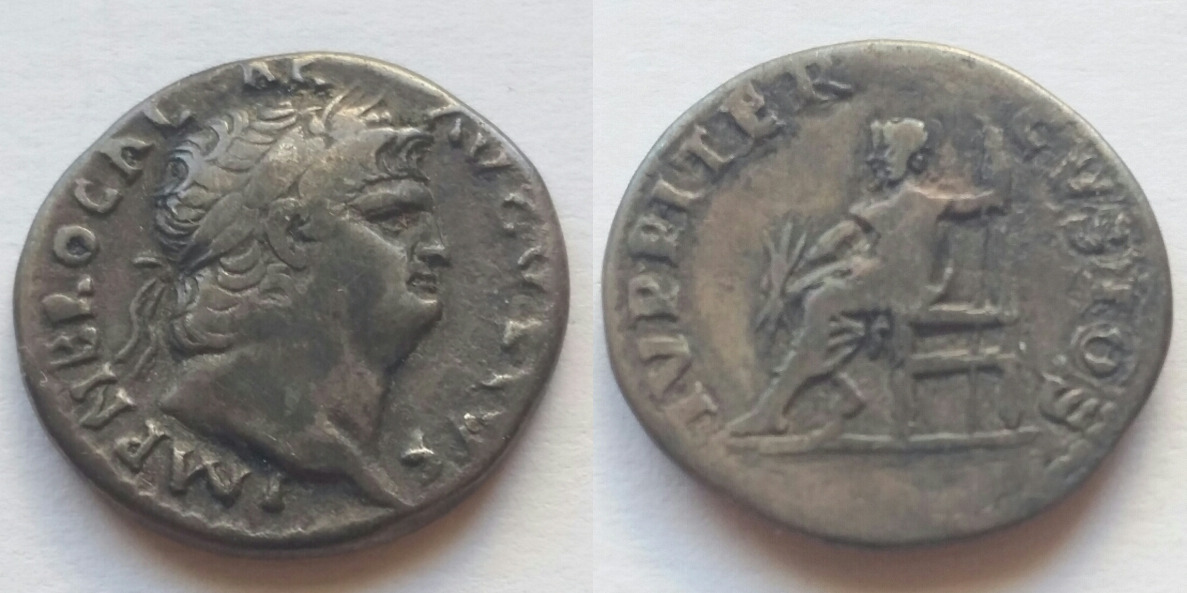 Trajan ($50-100) 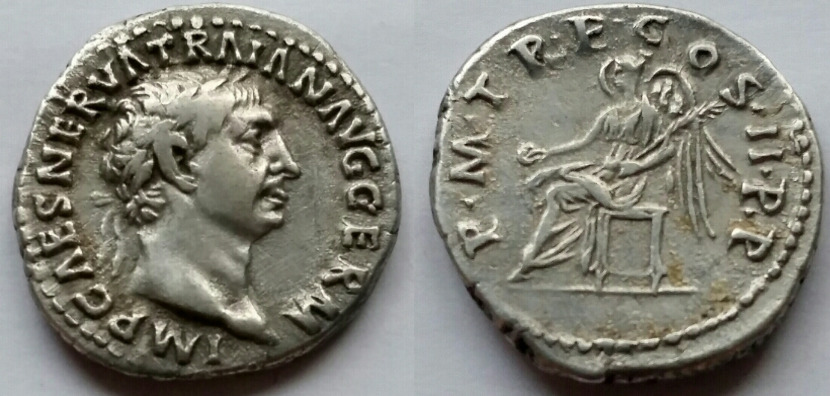 Hadrian ($50-100) 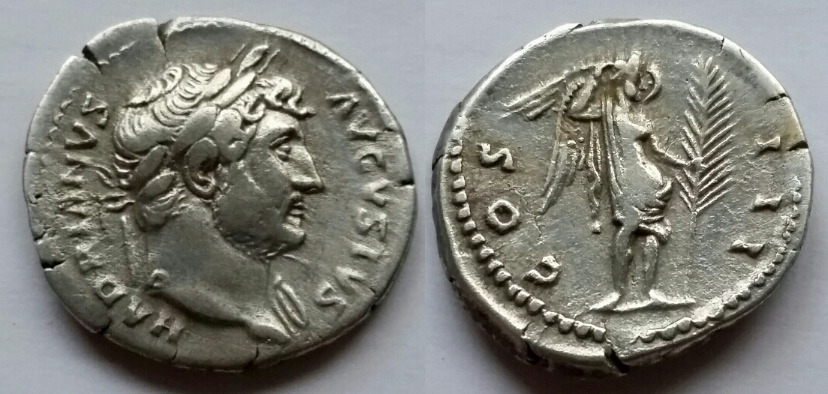 Antoninus Pius 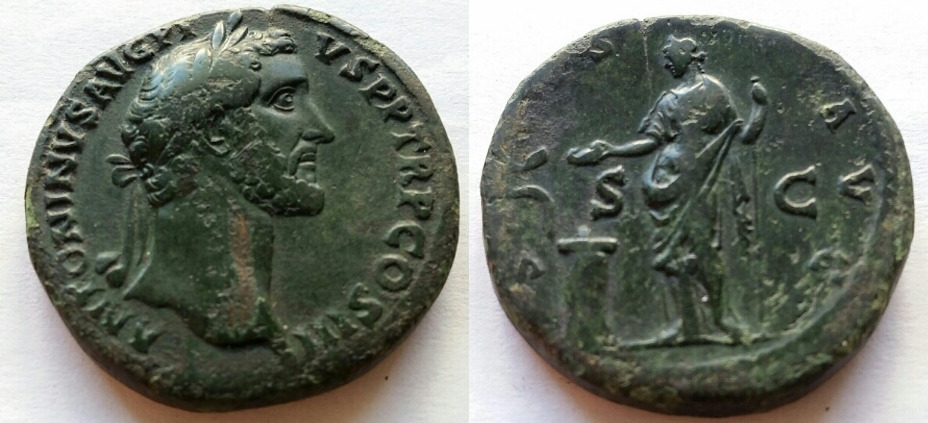 Marcus Aurelius ($50-100) 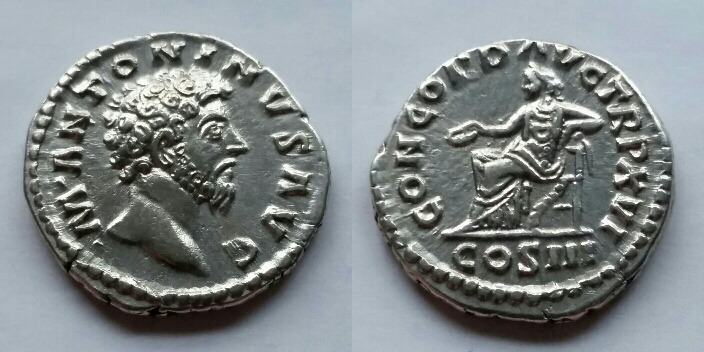 4) I would do a couple coins from the Crisis, 238-284. Antoninianii were the primary coin of that time, and the rapid debasement of the 250s was striking. Here are two coins of Gallienus; left is about 20-25% silver, left is debased to something like 3-8%. Go for a Gordian III antoninianus, they are only $30-40 even in mint state. Debased antoninianii are only a dollar or two. 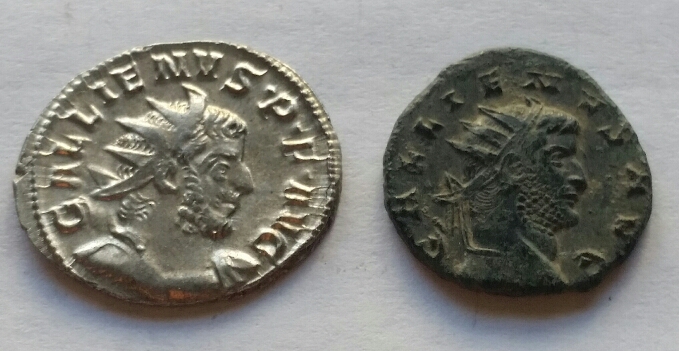 5) A nice big follis of the Tetrarchy, can be had typically for $20-50 in high grade: 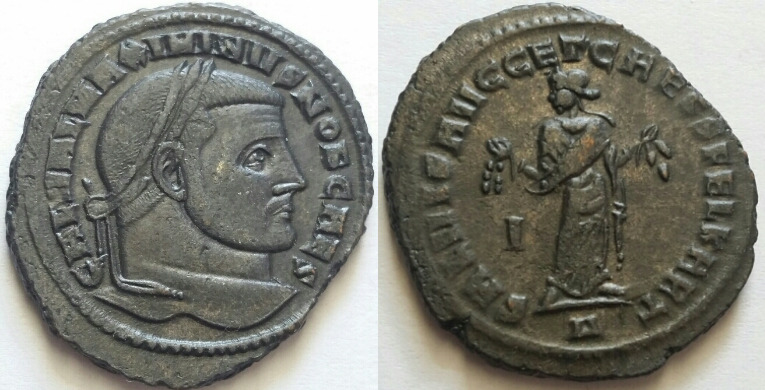 6) A coin of Constantine the Great is a must! 7) A tiny AE4 from the end of the empire - Honorius or any of the later Eastern emperors can be had for between $1 and $100, depending in rarity Zeno, emperor of the East when the West fell to Odoacer 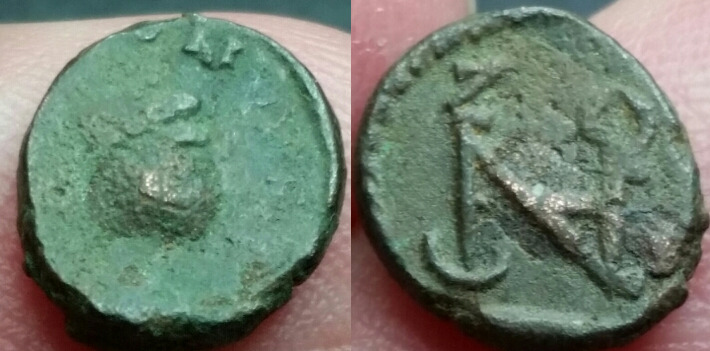 |
|
Pillar of the Community
Belgium
1194 Posts |
After leaving university in 1970 , a few years ago I thinked it was time to refresh what I learned . My deception was great . Most of students were only sitting there and passing one or two hours . I had there a very good time with the teachers ( university of Leuven , by the best quoted) , I had all the possibilities to ask and get an answer . I had some of my coins with me , but it didn't raise any interest of the students . Visiting the coin cabinet in Brussels ( very,very interesting with the possibility to view and 'touch' some unique coins ) it was nothing special . Same by visiting the Cinquantenaire Museum in Brussels , Egyptian art. So I think showing coins is only a remedy to pass the time for 95 % of the students . albert
|
|
Pillar of the Community
United States
949 Posts |
I have taught Freshman intro to church history. Five points of historical interest for intro Freshman history: 1. Early pre-hellenistic Greece: you will invariably talk about Athens, Pericles, and the Athenian experiment with democracy. An Athenian tetradrachm will capture attention, either as a pic, or if you can afford it as an actual coin. Readily available though not cheap. Here is an example from 449BC (during the time of Pericles) available online for $330: 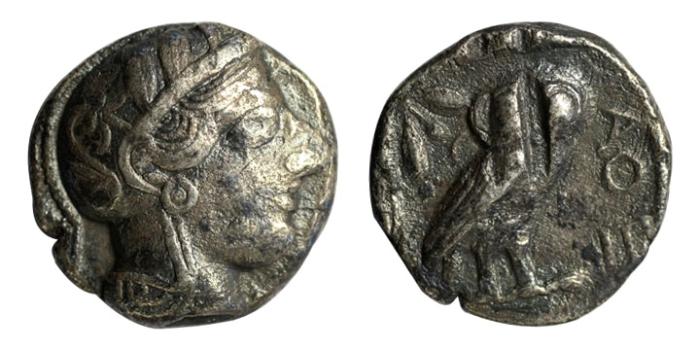 2. Beginning of Hellenistic period 2. Beginning of Hellenistic period: (Tetra)drachm of Alexander the Great. Here is a drachm from 336 BC during his life; available online for $193: 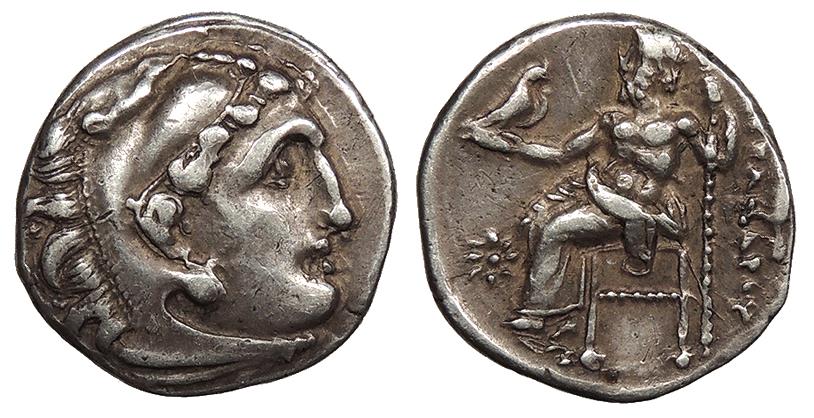 3. Roman Republic 3. Roman Republic - origins of Rome, introduction of the denarius in 211 BC (conflict with Carthaginians): show one of the earliest denarii Here is a nice example at $100: 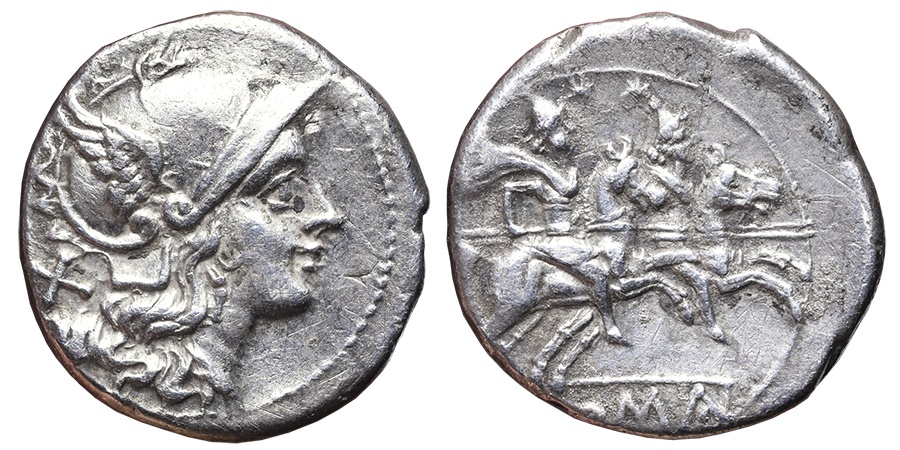 4. Transition to Roman empire: 4. Transition to Roman empire: Show a coin of Julius Caesar with his portrait, expensive to buy but use a pic if you must or show a denarius of Octavian/Augustus Caesar, the first authorized Roman emperor: readily available at reasonable cost Here is an example of a commonly seen type for Augustus, available online for $175: 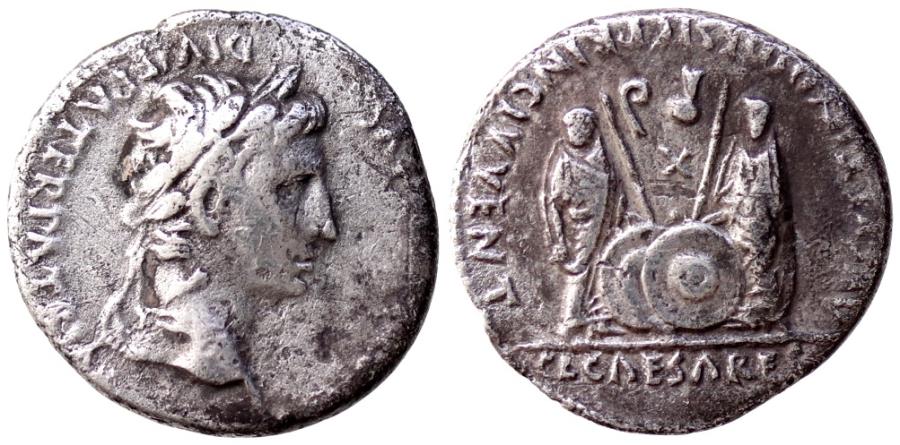 5. 4th century Rome: Dawn of the age of Christianity: 5. 4th century Rome: Dawn of the age of Christianity: Use a coin of Constantine with his portrait: plentiful and very inexpensive. Could give one to each class member. Nice examples cost $20 and up, but here is an example from about 330 AD at $8.50. They come much cheaper and in quantity (search on ebay): 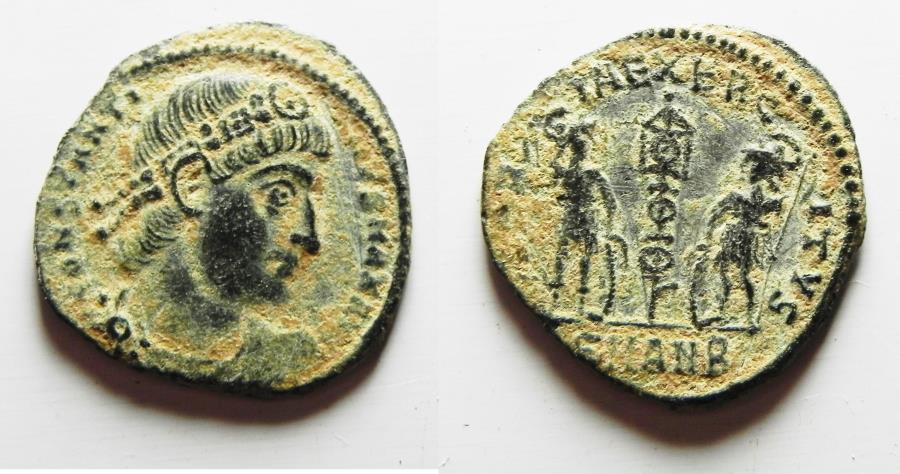 6. Introduction of the Byzantine empire: 6. Introduction of the Byzantine empire: Could use a large follis of Anastasius, but for name recognition you might go for a follis of Justinian Here is a follis of Justinian from Nicomedia from 555 AD available online at $58 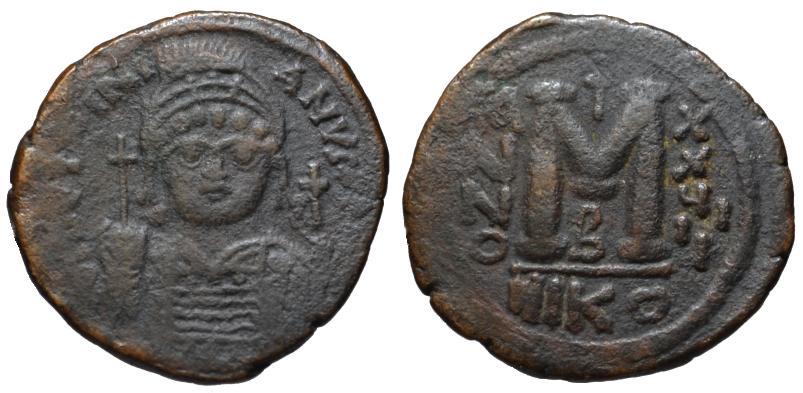 Pictures of really nice clear examples of all of these are available online. Edited by lrbguy
08/01/2018 10:29 pm
|
|
Moderator
United States
34549 Posts |
I think that @irbguy nailed it.
"If you climb a good tree, you get a push."
-----Ghanaian proverb
"The danger we all now face is distinguishing between what is authentic and what is performed."
-----King Adz
|
|
Pillar of the Community
 United States
8052 Posts |
 Though there are many additional opportunities. I have used coins from my collection of medieval saints' images on coins in a lecture on the cult of saints in Christianity. |
| |
Replies: 18 / Views: 4,147 |










 Posted 07/31/2018 11:28 pm


