| Author |
 Replies: 9,934 / Views: 330,756 Replies: 9,934 / Views: 330,756 |
|
|
|
Bedrock of the Community
United States
79225 Posts |
Nice token!
Errers and Varietys.
|
|
Pillar of the Community
 Sweden
2124 Posts |
Guernsey 1956, 4 doubles. 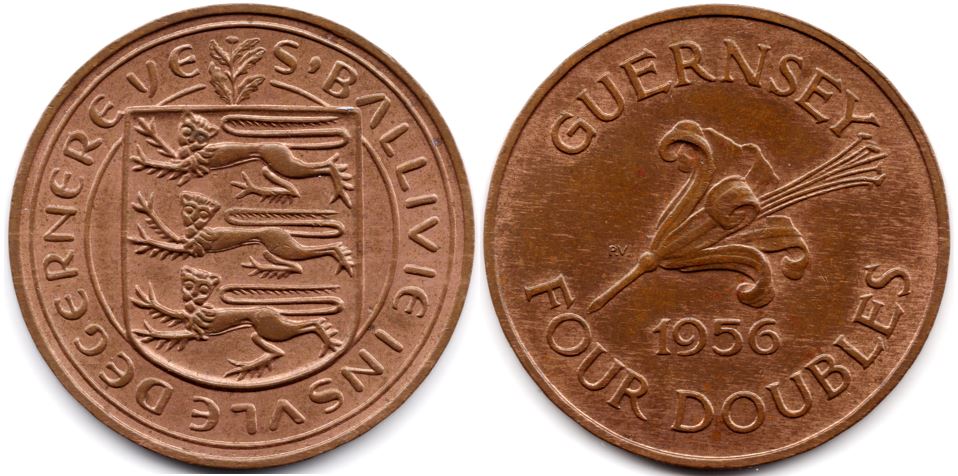 My first impression of the shield with the three lions was "Oh, that's a nice modern rendition, looks like something they may have come up with in the 1950s". The surrounding text looks quite modern too, although with a few odd forms and some confusing words. What language is that? INSVLE is Latin, for sure, but S'BALLIVIE and DEGERNEREYE? (Yes, that 2nd last letter is a Y, not a V, and not common in Latin texts.) Might it be Guernesiais, or Guernsey French? Well, it turns out that the 1250s is more close ...  Below is a reproduction from a 17th century book, of the 13th century seal in use by the Bailiwick of Guernsey. And the language is Latin: the full text should be read Sigillum Ballivie Insule de Gernereye - "Seal of the Bailiwick of the Island of Guernsey". Ballivie and Gernereye are just Latinized forms of the local words at the time. 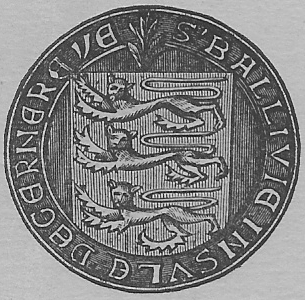 Source: Wikipedia. Public domain. Source: Wikipedia. Public domain. |
|
Moderator
 United States
195906 Posts |
Great examples!  |
|
Pillar of the Community
United States
1077 Posts |
Quote:
Guernsey 1956, 4 doubles. Years ago I read somewhere that in heraldry lions and leopards are really the same thing.
I wonder why Jersey and Guernsey have essentially the same seal.
Maybe they now come under the same county council...
  "If everything seems to be under control, you're just not going fast enough."
--- Mario Andretti
|
|
Pillar of the Community
Sweden
2124 Posts |
Quote:
Years ago I read somewhere that in heraldry lions and leopards are really the same thing. In essence, yes. Whether it is called a lion or a leopard depends on its position, or attitude. (Before moving on, I should say that my knowledge of heraldry is completely at an amateur level - as perhaps my thinking the 13th century coat of arms was a 1950s design shows - so any corrections are welcome!) Basically, they are all lions. Quite commonly in heraldry, the lion stands, forepaws raised (and probably roaring). Such a lion rampant is no doubt a lion. If the lion walks, with one forepaw raised and looks at the viewer ( lion passant guardant), then it can be called a leopard. It can also be called an English lion, since there are three such lions/leopards in the English coat of arms. Quote:
I wonder why Jersey and Guernsey have essentially the same seal. Historical reasons. Both have been ruled by English monarchs since the 11th century (via the monarch's role as Duke of Normandy). The three English lions were introduced by Richard the Lionheart (not Leopardheart  ) in the 12th century. Probably that was the arms most seen on the islands, and it was eventually adopted by both Jersey and Guernsey as their coat of arms. One may note that two other Channel Islands have their own coats of arms: Sark has two English lions, which was the arms of the Duchy of Normandy, while Alderney has one lion rampant. Nice token by the way. |
|
Pillar of the Community
United States
1077 Posts |
Quote:
Nice token by the way.
Thank you, erafjel! It's obviously a survivor...
And thanks also for the zoological insights into armorial bearings...not something we devote much time to in school here in the States."If everything seems to be under control, you're just not going fast enough."
--- Mario Andretti
|
|
Bedrock of the Community
United States
37154 Posts |
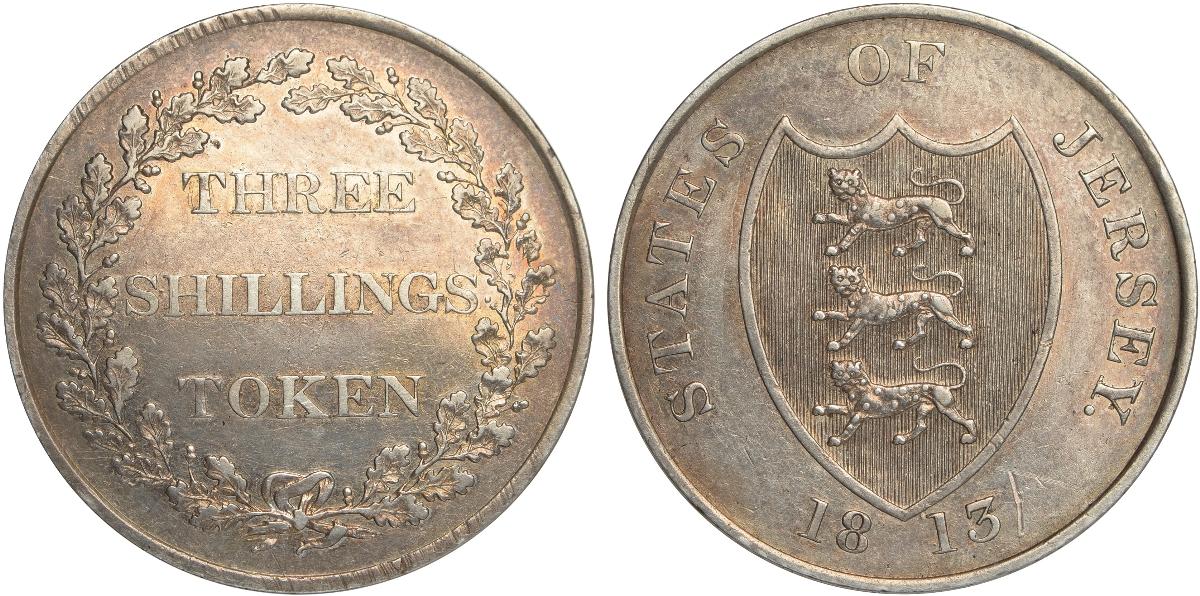
Great looking 3 Shilling token!
|
|
Pillar of the Community
Sweden
2124 Posts |
Quote:
And thanks also for the zoological insights into armorial bearings...not something we devote much time to in school here in the States. Neither do we in Sweden. I doubt it is in the curriculum anywhere in the world, below university level. Only a minor interest for me, sparked by my greater interest in coins. Here is another Jersey shield: 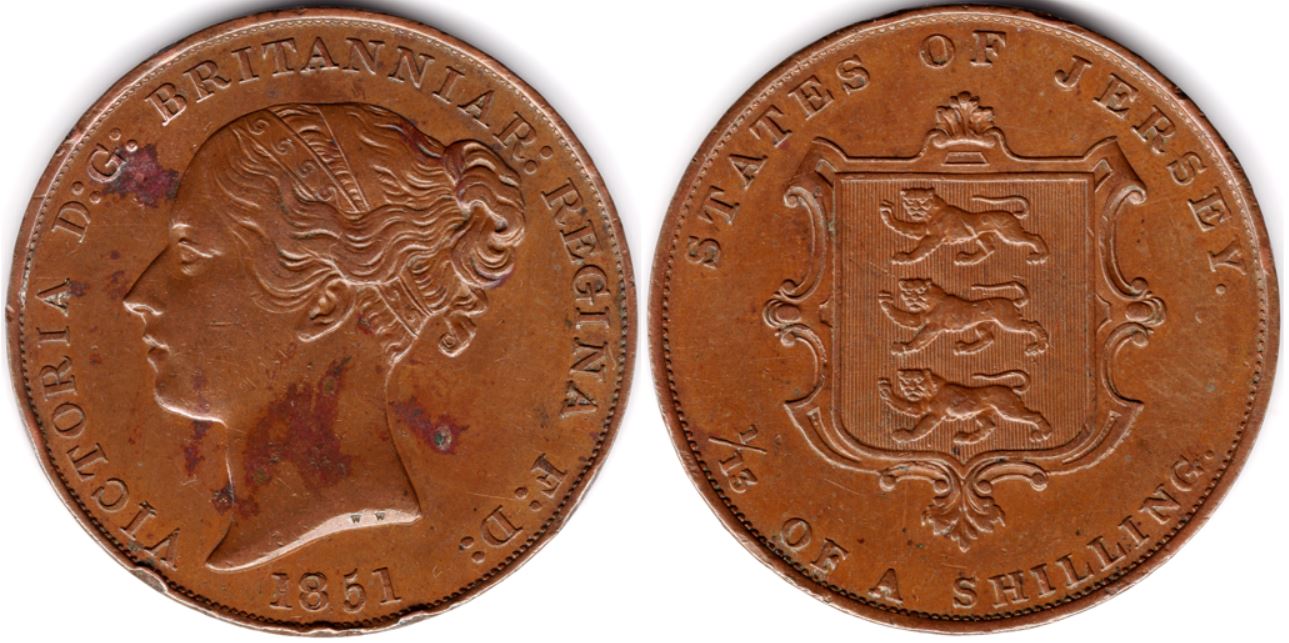 Looking closely at this one, and at your token, there are actually spots on the "lions" here, so they are definitely leopards. A quick investigation points to that Jersey coins (and tokens, I guess) had such spotted leopards until around 1870, after that the lions became more lion-like, with manes and no spots. Interestingly, I have not noticed the spots on my coin before, they are not too visible, but they are there ... |
|
Moderator
United States
195906 Posts |
Very nice! |
|
Bedrock of the Community
United States
79225 Posts |
Very nice erafjel!
Errers and Varietys.
|
|
Bedrock of the Community
United States
37154 Posts |
Austria 1970 50 Schillings 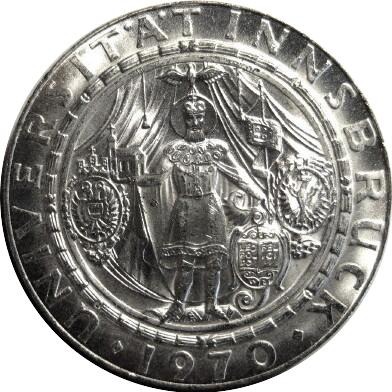 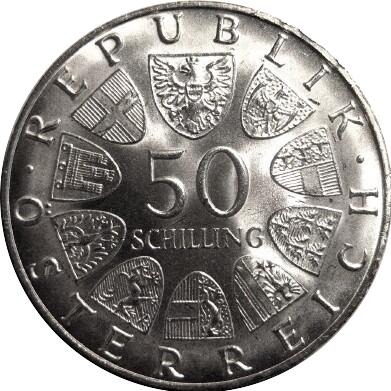 |
|
Bedrock of the Community
United States
37154 Posts |
St Thomas & Prince 50 Esc 1970 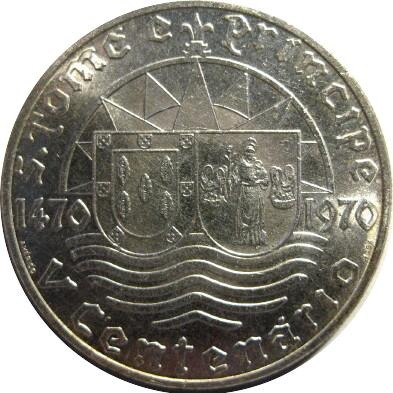 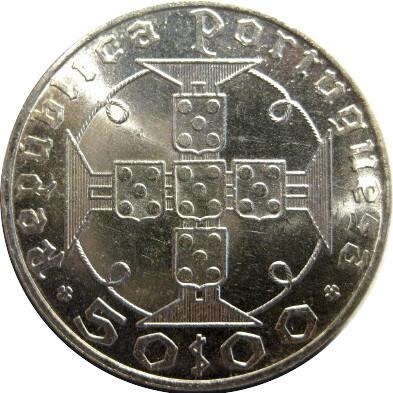 |
|
Bedrock of the Community
United States
37154 Posts |
Vatican City 500 Lira 1958 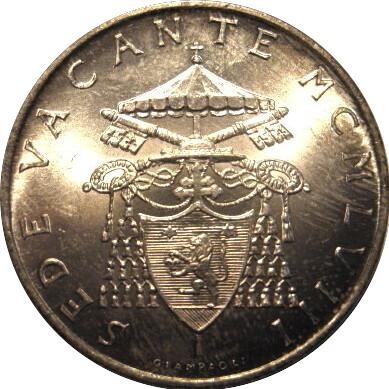 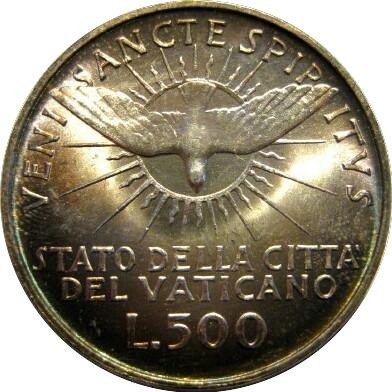 |
|
Pillar of the Community
United States
1077 Posts |
Yet another example of a coat of arms with three big cats with right paw raised, or passant guardant, but in this case there's a fourth one above the rest, brandishing a sword. That fourth lion represents a long war story...told by Britain's Hereford City Council here.
Now known to collectors as Dalton 2, this 1811 silver shilling token issued in Herefordshire was backed by two prominent family businesses in that county, the grocers, drapers, and general merchants Wainwright & Co. and Carless & Co. No other Herefordshire tokens -- either copper or silver -- were struck for circulation during the Regency Period of 1810-1820.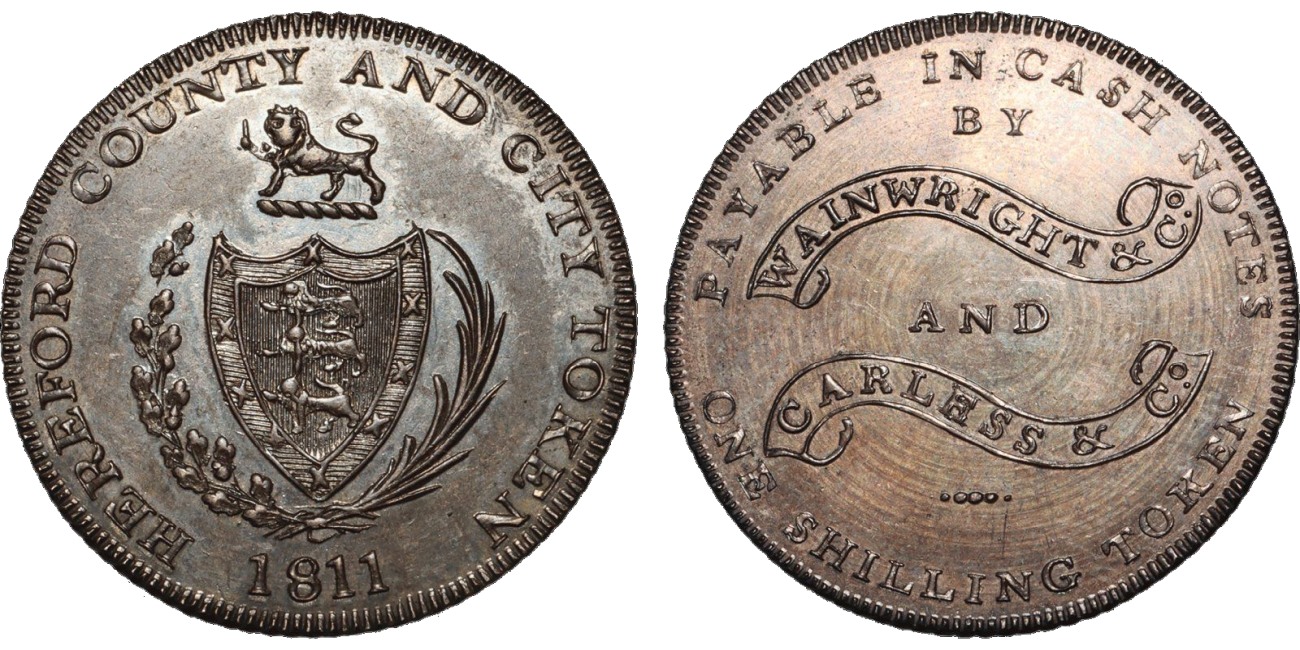 "If everything seems to be under control, you're just not going fast enough."
--- Mario Andretti
|
|
Bedrock of the Community
United States
79225 Posts |
Very nice IndianGoldEagle! Errers and Varietys.
|
| |
Replies: 9,934 / Views: 330,756 |








 First Page
 Previous Page


 Posted 12/04/2023 06:42 am


