| Author |
 Replies: 223 / Views: 27,226 Replies: 223 / Views: 27,226 |
|
|
|
Valued Member
United States
82 Posts |
I thought I would post this little Halfgroat of Henry-VII. Hope everyone enjoy their weekend... Rickie 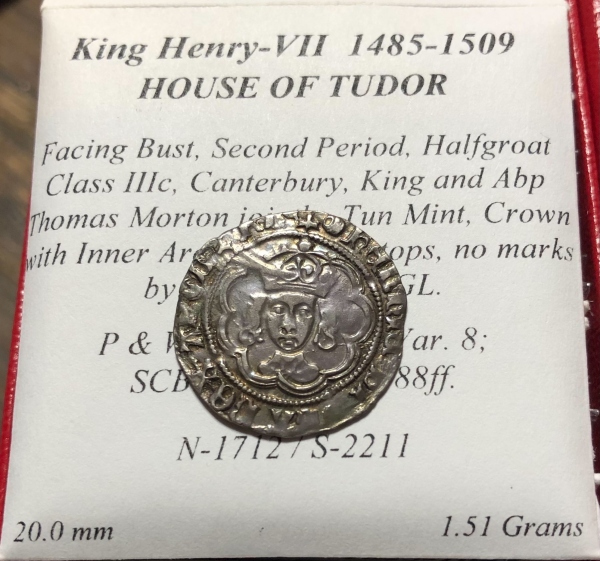 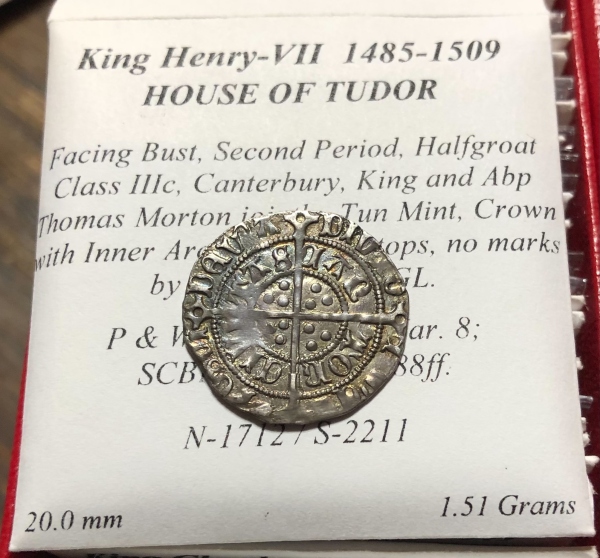 |
|
Moderator
 United States
198363 Posts |
Quote:
I thought I would post this little Halfgroat of Henry-VII. Hope everyone enjoy their weekend... Very nice!  |
|
Pillar of the Community
4628 Posts |
I love it and it shows the imperial crown that Henry wore.
Great coin and lots of history.
|
|
Pillar of the Community
United Kingdom
856 Posts |
OK, might get shot down for this but it's Stuart and I think it's stunning, it's just not a coin! Royalist badge of Charles I. On it's way to me as I type and I'm a bit excited about it!  English Civil War period, probably dating from around 1644 according to Farquhar and designed by Thomas Rawlins when he, the King and the Queen were all in Oxford. Bare headed bust of Charles I to obverse, reverse of Queen Henrietta Maria. Signed T.RAWLINS.F below. Cast silver, chased and gilt. 1½ inches (43mm) at longest side, including the suspension loops (to allow it to be worn on a cord or sewn into clothing). 'Somewhat rare'. 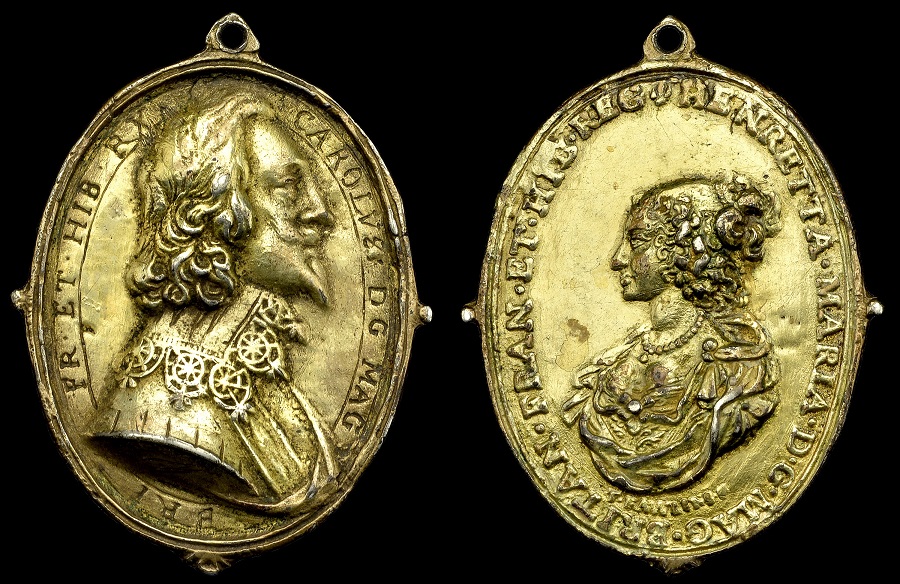 |
|
Pillar of the Community
United Kingdom
945 Posts |
Very nice indeed! You are forgiven...
|
|
Pillar of the Community
United Kingdom
856 Posts |
Thank you Sir!  |
|
Moderator
United States
198363 Posts |
Most definitely going to let this slide in. Very nice addition! |
|
Valued Member
United States
82 Posts |
Tom, Exceptional Piece... Thanks for sharing!
|
|
Pillar of the Community
United Kingdom
856 Posts |
Just an update now my badge has arrived to show the size. Quite pleased with this, although it's clearly had some wear, that was after all the purpose of it. Most of the gilding is intact with just a bit of wear to the high points. About a UK VF, with the reverse better. Possibly the weakness to the obverse is that it's from a later casting. Weighs a little over 11g, (0.4 ounces for those that still use them) so feels solid in the hand. I've managed to track it back to a 2013 Davissons sale (it was in another two subsequent sales through UK auction houses) but at the moment, no earlier. It did come with a loop for suspension, though I suspect this is modern as it looks like rolled gold* and doesn't fit the tray too well, so I've left it off. Anyway, a nice complementary item to my collection of Charles I shillings. *Edit. On closer inspection, the loop is solid and un-hallmarked and so appears to be more or less contemporary with the badge itself (though it's a slightly redder gold). Now, if I can just find some provenance to a collector prior to 2013, I'll be very happy! 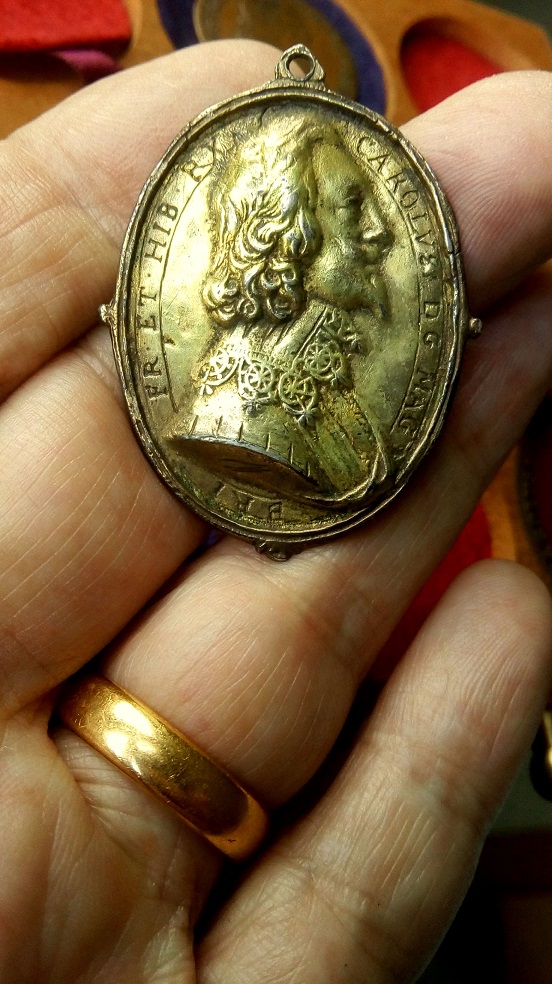 Edited by Tom Goodheart
04/10/2021 07:02 am
|
|
Moderator
United States
198363 Posts |
Looking good! |
|
Pillar of the Community
United Kingdom
856 Posts |
Well, I didn't get booted off for the last post and haven't found any shillings to add to my collection so here's my latest purchase, another Charles I supporter's badge. Hope it's ok. MI 355/216 is the reference. 11.44g of silver. 38mm x 29 mm. Dating from (approximately) 1642. From a design by Thomas Rawlins, chief engraver to the king [from 1647]. Little bit of repair work at 6 o'clock, probably from when the suspension loops were removed in antiquity. 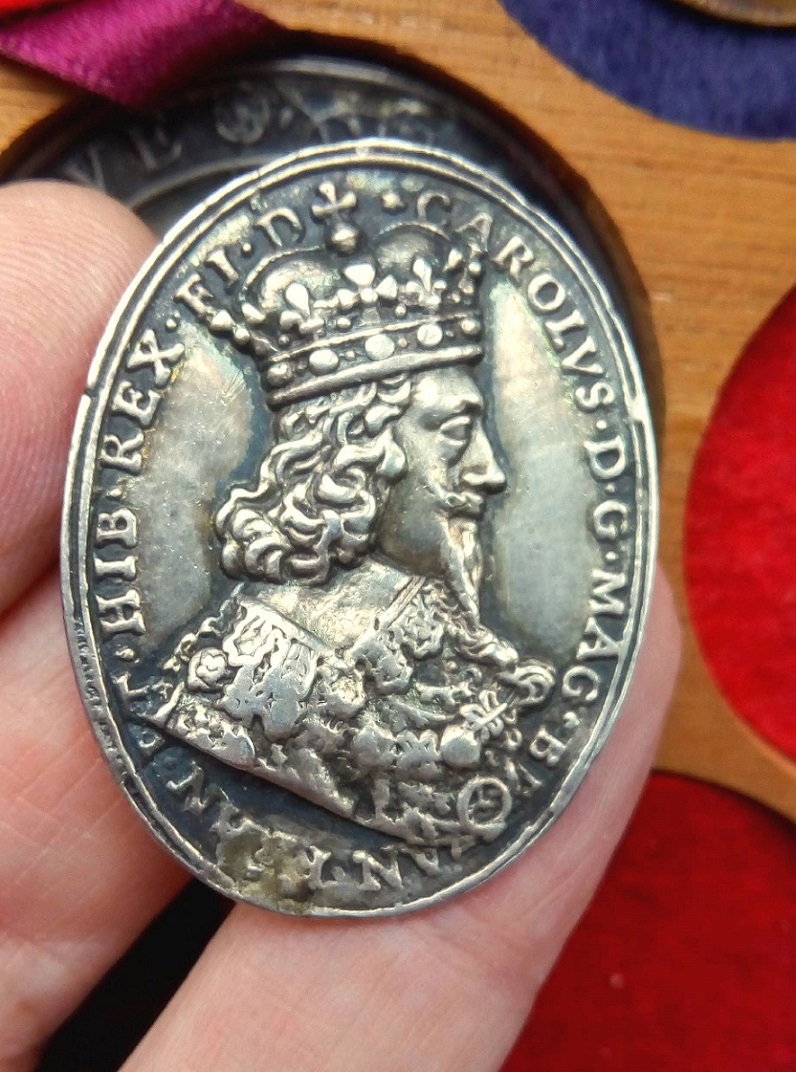 Edited by Tom Goodheart
05/08/2021 10:00 am
|
|
Moderator
United States
198363 Posts |
Impressive! Still tangentially related to the topic as well.  |
|
Pillar of the Community
United Kingdom
856 Posts |
Woohoo! Bought a coin! (Anyone else feel that since Covid hit and particularly with lockdowns and nothing to spend money on, the coin market has gone a bit crazy? Well, it's certainly been difficult to find anything nice over here!) A first and a bit of a rarity for me. Charles I shilling dating from 1626. However in this case I can date it a bit more precisely because, mid 1626 Royal finances were rather stretched. In response a commission of the King dated August 11th 1626 reduced the weight of both the gold and silver coinages materially. Under the commission shillings were coined weighing only about 81.75 grains (5.29g) instead of the normal 92.75 grains (6.0g). The commission was issued during the cross calvary period, so any coins struck under it would bear that privy mark. Trade however (particularly international trade) depends, at least in part, on confidence in the circulating currency and an effective 'debasement' was not welcomed and the move was rescinded, after having been operative for a period of less than five weeks, on 7 September 1626. Any such coin in the mint at the time was subsequently treated as bullion and consequently melted down again. As the number of specimens actually struck must have been very few, they are quite rare today. This coin, from the Martin Hughes collection (1999), was not identified as lightweight in his sale, but at 5.26g clearly is from that issue. Slight weak patch to the king's face (and correspondingly to the reverse) where the flan is thinner, but a decent full round example. S.2784, Sharp B1/1. Struck 11 Aug- 7 Sept 1626. Lightweight issue. 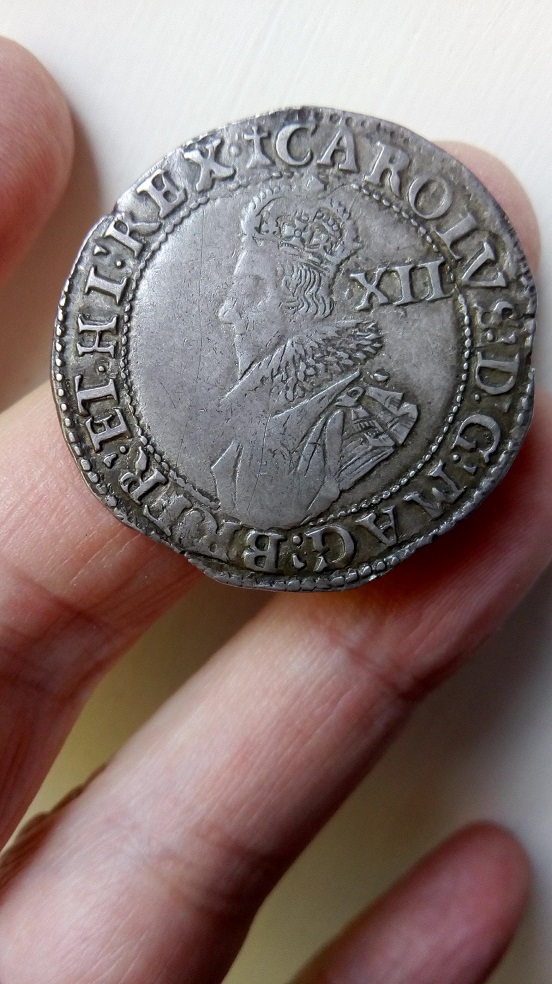 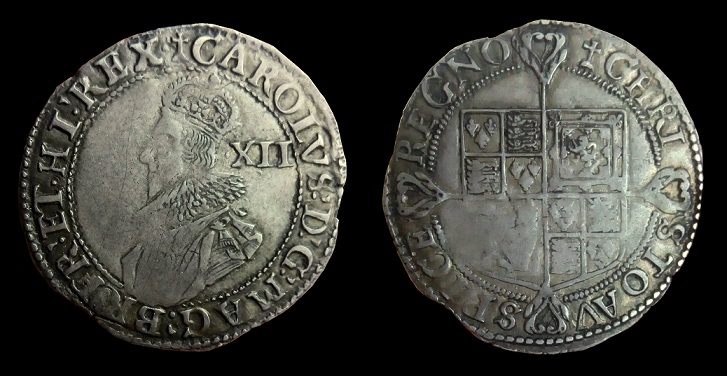 |
|
Moderator
United States
198363 Posts |
Excellent! |
|
Bedrock of the Community
United Kingdom
19235 Posts |
A recent acquisition and my oldest milled coin - a 1562 Elizabeth I sixpence: 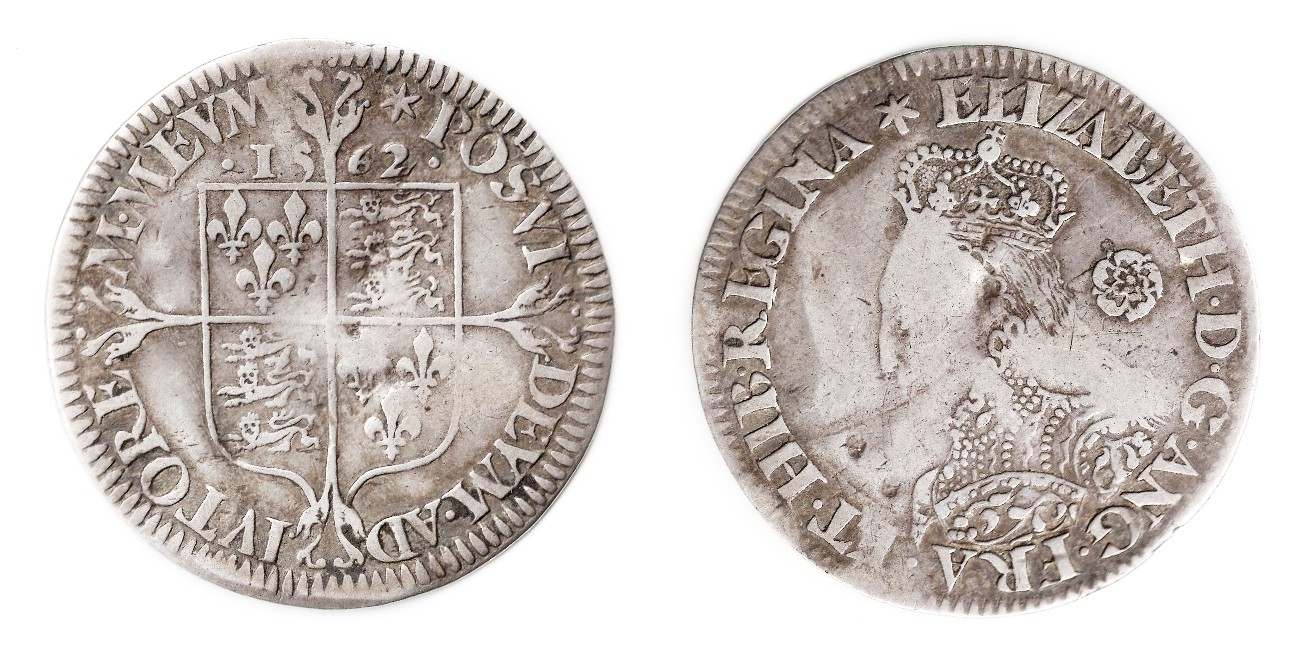 The milled sixpences of the 1560s were produced by a Frenchman called Eloye Mestrelle using a horse-powered screw press. Although of better quality than the contemporary hammered coins, they took longer to produce and were unpopular with the mint workers, who were concerned that the new equipment would make them redundant. Mestrelle was dismissed from the Mint in 1572 and later arrested and hanged for producing his own counterfeit coins. Milled coins were not struck again until the 1630s and milled coinage did not take over completely from hammered until 1662. |
| |
Replies: 223 / Views: 27,226 |





 First Page
 Previous Page


 Posted 01/29/2021 11:39 pm


