| Author |
 Replies: 14 / Views: 1,168 Replies: 14 / Views: 1,168 |
|
|
Pillar of the Community
United States
4113 Posts |
1989D slabbed PCGS MS69 Half Dollar Congress. What could have caused the circular blotch on the reverse? Could this have been caused by improper annealing? The Obverse seems fine.  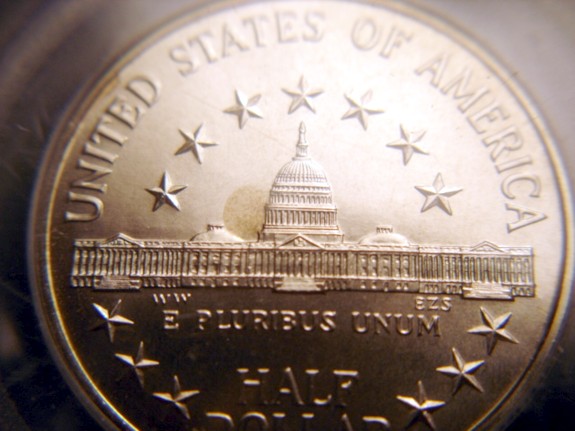 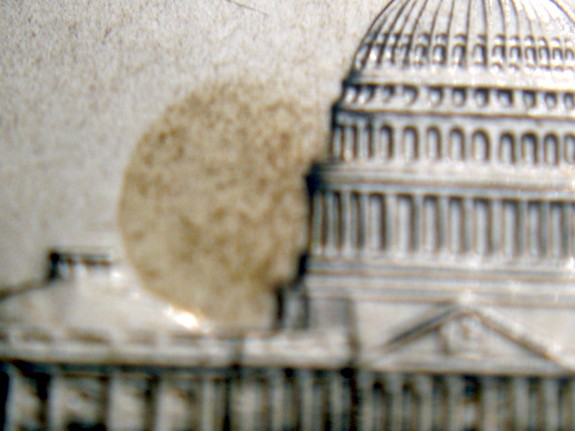 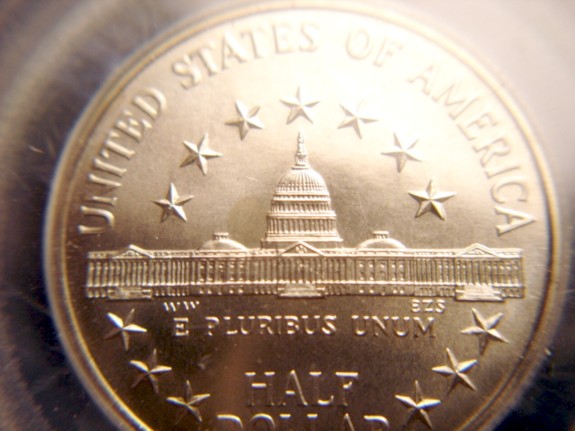 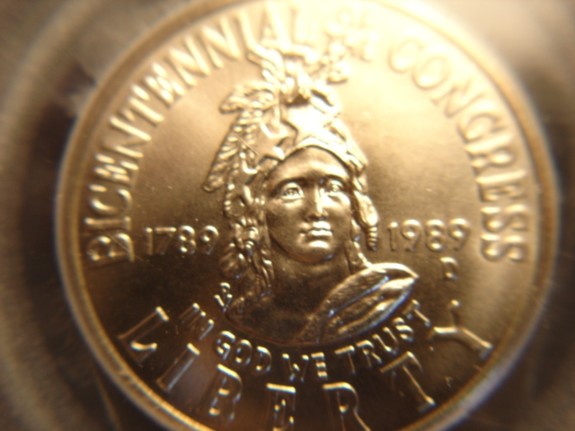 |
|
|
|
Bedrock of the Community
United States
12437 Posts |
Improper annealing would affect the entire coin. I have no idea what it actually is, but I bet it was on the coin when it was slabbed and then toned brown while in the slab.
|
|
Bedrock of the Community
United States
62064 Posts |
Could have been a water spot?
|
|
Pillar of the Community
 United States
4113 Posts |
biokemist6
Regarding improper annealing, you can never have a partially non-annealed coin either obverse or reverse?
It must be complete (ie) on both the total obverse and reverse?
|
|
Pillar of the Community
United States
1424 Posts |
hmmm, it almost looks like a drop of machine oil.  |
|
Pillar of the Community
United States
3507 Posts |
|
|
Pillar of the Community
United States
4113 Posts |
Hi Bill:
Why? Why ask Y?
"Inquiring minds (especially me)" would like to know what's on the back of this coin and how did it end up nice and circular etc that was graded and slabbed by a very reputable company like PCGS.?
Chuck.
Edited by chuckster 125
09/12/2008 12:37 pm
|
|
Pillar of the Community
United States
3507 Posts |
Hi Chukster, Sorry, "Regarding improper annealing, you can never have a partially non-annealed coin either obverse or reverse? It must be complete (ie) on both the total obverse and reverse?" That's what you said....Why is that the case? I have to find it but somewhere around here I have a Jefferson nickel that has copper on a few areas of the reverse but the entire obverse. It is struck on an improperly annealed planchet. I was asking why you think what you wrote is correct. Thanks, Bill PS: I couldn't find the coin quickly last night. I'll try to dig for it today so I can post a picture. Edited by foundinrolls
09/12/2008 2:30 pm
|
|
Bedrock of the Community
United States
12437 Posts |
FIR, I think that quote was directed at me  I guess I poorly phrased my response and should not have said "the entire coin" but the point I was trying to make was that improper annealing would not be responsible for one small circular spot- it would be more widespread and if the whole coin was not effected, it would be blotchy. I do not think anyone is in the position to tell you exactly "what it is"(short of a very expensive XRF analysis), but it is usually not too difficult to tell you "what it is not". You have to remember, real errors are generally rare on business strikes, but the become a whole lot rarer when dealing with specially handled coins like commemoratives and proofs. Some of the errors caused by careless treatment(IMO improper annealing is careless treatment) are incredibly difficult to find. I just chalk it up to contamination that was not visible at the time of slabbing. Also remember that slabs are NOT airtight. Think about milk spots on ASEs- they are caused by leftover planchet wash residue and develop over time, even years after being slabbed. Those milkspots caused PCGS to virtually stop giving MS70s to the ASEs.
Edited by biokemist6
09/12/2008 2:31 pm
|
|
Pillar of the Community
United States
3507 Posts |
Hi, OK...I thought the statement was by Chuckster. Sorry Chuckster:-) I should have asked biokemist6 the question. This is one Jefferson that I came across, I have yet another where the coloring is splotchy due to an improper annealing job. Either way, it can effect just spots, or particular areas of a planchet. I have no idea why it is that way, but it does happen. It is probably important to mention that this is a side conversation that developed under this thread so that we don't confuse anybody. It is also probably a good idea to mention that I don't think anything pertaining to improper annealing had anything to do with what happened to the first coin in this thread:-) My first thought was that it was some kind of contamination. I've seen spots develop on coins after someone sneezes in close proximity to a coin, so any kind of contamination may have been the cause of that spot. Anyhoo...here are the pictures of the one nickel that has varying degrees of a copper layer on either side. The obverse is pretty much completely layered, while the reverse is not. I left the reverse picture a little larger so folks can get a closer look at the surface on that side. Thanks, Bill   Edited by foundinrolls
09/12/2008 2:40 pm
|
|
Pillar of the Community
United States
4113 Posts |
Thanks biokemist6 for the clarification.
Bottom line ( not necessarily this coin but) you can have a coin that is partially improperly annealed, it does not have to be the complete Obv & Rev.
Chuck.
|
|
Pillar of the Community
United States
4113 Posts |
No problem Bill! all's been clarified by biokemist6!
Oh, BTY, Nice Pics , especially like the Rev on that Jefferson!
|
|
Bedrock of the Community
United States
12437 Posts |
Nice nickel Bill, that is one error I do not have yet. That has got to be one of the worst strikes I have ever seen on the usually mushy 64s but it sure is lusterous  |
|
Pillar of the Community
United States
6404 Posts |
Can someone provide a description of the annealing process? As far as I know planchets are annealed (heated and slowly cooled) to soften the alloy so the coins will strike up properly. I could see "improper annealing" as a process error that would affect how well the coins strike, or maybe cause discoloration or even corrosion if the planchets are over-heated. In any case, whole planchets are subjected to the process so I would expect the effect of "improper annealing" would apply to the entire coin. Or, am I missing some important factors? |
|
Pillar of the Community
United States
1807 Posts |
In an annealing process, heat treatment is used to bring the coin blanks to a state of malleability, ie; they are made less hard, in preparation for the minting process.
|
| |
Replies: 14 / Views: 1,168 |
|







 Posted 09/11/2008 6:43 pm





