(If you are not interested in anything but the bond itself, skip to the end of the text. If you like a bit of background, keep reading.  )
)Interested as I am in history, I find great pleasure in studying not only old coins and banknotes as such, but also the historical, financial and political background to why they were emitted and why they look the way they do. Recently I have turned my eyes to bonds and related documents. I find that these can be even more fascinating as they are often tied to specific historical events, plus they sometimes have the name of the bearer. That gives an extra dimension and a personal touch, and to me it opens up a window into events in the past.
So, allow me to open up such a window and bring you back to
France, 1915. The World War has been going on for a year - to what was supposed to be a short war and quick victory, no near end is visible. The cost of the war is high - in lives, of course, but also in francs. Even though the Banque de France has had the foresight to cumulate gold over the years before the outbreak of the war, those reserves are being depleted. The French government is in dire need of hard currency to finance the war efforts, and turns to the public for help. It is well known that many have hoarded gold and silver in these times of unrest - the suspension of the exchange of banknotes into gold coins due to the war has also made people stick to whatever gold they have. Now the government needs to convince people to let go of those tangible belongings and exchange them for banknotes and bonds - papers of uncertain future value...
A massive propaganda campaign is launched. It uses all forms of media, among them this
postcard with its very aggressive rooster. The text reads "For France, turn in your gold - Gold fights for victory". The backside text in red urges to "Subscribe to bonds for the national defense".
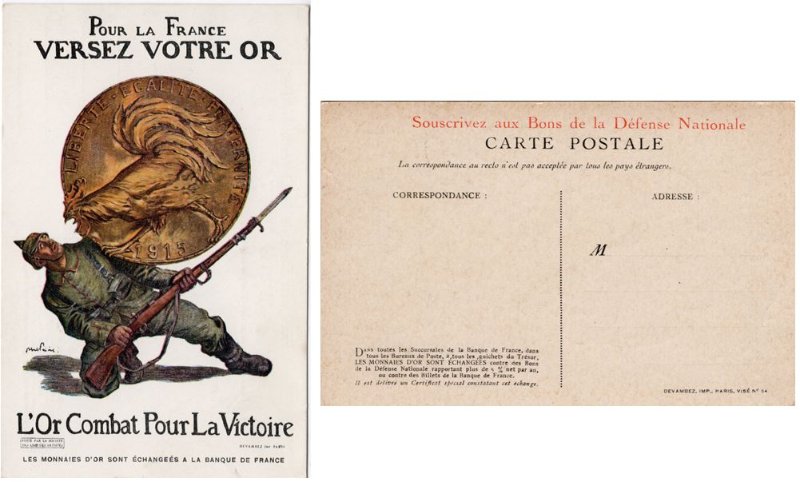
What we see on the postcard is the classic
20 francs Marianne/Gallic Rooster gold coin, minted in millions, which is typically the gold coin found among the public.
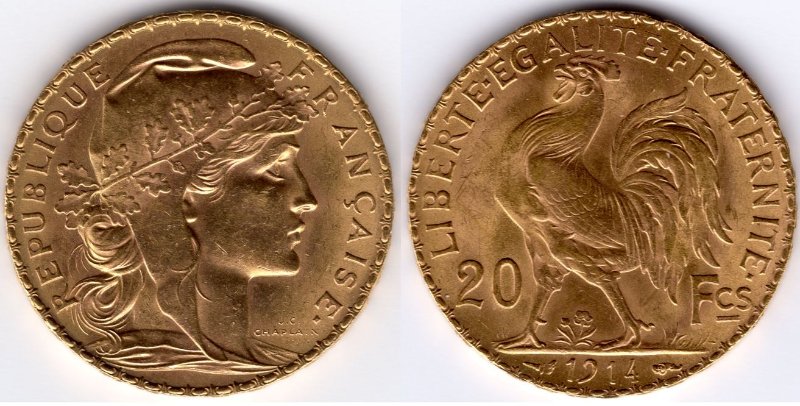
(Noteworthy is that the postcard coin is dated 1915, while in actuality minting of gold coins ceased 1914.)
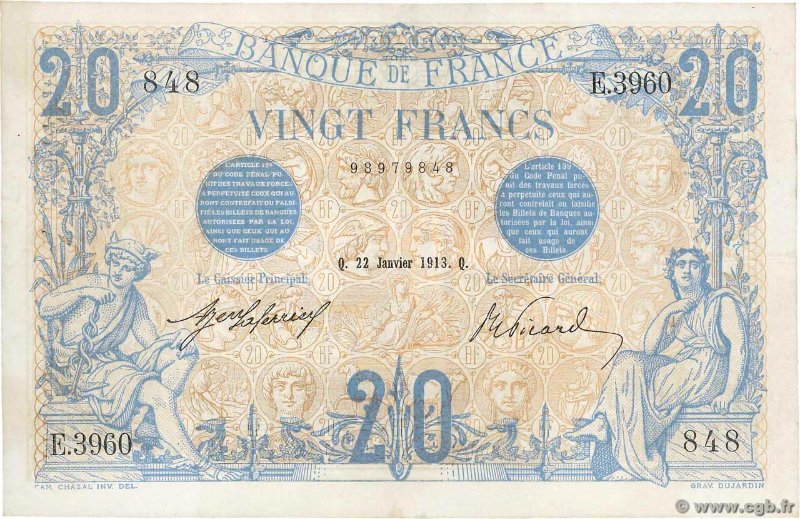
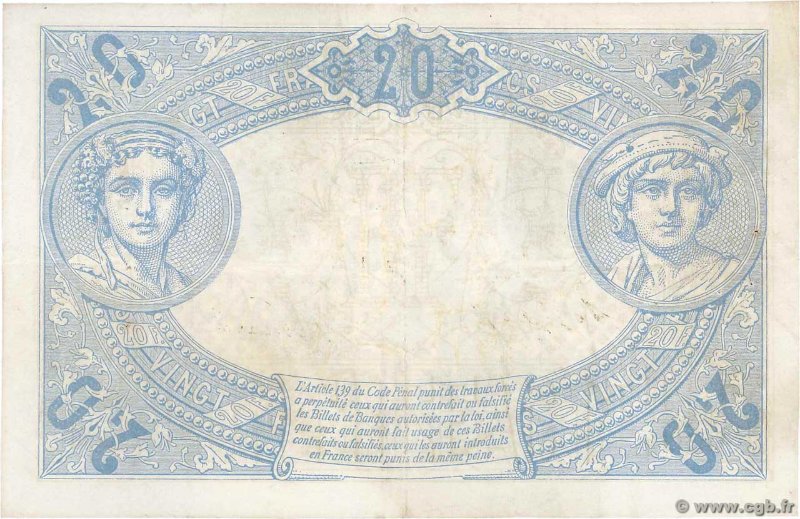
Having followed the to call to turn in one's gold, the 20 francs gold coin is paid with this
20 francs banknote (it is old-stylish already in 1915, the design being from the 1870s):
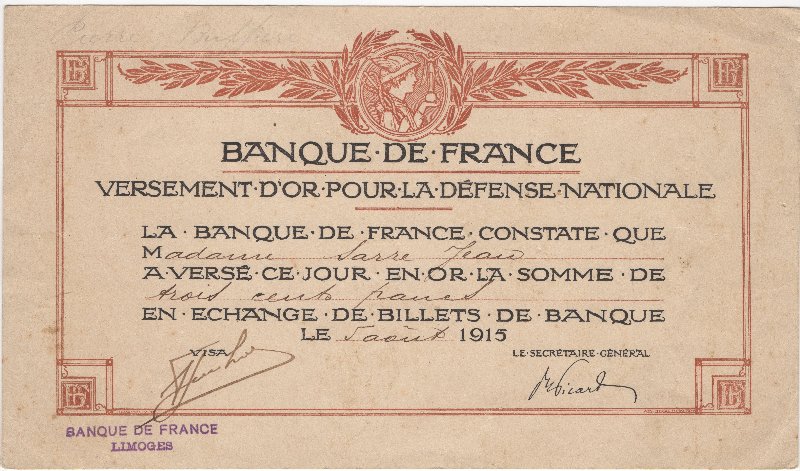
 Madame Jean Sarre
 lives in the town of Limoges in southwest France, quite far from the front lines, but most likely she knows someone there. She does not hesitate to exchange her 300 francs in gold - a sizeable sum, two months pay for a worker. This takes place on August 5, 1915, as stated on the
receipt she obtains.
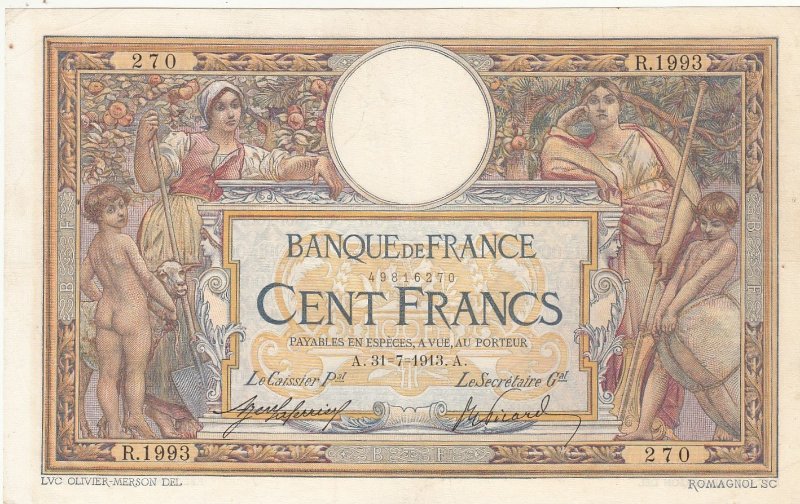
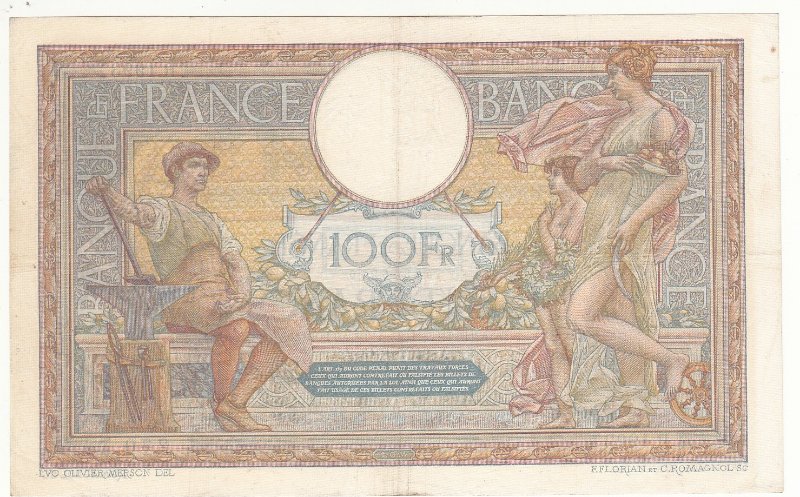
The payment she gets is in the more modern
100 francs notes (design of 1904).
The campaign to turn in gold is a success. In 10 weeks, 650 million francs in gold is collected.
The first of four defense loans is launched in November 1915. To engage as many as possible to buy war bonds, they are emitted also in small denominations, 5 and 20 francs.
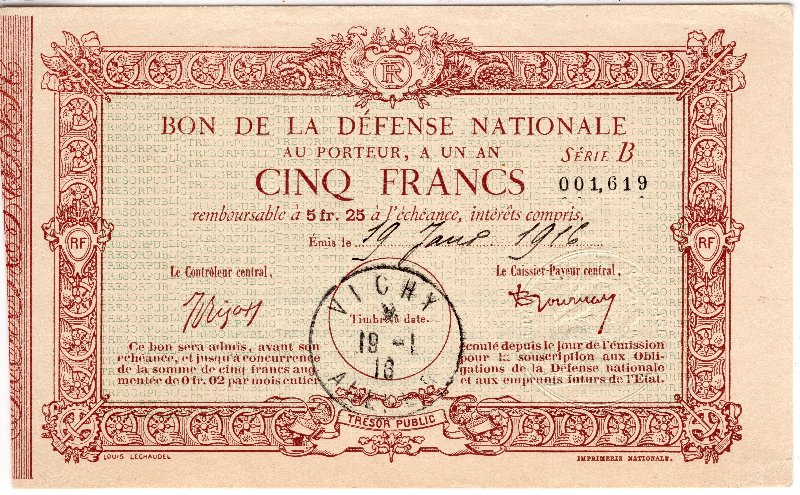
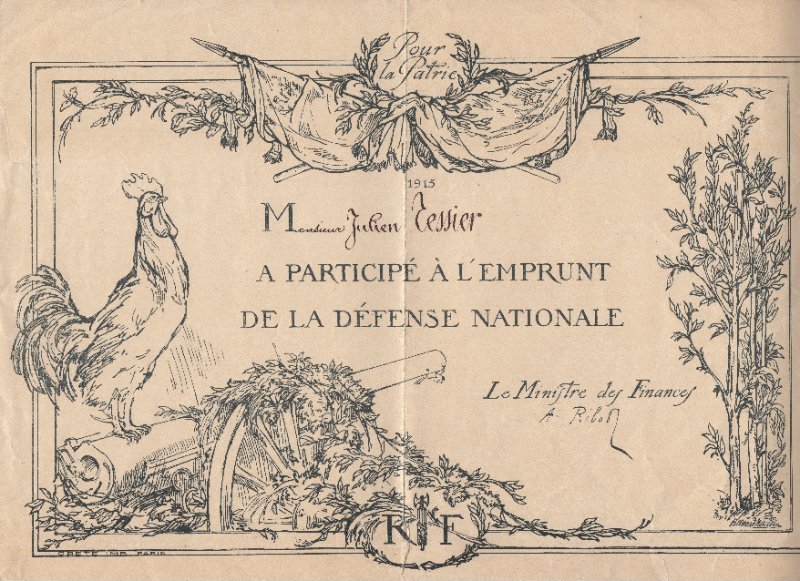
Monsieur Julien Tessier from Vichy in central France is retired, and too old to enlist. He lives in small circumstances, but he can still buy a
5 francs bond. The bond will give an interest of 25 centimes when reimbursed after one year.
The bond is a bearer bond, but to show that he has participated in the defense loan, M. Tessier obtains a
certificate with his name. The certificate is large, it is in folio format (32 x 22 cm) and he will frame it and put it on his mantelpiece.
We do not know how the war affected Mme Sarre and M. Tessier. All we know is that they are real persons, and we do know they made their contribution to the war effort, thanks to the documents they left behind and which have been preserved for more than a hundred years. With some luck, they will still bear witness to their deeds in another hundred years. I will do what I can to make that happen.







 Posted 11/16/2019 6:20 pm


 I like to imagine what life was like for them, adding a few characteristics and plausible circumstances give them life.


