| Author |
 Replies: 638 / Views: 59,877 Replies: 638 / Views: 59,877 |
|
|
|
Pillar of the Community
 Spain
2752 Posts |
Very nice Jim!...Especially like the portrayal of the leaping lion!....Cool coin and again thanks for the write up  @livingwater...Sweet looking coins and really like the horse c/m. |
|
Pillar of the Community
United States
7067 Posts |
Enjoying the additions. Thanks for sharing.
|
|
Pillar of the Community
 United Kingdom
1168 Posts |
Thanks, Paul and Bob. The apiary is growing as I succumbed yet again. I liked the straight wings on the bee, and the (sorry Paul) female head left. I like to think it is a local nymph, but who can say? This one appears to be the "earring and necklace" variety, as opposed to the "turreted female head left" type that it was sold as - both types are listed as BMC 68-70. 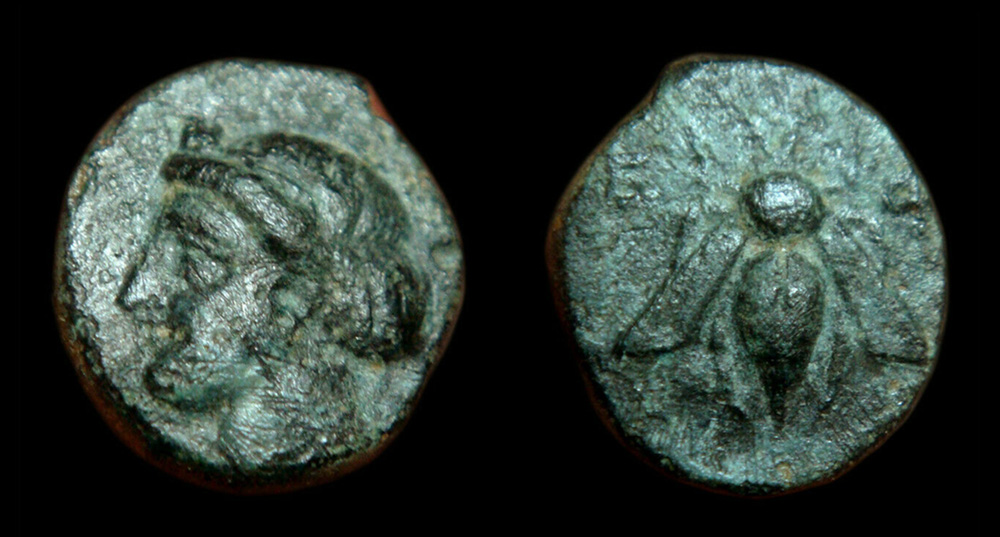 Ephesos, Ionia. ca 305-288 BC. Obverse: Female head left, wearing earring and necklace. Reverse: E - Φ, Bee with straight wings. Bronze. Diameter: 12 mm. Weight: 1.76 gr. BMC 68-70; SNG Cop 256; SNG vA 1839. |
|
Pillar of the Community
Spain
2752 Posts |
Nice addition Jim! Quote:
The apiary is growing as I succumbed yet again. I make it 7 now....  What's your favourite? 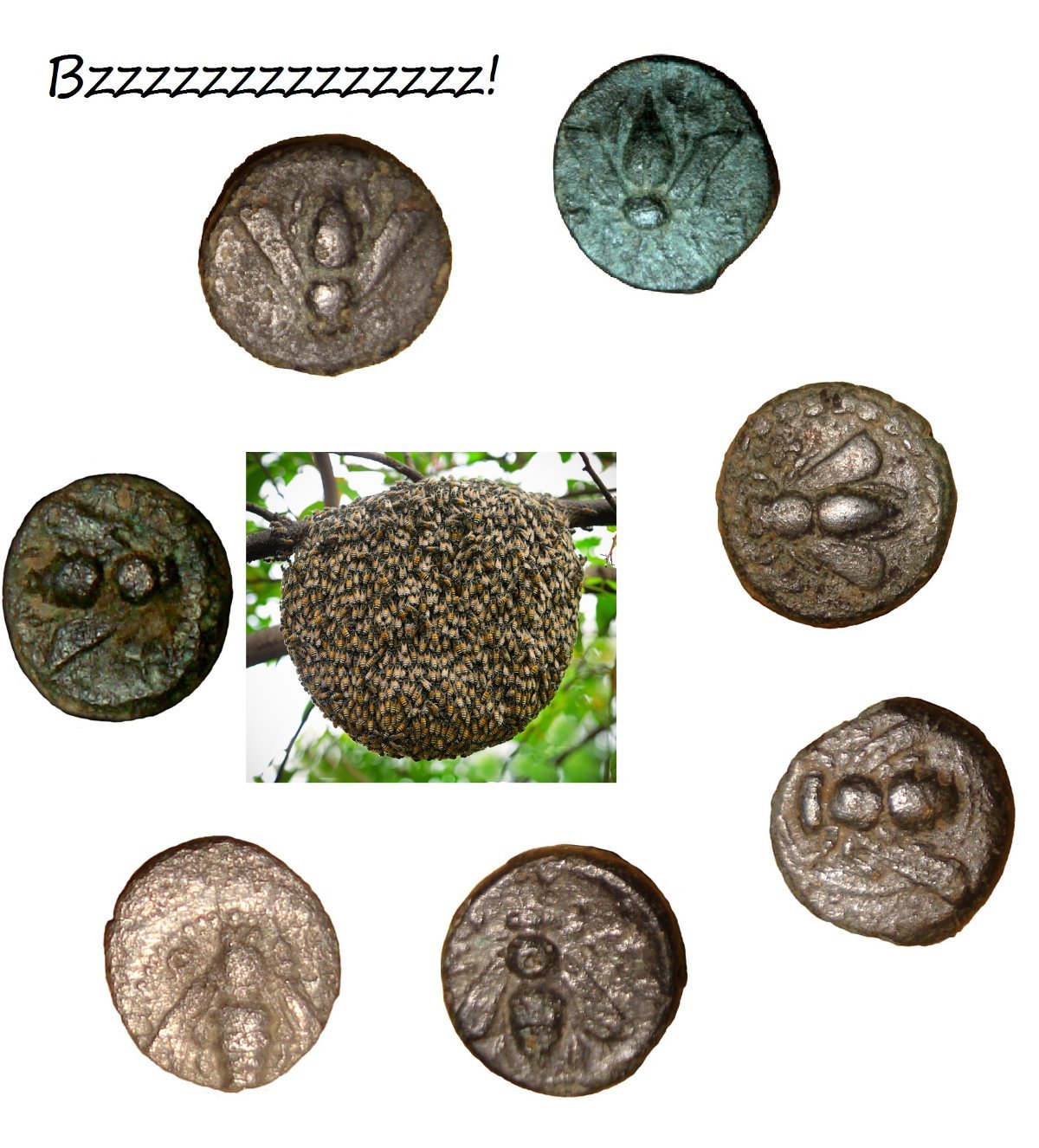 |
|
Pillar of the Community
United Kingdom
1168 Posts |
I love the composite image with the colony in the centre, Paul. I guess if I had to choose one as a favourite, and though it's not the best looking coin it would probably be the Tetartemorion because: 1) It is a twofer with the lovely eagle's head reverse. 2) It is the oldest at 550-500 BC. 3) It is the smallest at 6 mm in diameter. and 4) It is the lightest at only 0.12 gr. 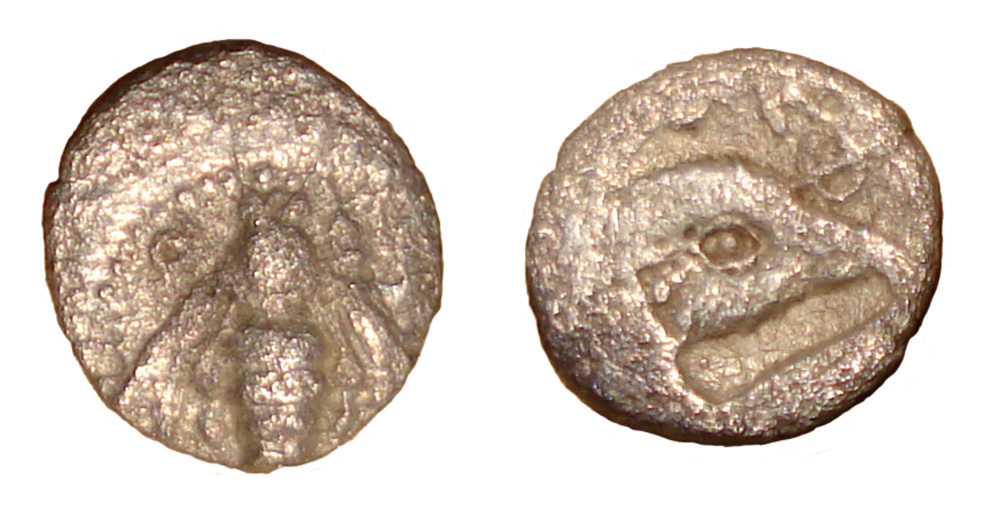 |
|
Pillar of the Community
United Kingdom
1168 Posts |
A crocodile to add to the menagerie was on my wish list, but even worn ones seem to command high prices. I paid a bit more than usual for this one from Nemausus (modern day Nimes), but apart from the obvious surface damage which reduced the price, there is still a lot of detail remaining. The back story was interesting, as why did a coin minted in Gaul have a crocodile on it? According to Greek geographer Strabo, Nemausus was the capital of the Gallic tribe of the Volcae. It was named after the ancient Gallic god, Nemausus, who was venerated in a sacred well in the northwestern part of the city. The Romans gained control of this part of Gaul during the Second Punic War, and later built the Via Domitia connecting Italy to Hispania. The emperor Augustus settled veterans from his Egyptian campaign in the city in 27 BC, gave them parcels of land and gave it the rights of a colonia. In consequence, the coins of Nemausus would show an Egyptian crocodile and sometimes a palm tree or leaf. Was this the first retirement village? 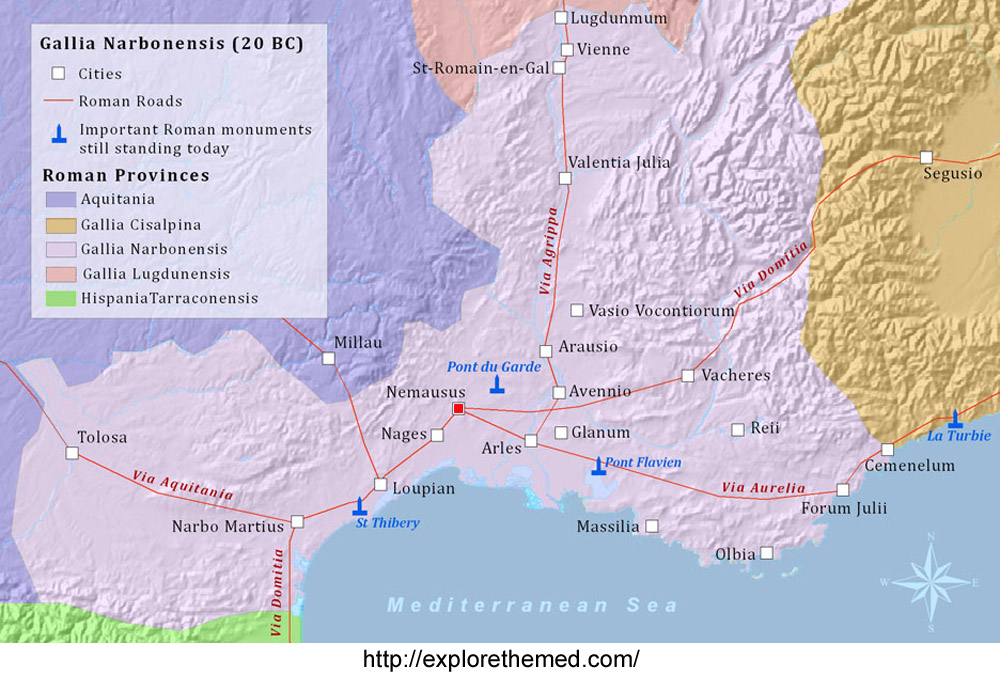 The city of Nimes still has the crocodile and palm tree emblem on its flag. 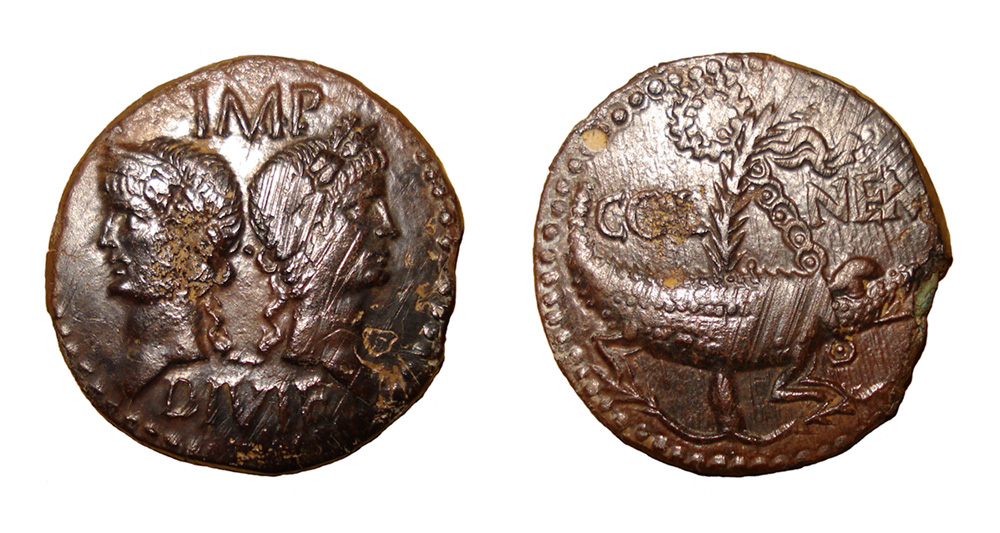 Gaul, Nemausus. Augustus and Agrippa. A.D. 10-14. AE Dupondius Obverse: Heads back-to-back of Agrippa, wearing combined laurel and rostral crown to left, and Augustus, oak-wreathed, to right. IMP DIVIF above and below. Reverse: Crocodile standing right chained to palm tree behind it, the top of which bends to the right, palm-branch at base. At the top of the tree a wreath with long ties, COL NEM either side of palm; all within dotted border. Bronze. Diameter: 26.5 mm. Weight: 8.78 gr. (Similar size and weight as Agora Auctions, sale 67, lot 105.) RIC 158; RPC 524. |
|
Pillar of the Community
United States
7067 Posts |
Good detail on that coin, Jim, despite the corrosion and scratches. |
|
Pillar of the Community
Sweden
2124 Posts |
 That's wonderful detail, they rarely come this sharp. My own for comparison: 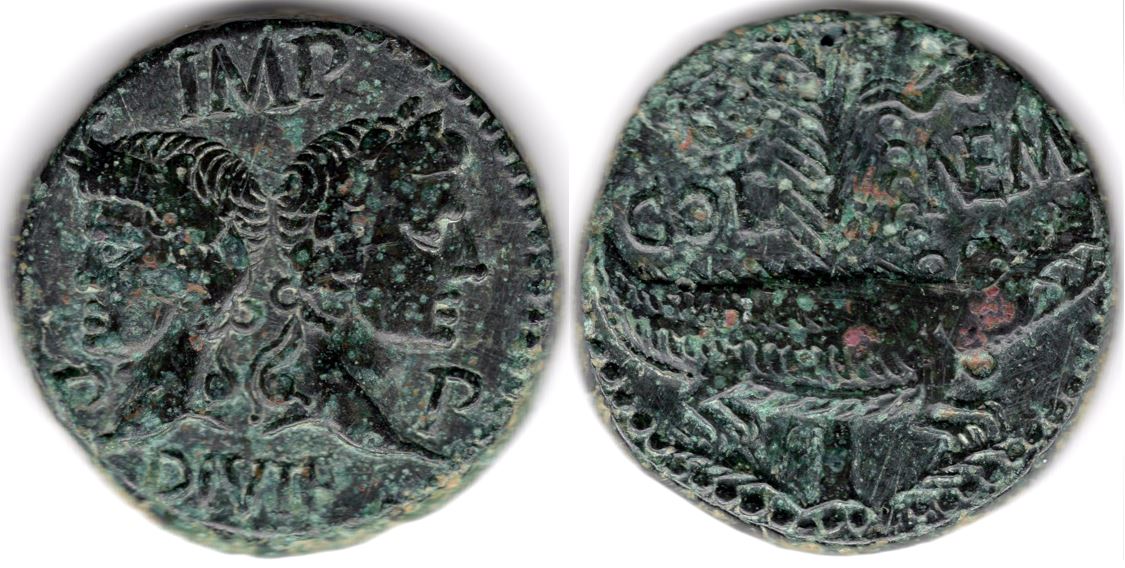 Dupondius, 10-14 AD, Nemausus/Nîmes. 13 g, 25 mm. RIC 159, RPC 525. The design with the palm, wreath and chained crocodile was taken as the coat of arms of Nîmes in 1535. At that time, numerous of these coins had been found in and around the town and by royal decree Nîmes was allowed to change their coat of arms to this one, reminding of its Roman origins. |
|
Pillar of the Community
United Kingdom
1168 Posts |
Thanks Bob. The coin really is pleasing in the hand, and I don't think I'd ever get a better one with limited funds.
Thanks also @erafjel. My coin came from a private collection, but your coin has all the detail without the deep scratches. A very nice example of the type.
Jim
|
|
Pillar of the Community
United Kingdom
1168 Posts |
The menagerie was lacking a panther. I had always been outbid with panther coins till winning this uncommon one from Nesos/Nasos. The panther's head is mostly off flan, but a headless panther is better than none at all.  The black panther was the favoured animal of the Greek god Dionysus, the god of the vine, winemaking, and wine. In mythology it symbolized the unleashing of suppressed urges, and breaking through barriers and inhibitions. 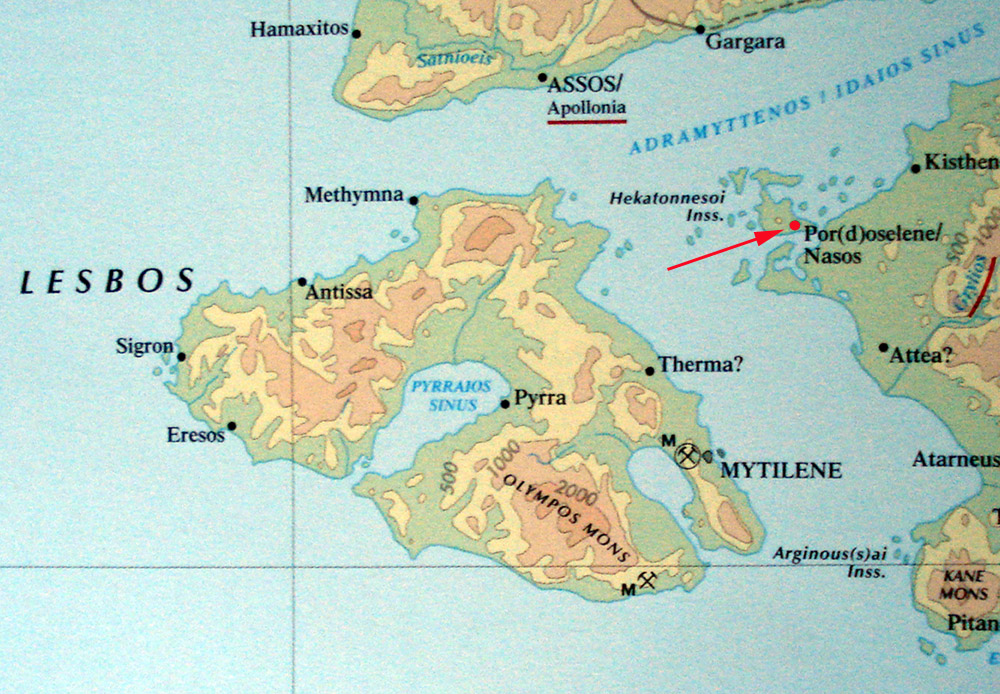 There are quite a few images of the coins of Nesos, but very little information on the actual place it's self. The consensus of opinion appears to be that Nesos was the largest of the small islands lying in the strait between Lesbos and Asia Minor called Hekatonessi. It had a temple of Apollo and was known to have struck small bronze coins. There is some doubt to the actual location of the city, but the Barrington Atlas equates Nasos and Pordoselene. (Strabo said that Pordoselene was renamed Poroselene to avoid the dirty allusion, as pordos means fart in Greek.) From Wikipedia: The place-name "Nesos Pordoselene" appears in the list of tributes to ancient Athens of the year 422/1 BC but there are different opinions on whether Nesos (or Nasos in the Aeolic dialect) and Pordoselene were a single city or if they are two different cities. 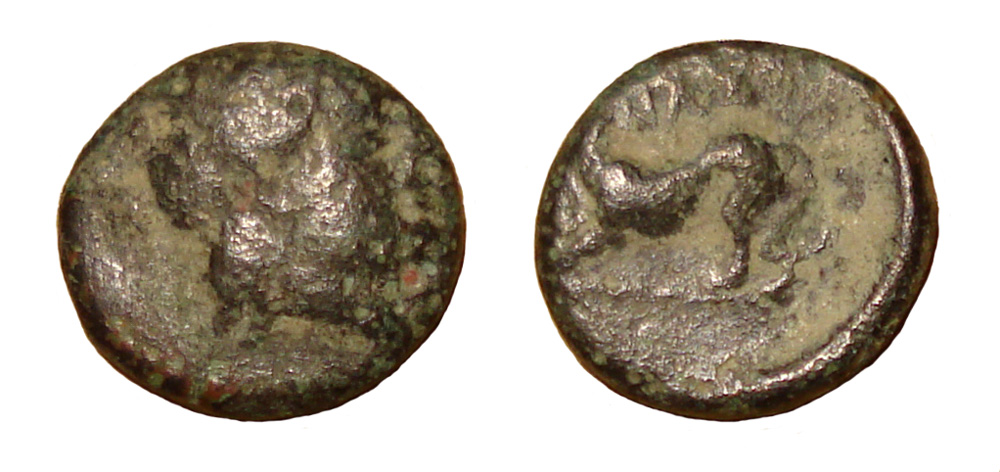 Nesos - Lesbos. 350-300 BC. Obverse: Laureate head of Apollo right. Reverse: Panther crouching left, head reverted; astragalos below. Reverse Inscription: NAΣI. Bronze. Diameter: 10 mm. Weight: 0.8 gr. Reference: BMC 3-4 |
|
Pillar of the Community
Spain
2752 Posts |
Catching up Jim....
That Nemausus is a really nice example!..Difficult to find with such nice detail...
And a sweet little panther a bit of a rarity! Interesting about the place name too.
Congrats on a couple of nice additions to the zoo..
|
|
Pillar of the Community
United Kingdom
1168 Posts |
Thanks Paul. The Barrington Atlas really comes into it's own with places like Nesos. The next reading material will be Strabo's Geography. |
|
Pillar of the Community
United Kingdom
1168 Posts |
Another bee to add to the apiary, and this time it's from Gentinos (Gentinus) in Troas, not from Ephesos. Researching the coin proved interesting as it didn't seem to go anywhere, though there were images of coins on sale from Gentinos. Surprisingly, Gentinus is listed in WildWinds' Geographical Index of Greek Mints, Rulers & Tribes, but there is no page. 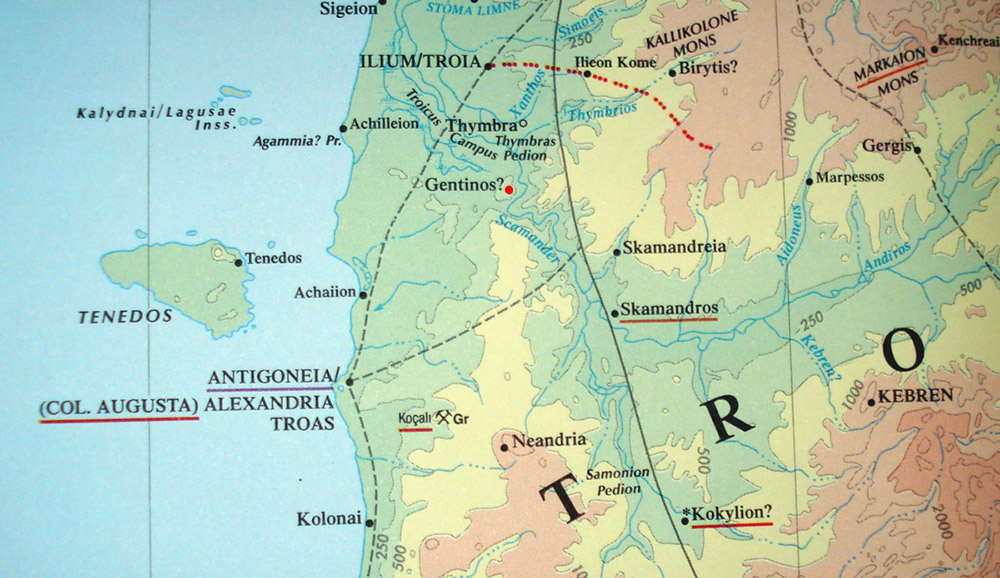 The only references I could find regarding the location of Gentinos pointed to page 56 (above) of the Barrington Atlas, where it is named "Gentinos?". 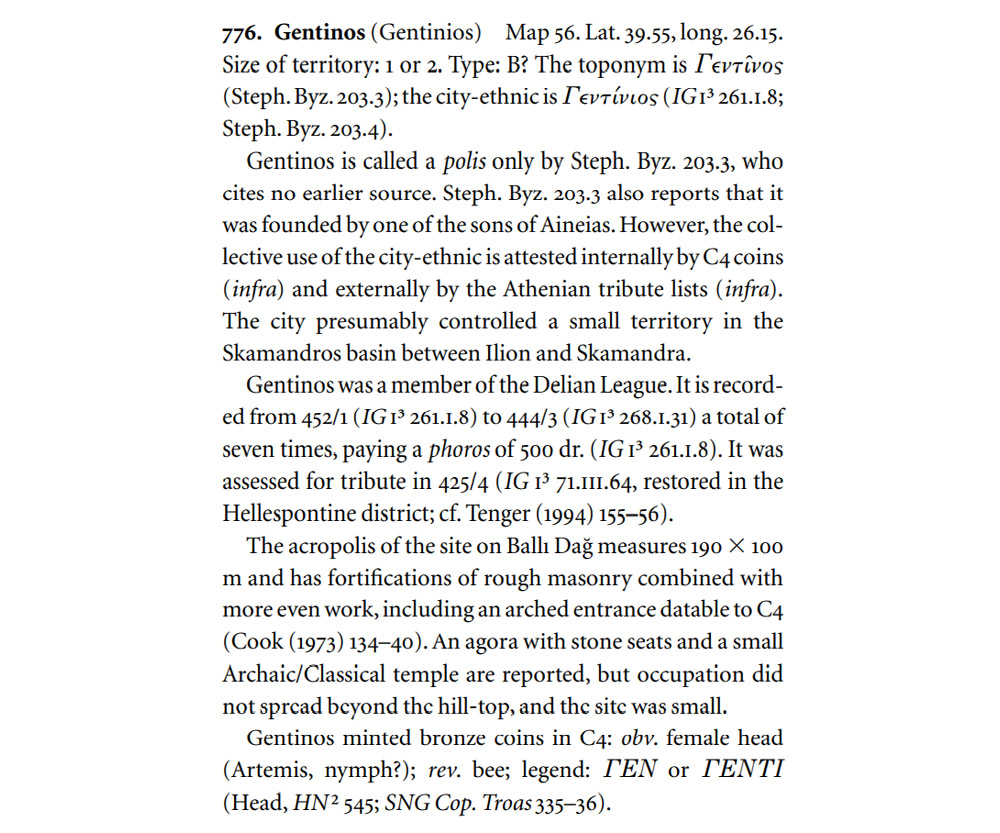 Likewise, there was very little found regarding the history of Gentinos, apart from the extract above from; Hansen & Nielsen 2004 - Lexique Poleis. 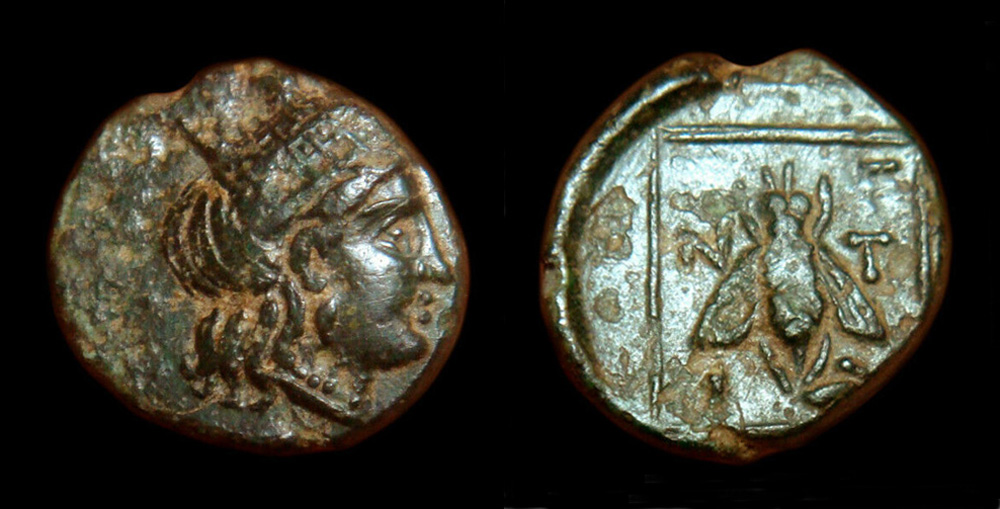 Gentinos - Troas. 3rd-1st centuries BC. Obverse: Turreted female head (Artemis?) right. Reverse: Bee within linear border. Reverse Inscription: Γ - Ε / Ν - Τ / Ι. Metal: Bronze. Weight: 0.9 gr. Diameter: 11 mm. Reference: SNG Cop 336; SNG Ashmolean 1141 |
|
Pillar of the Community
Sweden
2124 Posts |
That is a lovely coin! |
|
Pillar of the Community
Spain
2752 Posts |
...Another nice addition to your apiary Jim! I think the general consensus is that the obverse portrayal is of Artemis and looking at other examples I think I can just see the top and vertical line of the arrow behind the portrait? Although other types without the framing on the reverse seem less convincing? Enjoyed your write up as always thanks.. Ps..I've refrained from adding this bee to the Apiary portfolio until you add some more. |
| |
Replies: 638 / Views: 59,877 |







 First Page
 Previous Page


 Posted 12/01/2021 8:01 pm





