|
This page may contain links that result in small commissions to keep this free site up and running.

Welcome Guest! Registering and/or logging in will remove the anchor (bottom) ads. It's Free!
To participate in the forum you must log in or register. | Author |
 Replies: 638 / Views: 59,876 Replies: 638 / Views: 59,876 |
|
|
|
Pillar of the Community
 United Kingdom
1168 Posts |
Quote:
That is a lovely coin! Thanks, @erafjel. I was lucky to get this one. Quote:
Another nice addition to your apiary Jim! I couldn't resist this one, Paul, especially with the nicely detailed obverse image. I am also inclined to believe that the bust is of Artemis, more than any of the other gods/goddesses. Quote:
Ps..I've refrained from adding this bee to the Apiary portfolio until you add some more. It could take a while, Paul, as the "bee coins" seem to be very popular with collectors at the moment.  |
|
Pillar of the Community
Russian Federation
5186 Posts |
Quote:
I paid a bit more than usual for this one from Nemausus (modern day Nimes), but apart from the obvious surface damage which reduced the price, there is still a lot of detail remaining. Awesome coin, and awesome detail! I suspect that most (all?) of the scratches were actually on the planchet, i.e. that the coin was minted already with them. Neat bee as well! At 11 mm for the whole coin, this bee would actually (still) be smaller than its real-life counterpart. I keep being surprised at the skill of ancient Greek die-cutters that managed to make detailed images like that. |
|
Pillar of the Community
United Kingdom
1168 Posts |
Thanks, @january1may. That is an interesting couple of points I hadn't thought about the scratches being on the planchet before it was struck. Indeed, the bee on the coin is indeed a fair bit smaller than an actual bee, and like you, I never cease to be amazed at the craftsmanship of these ancient die-cutters. Without their skills we would not have these beautiful pieces of history. Jim  |
|
Pillar of the Community
United Kingdom
1168 Posts |
I couldn't resist bidding on this little coin from Assos, mainly because of the griffin on the reverse. I do like the helmeted and laureate head of Athena as well. Assos (Assios) or modern day Behramkale in Canakkale Province, Turkey, is said to have been founded from Methymna in Lesbos, by Aiolians, in the 10th century BC. The territory of Assos may have included the poleis of Gargara and Lamponeion, the former having been founded by Assians (Strabo). 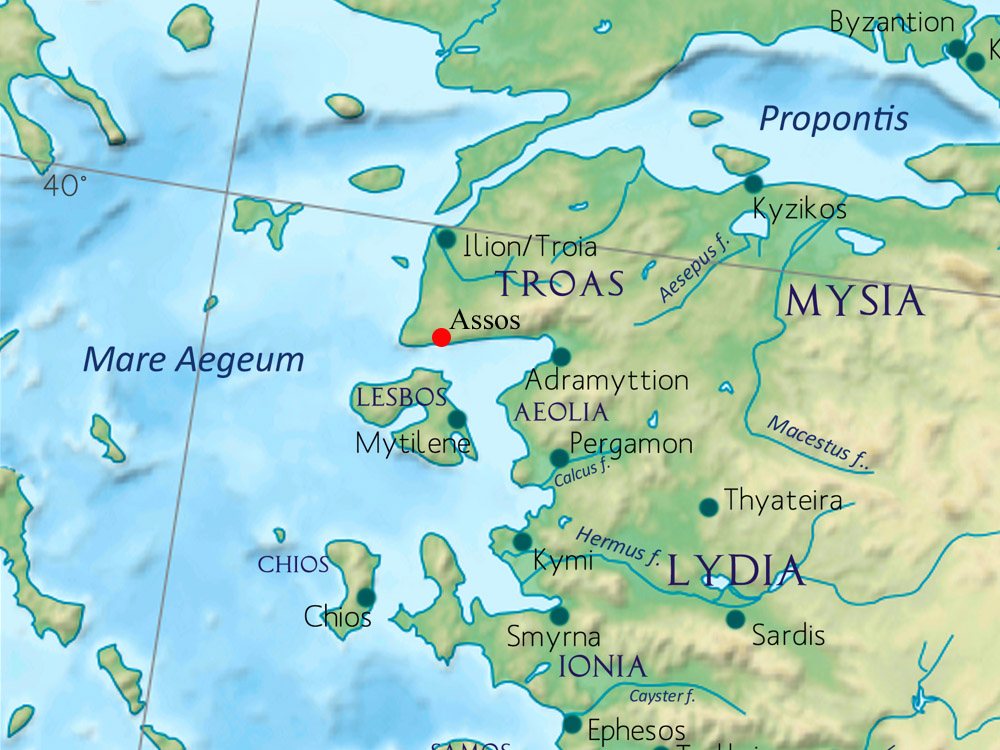 The Acts of the Apostles refers to visits by Luke the Evangelist and Paul the Apostle, to Assos. Over the course of Paul's three missionary journeys, he walked approximately 10,000 miles across the eastern Roman empire. His very last walk of these missionary journeys took place on the Troad pennisula while he was travelling back to Jerusalem. Knowing that trouble awaited him there, Paul left his travelling companions to sail around the coast without him while he walked the Roman road from Alexandria Troas to Assos, presumably alone. The thirty mile walk and the two days that it likely took him, would have given him ample time for reflection. From Hansen & Nielsen 2004 - Lexique Poleis: Assos was a member of the Delian League. It belonged to the Ionian district and is registered from 454/3 to 427/6 or 426/5 a total of eight times, twice completely restored, paying a phoros of 1tal. It was presumably assessed for tribute in 410/9. Three periods can be distinguished when Assos minted coins. (1) Silver, c.479-450: obv. griffin; rev. lion's head. (2) Silver, c.450-400: obv. head of Athena, wearing helmet; rev. lion's head, or Archaic statue of Athena with spear and fillets; legend: ΑΣΣΙΟΝ or ΑΣΣΟΟΝ (sic) or ΑΣΣΙ. (3) Silver and bronze, c.400-241: obv. head of Athena; rev. various types; legend: ΑΣΣΙ or ΑΣΣΙΟΝ. 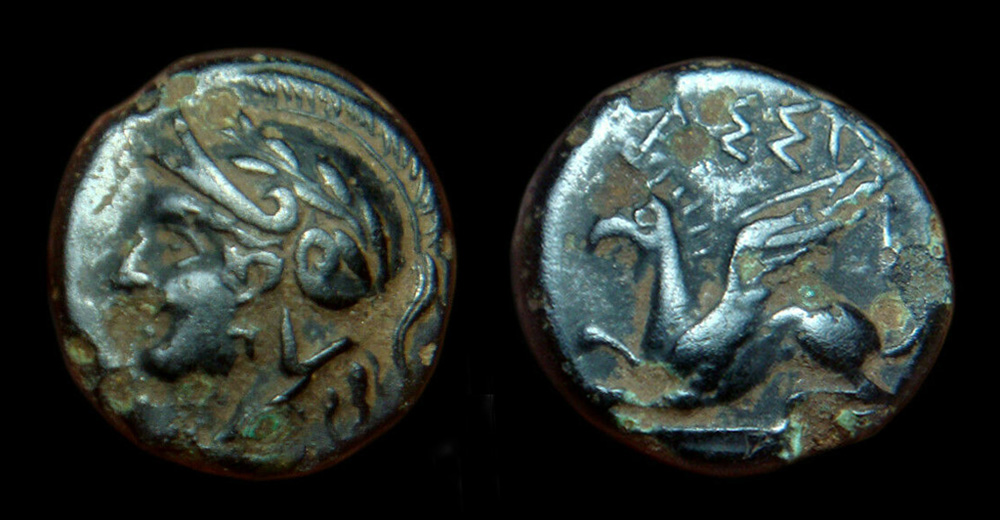 Assos - Troas. 400-241 BC. Obverse: Helmeted and laureate head of Athena, left. Reverse: Griffin recumbent left. Reverse Inscription: AΣΣΙ. Metal: Bronze. Diameter: 11 mm. Weight: 1.4 gr. Reference: BMC 13-14 |
|
Pillar of the Community
 Spain
2752 Posts |
That's a lovely looking coin Jim!. And as always with your posts I come away having learnt something new so thanks for the write up. Really nice patina and the earthen deposits in the fields enhances the details....Sweet coin.. I own only one coin with a depiction of a Griffin minted just down the coast at Phokaia. 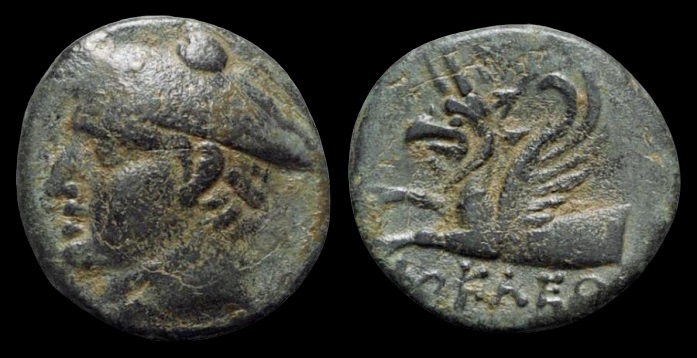 |
|
Pillar of the Community
United Kingdom
1168 Posts |
Thanks, Paul. I do enjoy researching these coins and learning something new as well. As with all your coins, the coin from Phokaia is extremely well centred on both sides. Not easy to come by with hand struck coins. I really like the griffin too. I often wonder if the image of Hermes wearing petasos is where the Scots got the idea of the Tam O'Shanter headgear? |
|
Pillar of the Community
United Kingdom
1168 Posts |
Not an individual animal reverse as such, but I was attracted to this coin from Marcianopolis by the rather nice portrait of Septimius Severus, and the Nemean lion being strangled by Herakles. 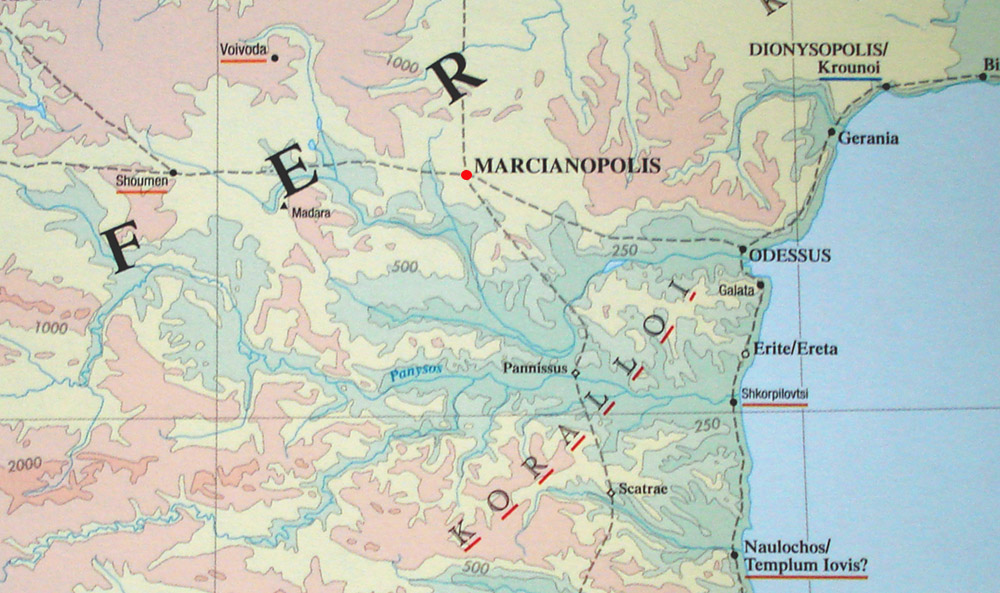 Roman Marcianopolis (present-day Devnya) was located in the north east part of Moesia Inferior, now known as Bulgaria. It was initially a Thracian settlement, but later occupied by Hellenized settlers from Asia Minor and named Parthenopolis. Following Trajan's campaigns in Dacia to the north, he renamed the settlement Marcianopolis after his sister, Ulpia Marciana, around 106 AD. Legend has it that Ulpia Marciana's daughter was washing in a spring at this location, and dropped the golden vessel that she was carrying into the spring. It sank down into the mud disappearing below the surface. After a few minutes the vessel resurfaced, and hearing of the strange occurrence, Trajan believed it to be the work of a deity that inhabited the spring. Taking it as an auspicious event, he decided to found a city there and name it after his sister. 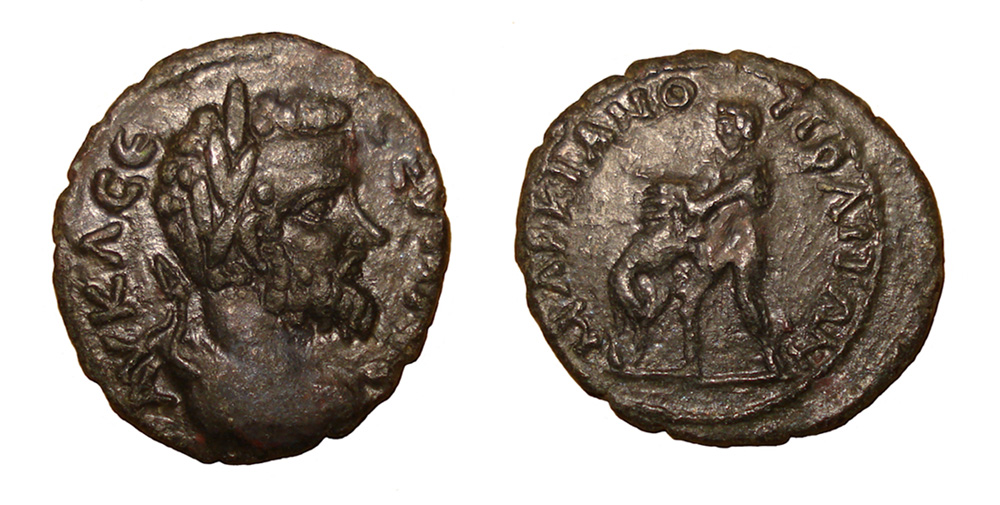 Marcianopolis - Moesia Inferior. Dichalkon. 193-211 AD. Obverse: Septimius Severus, laureate head right. Obverse Inscription: AV K Λ CEΠ CEYHΡOC. Reverse: Naked Herakles left, on ground-line, strangling the Nemean lion. Reverse Inscription: MAΡKIANOΠOΛITΩN. Bronze. Diameter: 21 mm. Weight: 4.5 gr. References: Varbanov 731; Moushmov 397. |
|
New Member
Israel
7 Posts |
|
|
Pillar of the Community
United Kingdom
1168 Posts |
Thanks, @Tngratian. I didn't have a Boeotian shield in the collection, so when this one came along, even though it's not bronze, the forepart of a horse made it ideal for the menagerie. The original reference was BMC 40, but that is with T-A above and beneath the prancing horse. It would appear that the correct reference is BCD Boiotia 268. 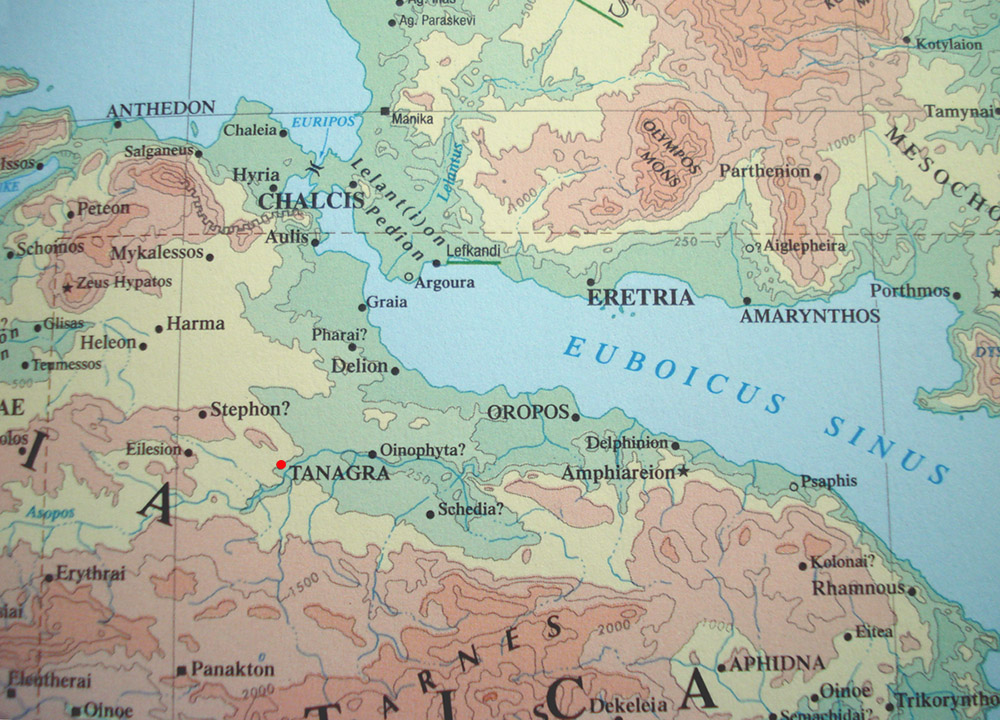 Tanagra, (Tanagraios), was said to have been the most important city in southeastern Boiotia. It was famous for its terracottas, fighting cocks and the best wine in Boiotia. Tanagra was also called Poemandria or Poimandria, and its territory Poemandris, from the fertile lands surrounding the city, or possibly after its founder Poimandrus, who took part in the Trojan campaign. Several ancient writers identified Tanagra with the Homeric Graea (Graia). The earliest inhabitants of Tanagra are said to have been the Gephyraei, who came from Phoenicia with Cadmus, and later emigrated to Athens. When writing of Tanagra, Strabo said: "Near Oropus is a place called Graia, the temple also of Amphiaraus, and the monument of Narcissus the Eretrian, surnamed Siglus, (the Silent), because passers-by keep silence. Some say that Graia and Tanagra are the same. The territory of Poemandris, however, is the same as that of Tanagra. The Tanagraeans are also called Gephyraeans. The temple of Amphiaraus was transferred by command of an oracle to this place from the Thebaic Cnopia." The translator's footnote explains: "In modern maps a modern town, Skoimandri, is laid down near the ruins of Tanagra. Pausanias, informs us why Tanagra was called both Poimandria and Graia. Tanagra was the daughter of Æolus and wife of Poimandrus; she arrived at such an extreme old age, as to receive the title of Graia, the Old." (Extracts from Geography of Strabo. Hamilton & Falconer. Vol 2 1856.) 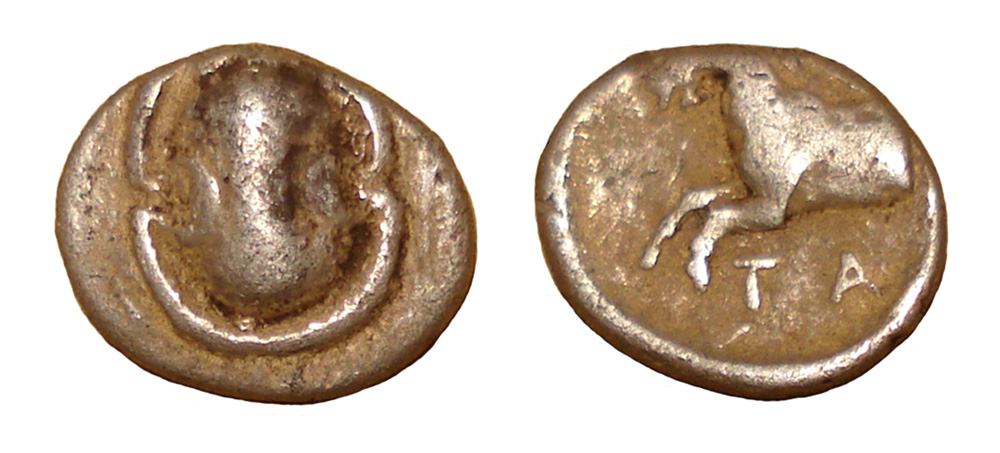 Boiotia (Boeotia) - Tanagra. Obol. 387-374 BC. Obverse: Boeotian shield. Reverse: Protome of horse left, below; TA. Silver. Diameter: 10 mm. Weight: 0.93 gr. Reference: BCD Boiotia 268. |
|
Pillar of the Community
United States
7067 Posts |
Congrats on adding a Boeotian shield, Jim. Did a double take when I saw an AR in your mix.
|
|
New Member
Greece
7 Posts |
Well maybe not my first one, but one of my first and definitely a favorite! Bronze tetras from Messana, showing not one but THREE animals. Octopus, Hare and Grashopper. Greetings from Athens 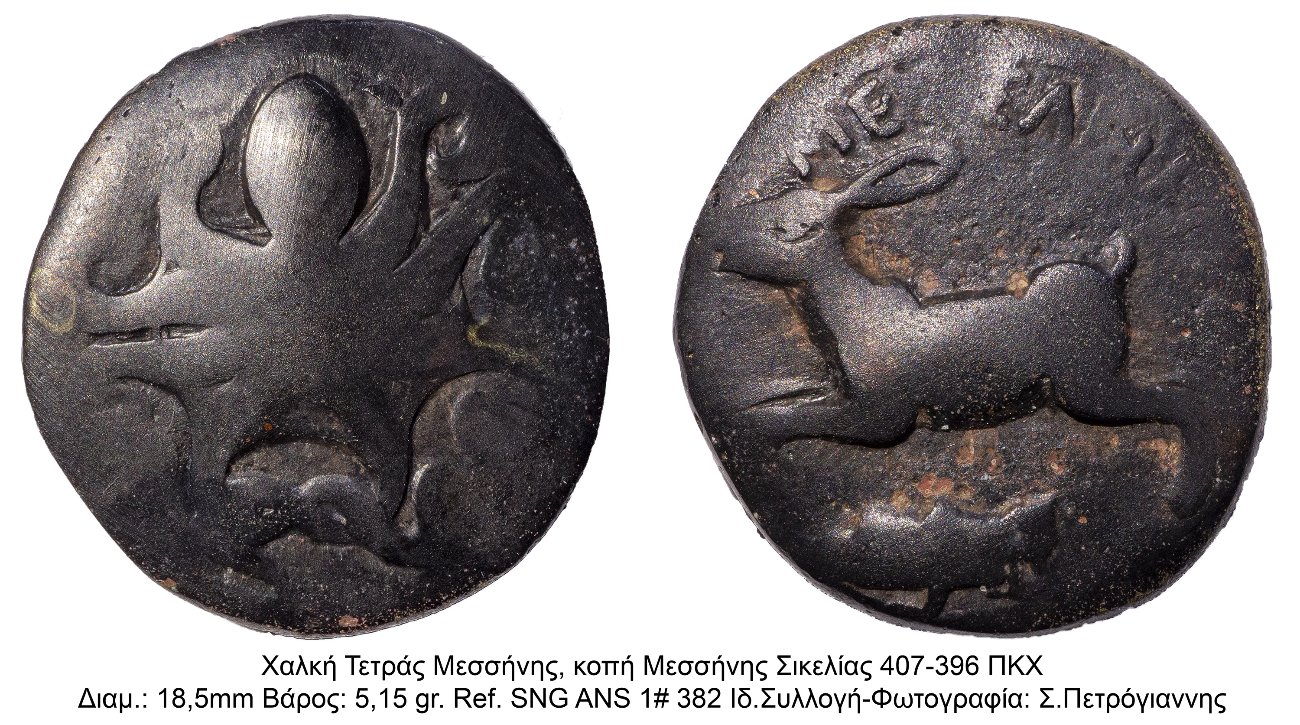 |
|
Pillar of the Community
United States
7067 Posts |
Quote:
Bronze tetras from Messana Three in one. |
|
Pillar of the Community
United Kingdom
1168 Posts |
Quote:
Congrats on adding a Boeotian shield, Jim. Did a double take when I saw an AR in your mix. Every now and then a little AR comes along that is hard to resist, Bob.  A very nice coin indeed, @Spyros. It is not very often we see three animals on one coin. I thought that this little coin with a butting bull from Gambrion (or Gambreion, or Gambrium) would make a nice addition to the menagerie. There was not much information regarding Gambrion to be found online, but some of the history was gleaned from Hansen & Nielsen 2004 - Lexique Poleis, and an online essay by Gurcan Imert. 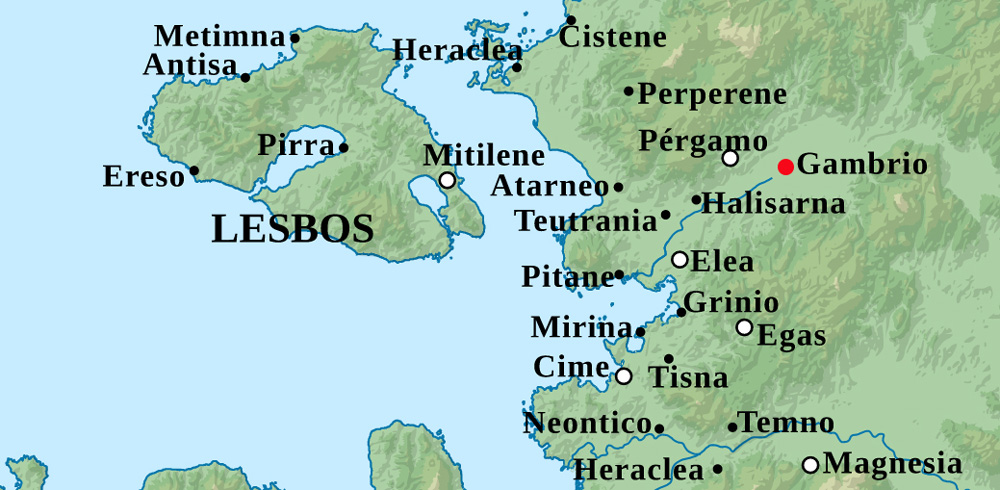 The first mention of Gambrium is in the Hellenica of Xenophon in 399 BC. At that time the ruler of the city, as well as of Palaegambrium, was Gorgion, son of Tiran Gongylos. Gambrion was a town captured by Thibron, but it is also described as a personal fief which had been given by the Persian king to Tiran Gongylos of Eretria in the 5th century BC, and whose descendants were still in control in the early 4th century BC. The Eratrai tyrant Gongylos established a kingdom consisting of four big cities: Myrina, Gryneum, Gambreum, and Palae-Gambreum. He was a very strong ruler and commander, and formed a powerful naval force. He married Ellás and had two sons from this marriage, Gongylus and Gorgion. While Gongylos was dying, he divided his kingdom between his two sons. Gongylus, the older of the sons, took Myrina and Gryneum, while the younger son Gorgion took Gambreum and Palae-Gambreum. 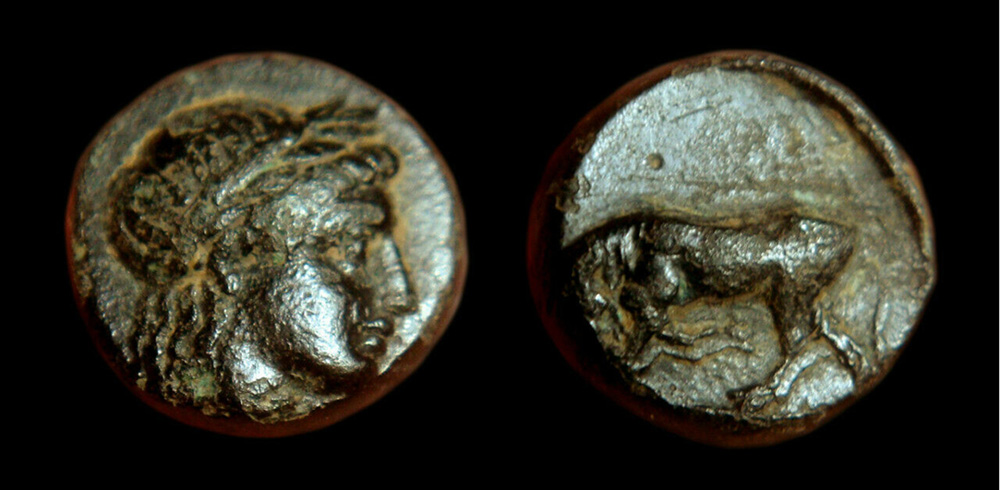 Gambrion - Mysia. 350-200 BC. Obverse: Laureate head of Apollo right. Reverse: Bull butting left. Bronze. Diameter: 9 mm. Weight: 1.0 gr. Reference: BMC 14-16; SNG Cop 157-158 |
|
Pillar of the Community
Sweden
2124 Posts |
Quote:
Gambrion - Mysia. 350-200 BC. Tiny but lovely! Quote:
Bronze tetras from Messana, showing not one but THREE animals.
Octopus, Hare and Grashopper. Interesting combo (and nice coin). Is there a story behind this constellation? |
|
Pillar of the Community
United Kingdom
1168 Posts |
Quote:
Tiny but lovely! Thanks, @erafjel. The reverse of this coin from Bithynia depicts the Centaur Chiron, my first centaur. He just scrapes into the menagerie being half of a horse. Chiron (also spelled Kheiron or Cheiron), was skilled in medicine, gymnastics, prophecy, hunting and music. Chiron was wise and just, and was much sought after as a tutor of heroes, such as Peleus, Jason, Aesclepius and Achilles. Homer calls Chiron the "wisest and most just of all Centaurs." Mythology has it that Chiron was the result of a coupling between the titan Kronos, and the nymph Philyra. 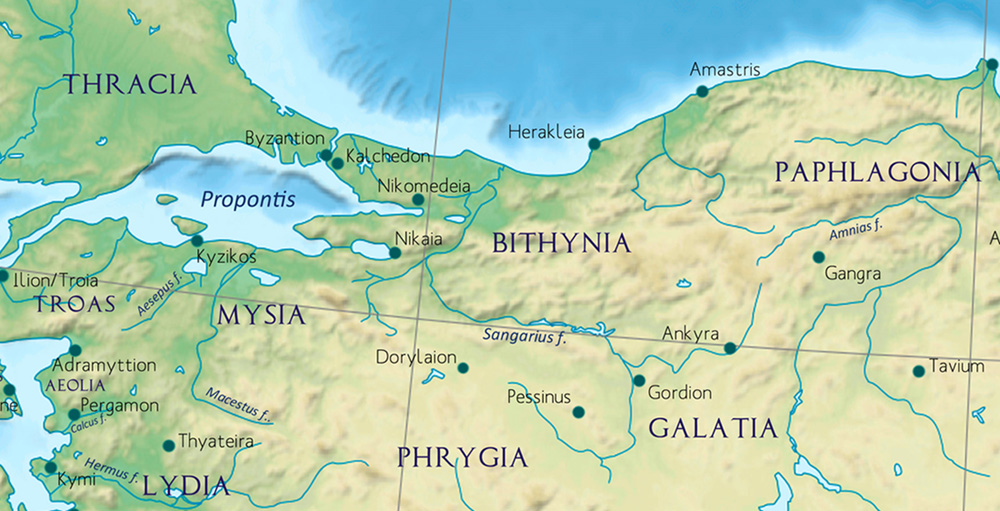 The coin is attributed to Prusias II Kynegos (Cynegus) "The Hunter", born 220 BC, the son of Prusias I and Apama III. He took the throne on the death of his father in 182 BC, and reigned till his death in Nicomedia in 149 BC aged 71. On the Wildwinds page: https://www.wildwinds.com/coins/gre...as_II/t.html RecGen 26 monogram 7, the coin is dated 238-149 BC, which is obviously erroneous as Prusias II was not born till 220 BC. 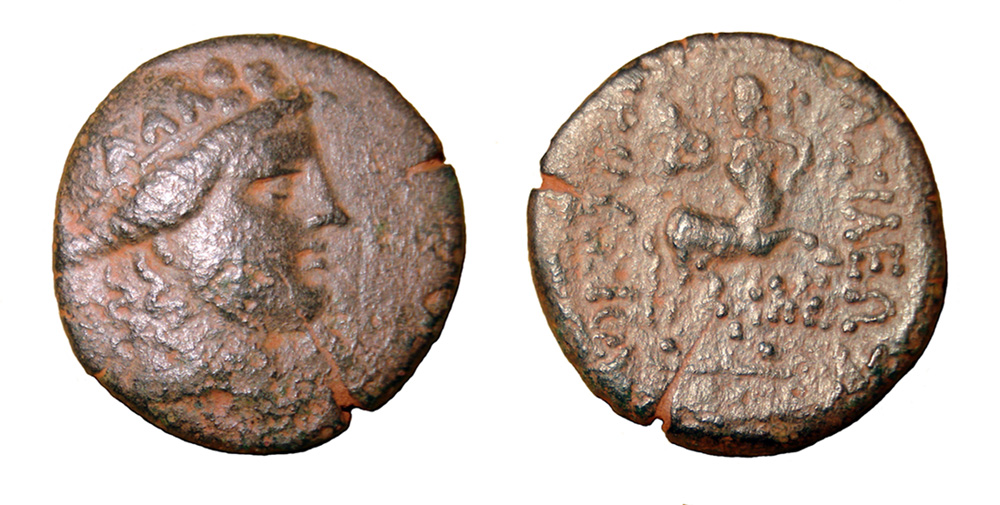 Prusias II Kynegos. Kingdom of Bithynia. 238-149 BC (?) [182-149 BC] Obverse: Head of young Dionysos wearing ivy wreath, right. Reverse: Centaur Chiron walking right, playing lyre; MTE monogram beneath front leg. Reverse Inscription: BAΣIΛEΩΣ ΠΡOYΣIOY. Bronze. Diameter: 20 mm. Weight: 4.6 gr. Reference: RecGen 26, monogram 7; BMC 9; SNG Cop 639. |
| |
Replies: 638 / Views: 59,876 |
To participate in the forum you must log in or register.
Disclaimer: While a tremendous amount of effort goes into ensuring the accuracy of the information contained in this site, Coin Community assumes no liability for errors. Copyright 2005 - 2026 Coin Community Family- all rights reserved worldwide. Use of any images or content on this website without prior written permission of Coin Community or the original lender is strictly prohibited.
Contact Us | Advertise Here | Privacy Policy / Terms of Use
|
| Coin Community Forum |
© 2005 - 2026 Coin Community Forums |
| It took 0.39 seconds to rattle this change. |
 |
|
| |
| |






 First Page
 Previous Page


 Posted 02/25/2022 08:01 am


