|
This page may contain links that result in small commissions to keep this free site up and running.

Welcome Guest! Registering and/or logging in will remove the anchor (bottom) ads. It's Free!
To participate in the forum you must log in or register. | Author |
 Replies: 638 / Views: 59,870 Replies: 638 / Views: 59,870 |
|
|
|
Pillar of the Community
United States
7067 Posts |
Quote:
my first centaur I guess we can give you half credit for this one, Jim. Nice coin. The rendition of Dionysos is reminiscent of those on Thasos tets of the second and first centuries BC. |
|
Pillar of the Community
 United Kingdom
1168 Posts |
Quote:
I guess we can give you half credit for this one. Half credit is fine thanks, Bob. I'm a glass half full kind of bloke.  I've had a look at some of the Thasos Tetradrachms, and the busts of Dionysos do indeed bear a remarkable similarity to the Dionysos on the coin from Bithynia. The similarities can't be pure chance, but I can't find any obvious connection between the two places. |
|
Pillar of the Community
United States
7067 Posts |
Just cross-cultural influences, I suppose. Roughly the same part of the world, after all. No doubt each was well aware of the other's coinage.
|
|
Pillar of the Community
United Kingdom
1168 Posts |
Quote:
No doubt each was well aware of the other's coinage. Indeed, Bob. I was quite taken by the eagle in flight landing on the maeander symbol on the reverse of this coin from Apameia in Phrygia. The attractive depiction of Athena was a bonus, plus the magistrates name, Andronikos Alkion. The reverse inscription for the city on this issue type is given as AΠAME in Wildwinds etc, but on this coin it can be clearly seen as AΠAMEΩN. 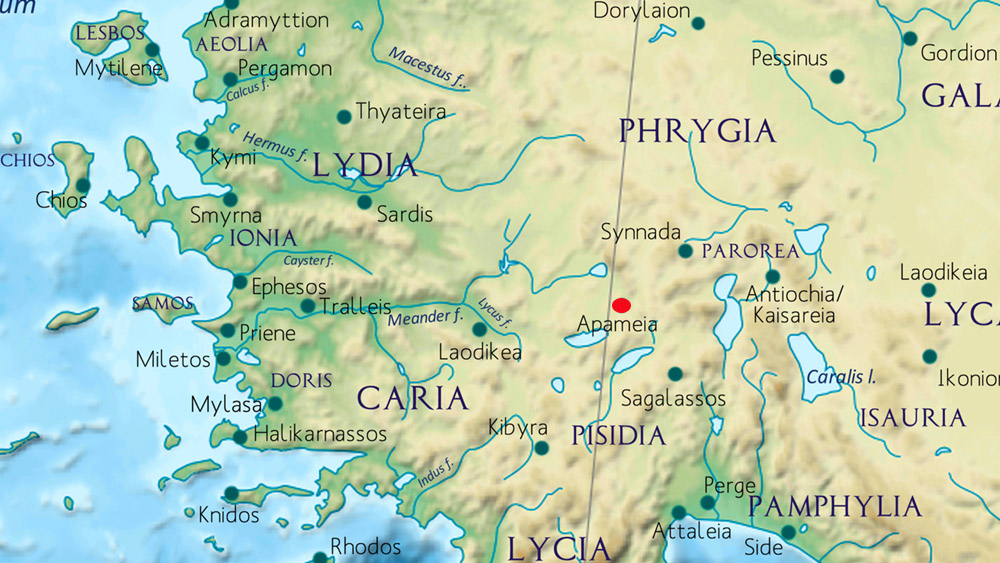 Apameia, or Apamea, or Apamea ad Maeandrum, is generally referred to as an ancient city in Anatolia founded by Antiochus I Soter in the 3rd century BC, and named after his mother, Apama. It was in Hellenistic Phrygia, but became part of the Roman province of Pisidia. It was near, but on lower ground than, Celaenae (Kelainai). However, the Princeton Encyclopedia of Classical Sites gives a more detailed description: KELAINAI later APAMEIA (Dinar) Phrygia, Turkey. Founded at the junction of the roads that still join Ionia to the East, and Phrygia to Pamphylia, as in antiquity. In 333 B.C. Alexander the Great marched to Kelainai on his expedition through Asia Minor and left there as satrap of Phrygia one of his best generals, Antigonos. This was the opening move in the maneuver for succession that culminated in 301 in the events that led to the battle of Ipsos (Paus. 1.8.1; Diod. 20.107.2-4), in which Seleukos I was victorious. His son Antiochos Soter (324-261 B.C.) moved Kelainai to the plain, rebuilt it, and named it after his mother. The meeting place of the conventus iuridicus in the Roman period, the city later became a bishopric. There are no remains in situ except the old and new city walls. Fragments of columns and architraves, as well as some inscriptions can, however, be seen in some gardens of the town. 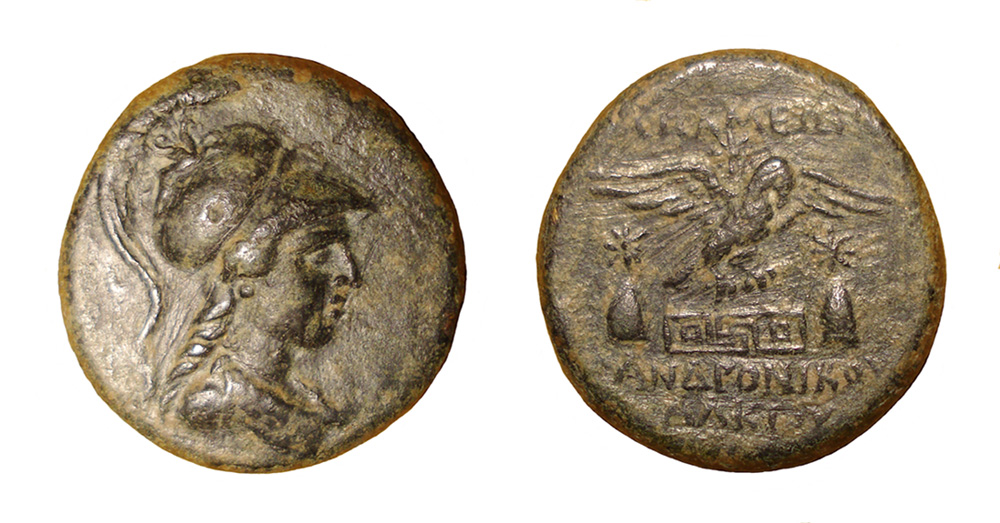 Apameia - Phrygia. 133-48 BC. Magistrate: ANΔΡONIKΟΣ AΛKION. Obverse: Bust of Athena right in crested helmet. Reverse: Εagle alighting right on maeander symbol between two pilei and two stars, star above eagle. Reverse Inscription: AΠAMEΩN / ANΔΡONIKΟΥ AΛKIOΥ. Bronze. Diameter: 23 mm. Weight: 10 gr. Reference: BMC 37-39; Weber 7024; Hunter 3; SNG Lewis 1010; SNG Cop 163; Walcher 2747; SNG Tuebingen 3955-2956; SNG Munich 109. Edited by Novicius
04/06/2022 11:25 am
|
|
Valued Member
United States
319 Posts |
What a menagerie! Fantastic representation of the animal kingdom in this thread...along with some awesome history lessons. Totally worth the "walk" through this Zootopia! I tried to choose a favorite, but there were simply too many impressive coins. 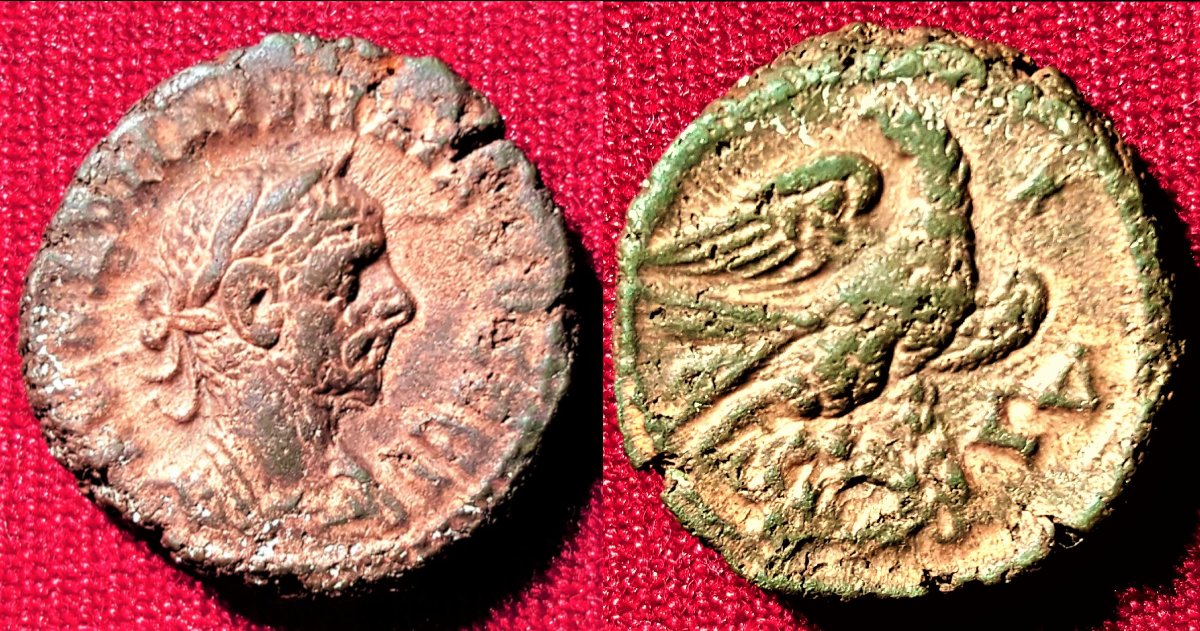 The avians are well-represented, but I couldn't help throwing this Roman eagle into the mix. An Aurelian tetradrachm of Alexandria. I could, however, be mistaken. This ID is from memory (as I let this specimen go many years ago) and the legend is dicey. |
|
Pillar of the Community
United Kingdom
1168 Posts |
Thanks for the comments and posting the Aurelian tetradrachm, Mike. The regnal year LΔ would date it to 272-273 AD.  The eagle is a magnificent bird, and it's easy to see why so many countries and peoples have adopted it as their emblem over the centuries. It does symbolise strength, leadership, and justice etc. in a very visual manner. |
|
Pillar of the Community
 Spain
2752 Posts |
Catching up here Jim...You have been busy! Some excellent additions to the zoo! Grappling Lions (Cool portrait!), horse with that "Iconic" Boetian shield, Centaur with a sweet Dionysos, butting bull on a tiny flan and that's a lovely Apamaie eagle! Wonderful informative posts as always, thoroughly enjoyed reading through them...Thanks P.S.....No Bees?  Edited by Palouche
04/10/2022 4:49 pm
|
|
Pillar of the Community
United States
7067 Posts |
Impressive eagles, Jim and Mike.
|
|
Pillar of the Community
United Kingdom
1168 Posts |
Quote:
Some excellent additions to the zoo! Thanks, Paul. I've been lucky recently with a few coins I've bid on, but prices do seem to be on the rise again. The Ephesos "bee" coins in particular appear to be rising in cost pretty fast. Even fairly rough ones are going for more than they were a couple of months ago. I daresay there will be more in the future though, as there are hundreds of different varieties. I was really pleased with the Septimius Severus portrait, as it's the only coin of his that I have. Quote:
Impressive eagles, Jim and Mike. Thanks again, Bob. Apart from the divergence from my usual bronze offerings, this chunky AR stater from Kelenderis held a lot of interest for me. There is the obvious animal interest with the horse on the obverse and the goat on the reverse. Some sites referred to a nude youth on the obverse, while others referred to Ephebus taking part in a calpe or anabates race. I was to learn that ephebus was a term for any male who had attained the age of puberty, but in Athens it became a technical term for young men aged between 18 and 20, and calpe or anabates was a dismounter race, with mares at the gallop, where the rider dismounted and ran with the horse over the last stretch. 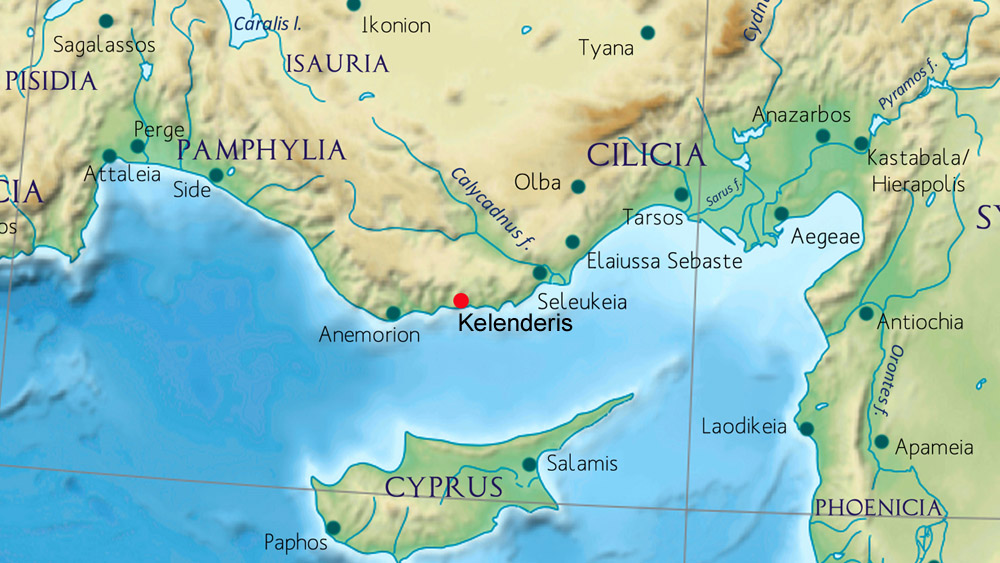 I didn't find much about Kelenderis, apart from the following from the Princeton Encyclopedia of Classical Sites: KELENDERIS, later Gilindire (Aydincik) Rough Cilicia Turkey. On the coast 46 km W of the modern Anamur and the center of a region known to Pliny (HN 5.92) as Kelenderitis. Said by Apollodoros to be a foundation of Sandokos of Syria and therefore presumably of native origin, Kelenderis was colonized, doubtless in the 8th c. B.C., by Samians. Included in the Delian League between 460 and 454 as a way station on the route to Egypt, with an assessment probably of one talent, it thereafter has no recorded history. Its coinage began in the mid 5th c. and continued until the time of Decius. Survival into the 5th c. of our era is attested by Hierocles and the Notitia. Of the recorded inscriptions, nearly all funerary and datable to the 2d and 3d c., not one is now to be seen. The ruins today are overlaid by the expanding modern village. Fortifications may still be detected, nevertheless, around the modern lighthouse on the small promontory which forms and commands the harbor; but the chief harbor was undoubtedly the fine, landlocked bay with its famous spring 1.6 km to the W at Soguk Su. Here there are ancient ruins, notably a bath at the head of the bay and archaeological debris on the peninsula at its mouth. The most notable monument is the great built tomb among olive trees to the E of the modern town. There are handsome but much destroyed rock-cut tombs at Duruhan 9.6 km to the N. 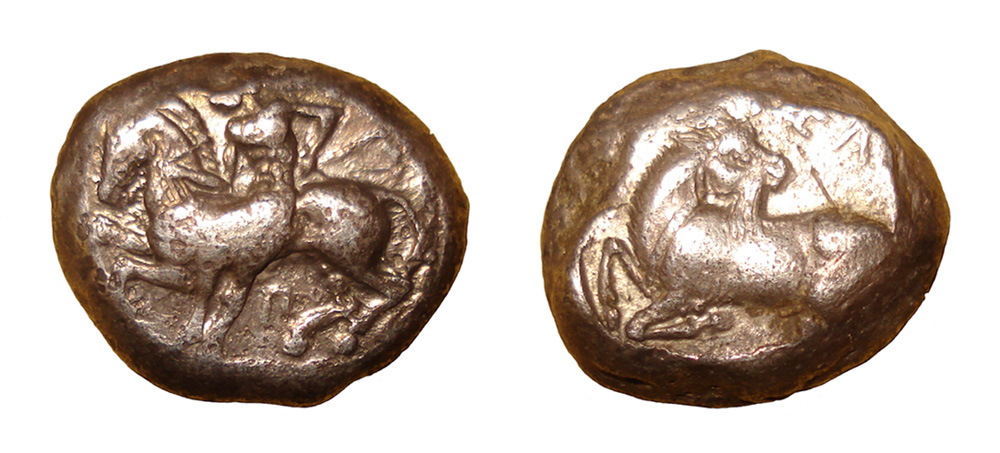 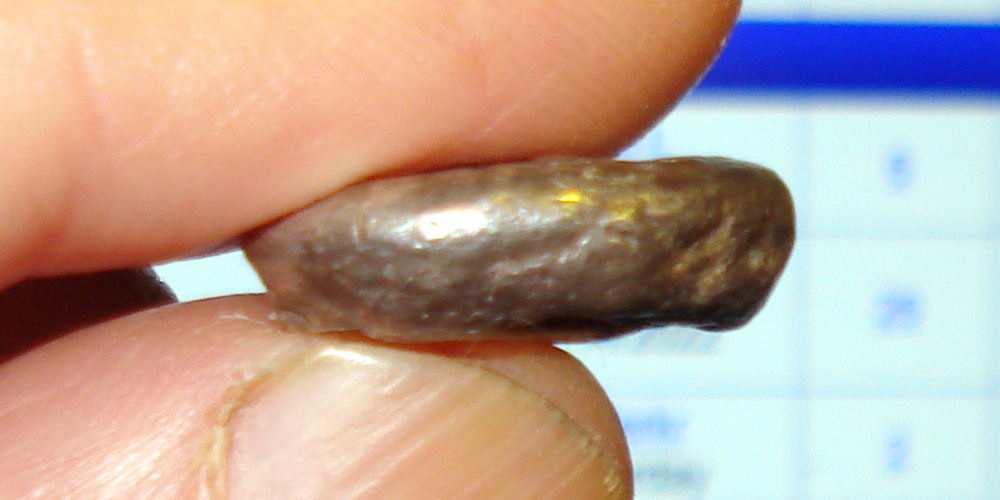 Cilicia, Kelenderis. AR Stater. Circa 430-420 BC. Obverse: Ephebus holding whip, dismounting from horse galloping to left; Π below horse's belly. Reverse: Goat kneeling to left, head to right; KEΛE above. Silver. Diameter: 19 mm. Weight: 10.78 gr. Tentative reference: SNG BnF 52. Edited by Novicius
04/13/2022 11:49 am
|
|
Pillar of the Community
Sweden
2124 Posts |
Charming goat, @Novicius, and educational post as usual! It's been a while since I posted, but now another Gallic horse has entered my collection. Allobroges, 75-60 BC, "quinarius." Silver, 2.17 g, 16 mm. Obverse: Goddess Roma. BR - I in front of helmet. Reverse: Rider with a lance. [C]OMA below. La Tour 5820, Delestree 3134. 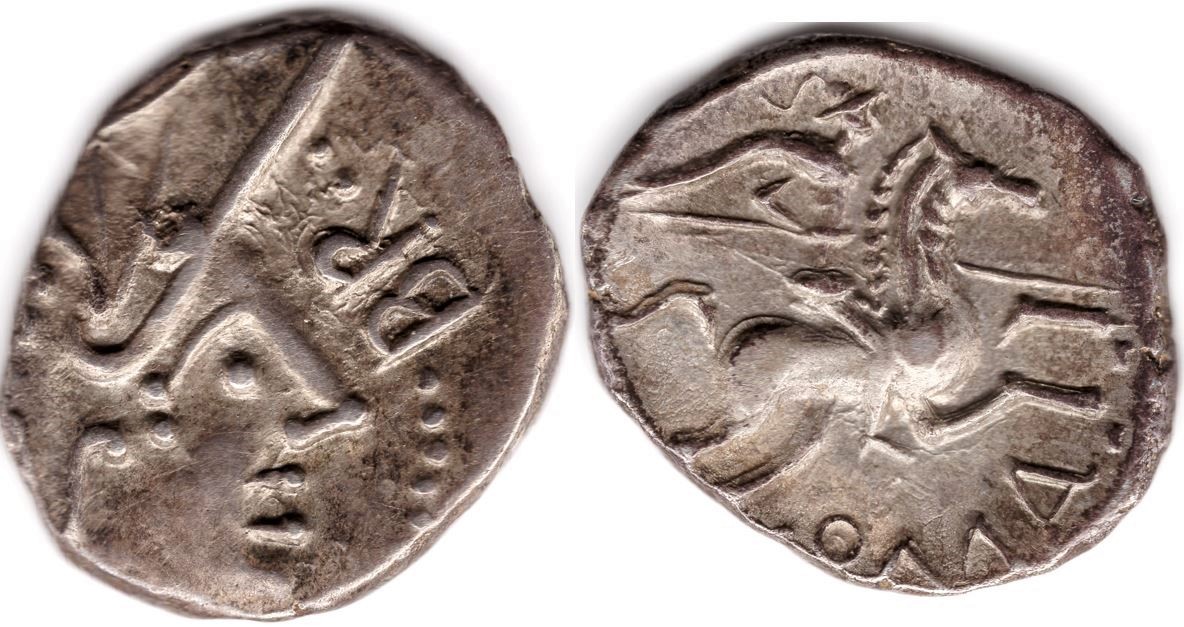 The Allobroges dwelled between the Rhône valley and the Alps. They settled there probably towards the end of the 3rd century BC (their name is derived from Gaulish allo-brogi, meaning "[those from] another land"). The tribe could have its origin in a group of Celtic mercenaries who fought the Romans at the Battle of Telamon (in today's Tuscany) in 225 BC, and after having been defeated settled in the Rhône-Alps area. Their control of the important trade routes there, such as the Rhône river, (and, perhaps, their possibly mercenary background) made them rather wealthy and influential. The area was conquered by Rome in 121 BC. The Allobroges seem to have accepted the Roman superiority most of the time, despite heavy taxation. There was a series of insurrections in the 60s BC, following especially heavy taxation by the Roman provincial governor. After that though, the Allobroges - at that time considered to be one of the strongest Gallic tribes - sided with Caesar in his campaign to conquer Gaul, and rejected to join Vercingetorix who led the Gallic tribes (and was finally defeated by Caesar at the Battle of Alesia in 52 BC). The coinage of the Allobroges followed that of the "Gallic denier zone," the part of Eastern Gaul that minted local types reminiscent of Roman denarii, although only half their weight and consequently often referred to as quinarii. (Whether that was an actual exchange rate is not known.) The coin I show is typical, with the goddess Roma on one side and a horse motive on the other, and not with Roman but with Gaulish inscription. The word BRI may be short for brigo, Gaulish for strength/vigor. The horse was a favorite motive among the Gauls, by itself or in a battle situation like here. I think it is beautifully depicted on this coin, and particularly prominent is the braided mane. Interesting is also the rider's helmet with its dynamic plume! |
|
Pillar of the Community
United Kingdom
1168 Posts |
Thanks, @erafjel. Your Allobroges coin is in superb condition, and the reverse with the horse and rider makes a nice addition to the animals thread. I have no knowledge of these coins, so find the write-up fascinating. Thanks for posting. |
|
Pillar of the Community
Spain
2752 Posts |
Nice chunky addition Jim...Lovely coin! Quote:
I was to learn that ephebus was a term for any male who had attained the age of puberty. .."Always" learn something new from you thanks! That's a really cool looking coin! @erafgel...Wonderful coin and thanks for the informative write up! |
|
Pillar of the Community
United Kingdom
1168 Posts |
Quote:
Nice chunky addition Jim...Lovely coin! Thanks, Paul. It is a pity that the strike wasn't a bit harder, and more of the imagery might have shown. Then again, I might not have been able to afford it if it had been. This coin from Rhegion (Latin Rhegium), now modern day Reggio, is tiny, but this once very powerful city has a wealth of often turbulent history. Situated on the Fretum Siculum, or the modern day Strait of Messina in the south of Italy, directly opposite the strait from Zankle (the ancient name of Messina), It grew into a major maritime city. The city had great academies, and was home to the poet Ibykos and the sculptor Klearkhos. The site of Rhegion has been settled by a variety of different peoples since the 3rd millenium BC. Rhegion it's self was founded about the beginning of the first Messenian War in 743 BC, by Aeolian Chalcidians from Euboea and by Doric Messenians. 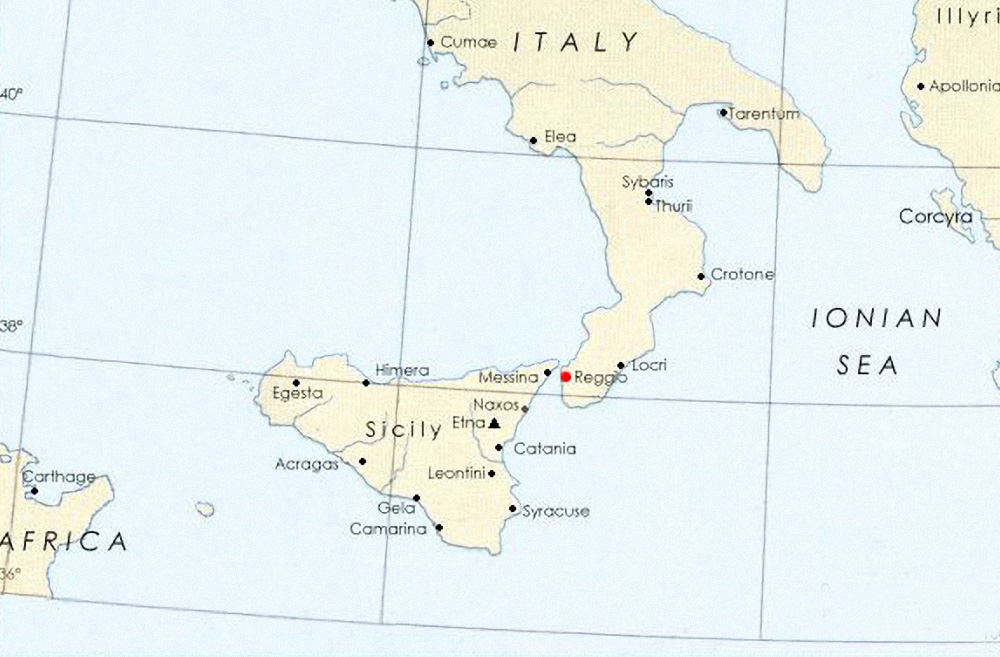 Repeated attempts by Hannibal to make himself master of the city were repulsed, but it was occupied successively by the Visigoths, Goths, Byzantines, and Saracens. Around the time that this coin was struck there were hostilities between Rhegion and Syracuse. Syracusan tyrant Dionysius I besieged Rhegium without success in 390 BC, returning to starve the city into surrender in 387 BC. The city was demolished, its leading citizens executed, and the survivors were sold as slaves. Dionysius II refounded the city with new settlers about 356 BC. Though the coinage of the restored city retained the traditional lion mask, the head of Apollo was rendered in a different "Hellenistic" style. Another disaster was to unfold with the arrival of Pyrrhus in Italy in 280 BC. The Rhegians did not trust the Carthaginians, and viewed Pyrrus' progress with apprehension, so asked Rome for assistance under the terms of the Roman alliance. The Romans were occupied with the war against Pyrrhus and sent 4,000 Campanian troops under the command of an officer named Decius as a garrison. These troops had not been in possession of the city for long when they massacred the male citizens, reduced the women and children to slavery, and took the city for themselves. The Romans were unable to avenge this act of treachery till Pyrrhus finally withdrew from Italy in 272 BC. The consul Genucius then, with the support of Hieron of Syracuse, laid siege to Rhegion, and eventually took the city by force. A great number of the Campanians died in the defence, and the rest were executed. 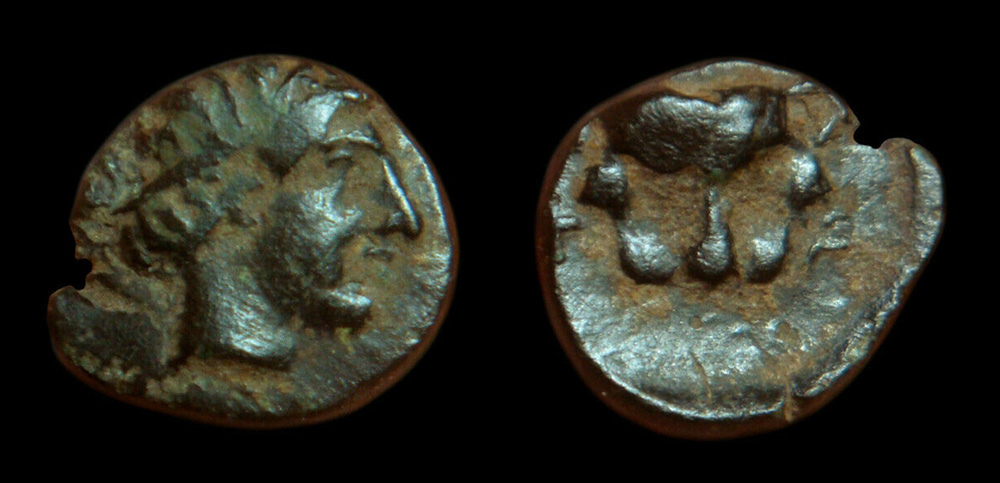 Rhegion - Bruttium. 415-387 BC. Obverse: Laureate head of Apollo right. Reverse: Facing lion's scalp. Bronze. Diameter: 9 mm. Weight: 0.6 gr. Reference: HNItaly 2524; SNG ANS 698-701 |
|
Pillar of the Community
United States
7067 Posts |
Congrats on the new lion, Jim. Lot of history imbued in that coin. Wanton violence, execution of civilians...still seems all too familiar.
Edited by Kamnaskires
04/26/2022 07:46 am
|
|
Pillar of the Community
Spain
2752 Posts |
Yes a neat "wee" coin Jim . Very nice portrait and I do like these simplistic reverses.. Enjoyed the write up Thanks.. As you know I have a similar Hera obverse with lion scalp reverse from Ionia Samos do you happen to know why the scalp was used as a symbol? Just to show power? |
| |
Replies: 638 / Views: 59,870 |
To participate in the forum you must log in or register.
Disclaimer: While a tremendous amount of effort goes into ensuring the accuracy of the information contained in this site, Coin Community assumes no liability for errors. Copyright 2005 - 2026 Coin Community Family- all rights reserved worldwide. Use of any images or content on this website without prior written permission of Coin Community or the original lender is strictly prohibited.
Contact Us | Advertise Here | Privacy Policy / Terms of Use
|
| Coin Community Forum |
© 2005 - 2026 Coin Community Forums |
| It took 0.55 seconds to rattle this change. |
 |
|
| |
| |







 First Page
 Previous Page


 Posted 04/04/2022 09:14 am


