For the next two decades (and intermittently thereafter until 1513), I will post some coins of the Duchy of Lorraine, which existed from 959 to 1766 AD, though from a numismatic viewpoint, the last circulating coins were issued in 1729.
In medieval European history, "Lotharingia" -- the predecessor of Lorraine -- arose from the three way division of the Carolingian empire among Charlemagne's grandsons spelled out by the Treaty of Verdun (843 A.D.): East Francia (lands east of the Rhine), was awarded to Louis the German, became the Kingdom of Germany, predecessor of the Holy Roman Empire. West Francia (lands west of the Rhone) was the future Kingdom of France, awarded to Charles the Bald. And the remaining central slice stretching from the North to the Tyrrhenian seas, awarded to Lothair, was initially known as Media Francia.
In 855 as Lothair was dying, he specified the partitioning of Media Francia among
his three sons. The southernmost part (the future Italy) went to his eldest son, Provence to the youngest, and the provinces north of Provence to his middle son, Lothair II. This region became known as the Kingdom of Lotharingia.
By the beginning of the 12th century, this kingdom had further fragmented into a number of smaller principalities, including the various duchies and counties that eventually became the Netherlands and Belgium (at the time called "Lower Lorraine,") and a larger territory to the south (with Burgundy at its southern border) which was initially known as Upper Lorraine, and eventually just Lorraine.
Forming a string of the westernmost fiefs of the Holy Roman Empire, Lower and Upper Lorraine were always in the sights of royal France as targets for political alliance or territorial acquisition. In the case of the Duchy of Lorraine, it was intermittently occupied by the French for long stretches between the 1630s and 1730s, before its final assimilation into France in 1766 (a delayed consequence of the war of the Polish Succession in the 1730s).
As with any long lived principality, Lorraine has a rich numismatic history, though
dated coins are a bit patchier, and restricted to testons and fractions until the early 1700s.
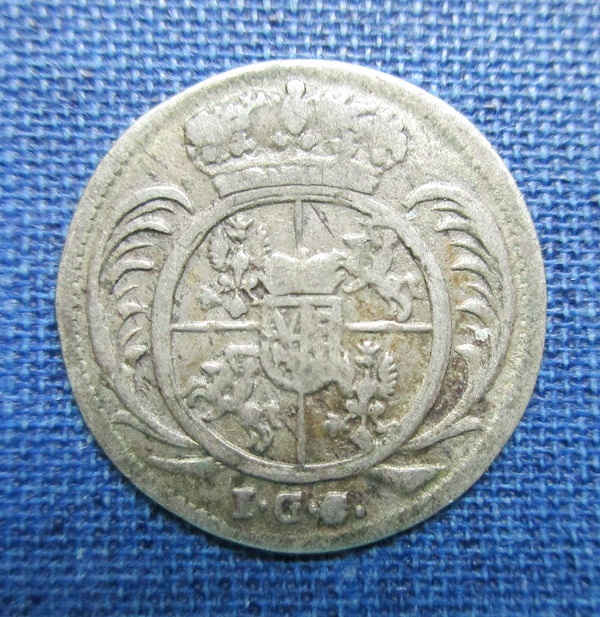
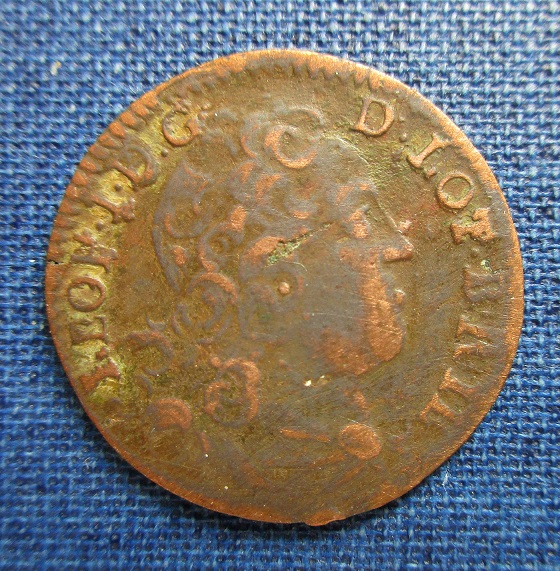
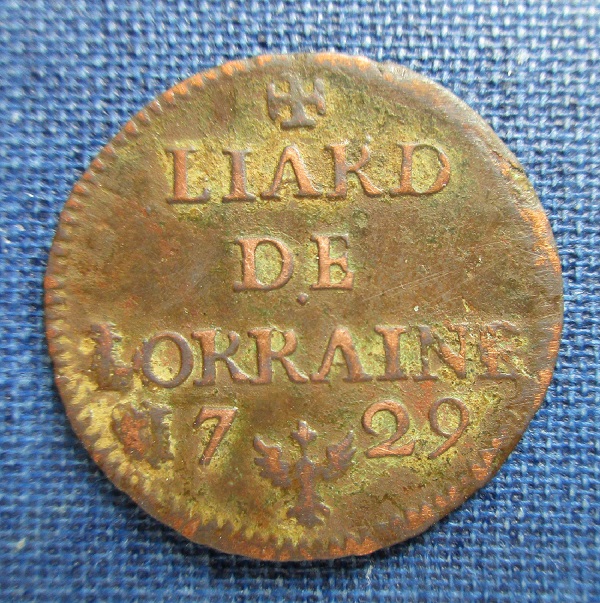
Here is a 1729 liard of Lorraine with a portrait of Duke Leopold obverse. He died in March of the same year, and was succeeded by his son, Francois III. Seven years later, Francois would marry Maria Theresa of Austria, and abdicate the crown of Lorraine in favor of Stanislaw Leszczynski (the deposed King of Poland), ending the dynasty of the House of Lorraine, but beginning the Hapsburg-Lorraine dynasty in Austria as Francis I.





 First Page
 Previous Page


 Posted 11/05/2020 6:22 pm