Sorry, I somehow missed this thread when it was first posted.

Quote:
But I dont know, is it possible to plate without electroplate method?
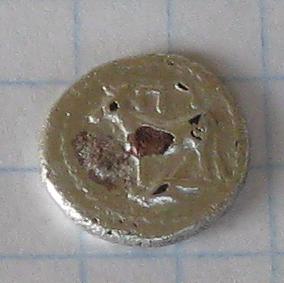
Yes, plated fake coins are known from ancient times. The counterfeiter would make a coin-sized "sandwich" of two thin layers of silver or gold with a base-metal core; this would then be struck with dies, just like a real coin, smashing the layers together into a single piece of metal. Except for the light weight, they would appear quite convincing when first made. Of course, they're normally fairly easy to detect today, because the core normally corrodes faster than the surface layer, creating bubbles and breaks in the surface.
Such coins are known as "fourees". The die-work is often just as good as the genuine coins, and it's even speculated that some of them may have been made in the actual ancient mints, by dishonest mint employees. They're commonly seen in the Roman series, less common with Greek coins, and silver fourees are much more common than gold ones.
Your coins are definitely fakes of some kind, and they look like they
might be fourees, but I'm not familiar enough with fourees to be able to tell you for certain whether your particular coins are ancient or modern counterfeits.
Quote:
And could you help me about id for this one please?
Sorry, can't find anything on this one at the moment; the reverse incuse punch looks Greek Archaic, but the obverse design puzzles me - it looks like a crude face.
Don't say "infinitely" when you mean "very"; otherwise, you'll have no word left when you want to talk about something really infinite. - C. S. Lewis








 1.jpg
1.jpg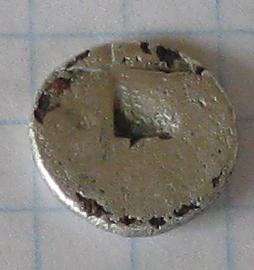 2.jpg
2.jpg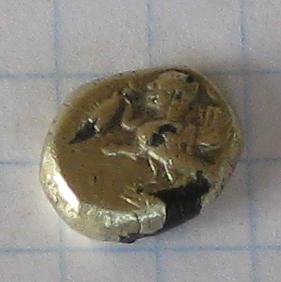 5.jpg
5.jpg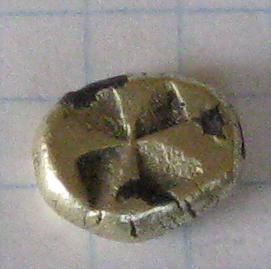 6.jpg
6.jpg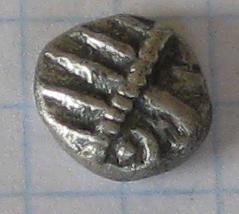 3.jpg
3.jpg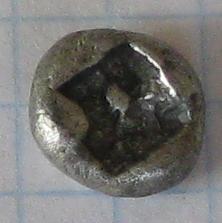 4.jpg
4.jpg


 Posted 12/08/2008 5:59 pm


