| Author |
 Replies: 16 / Views: 4,093 Replies: 16 / Views: 4,093 |
|
CCF Master Historian of Commemorative Coins
 United States
12515 Posts |
There are a number of interesting side notes about the US commemorative coin series (classic and modern) that don't quite merit one of my deep-dive posts, but may still be of interest to a few folks (other than me!). So, I've decided to post a few of them as I have the time. At this point, I don't know all of the topics that I will cover but I feel comfortable in saying that they'll range from fairly well-known to a bit obscure. Up first, a bit of "some things never change." The internet has certainly made it easier for folks to voice their displeasure with the designs/artwork used for US coins (especially commemorative coins), as well as the prices being charged by the US Mint for its coins, but public criticism of the for-profit model of commemorative coins along with their designs has been around since the very beginning of the series! In the October 1892 issue of The Numismatist, the official publication of the American Numismatic Association ( ANA), the editorial team made it quite clear that they did not support the $1.00 per coin price of the new commemorative souvenir coin: "The original intention was for their use, primarily as coins of admission, and secondarily, as souvenirs of the Fair. It is therefore with regret that we note, that the authorities of the Fair are already banking on the cupidity of collectors, curio-seekers, hobby-riders, et hoc.comnes genus to help them unload these pieces at an enormous profit. We would that in this matter they were doomed to disappointment, but the old adage of Artemus Ward, that "this world contains about thirteen hundred millions of people, mostly fools" needs only the occasion to be verified." [Note: I wasn't familiar with the term "cupidity" - per Merriam-Webster it means "inordinate desire for wealth: avarice, greed." Also, I was completely new to the Latin phrase included in the piece; it means (per Merriam-Webster again) "and everything (else) of this kind." Nice to know, but I don't believe I'll be using the Latin phrase on a regular basis!]In January and February of 1893, a syndicated, less-than-flattering editorial was published in several US newspapers. both large and small, including The Boston Globe, The Evening World (New York, NY) and The Newton Enterprise (Newton, NC). From the piece: "The front side of the coin has an elegant likeness of the late Sitting Bull. This, however, is said to be meant for Columbus. The patriotic American can take his choice, and the know-nothings certainly will claim the head to be intended for Sitting Bull because of the gentleman being an American. On the right shoulder appears the letter B. This certainly indicates the location of either a boil or a barnacle." [Note: I did some research, it turns out the "B" actually is the initial of Charles Barber, the designer of the coin's obverse.]  "There is also a likeness of Columbus' ship, under full sail. At first blush the ship seems to be on wheels, but closer examination shows that the two wheels are the eastern and western hemispheres. The ship seems to be surrounded by a herd of porpoises, but probably this is meant for waves." [Note: The origin of the common "ship on wheels" derogatory descriptor of the coin's reverse?] "There is also a fishing pole rigged out of an after port in the cabin of the ship, and one gathers an idea the venturesome mariner is either baiting his hook and lying about a bite he just had, or has hauled in a fish, for the line is taken aboard ship." [Note: I never realized the pole at the rear of the ship was a fishing pole! I always thought it was a pole for a flag or ensign! You learn something new every day!] Just a quick pair of examples in support of the sentiment: "Everything old is new again." 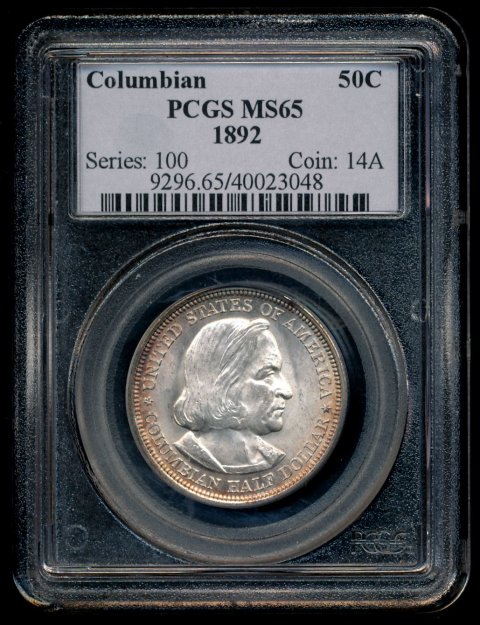 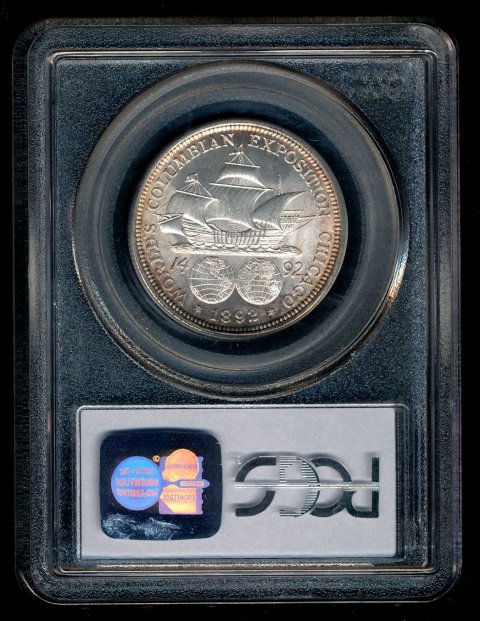 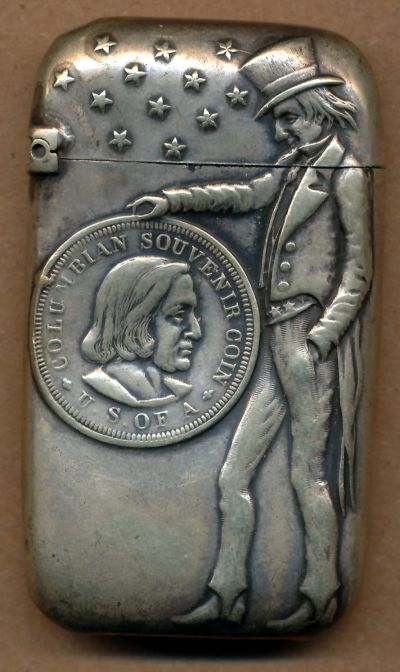 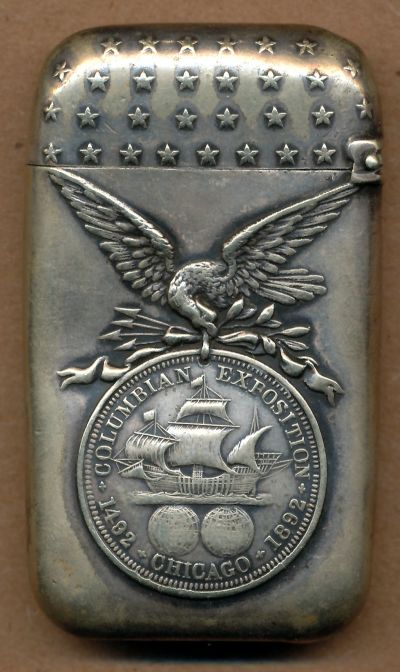 Collecting history one coin or medal at a time! (c) commems. All rights reserved.
|
|
|
|
Moderator
United States
195036 Posts |
Fascinating!  The long term wins again.  |
|
Valued Member
United States
424 Posts |
Good information as always, Commems. I've always liked the Columbian half.
Love the lighter also, where'd you come across that one?
|
|
Pillar of the Community
 United States
744 Posts |
Nice article. Having been born in Chicago, I have one of those in my collection...
If you ever go to Riverside, Illinois - about 3 mile west of Chicago, (half the Brookfield Zoo is in Riverside) near the corner of Blackhawk and Cowley, there is a "house of the future" there from the fair.
It kinda looks like a cape cod type home and is rather plain looking, and in the back yard of a house on Michaux Rd there is one of the ticket booths. It's octagon (gazebo) shaped, about 12 -15 feet around.
Riverside is a National Historic Landmark for its design (Frederick Law Olmsted, the designer of Central Park in NYC, did the layout). It also has several Frank Lloyd Wright homes there.
There is also a book called Devil in the White City, about a serial killer operating the same time as the fair was going on.
|
|
CCF Master Historian of Commemorative Coins
 United States
12515 Posts |
@DeputyMax: Thanks for the positive feedback - always appreciated! I should have labeled the second piece, it's actually a match case/safe vs. a lighter. You can learn more about how I came to acquire it here: 1892 World's Columbian Exposition Match SafeCollecting history one coin or medal at a time! (c) commems. All rights reserved.
|
|
Pillar of the Community
United States
5713 Posts |
Thanks for the interesting article, although I'm skeptical about the fishing pole!
|
|
CCF Master Historian of Commemorative Coins
United States
12515 Posts |
Quote:
...although I'm skeptical about the fishing pole! Just a joke - no fishing pole on the coin! Collecting history one coin or medal at a time! (c) commems. All rights reserved.
|
|
CCF Master Historian of Commemorative Coins
United States
12515 Posts |
@mtuma3: If I ever get to Chicago again, I'll do my best to check out your suggestions. Thanks! @jbuck: I'm a big believer in the long-term! (Of course, a large number of folks today are much more focused on the short-term.  ) Collecting history one coin or medal at a time! (c) commems. All rights reserved.
|
|
Moderator
United States
195036 Posts |
Quote:
I'm a big believer in the long-term! Quote:Of course, a large number of folks today are much more focused on the short-term. I share your disappointment.  |
|
Pillar of the Community
United States
7290 Posts |
Spent way too much time looking for the fishing pole....   However always an enjoyable read Thanks commems... |
|
Valued Member
299 Posts |
Good thing these weren't made this year or they did not have the modern mindset in 1892/3. There would be : P-unc, P-proof, W-reverse proof, CC-enhanced unc., O-unc., S-struck in gold (unc and proof), D with privy mark, (all of the above in silver and clad exc the gold) P-colorized satin finish and a cheesy bronze medal. All 20 pieces for only ... $ can't say, check the gold price first...
|
|
CCF Master Historian of Commemorative Coins
United States
12515 Posts |
Quote:
Spent way too much time looking for the fishing pole... @Greasy Fingers: It's obvious you need a stronger coin glass! Thanks for the continued support! Collecting history one coin or medal at a time! (c) commems. All rights reserved.
|
|
Pillar of the Community
2226 Posts |
Thanks Commems, good article.
The Columbian was the first commemorative I bought spending a lot of time studying the obverse and reverse details to aid me identifying potential wear locations. I wanted a raw example and think using many of the ship's finer points like the masts fabric lines(rigging), ship sides and globes, etc.
My search now is for a beautiful Texas.
|
|
Valued Member
Virgin Islands (U.S.)
68 Posts |
Having been born and raised Chicago (far southeast side), this one has always been among my favorites, especially the artistry on the reverse. What I find a bit more fascinating is that these were actually used in eveyday commerce, given the number of slicks of this coin I've seen -- anhalf dollar is still a half dollar to non-collectors &  Which again I suppose bears out the idea that it's collectors like us who create, trade and sell on the "value" beyond melt and face value. |
|
New Member
United States
1 Posts |
We recently bought both an 1892 and 1893 dated Columbian Exposition half dollar. Does anyone know if there are any that are proof coins? And if so, how do you tell the difference? I read there are a few proofs floating around of the Isabella, but can find nothing on the Columbians. I'm a newbie in coin collecting and still learning....
|
|
CCF Master Historian of Commemorative Coins
United States
12515 Posts |
Quote:
Does anyone know if there are any that are proof coins? Yes, there are known proofs for the 1892 (approximately 100) and the 1893 (less than a dozen). Quote:
And if so, how do you tell the difference? In general terms, the sharpness of the coin's edges and design details are proof diagnostics. On a proof coin, the sharpness of detail found on the coin (e.g., the sails and ship rigging) is at a level not generally seen on MS coins. Proof Columbian half dollar are not inexpensive coins. 1892 coins in an uncirculated (vs. impaired) state will typically sell for several thousand dollars (and up!) and 1893 examples in the same state can approach (or exceed) $20,000 depending on grade. Collecting history one coin or medal at a time! (c) commems. All rights reserved.
Edited by commems
03/07/2021 1:06 pm
|
| |
Replies: 16 / Views: 4,093 |







 Posted 08/12/2020 9:47 pm





