I've stated here on CCF that my classic US commemorative coin collection is a 55-piece Type and Major Varieties set. The five varieties I include are the Alabama 2x2, the Missouri 2*4, the Grant with Star, the Pilgrim with Small "1920" and the Boone Bicentennial with Small "1934." The story of the Small "1934" Boone half dollar is different from each of the other varieties, however, as it is the only one that was specifically legislated / authorized by Congress and approved by the US President.
Read More: Commems CollectionHere's the story...
The Daniel Boone Bicentennial half dollars were first issued in 1934, the bicentennial year of Boone's birth (he was born on November 2, 1734 in Exeter Township, PA). In 1934, 10,000 coins were struck at the Philadelphia Mint for the coin's sponsor, the Daniel Boone Bicentennial Commission ("Commission").
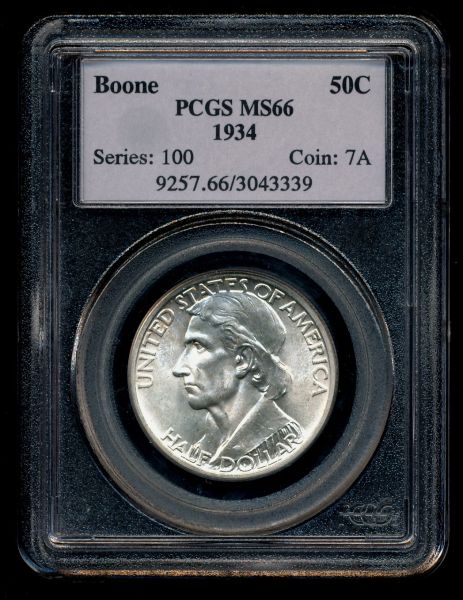
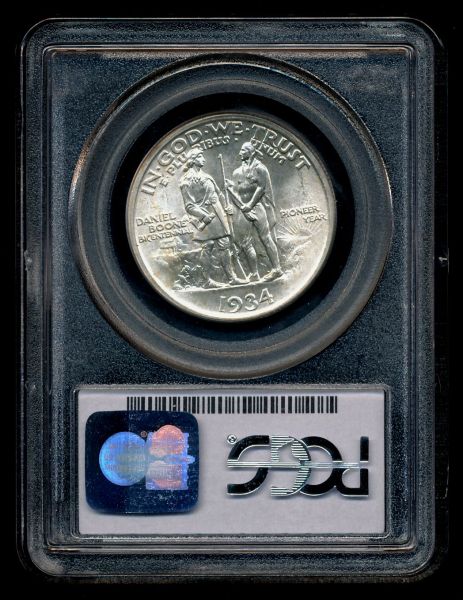
As the legislation that authorized the coin allowed for 600,000 coins to be struck but did not specify an end-date for the program, the Commission requested additional coins in 1935 (and would continue to do so through 1938). The Commission also requested that the anniversary date of 1934 be retained somewhere on the 1935-dated coins to maintain the reference to the bicentennial year. The Mint informed the Commission that it could not accommodate its request without new legislation from Congress; adding a second date to the coin that did not represent the year the coin was struck was the problem. Though not happy, the Commission (and its coin distributor) did press on with the request for additional coins.
So, the first batch of 1935-dated Boone half dollars struck by the Mint used the previous design with the only update being to change the date from "1934" to "1935" on the coin's obverse - the coins do not include any reference to 1934. The Philadelphia Mint struck 10,000 of the coins with an additional 5,000 each struck at the Denver and San Francisco Branch Mint facilities.
The Commission did not want to lose the coin's connection to the 1934 bicentennial year, however, and moved to have new legislation that would allow the coin to have "1934" incorporated into the coin's design. The bill was introduced in the House in April 1935, and was immediately referred to the House Committee on Coinage, Weights, and Measures. It took some time for the Committee to report back, but it did so favorably without amendment on August 20th. Things moved quickly from there. The bill was approved by the House and Senate without debate and signed into law on August 26, 1935 by President Franklin Delano Roosevelt.
The bill authorized the Director of the Mint "to supplement the [coin's] design so that the reverse of said 50-cent piece will show the figures "1934" immediately above the words "pioneer year".
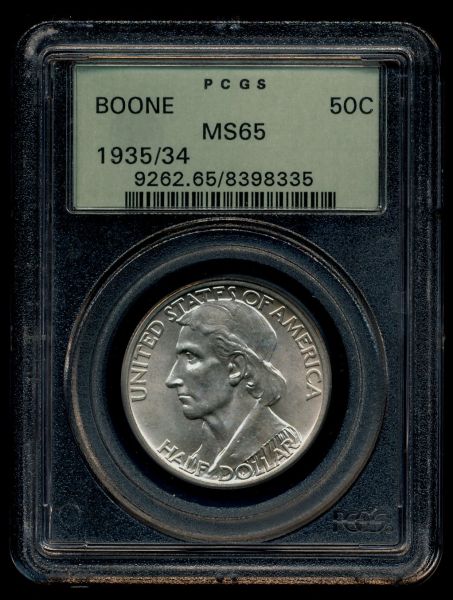
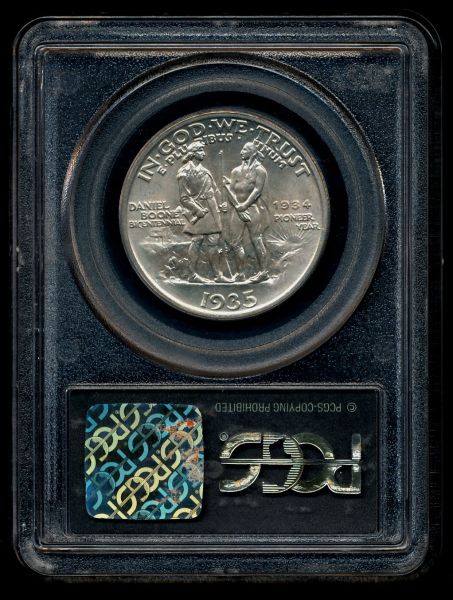
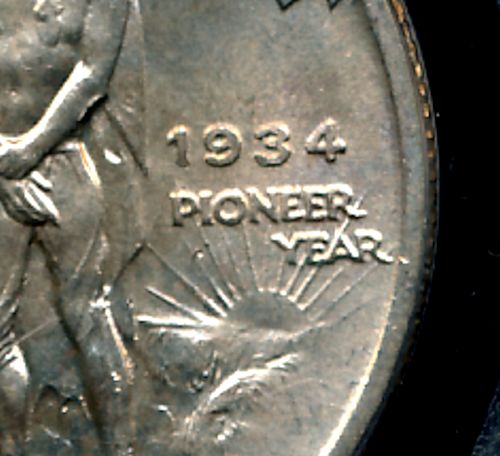
The Commission placed an order with the Mint for a batch of coins featuring the new design and the Mint obligingly produced 10,000 / 2,000 / 2,000 coins at its Philadelphia / Denver / San Francisco facilities. The limited number of coins struck by Denver and San Francisco - just 2,000 each - caused quite a stir in the collecting community at the time and led to a quick price escalation in the marketplace that was driven by the coin's distributor - C. Frank Dunn.
The Boone half dollars struck in 1936, 1937 and 1938 all incorporate the small "1934" in the reverse design as per the revised coinage law. Dunn had the number of coins struck in Denver and San Francisco upped to 5,000 each (2.5X the 1935 Small "1934" issue and on par with the original 1935 production). By 1937, however, the commemorative boom was over and the number of active collectors/speculators had dropped dramatically. This is reflected in the D and S mintage figures for 1937 - 2,500 each - and 1938 - just 2,100 each. Prices today for the program's various D and S issues reflect the fact that most commemorative collectors do not pursue complete 144-piece sets and are largely content with type examples of each issue if they are collecting a "full" set. Type sets don't need a particular date and mint mark coin, so the overall supply of Boone half dollars is generally enough to satisfy demand. That said, the 1935 Small "1934" D and S coins do carry a premium over the other coins in the Boone series.
You may be wondering about the multi-year Oregon Trail Memorial, Texas Centennial and Arkansas Statehood commemorative coin programs and how they dealt with follow-up years...The Oregon Trail half dollar was not issued to mark a single specific anniversary year and thus its design did not incorporate any such year. So, the Oregon Trail Memorial Association had no issue with the Mint changing the year on the coin to reflect the year it was struck. The Texas half dollar reverse design incorporates dual dates ("1836-1936") so the changing year of issue date on the obverse did not present an issue. The same is true for the Arkansas Statehood Centennial coins; the dual dates ("1836-1936") of the anniversary are part of the design and separate from the date used to indicate the year of striking. So, only the Boone Commission was caught not looking ahead with its design requirements and was, therefore, required to go back to Congress for a design change to meet its desire of maintaining its coin's bicentennial reference.
Hope you enjoyed the read!





 Posted 10/03/2020 9:49 pm





