| Author |
 Replies: 56 / Views: 7,922 Replies: 56 / Views: 7,922 |
|
|
|
Pillar of the Community
 United States
5720 Posts |
My guess is that the obverse devices were flattened by something akin to a flathead punch tool. Multiple strikes by a hammer to individual letters and numbers would cause minimal flattening on the reverse because the force would be distributed over the entire surface of the reverse. And you can clearly see some minor flattening of the reverse devices and rim. This looks like PMD that can be duplicated with the appropriate tools. |
|
Valued Member
 United States
284 Posts |
Kevin to @Zurie,
I'm waxing curious, not being pigheaded. I know just enough about the mint's processes to embarrass myself.
I see a profound difference between the mis-shaping of the date numerals and the mis-shaping of the letters. The former appear mountain-like and the latter appear plateaued. The exception is the numeral one which is also plateaued.
Know-nothing to expert,
Am I right to suspect that the mint in 1900 kept a supply of dies that were 99% ready to deploy, needing only to have the last three digits of the date affixed. It would have been wise to do so. It seems to me that a such-like "plan-ahead" die made in 2000 having only the two could - barring a decision to change the design -- stand ready for duty for nine centuries - less one year as long as it stayed at the same mint
I'm flummoxed. How could either a post-mint damaging force - or why would a post mint culprit - attend to this mountain/plateau detail?
Kevin
Edited by Kcm
03/22/2021 11:42 am
|
|
Valued Member
Canada
235 Posts |
If you look at the denticles at the lower-left of the obverse, you can see that they were struck obstructed (grease). No "flattening" or rounding after it left the Mint...
Edited by whatdowehavehere
03/23/2021 8:34 pm
|
|
Valued Member
United States
284 Posts |
Yes. I see what you see. How much does that tell you?
Kevin
|
|
Valued Member
Canada
235 Posts |
The coin was struck that way, obstructed, due in all probability to Grease gobbed onto the obverse die
|
|
Pillar of the Community
United States
6445 Posts |
This is deliberate damage, done for whatever reason to a common, circulated, low-value cent. I can imagine a steel or brass cylinder with diameter slightly less than the original coin. The vandal put the coin on a compliant surface, maybe a rubber pad over an anvil. They covered the obverse with a piece of rubber, centered the cylinder, and started hammering. If I were really interested I might attempt to duplicate the effect on another common IHC. I'm ready to accept a " PMD" conclusion, but maybe someone else would take on the challenge of reproducing the appearance of the OP's coin. |
|
Valued Member
Canada
235 Posts |
That STILL doesn't explain: the weakly struck L on the ribbon, or the dull denticles. Just wishing something so doesn't make it so...
Edited by whatdowehavehere
03/23/2021 11:37 pm
|
|
Valued Member
Canada
235 Posts |
Plus, it takes a LOT of Energy to move the metal up past the stands of the letters-nevermind with no damage to the tops otherwise, or the stands themselves. Physics... simply: if you're going to pound on a coin with a piece of pipe and a hammer, you will expand it unless it's in a fixed, unmoveable collar-but displaced metal must go "somewhere". It will not discriminate and only selectively move around the devices-it would be "all or nothing". That's not he case here (and by-the-way: if you're using a piece of pipe to try to replicate the "damage", it cannot be hollow; it must be solid and slightly concave at the center, which would make it a "piece of Bar"-not pipe)
Edited by whatdowehavehere
03/24/2021 01:02 am
|
|
Valued Member
United States
284 Posts |
I am the OP. After reading through @Whatdowehavehere's and @Jaoble's fascinating discussions, I'd again like to raise the issue of the great discrepancy I see between the 900 and the remaining devices (See my 03/22/2021 10:29 am post on page 2). The discrepancy, I assert, is blatant in the images already posted, but if more are desired. I can go find the coin again. I sincerely doubt this particular phenomenon could be deliberately rendered by multiple blows to a collared (a necessity duly pointed out) and masterfully padded (a necessity likewise duly pointed out) IHC. I still lean toward a single strike by a (very late stage) capped hammer die. I'm not, however, convinced of this. What I am convinced of is that, beginning with a newly minted IHC, replication of the phenomena (including and especially the absence of the expected tooling traces) could not be accomplished in any workshop except one frequented by Harry Potter. Kevin |
|
Pillar of the Community
United States
4846 Posts |
A late stage die cap would distort the devices, but not increase the size of them, certainly not to the extent that you see on this coin.
In my opinion there are no errors that look remotely similar to this coin, and the devices present mechanical manipulation post strike.
|
|
Valued Member
United States
284 Posts |
@Adam E, I deem it nonsensical to solicit expertise and then reject it. Capped die hypothesis is hereby abandoned. That pushes me to approach your "would-have- been-seen-before" error assertion.
Still, while disavowing any numismatic expertise on my part, expertise in physical phenomena precludes my rushing to the post-strike manipulation camp -- at least for the present.
Kevin
|
|
Valued Member
Canada
235 Posts |
I've never read anything published by J.K. Rowling (but I did take the kid to see one of the movies...)
Maybe it's better trying to explain what it isn't:
It isn't a Late Stage Capped Die error (looks nothing like one)
It isn't the product of a some mindless pounding with a piece of Pipe (or Rod) and a Hammer
If anyone can explain how areas of the obverse denticles, and the L on the ribbon (Longacre didn't place it there because he ran out of room elsewhere for it), which were struck through *something*, as Post Mintage Damage: I'm all ears
Edited by whatdowehavehere
03/24/2021 3:37 pm
|
|
Pillar of the Community
United States
6445 Posts |
If an unbiased, somewhat-expert review is desired the OP could send the coin to ANACS and see if they call it an error. Or, we could indulge in "yes it is, no it isn't" until everyone gets tired.
We have seen many weird coin distortions on CCF and sometimes consensus doesn't happen. These situations usually involve common, low-value coins for which intentional damage would not represent a significant monetary loss.
In any case, everyone is welcome to their opinion!
|
|
Pillar of the Community
United States
9811 Posts |
I believe ANACS or other TPGs would just inquire to other experts. I would put out a word to Rick Snow, Chris Pilliod, Ken Potter, Mike Ellis or Bill Fivaz. I think one of them may give the best answer to what the heck is going on with this coin.
"Buy the Book Before You Buy the Coin" - Aaron R. Feldman - "And read it" - Me 2013! ANA Life Member #3288 in good standing since 1981, ANS, Early American Coppers Member (EAC), Colonial Coin Collectors Club member (C4), Conder Token Collector Club member (CTCC), Civil War Token Society (CWTS) member, Liberty Seated Collectors Club (LSCC) & Numismatic Bibliomania Society member (NBS), USMex, Member in good standing, 2¢ variety collector. See my want page: http://goccf.com/t/140440 |
|
Valued Member
Canada
235 Posts |
Here's one that's struck through a glob of grease on the obverse. The area above LIBERTY, which is the bottoms of all the feathers, is detailed but depressed into the planchet. There's also an area in front of the nose which is the clincher for this type of error. 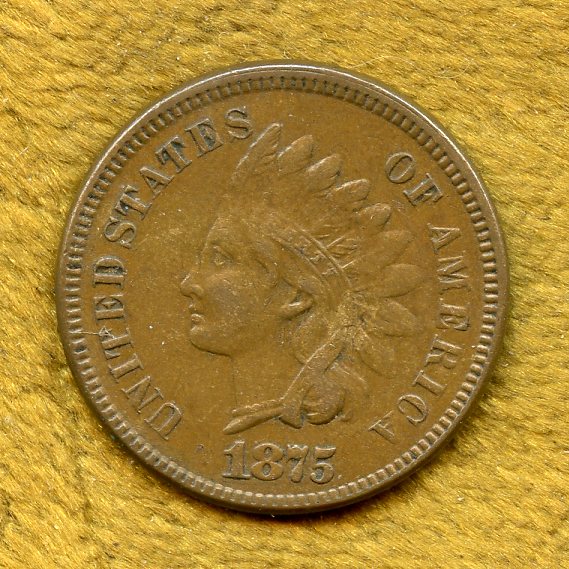 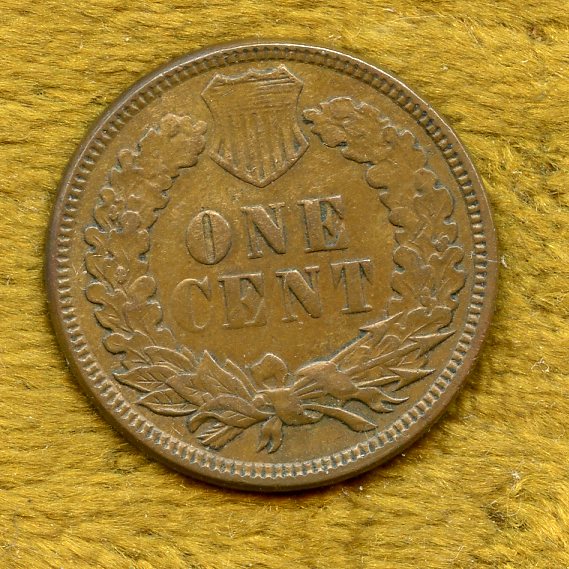 |
| |
Replies: 56 / Views: 7,922 |






 First Page
 Previous Page


 Posted 03/22/2021 11:40 am


