In this edition of Quick Bits, I'm sharing three things about the York County Tercentenary coin that are either lesser-known or possibly previously-unknown.
1.
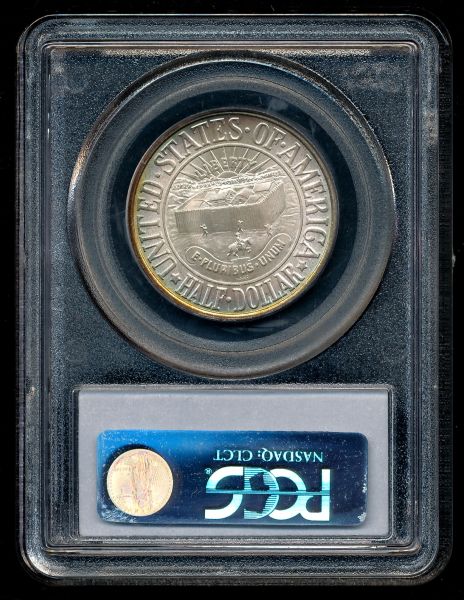
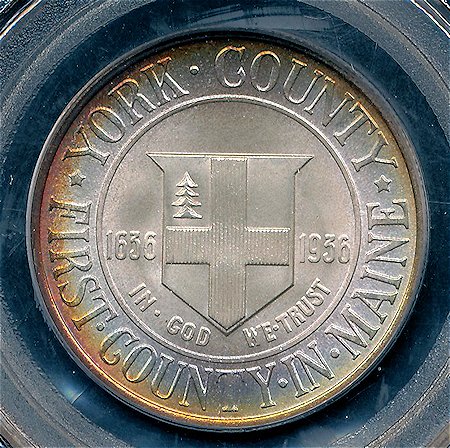
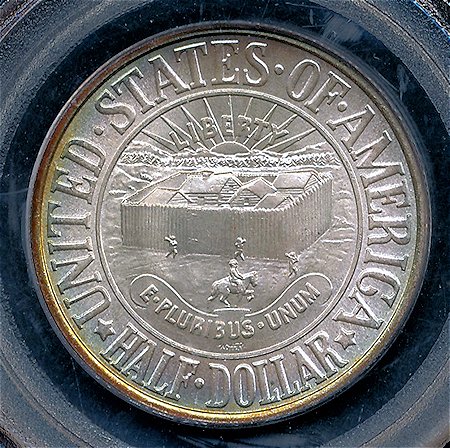
LESSER-KNOWN FACT: Most collectors (and grading services) today look at the York County Tercentenary half dollar and assume that the side with the York County, ME Seal is the obverse; multiple reference books have listed it as such over the years. While this seems logical considering the Seal side is the side with a date - which is almost always the side of the coin that the Mint views as the obverse - the 1937 Annual Report of the Director of the Mint plainly states that the obverse is the side with a "View of old stockade on Saco River (Brown's Garrison)." So, officially, the undated garrison side is the coin's obverse. For years, I've considered the Seal side to be the obverse! How about you?
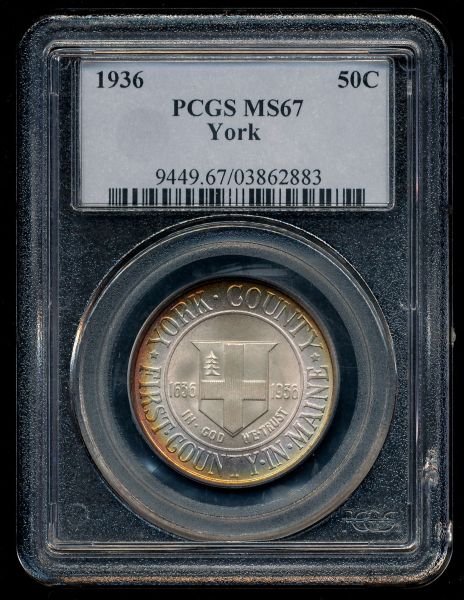
2.
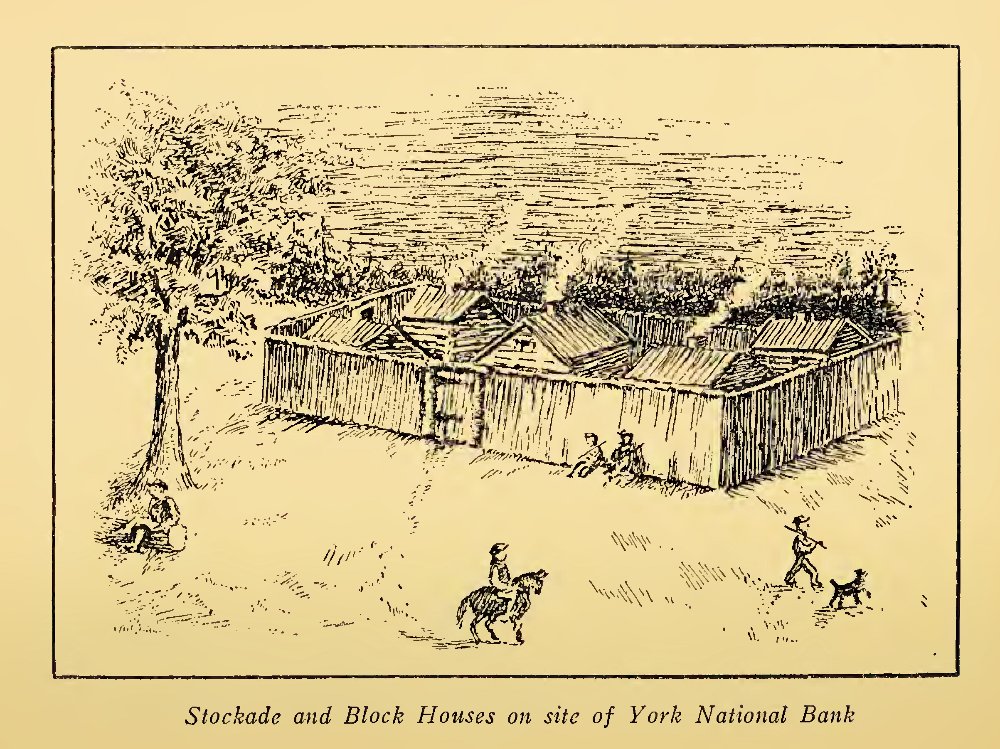
LESSER-KNOWN FACT: The name of the small stockade depicted on the obverse is Brown's Garrison; it was located in Saco, Maine. Brown's Garrison was built as a shelter for workers in a nearby sawmill owned by William Pepperell, Jr., Nathaniel Weare and Humphrey Scamman, Jr.; it served as protection against hostilities launched by local Native Americans.
The garrison consisted of several houses with a surrounding stockade; it was built on the same site as was occupied by the York National Bank building (circa 1936). The York National Bank served as the distributor of the York County commemorative coin on behalf of its legal sponsor - the Committee for the Commemoration of the Founding of York County.
The coin was designed by Walter Rich. The source material for his design was a woodcut of Brown's Garrison in
The Proprietors of Saco; the booklet was written by Frank Cutter Deering and was privately published/printed by York National Bank of Saco, Maine in 1931. I can't attest to the accuracy of the booklet's depiction of the original garrison, but the coin's transfer of it is reasonably faithful - though a bit more crowded.
3.
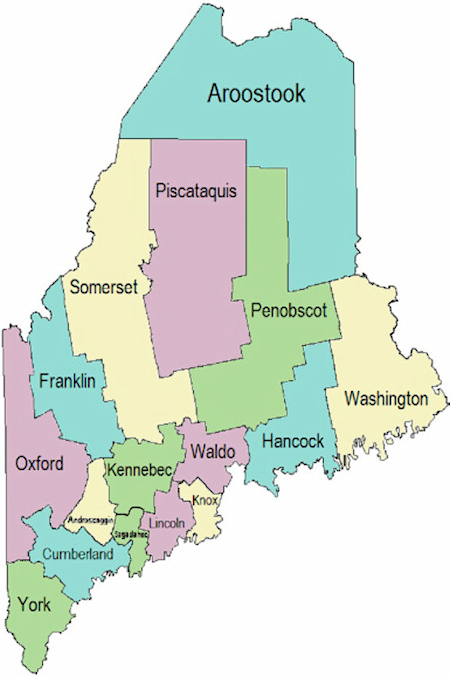
PREVIOUSLY-UNKNOWN FACT? The coin includes four stars: two are found on the obverse of the coin and two on the reverse. In searching for potential meanings for the four stars - outside of the numismatic references which all consider them to be generic/non-symbolic - I did come across one fact in York County's history for which "four" is significant. Four counties, either in whole or part, were formed from the original territory of York County - Cumberland (1760), Lincoln (1760) and part of Oxford (1805) counties were all carved from York County. Approximately 50 years later, in 1854, Sagadahoc County was carved from Lincoln County (not York County), that's why Lincoln County does not have a contiguous link to Cumberland/York County in the Maine map shown below. So, it's possible that the coin's four stars represent York, Cumberland, Lincoln and Oxford Counties.
Coincidence or hidden symbolism in the design created by Walter Rich? I'd like to think that Walter knew his York County history and that he added the four stars as symbols of the four counties but kept their meaning quiet to await independent discovery. (At least that's what I told myself after I "discovered" the possible connection!)









 Posted 03/02/2021 6:05 pm


 , but I'm thankful for the engagement I do get!


