| Author |
 Replies: 18 / Views: 3,321 Replies: 18 / Views: 3,321 |
|
New Member
United States
24 Posts |
|
|
|
|
Pillar of the Community
Canada
6244 Posts |
|
|
Pillar of the Community
United States
4963 Posts |
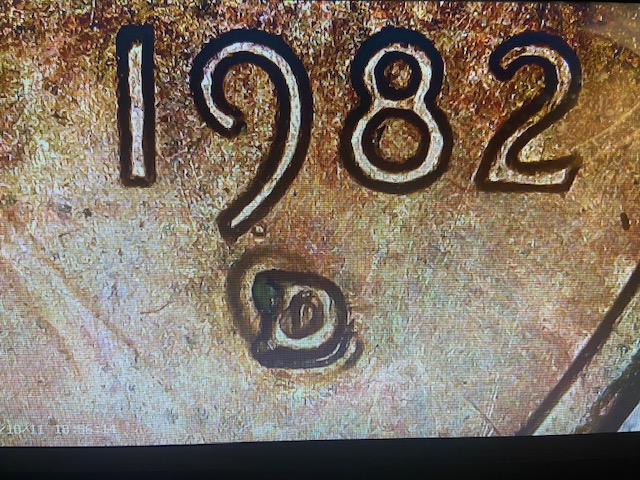
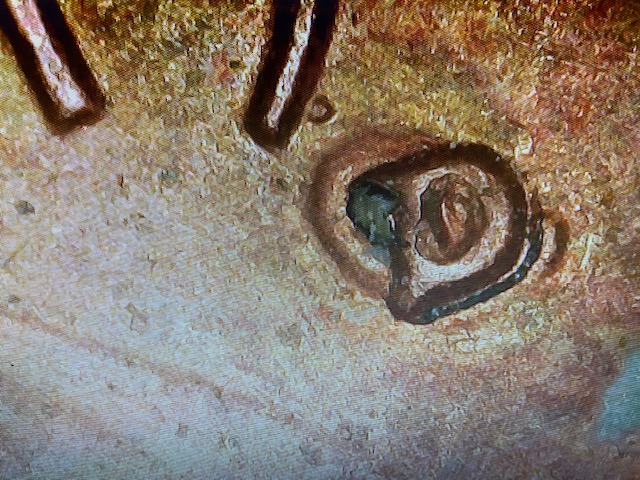
Plating bubble caused by zinc rot. The sharp edges of the mintmark can cause the copper plating to split when the coin is struck, allowing the zinc core to react. I'm seeing more on the edge where the copper has been damaged.  |
|
Valued Member
United States
356 Posts |
 . Just a zinc zit that has busted through the copper plating and erupted which caused this. |
|
Bedrock of the Community
United States
10635 Posts |
I'm with Numisma above, zinc rot which caused a plating bubble. Along the mint mark you can see split plating that allow even more of the inter-crystalline corrosion caused by lead impurities within it to emerge. Zinc rot will literally eat this coin, eventually leaving nothing. Spend it while you can, because this one is doomed as zinc rot is irreversible.  to the CCF!  |
|
Pillar of the Community
Canada
6244 Posts |
Numisma, Scuba1, your supposition could be correct. My question is "Why different direction?" then if bubbles, erupted, etc. the term do not matter here, why do not follow the strike?. Do a test of rising deformation has signs of elasticity? If the plated layer of 15 microns of cooper move are mean that we have a exfoliation. Scuba1 can make the test. If not it is another thing.
Second is if the strike broke the cooper layer, the detached part will follow the directions of the cut (strike). Theoretic the die strike must not cut or deform the plating layer. could happened? maybe , but must be proved.
|
|
Pillar of the Community
United States
4963 Posts |
Quote:
My question is "Why different direction?" then if bubbles, erupted, etc. the term do not matter here, why do not follow the strike?. Maybe I shouldn't have called it a bubble. Once some zinc is exposed, it starts to react with chemicals in the environment. The zinc salts created occupy more volume, force the copper away, and allow the corrosion to spread to fresh metal. Quote:
Theoretic the die strike must not cut or deform the plating layer. could happened? maybe , but must be proved. Split plating is actually fairly common since the planchets are plated before strike. Here's an example: http://goccf.com/t/374820Quote:
inter-crystalline corrosion caused by lead impurities Huh, I've never heard of this. Do you know where I could read more? I struggle to see how lead impurities would lead to zinc rot. |
|
Bedrock of the Community
United States
10635 Posts |
|
|
Pillar of the Community
Canada
6244 Posts |
Quote:
Quote:
inter-crystalline corrosion caused by lead impurities I never say this. is no lead involved here. Called bubbles or other do not matter, the effect is matter, I call many things different, the symptoms of the facts matter more. In this case you can say burning skin, so what? the coin effect matter. You are wright when you say salt in common language, in fact the zinc oxide is a base. Is porous and can rise any plated surface due to the expanding trough the contact with the oxygen. Quote:
Split plating is actually fairly common since the planchets are plated before strike If this affirmation is correct, I do not put in question, that mean the mint must adjust the cleaning plate and do not let develop the organic zinc protection layer. @ Numisma: I like, you are probably one of the few here to understad the chemistry. Chapeau Edited by silviosi
04/07/2021 01:44 am
|
|
Bedrock of the Community
United States
10635 Posts |
Quote:
I never say this. is no lead involved here. I said it. And silviosi, there IS a small amount of lead in U.S. Cents. which causes zinc rot. |
|
Pillar of the Community
Canada
6244 Posts |
Dear Merclover, if is lead I have no data on. Basic must not be. Could be? YES because the rolls are done by subcontractors and now the mints look for cheap materials and economy.
|
|
Bedrock of the Community
United States
10635 Posts |
Dear silviosi, Copper plated Zinc Cents are composed of Zinc Alloy 190 electroplated with 8 microns of copper. Zinc Alloy 190 contains 0.005% max Lead; 0.010% max Iron; 0.005% max Cadmium; 0.7% to 0.9% Copper; and 99.08% Zinc. Very little lead, but since we can see the results, it's enough lead to react to zinc to cause damage. |
|
Pillar of the Community
United States
4963 Posts |
From the Wikipedia article: Quote:
The New Jersey Zinc Company developed zamak alloys in 1929 using 99.99% pure zinc metal to avoid the problem, and articles made after 1960 are usually considered free of the risk of zinc pest since the use of purer materials and more controlled manufacturing conditions make zinc pest degradation unlikely. In addition to being effectively obsolete by the time zinc cents were introduced, it seems that lead-induced zinc pest manifests as cracking and other deformation rather than the corrosion seen on coins. Zinc pest is a change in the metallic structure that effectively distorts the object and is unavoidable, and what happens to zinc cents is chemical corrosion that's (at least initially) localized starts when the metal is exposed to chemicals in the environment. Thanks for sharing that, though! I'm always happy to learn something new.  I'm also not finding a single reference to zinc pest with respect to coins; it's pretty much all about die-cast objects from earlier in the 20th century. Here's a Coin World article that mentions zinc corrosion: https://www.coinworld.com/news/prec...n-coins.htmlQuote:
High humidity will cause zinc to loose [sic] its luster producing either zinc hydroxide or a corrosion product referred to by conservators as "white rust." Both of these corrosion products are fairly stable and adhere well to the surface of the metal, provided thestorage environment is unpolluted.
However, pollutants such as acetic and formic acid react with these protective layers to form corrosion products such as zinc acetate and zinc formate. That's not to say I'm positive it couldn't happen or at least be involved, but it doesn't seem to be the case from what I'm finding. I'm hoping some of the real experts will weigh in so we can get to the bottom of this. Edited by Numisma
04/07/2021 02:50 am
|
|
Pillar of the Community
Canada
6244 Posts |
thanks, very interesting formula. I didn't has this.
|
|
Pillar of the Community
Canada
6244 Posts |
@Numisma if we look at C. Fiaud, S. Bensarsa, I. D. des Aulnois et al., "Inhibiting properties of phosphines against zinc corrosion in acidic media," British Corrosion Journal, vol. 22, pp. 109-114, 1987., then in this coin we do not find those symptom's.
For the point of view of lead, this element will not accelerate or help corrode the zinc. Will have more effects in the mechanical proprieties like Numisma mentioned. Lead do not corrode, "white rust" is a organic protection of the metal against external agents, mean it is a protection against corrosion.
the corrosion of the zinc manifest primary by a (visually) black oxide. this coin do not show this except the middle of the "D". The rest is no sign of corrosion or such.
Corrosion of the zinc yes is porous, but has a irregularly form never strait, and this coin has strait deformation.
For me the coin show more something like a strike, not corrosion. Specialists in striking will pronounce. I know the procedure of striking, I know the way how mint work but I am not specialist on manufacturing.
This coin for me is a "striking error"
Edited by silviosi
04/07/2021 06:16 am
|
|
Pillar of the Community
Canada
6244 Posts |
PS to previous post:
For long time I want to say to the forum that Gold, Iridium and Lead are not native from our planet. I give the example of those metals because those are involved in coins production.
One main characteristic it is they DO NOT CORRODE. could be attack by different agents but do not corrode.
|
| |
Replies: 18 / Views: 3,321 |










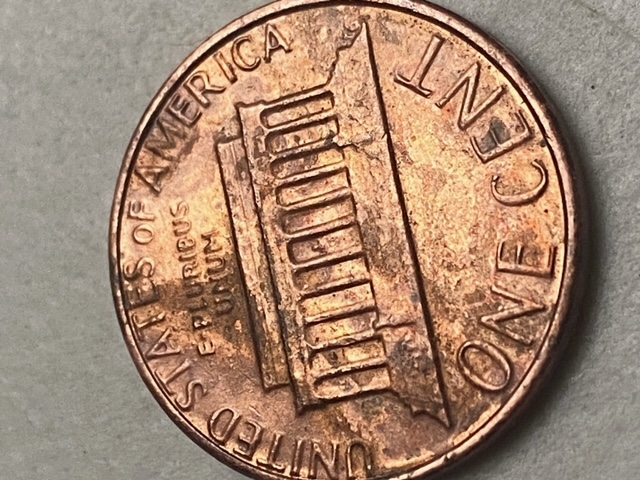
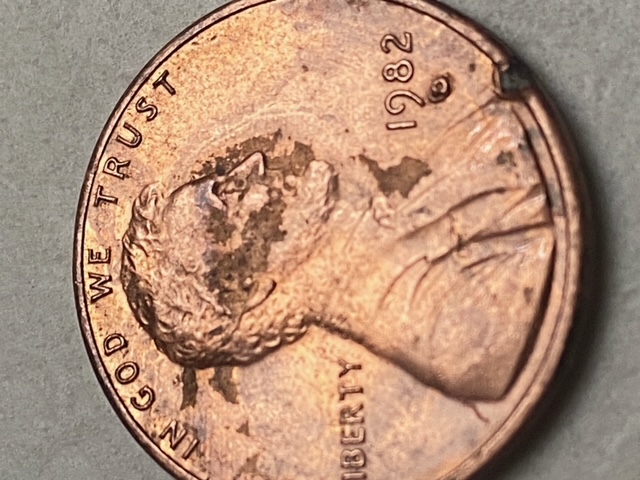


 Posted 04/07/2021 12:26 am


