NGC -
Don't let the noble themes on these two coins fool you: Both are fake.Ludwig I began his rule as King of Bavaria in 1825, inheriting the throne from his father. Ludwig issued this 1830-dated coin with his image on the obverse and the words BAYERNS TREUE (meaning Bavarian loyalty) on the reverse. It celebrates the loyalty of the Bavarian people to the royal family.
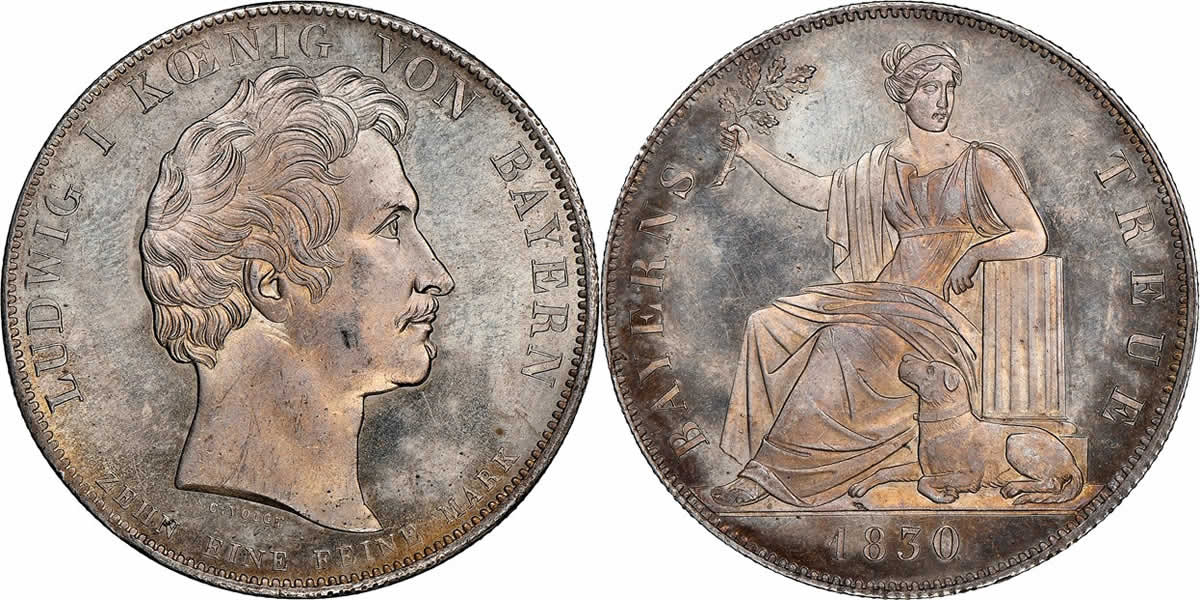 This genuine German States 1830 Bavaria "Loyalty" Thaler graded NGC MS 63 realized $870 at a December 2020 Heritage Auctions sale.
That loyalty was later tested by the Beer Riots of 1844 and his mistress Lola Montez's unpopular meddling in politics, which hurt Ludwig's popularity. By 1848, he faced a wave of protests and decided to abdicate rather than suffer what he saw as the indignity of having his power redefined as constitutional monarch.
Because of their beauty and historical significance, thalers are a popular target for counterfeiters. Genuine Mint State examples of an 1830 Loyalty Thaler, for example, can sell for well over $1,000.
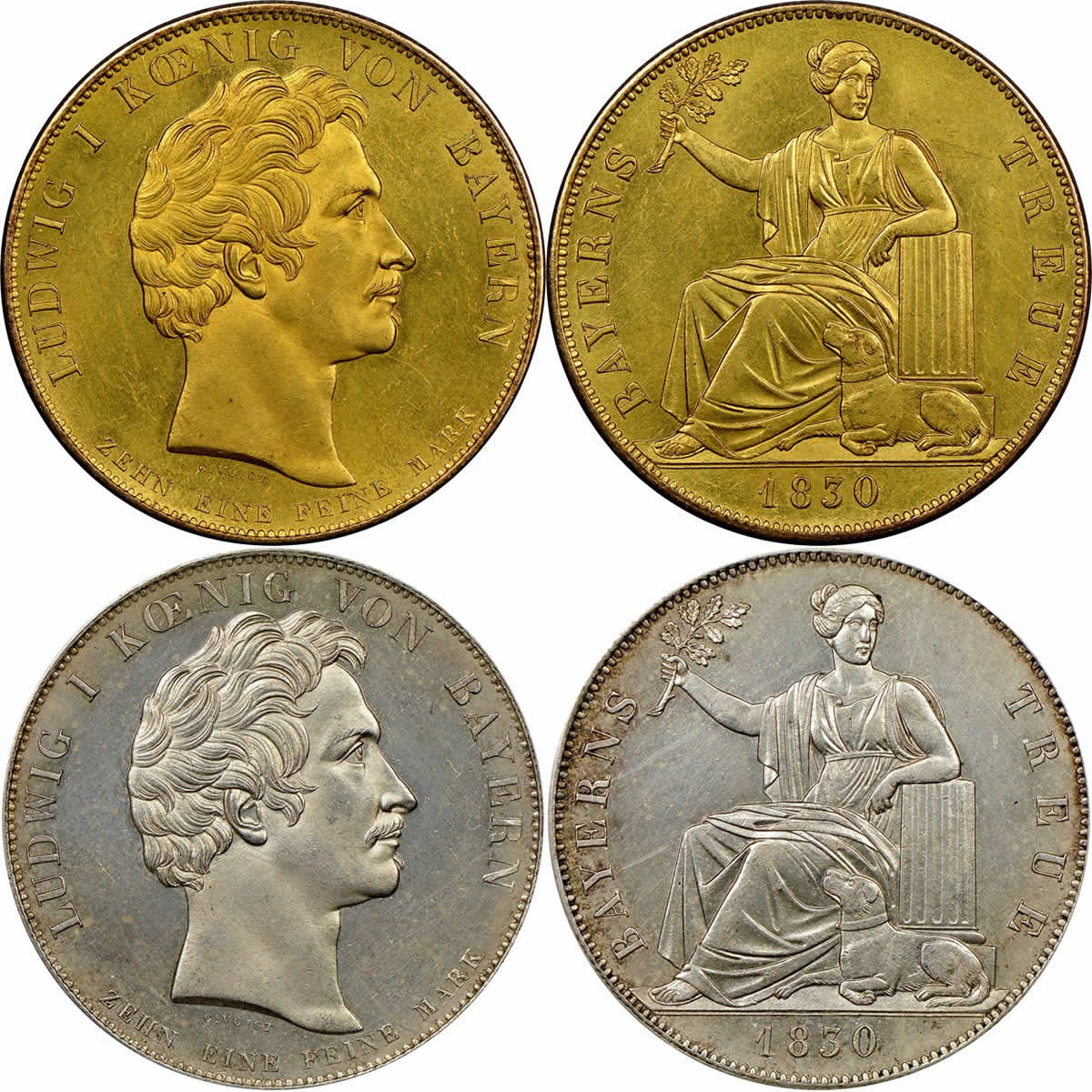 Counterfeit German States 1830 Bavarian "Loyalty" Thalers
Here are two examples of fakes of this coin. These are die-struck counterfeits, which are highly deceptive because a genuine example is used to create the counterfeit dies. These dies pick up some of the smallest details of the original, genuine coin, including its contact marks. These are the nicks and abrasions on the surface that a coin suffers at any point after being struck.
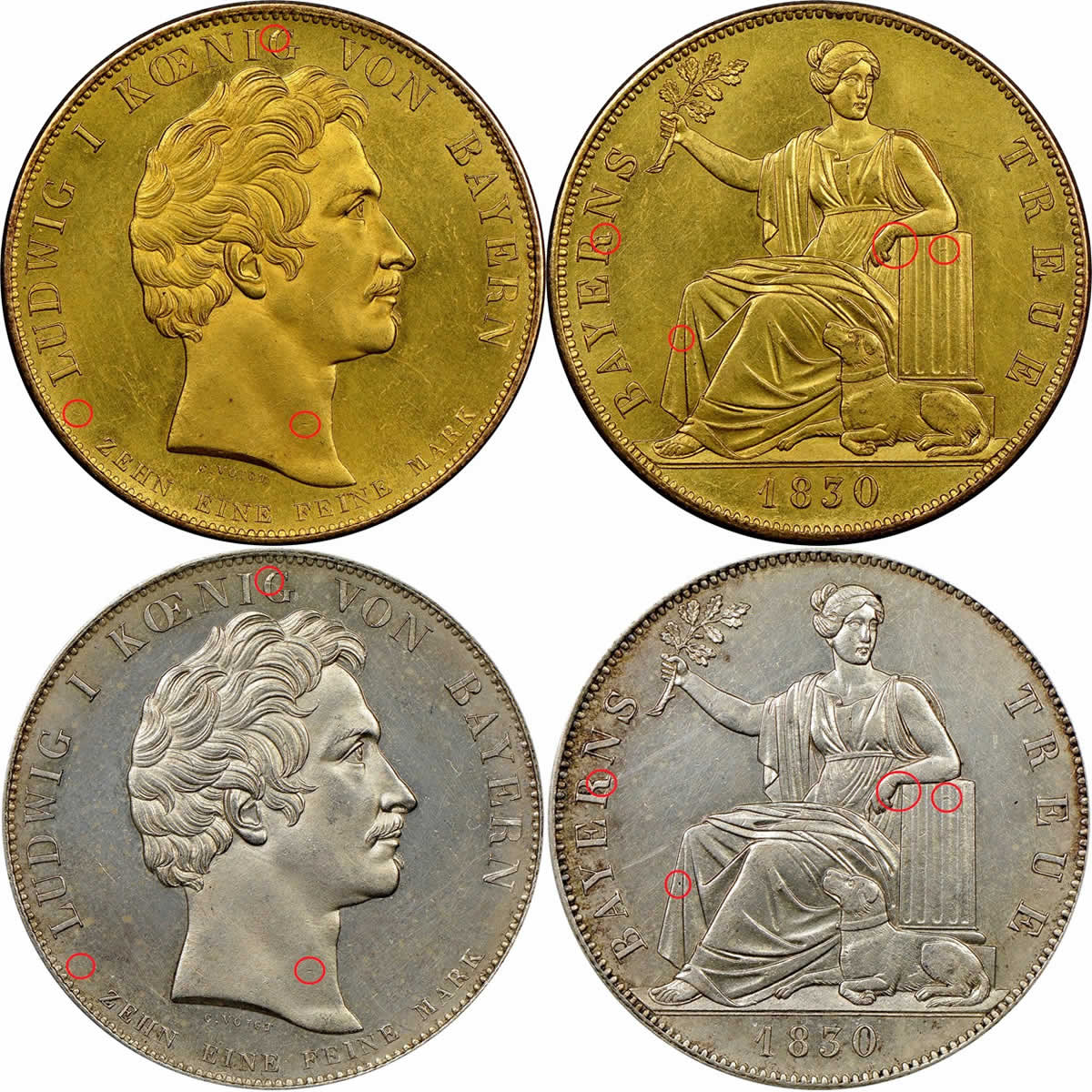 Counterfeit German States 1830 Bavarian "Loyalty" Thalers with repeating depressions highlighted
These contact marks are called "repeating depressions" because they are captured by the dies, which then repeat them every time they strike a counterfeit. These depressions are also usually shallower than a genuine contact mark. Additionally, the surfaces within them will appear the same as the unmarred surfaces of the coin because they were formed when the coin was struck rather than from circulation.
No two genuine coins should ever have the same sets of contact marks like the two coins pictured here because a genuine die would not have damage from circulation. Of course, over its lifetime, each individual counterfeit will gain its own group of unique contact marks.
In addition to the repeating depressions, the luster on these two counterfeits appears incorrect when compared to a genuine example. A much-closer examination reveals the counterfeits also lack some of the design's finer details.
Read More: Counterfeit Detection Series Check out this coin on ebay
.











 Posted 08/25/2021 1:11 pm


