| Author |
 Replies: 489 / Views: 21,718 Replies: 489 / Views: 21,718 |
|
|
|
CCF Master Historian of Commemorative Coins
  United States
12628 Posts |
@TNG: Great stuff! I took my time going through it all and really enjoyed the background information you included for each piece - it's something I can definitely relate to!  I have the St. Louis medal from Heraldic Art (HA) in my collection as well. HA really did a great job with their medals; I very much enjoyed assembling my set. (I even exhibited the set at an ANA Convention!) Back in 2003, a St. Gaudens exhibit was hosted by the North Carolina Museum of Art. The exhibit included a small-scale reproduction of Diana. I was immediately drawn to it and thought about purchasing a small statuette of it on more than one occasion. I'll have to keep my eyes open for the Franklin Mint medal you showcased in the interim. Great Remington set! Thanks for contributing! Collecting history one coin or medal at a time! (c) commems. All rights reserved.
|
|
CCF Master Historian of Commemorative Coins
United States
12628 Posts |
@Dorado: I enjoyed learning about the Russian ruble commemorative coin and seeing the actual statue/monument it depicts. It spurred me on to look into it a bit more - quite a story behind it!
Thanks for posting it.
Collecting history one coin or medal at a time! (c) commems. All rights reserved.
|
|
Bedrock of the Community
United States
10284 Posts |
Good luck on finding the Diana medal. I looked for another almost daily foe well over a year. You might find one if somebody breaks up a set and sells them one by one. You better be fast. It will be one of the first to sell.
Glad you enjoyed my posts.
|
|
Bedrock of the Community
United States
10284 Posts |
|
|
CCF Master Historian of Commemorative Coins
United States
12628 Posts |
@TNG: Thanks for the scarcity info on the FM Diana medal. Locating one won't be a priority for me - lots of other items on the list ahead of it! So, if I find one, great - if not, it'll be OK. Regardless, it is an attractive medal (with a beautiful subject!). Collecting history one coin or medal at a time! (c) commems. All rights reserved.
Edited by commems
06/10/2021 07:52 am
|
|
CCF Master Historian of Commemorative Coins
United States
12628 Posts |
The 1989 US Congress Bicentennial silver dollar and CuNi clad half dollar each feature one of my favorite allegorical statues - the Statue of Freedom that stands proudly atop the dome of the US Capitol (and, in plaster vs. bronze, in Emancipation Hall of the US Capitol Visitors Center). The final piece of the bronze statue was put in place atop the Capitol Dome on December 2, 1863. Statue of Freedom Atop Capitol Dome 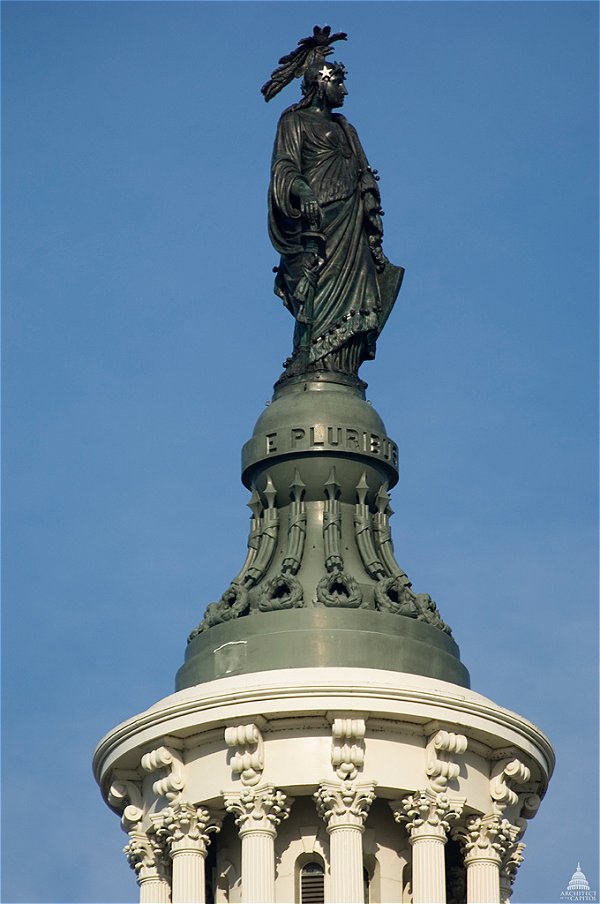 (Image Credit: Architect of the Capitol web site, http://www.aoc.gov. Public Domain.) (Image Credit: Architect of the Capitol web site, http://www.aoc.gov. Public Domain.)The Statue was created by sculptor Thomas Gibson Crawford. Crawford was born in New York City on March 22, 1814. In 1935, he moved his home and studio to Rome, Italy where he stayed for the rest of his life. He died on October 10, 1857 in London, England, the result of cancerous eye and brain tumors that first cost him his vision, then his career and then his life. Statue of Freedom Closeup of Head 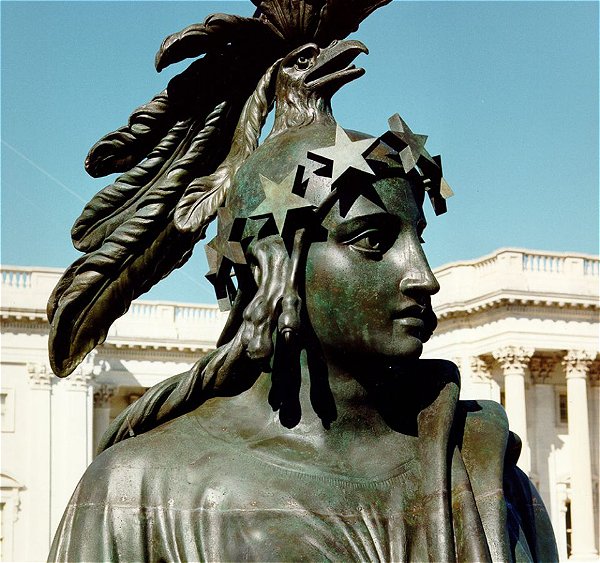 (Image Credit: Architect of the Capitol web site, http://www.aoc.gov. Public Domain.) (Image Credit: Architect of the Capitol web site, http://www.aoc.gov. Public Domain.)In addition to the Statue of Freedom, Crawford created multiple impressive sculptures for the US Capitol Building, including the Progress of Civilization pediment above the east entrance to the Senate wing of the Capitol and the Justice and History sculpture above the doors to the Senate. The web site of the Architect of the Capitol has a terrific piece on the Statue of Freedom, and Thomas Crawford. It doesn't make sense for me to attempt to summarize the information here, so I encourage those with an interest to visit: Architect of The Capitol - The Statue of Freedom. The obverse of the Congress Bicentennial silver dollar presents the full Statue of Freedom as it is seen atop the Capitol Dome; the coin's reverse features the Mace of the House of Representatives. William Woodward was responsible for the coin's design. 1989 Congress Bicentennial Silver Dollar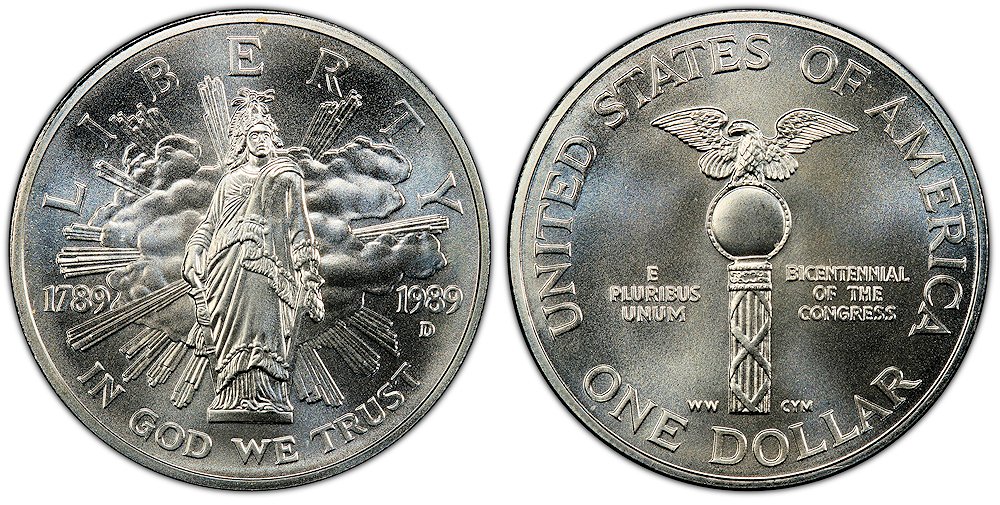 The view of the statue on the Congress Bicentennial half dollar is a closeup image of the helmeted head of the statue; the reverse presents a full view of the east face of the Capitol Building surrounded by a ring of 13 stars. Patricia Lewis Verani designed the coin's obverse and William Woodard handled the reverse. 1989 Congress Bicentennial CuNi Clad Half Dollar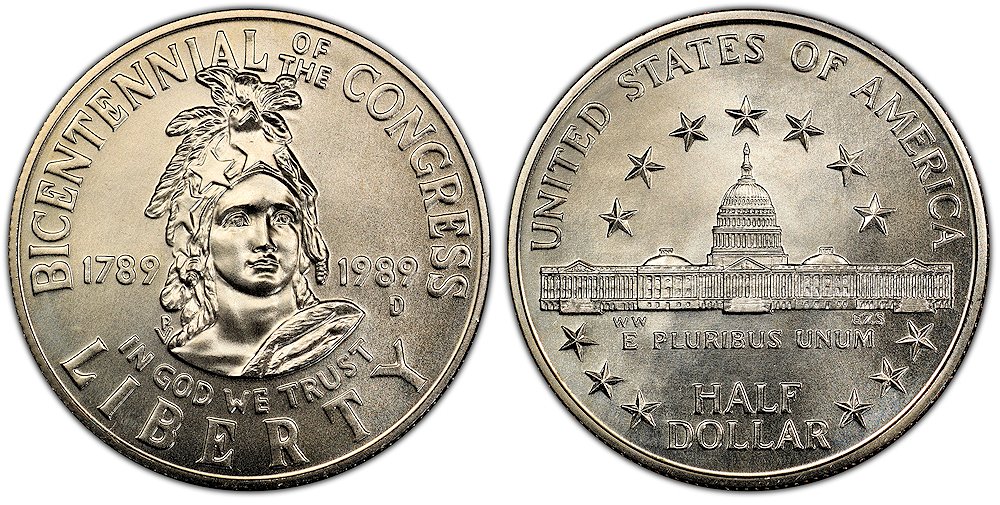 (Image Credits: Both coin images courtesy of PCGS CoinFacts, http://www.PCGS.com). (Image Credits: Both coin images courtesy of PCGS CoinFacts, http://www.PCGS.com).More about the 1989 Congress Bicentennial silver dollar can be found here: - 1989 Congress Bicentennial Dollar with Rotated Reverse- A Mint at Washington DC- US Commemorative Coins Authorized to Reduce the National DebtOther of my posts about commemorative coins and medals can be seen here: Read More: Commems Collection. Collecting history one coin or medal at a time! (c) commems. All rights reserved.
|
|
CCF Master Historian of Commemorative Coins
United States
12628 Posts |
There is often confusion between the two statues of a colonial minute man that can be found in the Lexington-Concord area. The "Minute Man" statue in Concord is the creation of artist/sculptor Daniel Chester French. The statue depicts an unnamed "minute man" or "minuteman" with one hand on his plow and the other holding his long gun. Minutemen were very often farmers who joined their local militia to protect their homes and farms. They were farmers first (hence the plow), soldiers second. The statue was unveiled at the Lexington-Concord Centennial (1875) commemoration of the battles and serves as the subject of the obverse of the 1925 Lexington-Concord half dollar that helped mark the Sesquicentennial of the famous battles. (See link below.) Minute Man Statue by Daniel Chester French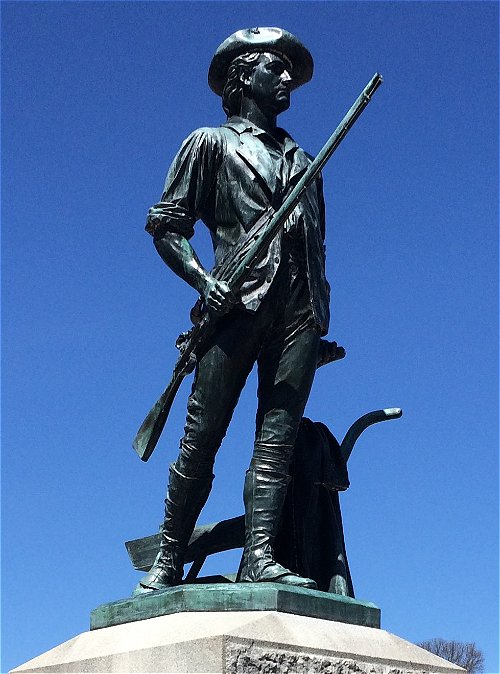 (Image credit: Wikimedia Commons via Creative Commons License) (Image credit: Wikimedia Commons via Creative Commons License)A second minute man statue (the "Lexington Minuteman") stands in Lexington, it was created to commemorate the 125th anniversary (aka Quasiquicentennial) of the battles. The statue was sculpted by Henry Hudson Kitson. It is said to depict Captain John Parker, recognized as the leader of the local militia in Lexington at the time of the battle (1775) , but the statue's depiction of Parker has to be considered approximate at best as it is known that more than one male model was used by Kitson to create the farmer figure seen in the statue (Kitson was not working from a contemporary painting/drawing of Parker). The statue stands today at the southeast corner of the Lexington Battle Green, facing in the direction of the route taken by British troops as they advanced on the town. Minute Man Statue by Henry Kitson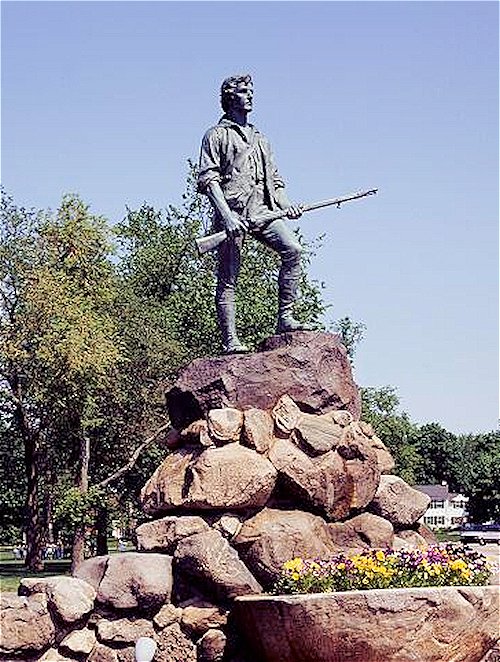 (Image Credit: Image courtesy of Library of Congress, Prints and Photographs Division. Public Domain.) (Image Credit: Image courtesy of Library of Congress, Prints and Photographs Division. Public Domain.)The Kitson statue was featured on the American Revolution Bicentennial Administration's (ARBA's) commemorative medal of 1975; the statue is seen on the medal's reverse. A left-facing portrait of Paul Revere is presented on the obverse. The medal was struck in bronze and silver (proof) and available individually; the bronze medal was also sold within a philatelic-numismatic cover (PNC). (See link below.) 1975 ARBA Medal With Lexington Minute Man Statue (Reverse)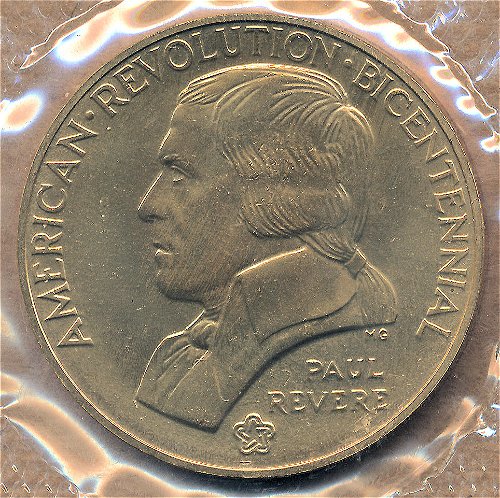 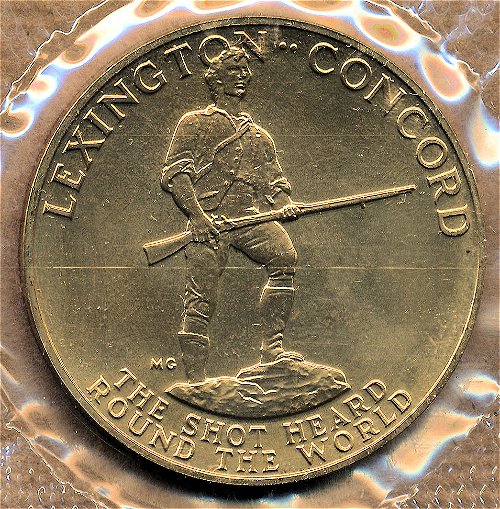 To learn more about the Lexington-Concord coin and/or the ARBA medal, see: - 1925 Lexingon-Concord Sesquicentennial - Coins That Depict a Statue- 1975 ARBA Philatelic-Numismatic CoverFor other posts about commemorative coins and medals, see: Read More: Commems Collection. Collecting history one coin or medal at a time! (c) commems. All rights reserved.
Edited by commems
06/10/2021 08:35 am
|
|
Moderator
United States
197800 Posts |
Impressive examples!  |
|
Pillar of the Community
United States
1080 Posts |
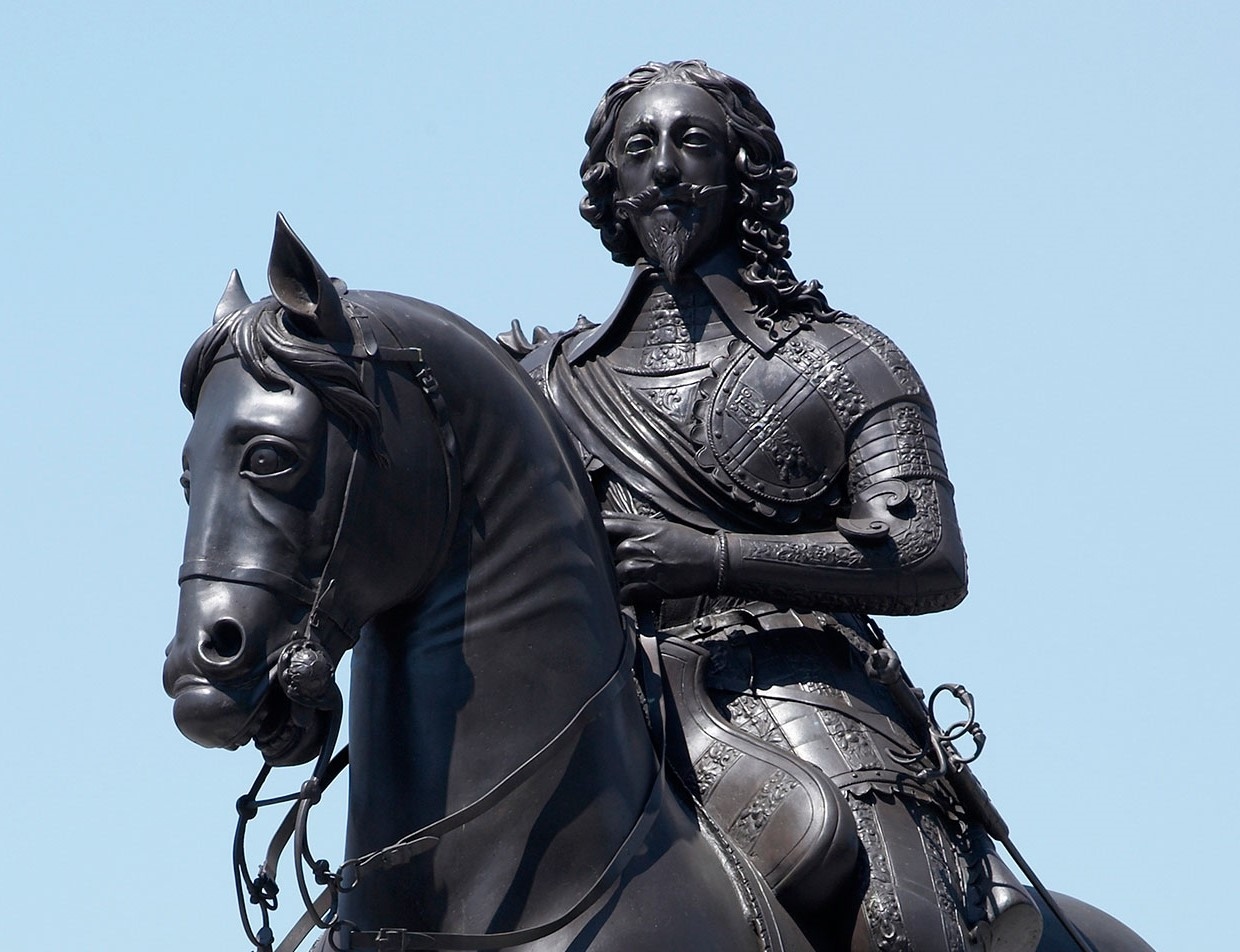 Just to add a little British accent here, this statue of Charles I, King of England, Scotland, and Ireland, has presided over Charing Cross in London since its installation there in 1675. Completed in 1633 by the French sculptor Hubert Le Sueur, it was kept hidden during the Civil War (1625-1641) and finally erected at its current location by Charles II to honor his father's memory. Interesting footnote from the website of the English Heritage Trust: "During both world wars, the statue was at risk of bomb damage, so was heavily sandbagged, eventually being removed for safekeeping to Mentmore House in Buckinghamshire in 1941. It returned to its commanding position in 1947." Charing Cross was a hamlet back in the 13th century and eventually grew to become a major road junction, but with urban sprawl over the intervening years it's now a District within London's Westminster Borough and has been recognized since the late 1700's as the city's geographic center. If you're headed there nowadays you'll find this statue adjacent to the Trafalgar Square Mall (which is a large open plaza, not a shopping center). This token, a pretty recent pickup for me, is a rare 18-pence proof of anonymous origin issued in 1811 or 1812, unlisted in Dalton but updated in Mays as Middlesex 2 bis. 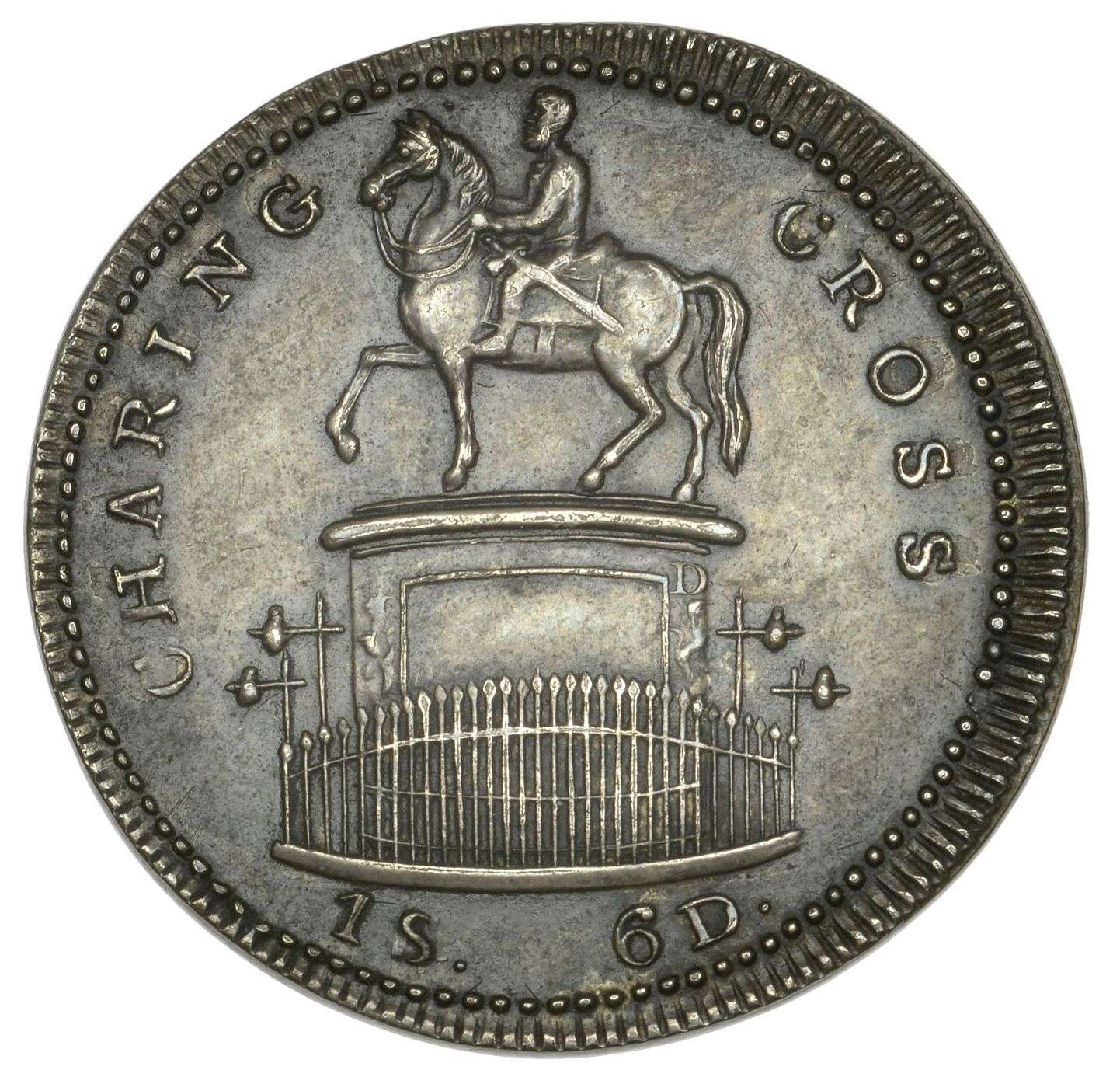 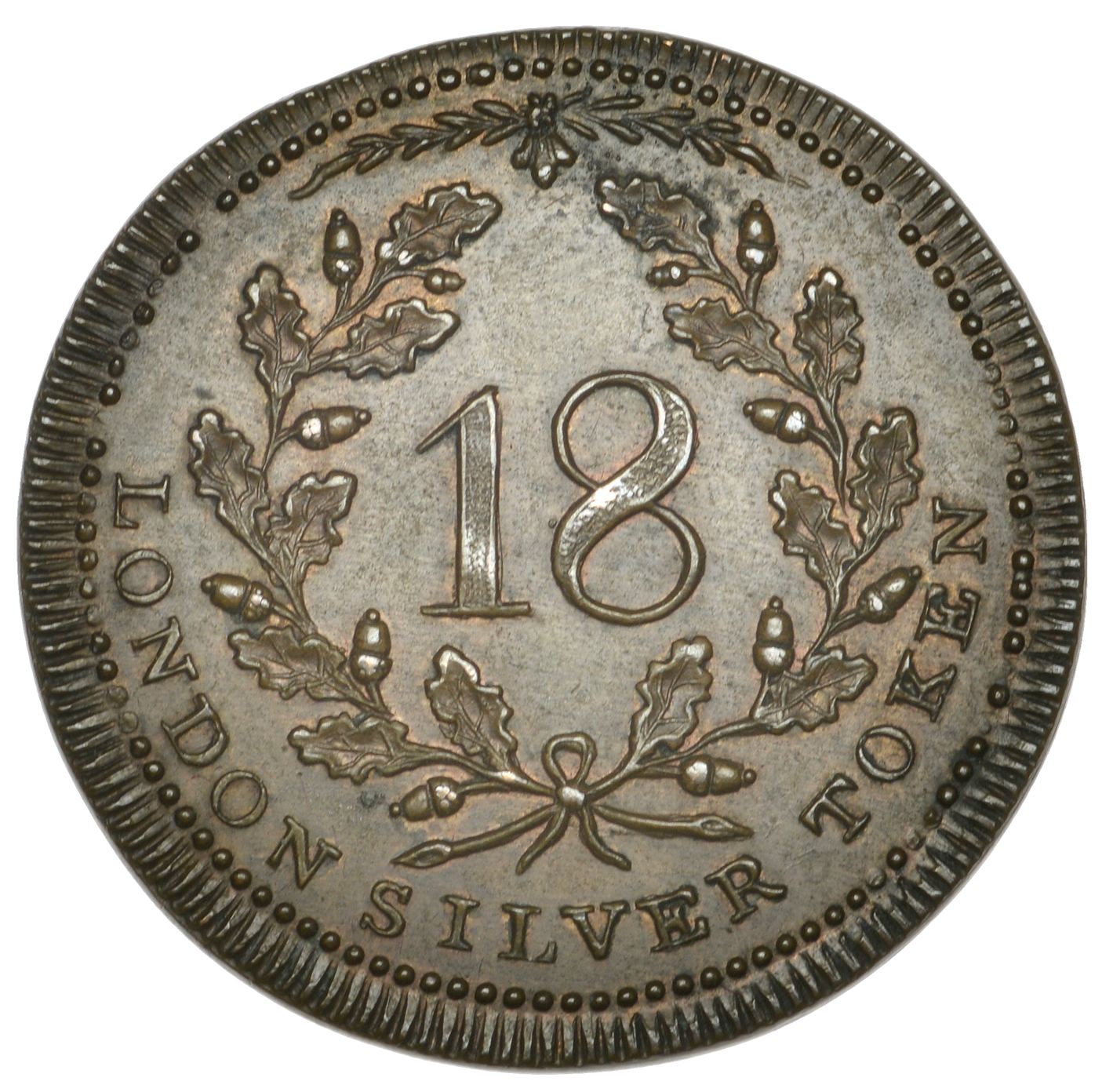 "If everything seems to be under control, you're just not going fast enough."
--- Mario Andretti
|
|
CCF Master Historian of Commemorative Coins
United States
12628 Posts |
@daltonista: Great token! I enjoyed the brief history lesson as well. Thanks for posting! I look forward to more!
Collecting history one coin or medal at a time! (c) commems. All rights reserved.
|
|
Moderator
United States
197800 Posts |
Very nice! |
|
Bedrock of the Community
United States
37232 Posts |
|
|
Bedrock of the Community
United States
37232 Posts |
|
|
Moderator
United States
197800 Posts |
Excellent examples! |
|
Bedrock of the Community
United States
37232 Posts |
|
| |
Replies: 489 / Views: 21,718 |





 First Page


 Posted 06/09/2021 10:21 am