A few years ago, I began collecting selected silver rounds from the 1980s. As I'm a type collector by nature vs. being a stacker, I pursued single examples of each round vs. multiples. I identified certain series of silver rounds that interested me and then worked to assemble a type set of each. I plan on posting about each series I collected. Hopefully, some will find the posts interesting. First up is a three-piece set that has a direct and promoted link to the US Government's decision to reduce/sell off its silver stockpile. I refer, of course, to the silver rounds that feature the inscription "US Assay Office."
In the fall of 1981, the General Services Administration (GSA) held a series of auctions for silver from the US' Strategic Stockpile. Each weekly auction made 1.25 million troy ounces of silver available to the marketplace; the minimum lot size for prospective buyers was eight 1,000 ounce bars (8,000 ounces total); bidders could place bids for larger lots or for multiples of 8,000 ounces at various bid prices. The auctions were not for the average individual who wanted to speculate in silver - though most weeks bids were received from individuals looking to "steal" silver for six+ dollars below market!
Prior to the start of the auctions, it was expected that the full allotment of 1.25 million ounces would be sold each week. The actual results were quite different - not one of the nine auctions held sold the full amount available. In fact, only four of the nine auctions received bids high enough to have any of the silver awarded. Congress stopped the auctions in December 1981; at that point, just two million ounces of a potential 11.25 million had been sold.
One of the bidders that did place an acceptable offer in Auction 4 (November 5, 1981) was Continental Coin Corporation (CCC) of California; it paid $9.05 per ounce for over 100,000 ounces. The silver it won had been stored in San Francisco, CA in the vaults of the local US Assay Office. After taking possession of its silver, the company quickly moved to have rounds and bars struck from it - advertisements for its rounds and bars appeared in newspapers as early as March 7, 1982.
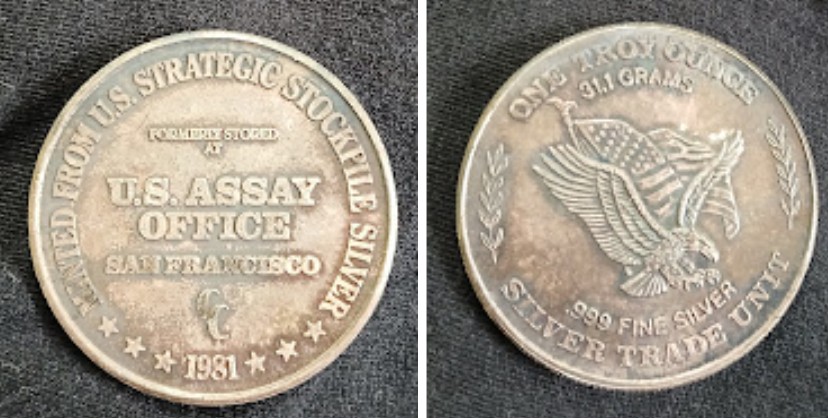
Each round and bar made the source of its silver very clear. Each featured the inscriptions "Minted From U.S. Strategic Stockpile Silver" and "Formerly Stored / At / U.S. Assay / Office / San Francisco" on its obverse. These inscriptions have led many to erroneously believe the rounds were struck by the US Mint as official issues; they were all struck by a private mint and have no official government standing.
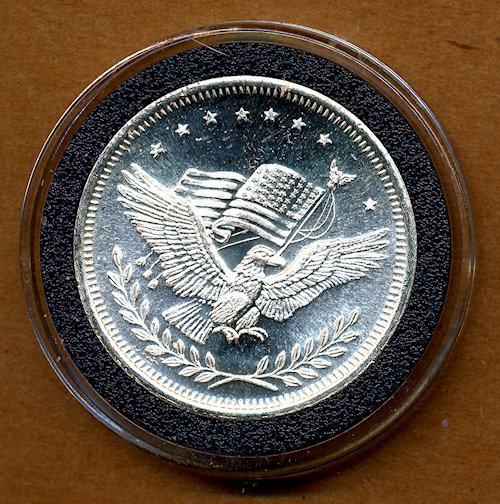
Three different versions of an eagle design were used for the reverse of the rounds: 1) Wings Up, 2) Wings Out, Branches and 3) Wings Out, No Branches. In the background of each design is the US Flag, depicted unfurled and waving in the wind. The flag proved to be a bit too much of a challenge for the designer or die engraver of the round, however, as its depiction on all three designs is inaccurate (too few stripes and too few stars).
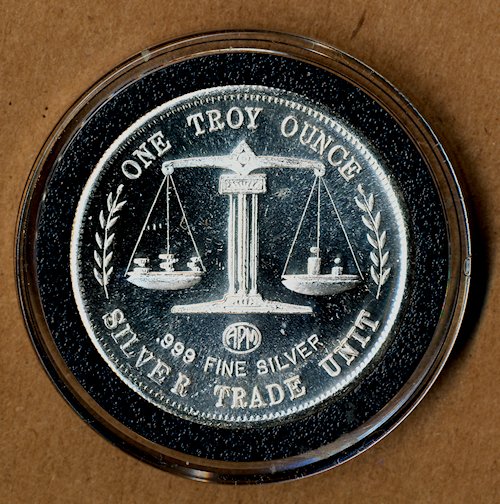
All rounds struck contain one-ounce (troy) of 0.999 fine silver; I'm not aware of fractional sizes or multi-ounce rounds. CCC also produced silver bars in one, five, ten and 100 ounce sizes from the silver it purchased. Some CC bars are marked as being produced from silver sourced as the New York Assay Office, but none of the rounds carry such markings.
The US Assay Office rounds remain available in today's marketplace and generally sell at a small numismatic premium over the spot price of silver.
Common Obverse Across Types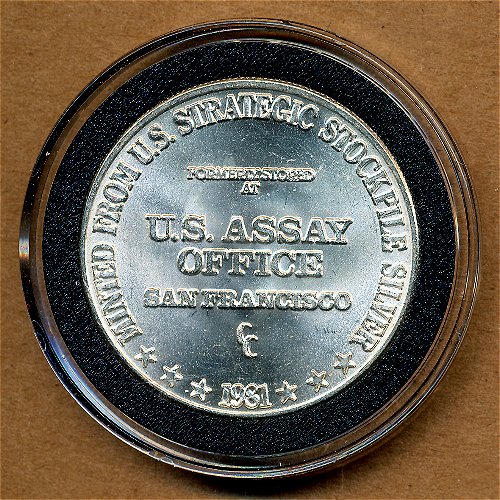 Type I Reverse: Eagle with Wings Up
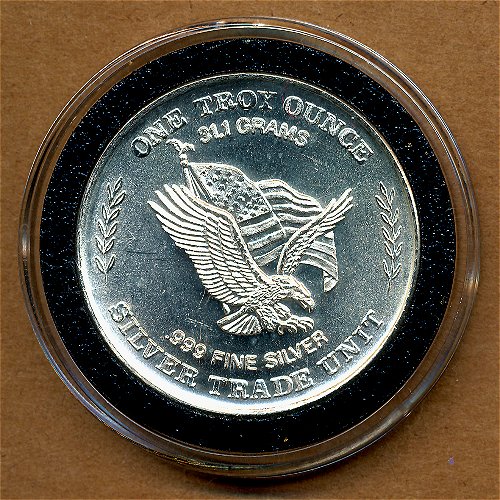 Type II Reverse: Eagle with Spread Wings, Branches
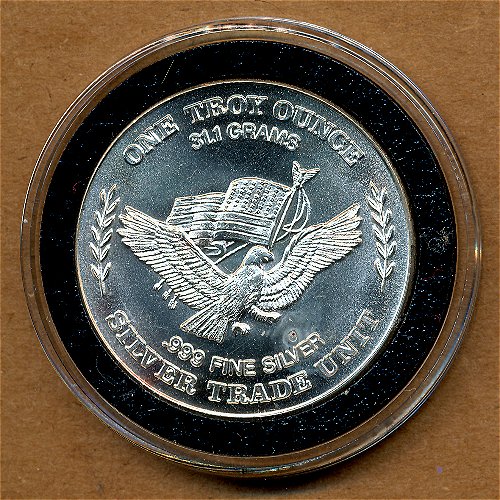 Type III Reverse: Eagle with Spread Wings, No Branches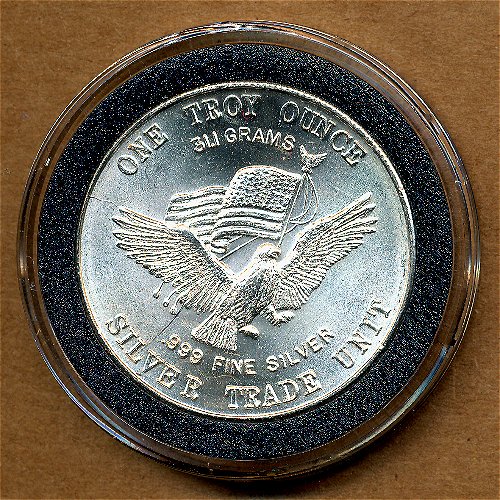




 Posted 07/09/2021 6:30 pm