|
This page may contain links that result in small commissions to keep this free site up and running.

Welcome Guest! Registering and/or logging in will remove the anchor (bottom) ads and the security checks. It's Free!
To participate in the forum you must log in or register. | Author |
 Replies: 1,279 / Views: 81,832 Replies: 1,279 / Views: 81,832 |
|
|
|
Pillar of the Community
Russian Federation
5186 Posts |
Quote:
I'm inclined to call this one as datable to 1417. I'm fine with those who prefer to expand this to the range of 1417 to 1418 AD. Less than a year, larger part (just barely) in 1417, that sounds like a 1417 coin to me one way or another. Neat coins, everyone! I won't have a narrowly dated entry until we get to the 1380s, though there are some coins I have that were probably made in the 1400s or 1410s, and one that the seller attributed to the 1390s and I don't have any idea about. |
|
Pillar of the Community
 United States
8076 Posts |
Indeed that K in KAROLVS is quite creative! Speaking of letterforms, I know you've (@spence) studied the letter A in depth...I was surprised to learn that in Flanders, engraving this letter with / without its crossbar was systematically used to marks coins of different "emissions." The Flanders double groot I posted upthread has barred As, which date it to 1416-1418. The same type without the bars is an earlier emission under the same ruler with a broader date range, 1409-1416. This was also a characteristic of the Flanders 2 mite coins I posted last decade. My last coin issued solely in this decade is this half groat of Poland issued under Wladyslaw II (Wladyslaw Jagiello) dated to 1410-1412, Kopicki 359 and Pawlikowski type XIV. Pawlikowski splits Kopicki 359 (no letters under crown) into at least 4 date ranges, based on other features of the coin (1406-7; 1408; 1408-10 and 1410-12). 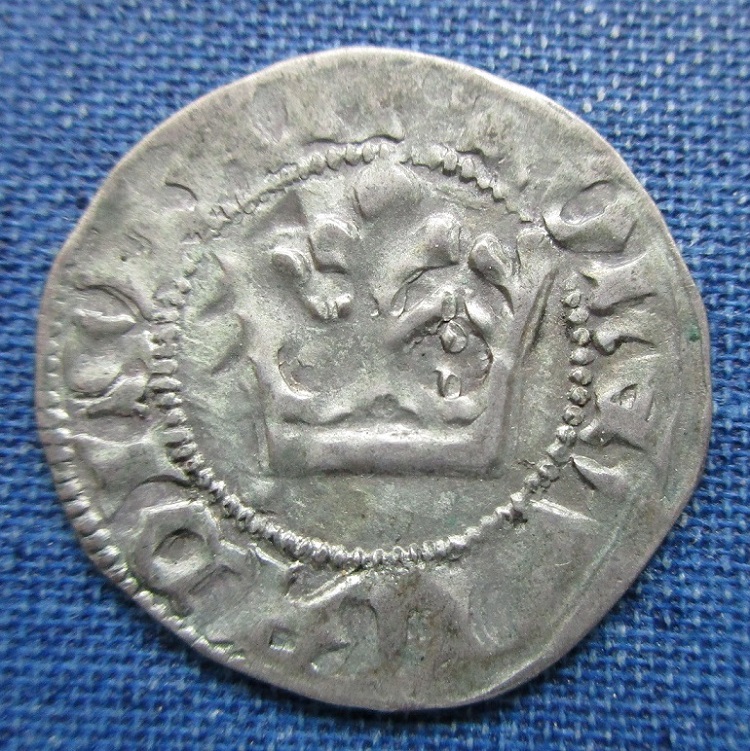 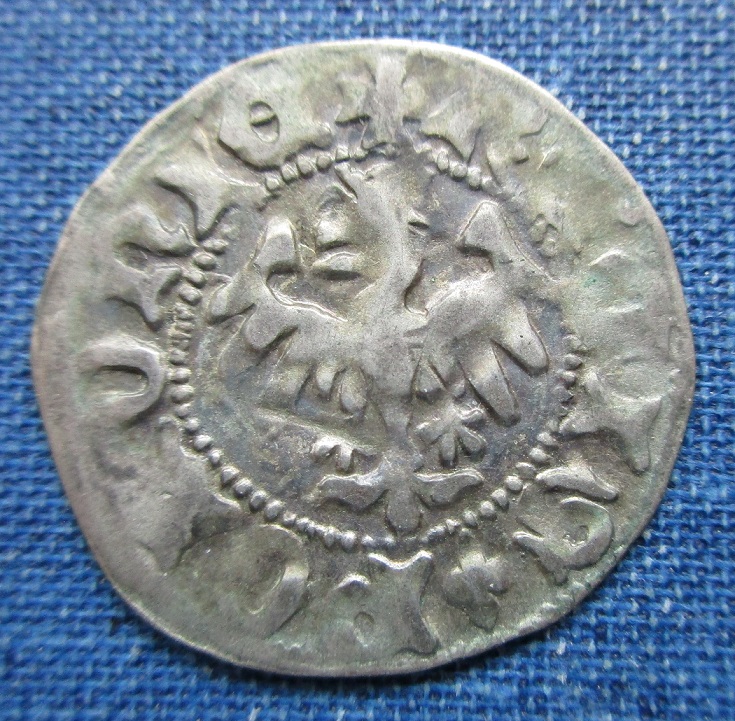 Obv: Crown. + mOnE WLADISLAI Rev" Crowned eagle. + ReGIS POLOnIe Edited by tdziemia
11/21/2021 4:54 pm
|
|
Pillar of the Community
United Kingdom
725 Posts |
Quote:
The Second Emission on these French Gros dit "Florette" was authorized on October 21, 1417 AD and it would be a little more than four months before the Third Emission began on March 7th, 1418 AD. When was the start of the year in France at that time? English dates always confuse me because the year changed in March, so that 25 March 1417 was a year earlier than 24 March 1417. In England, 21 October 1417 would be 16.5 months before 7 March 1418. |
|
Moderator
  United States
34572 Posts |
Quote:
When was the start of the year in France at that time? English dates always confuse me because the year changed in March, so that 25 March 1417 was a year earlier than 24 March 1417. In England, 21 October 1417 would be 16.5 months before 7 March 1418. @john you are blowing my mind with this, but hopefully I'm going to be learning something here. My thought was that the progression of months went: October 1417 November 1417 December 1417 January 1418 February 1418 March 1418 etc. for countries using the Julian (and since the mid 16-Century, the Gregorian) calendars. However, I do see reference to there being a period of time during the middle ages when New Year was celebrated for the Feast of the Annunciation: https://www.history.com/topics/holidays/new-yearsIt sounds like you are saying that the progression would have gone: October 1417 November 1417 December 1417 January 1417 February 1417 1-24 March 1417 25-31 March 1418 April 1418 etc. Is that right? Or was it more that the church was celebrating a holiday despite the number of the year actually having incremented a few months previous? I don't want us to get too far down this rabbit hole, but if the starting/ending month of the years has varied over time then it is good for us to learn that. "If you climb a good tree, you get a push."
-----Ghanaian proverb
"The danger we all now face is distinguishing between what is authentic and what is performed."
-----King Adz
|
|
Pillar of the Community
United States
8076 Posts |
I also mentioned upthread that I understand that in the Low Countries the year changed on Easter, but I probably made a mistake, since a fixed-date feast like the Annunciation would make more sense.
Which also leaves us with the question of how these dates were later translated by the authors of the books where we find these references. Did they already translate the 15th c. dates into the modern system? Or just leave them as they were in the original sources, but with the added note that Jan 1417 would be Jan 1418 according to a modern calendar?
Indeed, a potential rabbit hole which I don't think we need to concern ourselves with, and probably the reason that we just see "emission of ..." in so many places.
Edited by tdziemia
11/22/2021 08:35 am
|
|
Pillar of the Community
Sweden
2124 Posts |
@Spence, those Aachen groschens are really nice. Very original dating on the 1411 one. I have the precursor to your Florette, the first Charles VI gros - the K in Karolus is similar on mine. This was a single issue, ordered June 7, 1413. It was to be replaced by another gros issue Nov 3 the same year, so this one is definitely issued only in 1413. France 1413, gros "aux lis," Charles VI, Rouen. 0.931 silver, 2.87 g, 27 mm. Duplessy 381, Lafaurie 385, Roberts 2871. 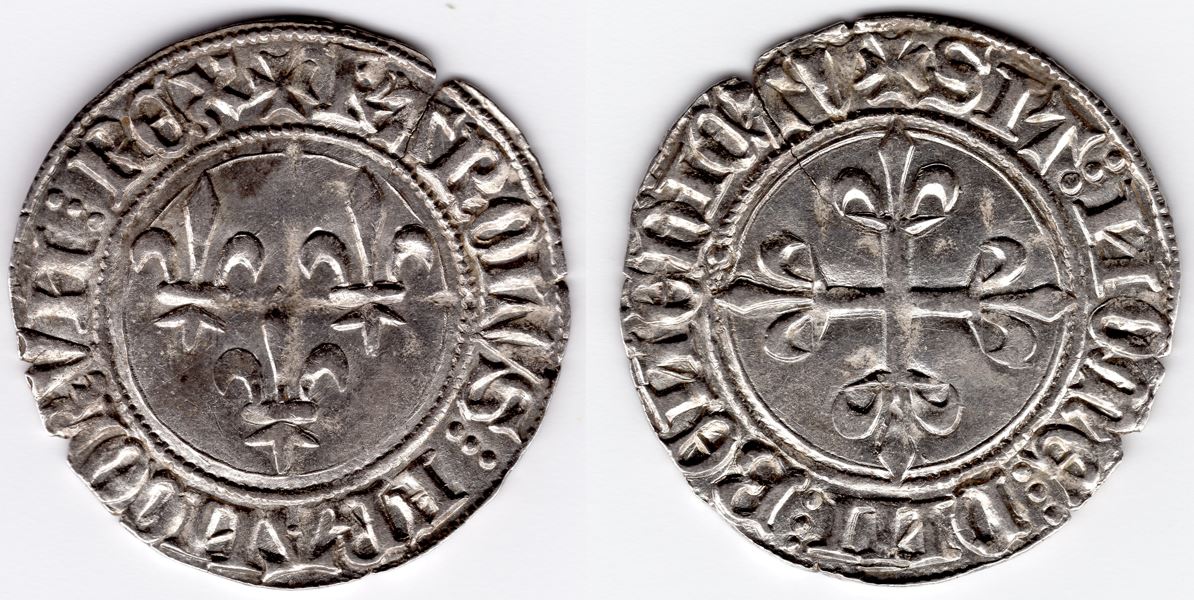 Obv: Three fleurs-de-lys. Inscription: KAROLVS FRANCORVN REX (Charles King of the Franks). Point under the 15th letter ('V') for Rouen. Rev: Cross with fleurs-de-lys. Inscription: SIT NOMEn DomiNI BENEDICTVm (Blessed be the name of the Lord). Point under the 15th letter ('D') for Rouen. The N's are consistently retrograde on this one. This was the first coin of good silver in decades, and there is an interesting story behind that. In 1413 Paris came under the control of the Duke of Burgundy, John the Fearless, who allied himself with the Cabochiens, a group of wealthy butchers (!). They managed to take control of the city, including the royal administration. Among several things they ordered during the months they were in power was the return to good money, resulting in the decree for this coin issue. |
|
Pillar of the Community
Sweden
2124 Posts |
Quote:
When was the start of the year in France at that time? Until 1565, France had the year defined by Easter, with the 1st day of the year being Easter day. That could happen from March 22 to April 25, so years were of variable length. 1566 however, began Jan 1. This was then called the "new style" ("nouveau style") in contrast to the "old style" ("ancien style"). Quote:
Which also leaves us with the question of how these dates were later translated by the authors of the books where we find these references. At least the main French reference works, Duplessy and Lafaurie, use the new style throughout. So, for example, what in Duplessy is dated Feb 1, 1420, was at the time considered to be Feb 1, 1419. |
|
Pillar of the Community
United Kingdom
725 Posts |
Quote:
It sounds like you are saying that the progression would have gone:
October 1417
November 1417
December 1417
January 1417
February 1417
1-24 March 1417
25-31 March 1418
April 1418
etc.
Is that right? Yes. Quote:
Or was it more that the church was celebrating a holiday despite the number of the year actually having incremented a few months previous? I don't want us to get too far down this rabbit hole, but if the starting/ending month of the years has varied over time then it is good for us to learn that. No, the actual year started on 25 March. It's why the tax year in Britain starts on 6 April - which was 25 March plus an adjustment in 1800 to fix an issue caused by mismatched leap year calculations. It was always a fixed date (in England at least), but the new year was a different day in different countries until they all switched to January 1. So you need to be careful you know which systems are being used if you want to work out chronology by comparing dates on coins, dates in original documents and dates in modern references. Sometimes, the date will be written something like 'January 1417/8' to tell you they mean January 1418 in the new calendar, which would have been January 1417 at the time. They did this at the time as well as in modern references. I've seen it in baptism records, which obviously affects how old someone was if you get it wrong. As an example of how it affects coin dating, I have a Charles I Newark Siege Ninepence dated 1645. The coins dated 1645 were minted in January-March 1645 i.e. the end of 1645, which we now would call early 1646. That was just before Charles I arrived in May 1646. Those minted after 25 March were dated 1646. The date of the coin doesn't make sense in terms of historical events if you don't know that, as there wasn't a siege in January-March 1645 according to the new calendar. It would also affect the year I assign to the coin for a thread like this...is it 1645 (as on the coin) or 1646 (as we would have it now on the current calendar)? Which country you're in matters quite a bit in terms of when this is relevant. The 'October Revolution' in Russia actually happened on 6-7 November according to the new calendar, because Russia didn't change over until 1918. They still celebrate 'Russian New Year' a couple of weeks after us, since although they moved that to January 1, it gradually goes out of alignment because of the leap year issue in the Julian Calendar (which the Russian Orthodox Church still uses). Quote:
Until 1565, France had the year defined by Easter, with the 1st day of the year being Easter day. That could happen from March 22 to April 25, so years were of variable length. 1566 however, began Jan 1. This was then called the "new style" ("nouveau style") in contrast to the "old style" ("ancien style"). Thank you. You wouldn't have wanted to be an international trader in the 1400s! I have enough trouble with different daylight savings dates... Edited by JohnConduitt
11/22/2021 4:24 pm
|
|
Moderator
United States
34572 Posts |
Ok well I have learned a bunch today. Thx to all for their input and knowledge on this!  It is good to know that modern books such as Duplessy are using nouveau style dates. I understand that different regions have transitioned from the ancient style at various points, but does anyone know when in the Middle Ages January 1 generally stopped being the first day of the new year? From my reading, it seems like this was what Julius Caesar had decreed back in 46 BC. Also, while I'm at it, I wanted to post another coin. This Soldo is from the Italian City of Aquileia and can be dated to between 1412 and 1420 AD. The obv inscription is + LODOVICVS DUX D TECH and then rev inscription is PATRA AQVILE. I have it attributed as Biaggi 193. 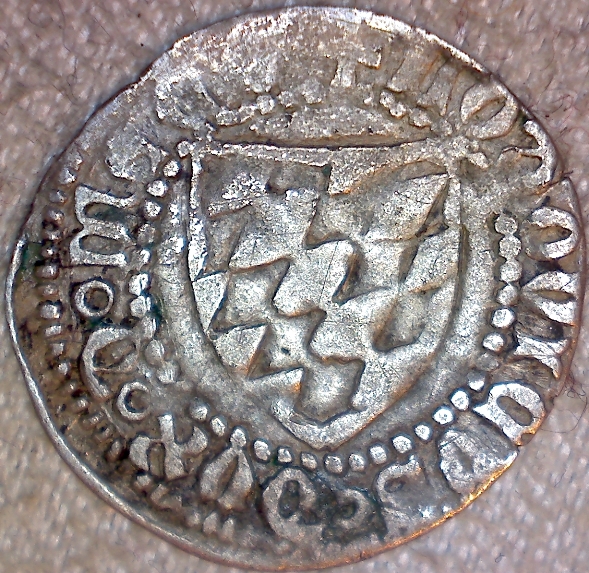 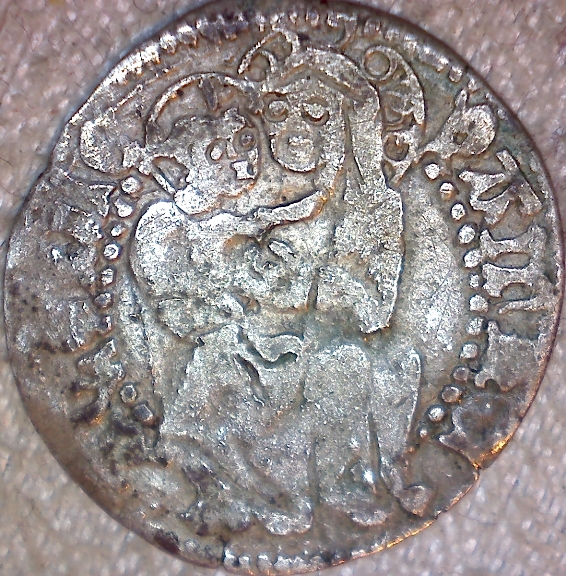 "If you climb a good tree, you get a push."
-----Ghanaian proverb
"The danger we all now face is distinguishing between what is authentic and what is performed."
-----King Adz
|
|
Pillar of the Community
Russian Federation
5186 Posts |
Quote:
As an example of how it affects coin dating My favorite example is the so-called "gun money" issues of 1689-90, which are conveniently labeled by month. And the attested dates are, in chronological order... June 1689 July 1689 August 1689 September 1689 October 1689 November 1689 December 1689 January 1689 February 1689 March 1689 March 1690 April 1690 May 1690 June 1690 July 1690 [August 1690 September 1690 October 1690] James II had conclusively lost (and fled to France) after the Battle of the Boyne in July 1690, so no new official issues by him had been made after that (the Limerick mint apparently continued unofficially making coins for a few more months). Fortunately the issuing period had only included one March. There would surely have been some confusion if March 1690 coins were issued both at the start and at the end of the year! |
|
Pillar of the Community
United Kingdom
725 Posts |
Quote:
Does anyone know when in the Middle Ages January 1 generally stopped being the first day of the new year? From my reading, it seems like this was what Julius Caesar had decreed back in 46 BC. When William I came to England, I think they were using 25 December as New Year. He then changed it to 1 January, but in the 1100s it got moved to 25 March for religious reasons. At the time, there wasn't a universal standard for dates even within England, let alone Europe. The king had a system; the church used their system; people in a particular area used their system; people elsewhere used another. Sometimes they used regnal years instead. Presumably, it didn't matter too much when no-one left their village. A bit like timezones across Britain, which were different until the advent of trains. It might even have worked better, since you could tailor it to your area - I'm sure the Scots would appreciate a later start, as their spring is a little later, just as we apocryphally have to change our clocks twice a year to allow Scottish farmers more light in the working day. |
|
Pillar of the Community
United Kingdom
725 Posts |
Quote:
My favorite example is the so-called "gun money" Before I'd looked much into new years, I was totally confused by gun money dates. January-March 1689 didn't make any sense as James II didn't go to Ireland until March! I got a halfcrown dated May 1690 because a) it's more common and so was cheaper and b) I could make sense of it. Edited by JohnConduitt
11/23/2021 03:00 am
|
|
Moderator
United States
34572 Posts |
More great conversation about medieval and more modern dates! Thanks for your contributions. Here is a French Guenar datable to the range 1411 to 1417 AD and the last coin that I'll be posting for this decade. I have attributed it as Roberts 2981d and Duplessy 377c. 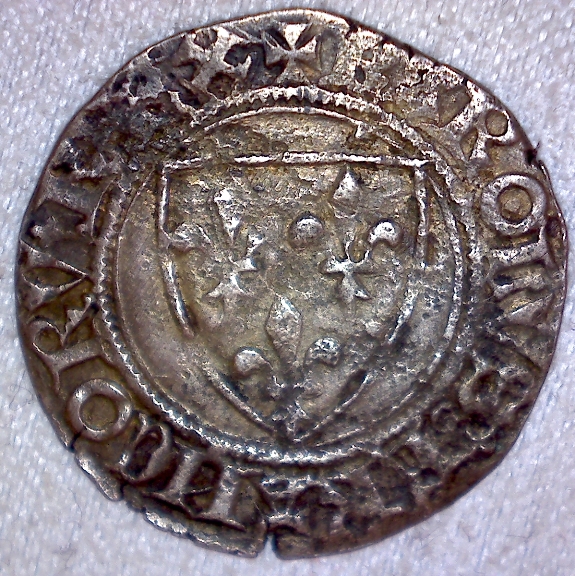 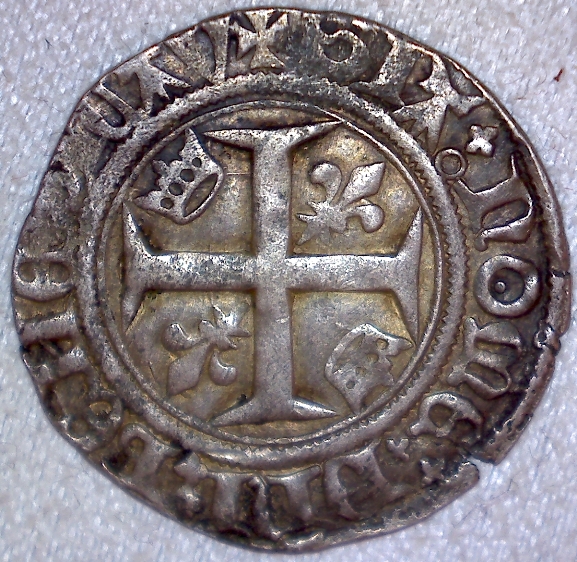 "If you climb a good tree, you get a push."
-----Ghanaian proverb
"The danger we all now face is distinguishing between what is authentic and what is performed."
-----King Adz
|
|
Pillar of the Community
Sweden
2124 Posts |
Lovely coins, @Spence! Another gros from me today. France 1413-14, gros ("grossus" or "gros aux lis sous une couronne"), Charles VI, Rouen. 0.718 silver, 3.70 g, 27.5 mm. Duplessy 384A, Lafaurie 388, Roberts 2874. 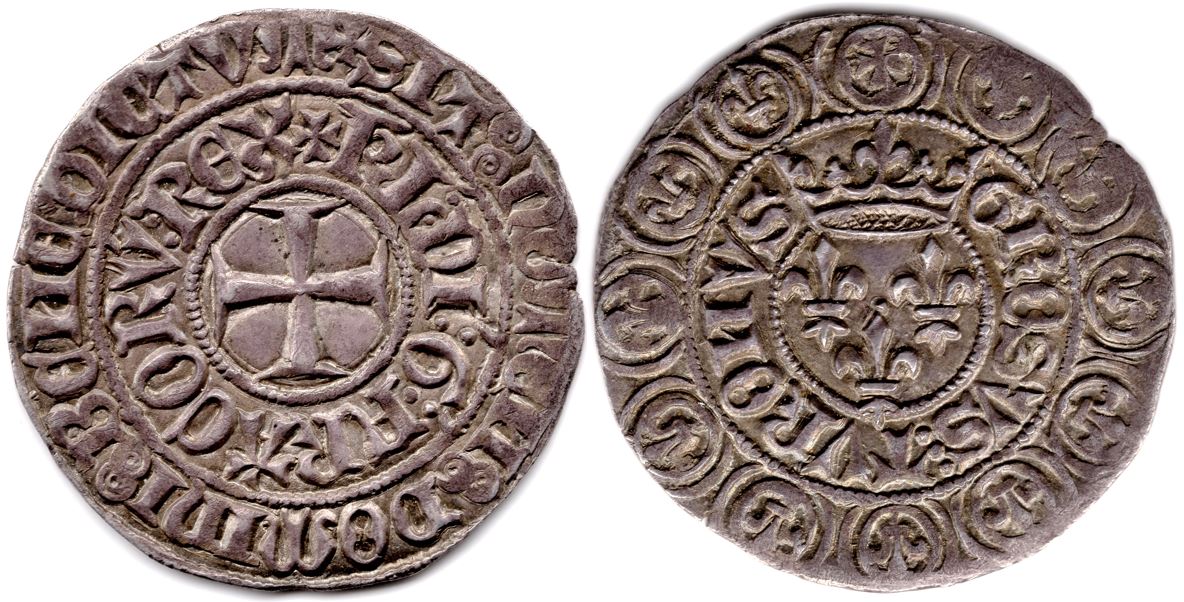 Obv: Cross. Inscription: SIT NOMEN DOMINI BENEDICTVM (Blessed be the name of the Lord) // KL´ DI´ G´ FRACORV REX (Karolus Dei Gratia Francorum Rex - Charles by Grace of God King of the Franks). Point under the 15th letter ('B') for Rouen. Rev: Three fleurs-de-lys below a crown, encircled by 11 fleurs-de-lys and a cross. Inscription: GROSVS TVRONVS (Big Tournois). Interestingly, two kinds of N's are used: Retrograde N and n. After the Cabochien revolt had been suppressed and a number of the rebels executed, a new decree for good money was issued November 3, 1413. The "rebel gros" of 0.931 silver (which I showed yesterday) was replaced by a new gros of 0.718 silver. However, the lower fineness was exactly matched by an increase in weight, so the silver content was maintained, and so was the value of 20 deniers tournois. The official explanation was that the previous coins had "not been received well by the public, who had refused to take them ... and had to them seemed too feeble a coin for its value" (freely translated from the royal decree). The new gros was heavier, and looked much like the old "gros tournois," which was also stated on the coin to dispel any doubts on its monetary strength. Still, to fit the king's name and titles, they had to be abbreviated almost beyond recognition; I don't think I have seen the king's name expressed by only two letters - KL - on any other coin. A decree June 4, 1414, stopped minting of the new gros coins. The minting dates for coins minted in Rouen can be delimited to Dec 8 - Jun 28, the dates for the execution of the decrees dated Nov 3 resp. June 4. |
|
Pillar of the Community
United Kingdom
725 Posts |
I think I'm nearing the end of my Russian coins now. At least, we're near the beginnings of an independent Moscow. Vasily I Dmitriyevich Denga, 1410-1415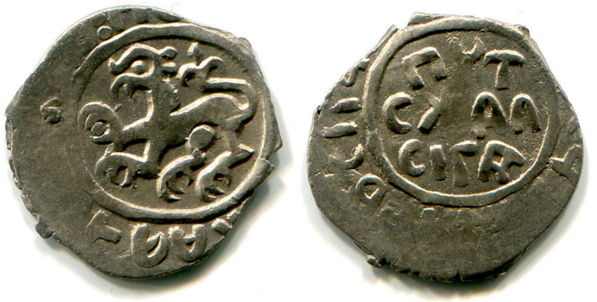 Suzdal. Silver, 12mm, 0.54g. Leopard. SEAL OF SZHALSK (centre, also in circular legend around) (HP 1918 A). Suzdal. Silver, 12mm, 0.54g. Leopard. SEAL OF SZHALSK (centre, also in circular legend around) (HP 1918 A). Vasily Dmitriyevich, son of Russian hero Dmitry Donskoy, was the independent Grand Prince of Moscow from 1395-1412, but also a vassal of the Golden Horde between 1389-1395 and 1412-1425. From 1392 he also controlled Suzdal, and both anonymous and named coins were struck in the city. Edited by JohnConduitt
11/24/2021 08:20 am
|
| |
Replies: 1,279 / Views: 81,832 |
To participate in the forum you must log in or register.
Disclaimer: While a tremendous amount of effort goes into ensuring the accuracy of the information contained in this site, Coin Community assumes no liability for errors. Copyright 2005 - 2026 Coin Community Family- all rights reserved worldwide. Use of any images or content on this website without prior written permission of Coin Community or the original lender is strictly prohibited.
Contact Us | Advertise Here | Privacy Policy / Terms of Use
|
| Coin Community Forum |
© 2005 - 2026 Coin Community Forums |
| It took 0.48 seconds to rattle this change. |
 |
|
| |
| |




 First Page
 Previous Page


 Posted 11/21/2021 4:53 pm


