| Author |
 Replies: 1,279 / Views: 81,831 Replies: 1,279 / Views: 81,831 |
|
|
|
Moderator
  United States
34572 Posts |
The last coin for me this decade is a Niquet from France that is datable to the years 1421 and 1422 AD. The obv inscription is KAROLVS FRACORV REX while the rev inscription is + DVPLEX TVRONS FRACIE. I have it attributed as Roberts 2722a and Duplessy 401. 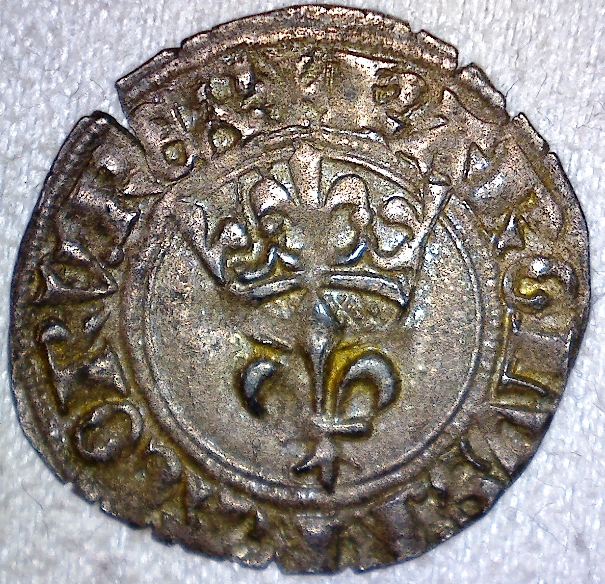 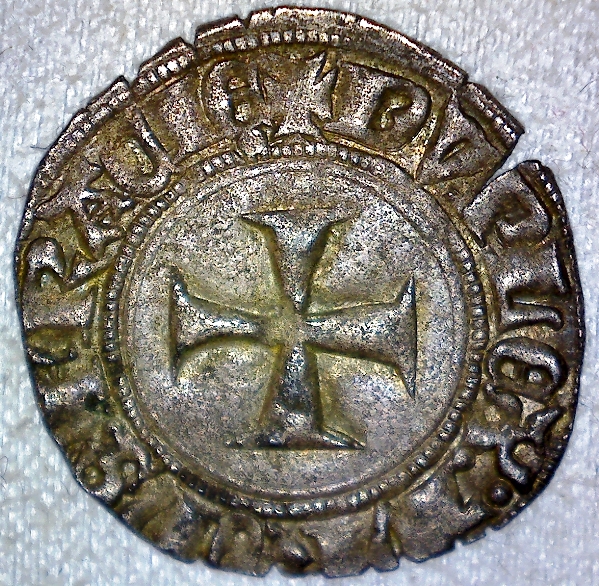 "If you climb a good tree, you get a push."
-----Ghanaian proverb
"The danger we all now face is distinguishing between what is authentic and what is performed."
-----King Adz
|
|
Pillar of the Community
 United States
8076 Posts |
Nice! Never heard of this denomination... so, does DVPLEX TVRONVS make it a 2 denier coin? Very rich on England and France this decade. I won't have anything datable to a single year for next decade, but have a few with narrow ranges. Tomorrow?  |
|
Moderator
United States
34572 Posts |
@tdz, I originally had this labelled as a Double Tournois, but Duplessy seems to indicate that it was nicknamed "Niquet". I'm struggling a bit to get a translation of this word. Maybe a short rest or nap? Perhaps one of our native French-speakers can help?
"If you climb a good tree, you get a push."
-----Ghanaian proverb
"The danger we all now face is distinguishing between what is authentic and what is performed."
-----King Adz
|
|
Pillar of the Community
Sweden
2124 Posts |
It's a double tournois alright, and it's nicknamed "niquet." A native French speaker would be great for accurate interpretation, but from what I can gather, the word in medieval times was used to denote something small, insignificant, despicable. This certainly would have to do with the coin being of low grade billon and weight compared to earlier issues, after a series of monetary devaluations. (In modern times the word seems to have got other meanings, not all of them suitable to repeat here  .) In any event, it is a very nice coin, and so are the Calais groats from @Spence and @JohnConduitt! |
|
Moderator
United States
34572 Posts |
Ok thx for the further explanation @era! With regard to dropping back another decade, is everyone ready to do this? Maybe let's give it another 16 hours (until noon tomorrow) for any last entrants for the 1420s and then we can get started on the 1410s. I'm really looking forward to seeing what you all have to post!
"If you climb a good tree, you get a push."
-----Ghanaian proverb
"The danger we all now face is distinguishing between what is authentic and what is performed."
-----King Adz
|
|
Pillar of the Community
United States
8076 Posts |
I will start the 1410s with this 2 groot coin from the County of Flanders (Burgundian Netherlands) that was minted during the reign of John the Fearless between December 1416 and April 1418 in Ghent; de Pas 10,26 and Boudeau 2249. The color does not look quite so "silvery" because the fineness is only 0.400. 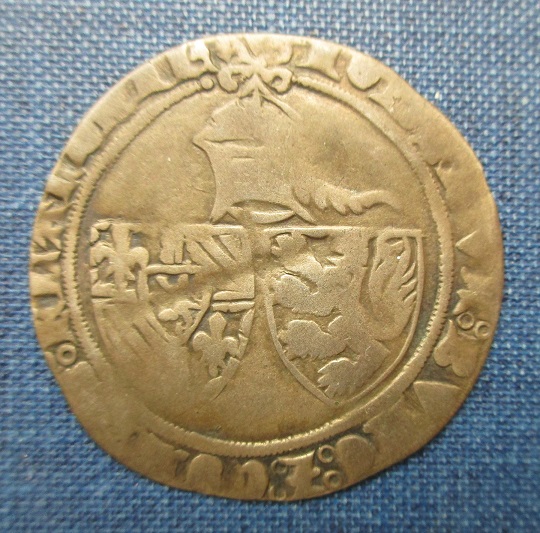 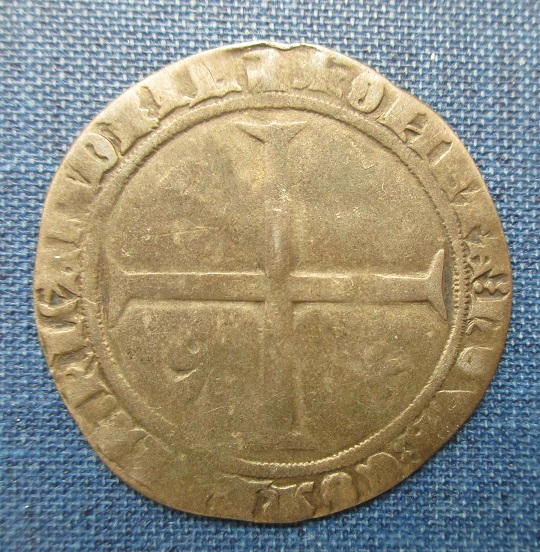 Obv: Tournament helmet above the shields of Burgundy and Flanders. IOhS:DVX:BVRG:Z:COMeS:FLANDRIe Rev: Cross pattee with alternating lilies and lions in the angles. + mOneTA:nOVA:COmeTIS:FLAnDRIe |
|
Moderator
United States
34572 Posts |
I like it @tdz! I only have a handful more of these dated Groschens from Aachen to post. This one is from 1411 AD (MILLESIMO CCCC VND, which is short for "undecimus") and is attributed as Levinson I-10. 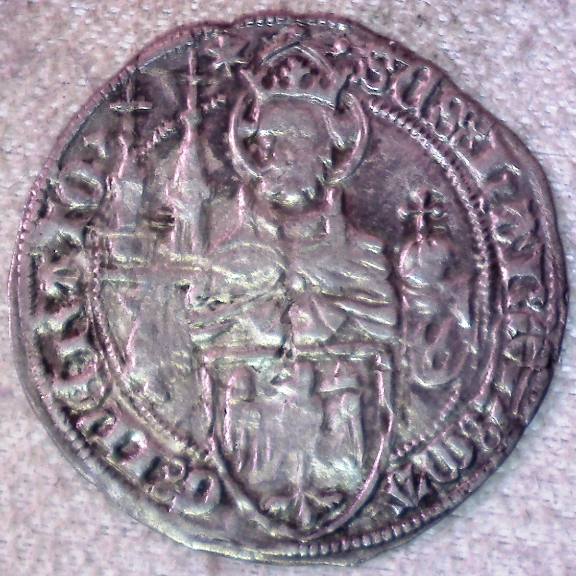 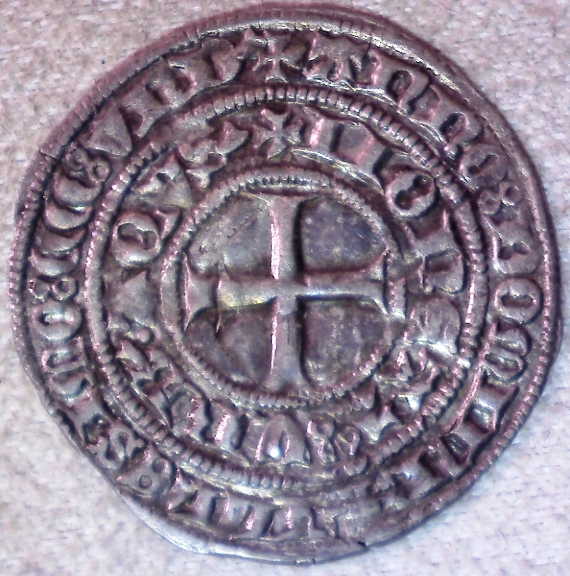 "If you climb a good tree, you get a push."
-----Ghanaian proverb
"The danger we all now face is distinguishing between what is authentic and what is performed."
-----King Adz
|
|
Pillar of the Community
United States
8076 Posts |
Amazing condition on that coin!  |
|
Moderator
United States
34572 Posts |
Thx @tdz. It is another recent pick-up for me from the estate of a former OFEY collector. Here is a Groat or Graafschap datable to that same year (1411 AD) that was minted by the Netherlands County of Holland. It is attributed as Chantard VIII.5 and Grolle II 19.3.7. The obv inscription is GVILM DVX DEI GR COM HOL Z ZE while the rev inscription is + MONT NOVA hOLAD Z ZENA. 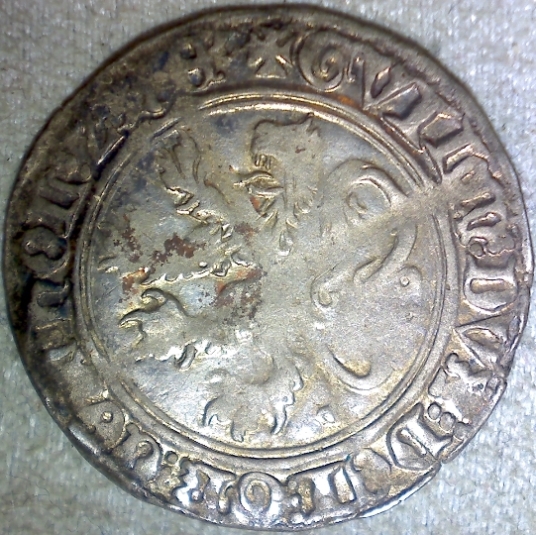 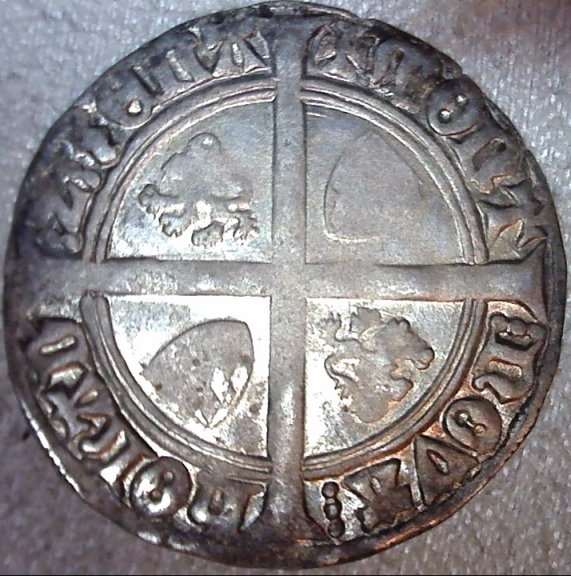 "If you climb a good tree, you get a push."
-----Ghanaian proverb
"The danger we all now face is distinguishing between what is authentic and what is performed."
-----King Adz
|
|
Pillar of the Community
United Kingdom
725 Posts |
Quote:
The color does not look quite so "silvery" because the fineness is only 0.400. That's interesting. If this was a Roman coin, I imagine it'd be called billon. Presumably, they could just have made it smaller, given it's 32mm. But then it might not be much of a 'groot'. In England, they were happy to go small. Henry V Type 5 Halfpenny, 1413-1422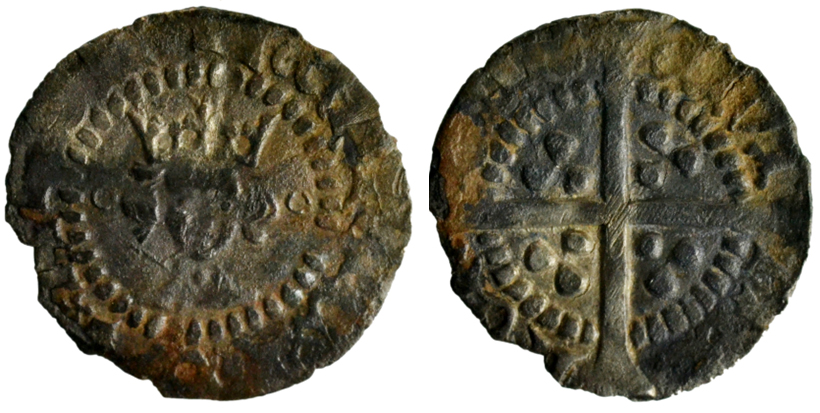 London. 12mm, 0.44g. Crowned facing bust, annulets by hair; HENRIC REX ANGL. Long cross pattee dividing the legend, with three pellets in each angle; CIVITAS LONDON (S 1795). London. 12mm, 0.44g. Crowned facing bust, annulets by hair; HENRIC REX ANGL. Long cross pattee dividing the legend, with three pellets in each angle; CIVITAS LONDON (S 1795).The weight is under 0.49g, which means this is after the 1412 coin reform. The two annulets by the crown make it Henry V. The dealer described it as a Class D halfpenny but also described the annulets as 'broken', which as far as I can tell, should make it Class C (Withers Type 5a; S 1794). But the annulets on these always seem to look broken... http://www.coins-of-the-uk.co.uk/pi...a/index.html |
|
Moderator
United States
34572 Posts |
Nailing down the exact attribution on 15th Century British silver minors is just not something that I have mastered so I can't be of any help as to the broken-ness of the annulets. In any case, it is a great addition to this thread! Here is another Groschen from Aachen. It is dated 1419 AD and as you can see, the diemaker has now transitioned the last part of the date from Latin to Roman Numerals (ANNO DOMINI MILESIMO CCCC XIX). It is attributed as Levinson I-14. 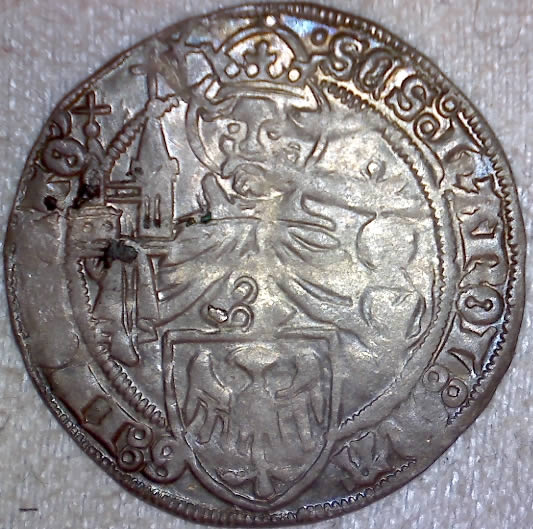 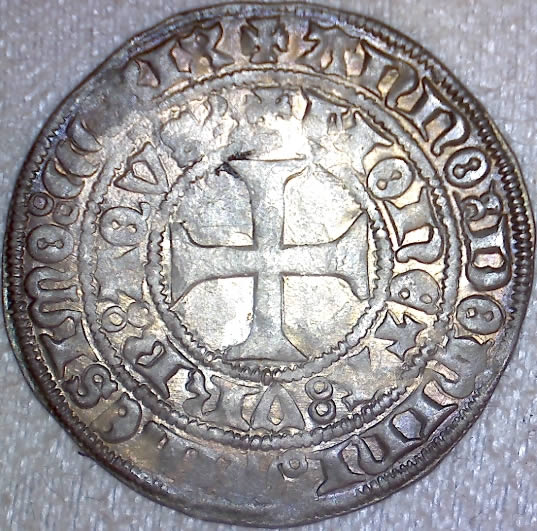 "If you climb a good tree, you get a push."
-----Ghanaian proverb
"The danger we all now face is distinguishing between what is authentic and what is performed."
-----King Adz
|
|
Pillar of the Community
United States
8076 Posts |
Quote:
I imagine it'd be called billon. I agree at that purity (under 50%) we would call it billon. However, in the coinage decrees, a certain set of gold coins were specified, a certain set of "silver" denominations (2, 1 and 1/2 groot often at decreasing purity) were specified, and then "black" (dark?) coins containing less than 10% silver at the lowest denominations. The 19th century numismatists who made the first catalogs kept these terms, and appear to have set a precedent for that part of the world. I'll make it 3 Low Countries coins for this decade, with this double gros of the Duchy of Brabant. Between January 1410 and March 1411, about 2.5 million of these were struck at the Leuven mint, and some unknown additional number into early 1412. So the date range is a bit over 2 years for this coin. Witte 435. 30 mm, 4.0 g. It was an interesting time in this part of Europe. Flanders (my first coin for this decade) had already come under Burgundian rule, and hence was allied with England. Brabant was still and independent Duchy and an ally of France. Duke Antoine, under whose authority this coin was struck, died at the Battle of Agincourt fighting on the French side, in August 1415. The County of Holland (@spence's coin) was ruled by the Duke of Bavaria, whose brother was Bishop of Liege, a bit to the southeast. By 1433, both Brabant and Holland would emerge from succession squabbles under Burgundian rule, too, with Philip "the Good" of Burgundy consolidating nearly the entire region into what became known as the Burgundian Netherlands. 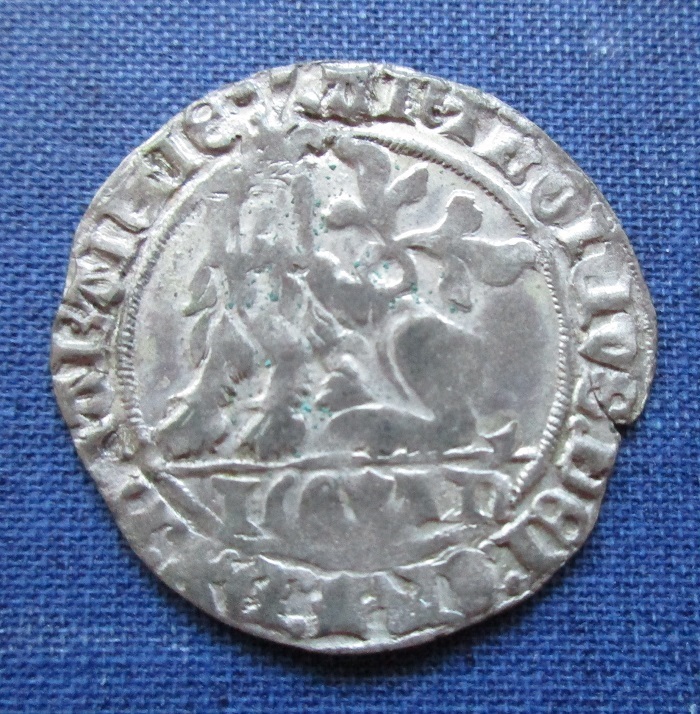 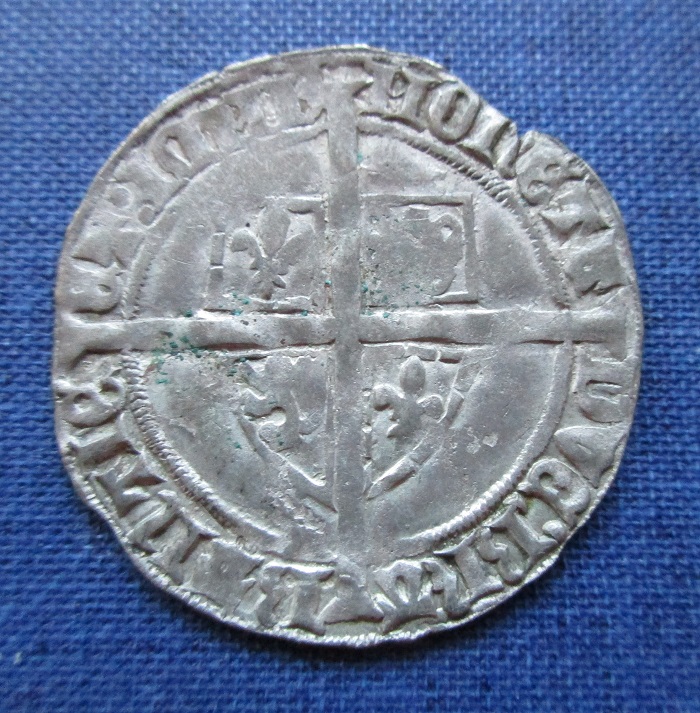 Obv: Crouching, helmeted lion left. AnThOnIVS DeI GRA DX BRABAnTIe. LOVAn' in exergue. Rev: Long cross pattee. MOneTA DVC BRABAnTIe eT LIMB Edited by tdziemia
11/21/2021 08:36 am
|
|
Pillar of the Community
United States
3552 Posts |
@tdziemia
Excellent narrative; I learned a lot of interesting facts.
|
|
Moderator
United States
34572 Posts |
The Second Emission on these French Gros dit "Florette" was authorized on October 21, 1417 AD and it would be a little more than four months before the Third Emission began on March 7th, 1418 AD. We gone back and forth on these a bit, but for the purposes of my collection, I'm inclined to call this one as datable to 1417. I'm fine with those who prefer to expand this to the range of 1417 to 1418 AD. In any case, it was minted in Rouen and is attributed as Duplessy 387a and Roberts 2882. I love the letterform for the letter K on this coin. 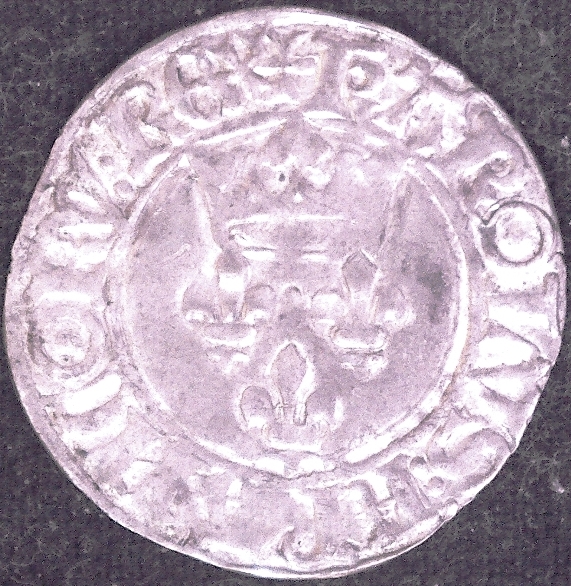 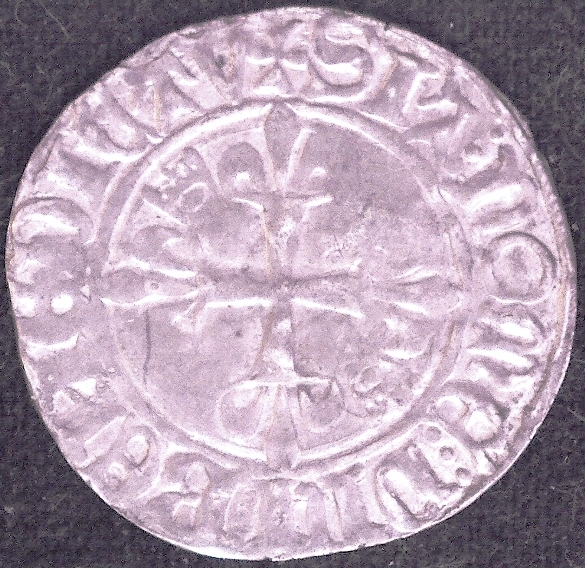 "If you climb a good tree, you get a push."
-----Ghanaian proverb
"The danger we all now face is distinguishing between what is authentic and what is performed."
-----King Adz
|
|
Pillar of the Community
United States
870 Posts |
Henry V AR Penny, 1413-1422, York, 17.2mm, 0.85g, 90°, Sp# 1787 Obv: +HEN]RIC REX ΛNGLIE, Crowned facing bust of King Henry V, mullet to left, annulet to right. Rev: CIVI TΛS x EBO RACI, Long cross pattee with quatrefoil at center, trefoils in quarters. 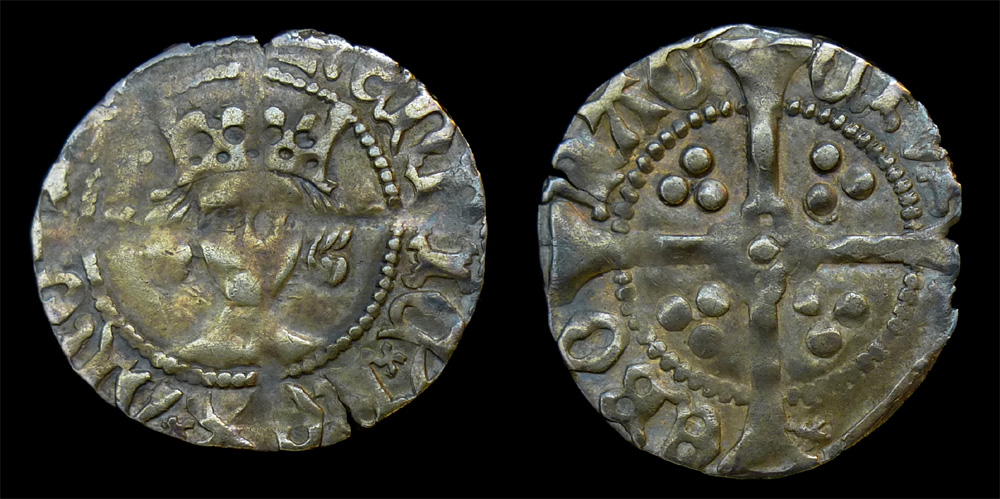 Edited by MartiVltori
11/21/2021 2:40 pm
|
| |
Replies: 1,279 / Views: 81,831 |





 First Page
 Previous Page


 Posted 11/19/2021 10:36 am


