| Author |
 Replies: 1,279 / Views: 81,829 Replies: 1,279 / Views: 81,829 |
|
|
|
Moderator
  United States
34572 Posts |
Quote:
those Russian coins are great.
 Here is a duo from France: two Blancs dateable to 1422 and 1423 AD. The first coin was minted in Rouen and has an obv inscription of FRANCORVM ET ANGLIE REX and a rev inscription of SIT NOMEN BENEDICTV HENRUCVS. It is attributed as Duplessy 445 and Roberts 2963. 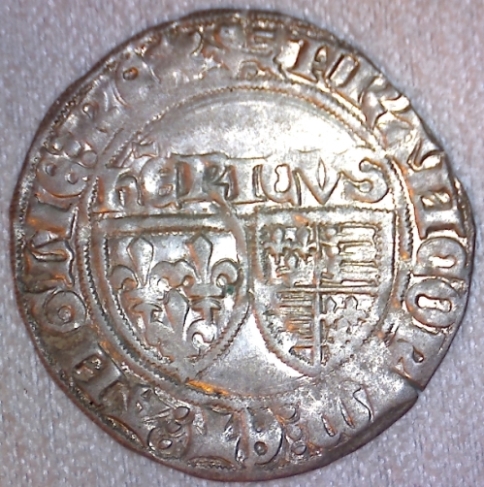 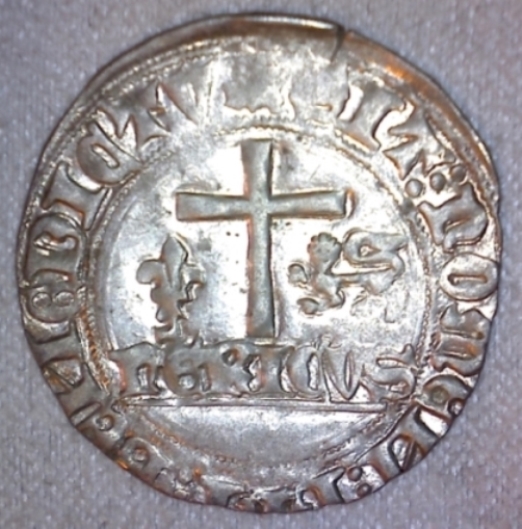 The second coin is attributed as Duplessy 462 and Roberts 3002. I don't love the ragged flan, but I suppose it is a bit like @tdz's coin in that respect. 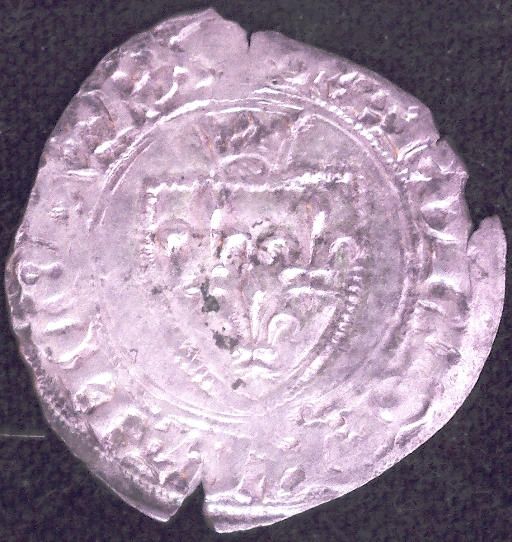 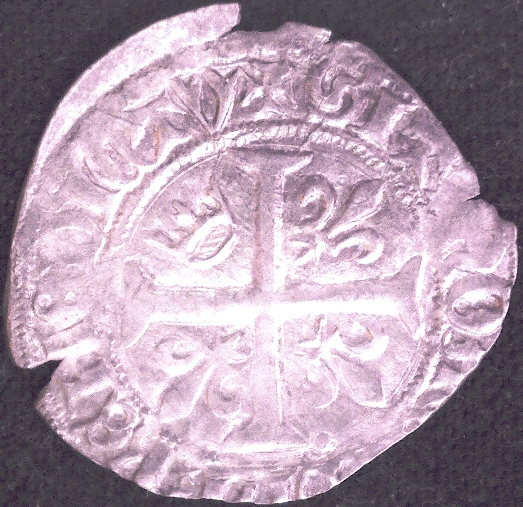 "If you climb a good tree, you get a push."
-----Ghanaian proverb
"The danger we all now face is distinguishing between what is authentic and what is performed."
-----King Adz
|
|
Pillar of the Community
Russian Federation
5186 Posts |
Quote:
@JohnC those Russian coins are great. I want to get some of those some day but they're almost always barely legible and/or far above my budget. Usually both. Nice blancs @Spence! With the new addition of 1423 we're now down to only three dates not yet posted for this decade: 1429, 1425 and 1424. |
|
Moderator
United States
34572 Posts |
Well 1424 and 1425 AD are holes in my collection, but this Double Gros minted in Tournai is from the second emission and therefore datable to 1429 AD. It is attributed as Duplessy 480A. 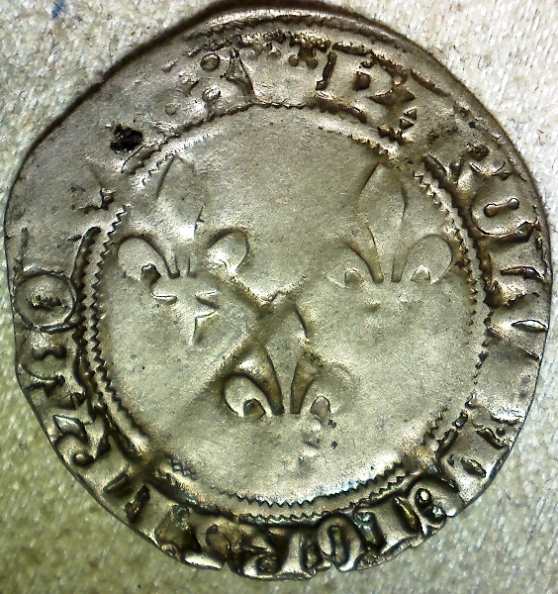 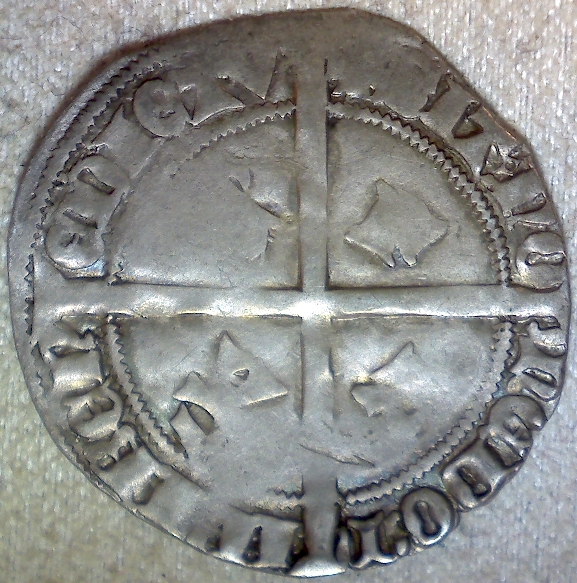 "If you climb a good tree, you get a push."
-----Ghanaian proverb
"The danger we all now face is distinguishing between what is authentic and what is performed."
-----King Adz
|
|
Pillar of the Community
United Kingdom
725 Posts |
It's amazing how many European coins there are datable to a single year. In England the cryptic symbols and mintmarks rarely get you closer than a few years. Russia is even worse. Quote:
@JohnC those Russian coins are great.
I want to get some of those some day but they're almost always barely legible and/or far above my budget. Usually both. Thank you. Yes, some early Russian coins can be very expensive if they have a good strike. They're also terrible for this thread as you can often only date them to a prince's reign or even several reigns. These coins from the independent states have very loose dates, all starting in the 1420s. Because they didn't change the design much, they're usually not expensive. They're a little comical, especially 'Mr Chad' from Ryazan. Ivan Feodorovich Denga, 1427-1456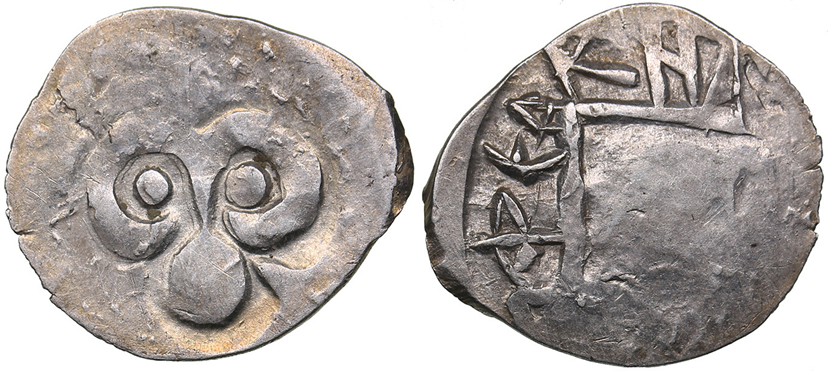 Ryazan. Silver, 1.0g. Large countermark 'ball nose' tamga on a Golden Horde dang. Reverse IV, legend 'Seal of Prince Ivan Fed' (HP II 2340 E).Novgorod Denga, 1420-1478 Ryazan. Silver, 1.0g. Large countermark 'ball nose' tamga on a Golden Horde dang. Reverse IV, legend 'Seal of Prince Ivan Fed' (HP II 2340 E).Novgorod Denga, 1420-1478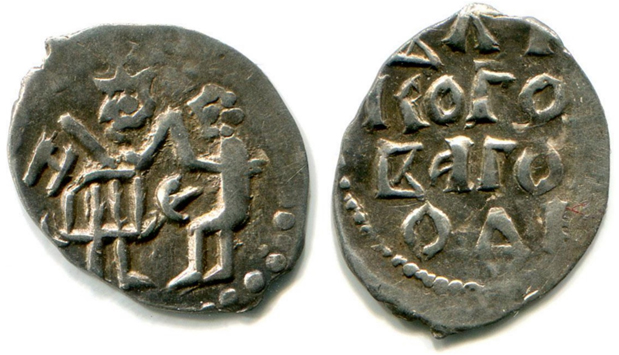 Novgorod. Silver, 0.65g. Homage scene with prince on throne. 'Of Great Novgorod' (HP 7555 A). Novgorod. Silver, 0.65g. Homage scene with prince on throne. 'Of Great Novgorod' (HP 7555 A). 1478 was when Novgorod was annexed by Moscow. Pskov Denga, 1425-1510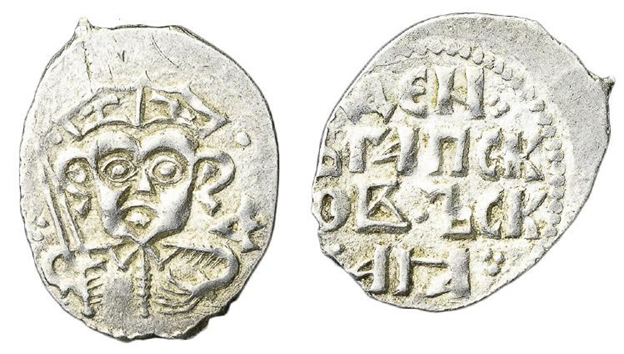 Pskov. Silver, 0.72g. Prince Dovmont. Den-ga Psk-ovsk-ovo ('of Pskov') (II Tolstoy 229). Pskov. Silver, 0.72g. Prince Dovmont. Den-ga Psk-ovsk-ovo ('of Pskov') (II Tolstoy 229).Edited by JohnConduitt
11/16/2021 2:34 pm
|
|
Pillar of the Community
 United States
8076 Posts |
Quote:
It's amazing how many European coins there are datable to a single year. I think @erafjel has commented on another thread about the French royal system of coinage decrees, and what it meant about the likely date of actual minting. I think the system in the Low Countries was similar. In some instances, the ducal edicts that authorized the coinage can be combined with mint records to narrow it to within a calendar year or at least a 12 month period. While my 1427 coin is listed in auction catalogs as "emission of 1427," the coin could theoretically have been minted as late as November 1428, when the 1427 decree was superceded by a new decree (which specified the use of the barred A to distinguish from earlier coinage). Likewise, the "emission of 1428" type might have been minted into the next year. Then there is the matter of the calendar "turning over" on Easter back then in this part of the world ... So, the year 1428 only began on April 13. For Florence, the mintmasters (one for gold, one for silver) changed twice per year most years, for reasons I don't understand. The sigla of the mintmaster (often the family coat of arms) was incorporated in the coin design, and can be used to date the coin to a 6 month period as long as there are records for when each mintmaster served, which seems to be the case for much of the 15th-16th centuries, as well as parts of the 14th. Similar system for Venice, though the tenure of the mintmasters does not seem to have been restricted to 6 months, so Venetian coins are only sometimes datable within a year. For the 1440s and 1450s, I identified 4 years where Venetian coins might be attributable to a single year (1443, 1447, 1450 and 1452). I don't know the system in Humgary, but suspect it is similar to Venice since we see pairs of letters as on Venetian coins. |
|
Moderator
United States
34572 Posts |
Quote:
It's amazing how many European coins there are datable to a single year. I agree. How about this uniface Pfennig from Austria datable to 1427 AD? It is attributed as Szego 2L13. For some dumb bunny reason I bought a duplicate a few years back and this is the one that is in better condition. 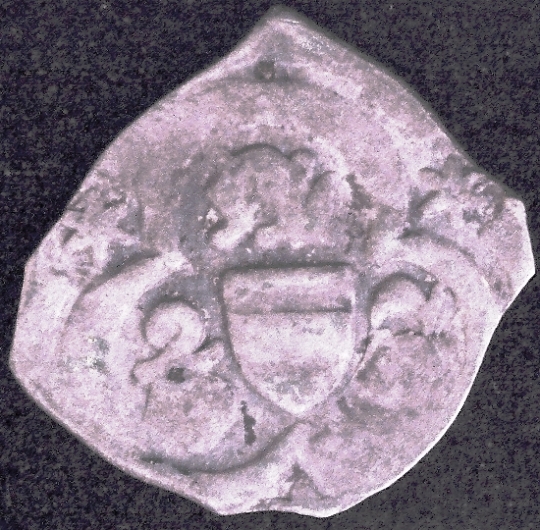 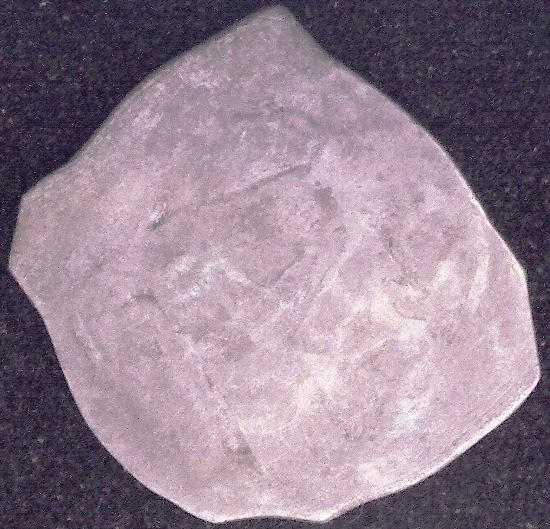 This is my last coin issued in a single year for now, but I've got a couple more to post tomorrow and then I'm completely done until we drop back another decade. "If you climb a good tree, you get a push."
-----Ghanaian proverb
"The danger we all now face is distinguishing between what is authentic and what is performed."
-----King Adz
|
|
Pillar of the Community
Sweden
2124 Posts |
Quote:Quote:
It's amazing how many European coins there are datable to a single year. I think @erafjel has commented on another thread about the French royal system of coinage decrees, and what it meant about the likely date of actual minting. Indeed he did  Here is that comment: http://goccf.com/t/365955#3141468Basically one cannot in general say with certainty that coins are minted only the year of the decree, but often that is the case since minting was done in batches. I have no coins for the 1420s, but for the upcoming decade I have two dateable to 1413 sharp!  |
|
Pillar of the Community
United States
1186 Posts |
I don't have any dateable ones for this decade and the date ranges will be too wide even for this thread the next 2 decades. For this decade the date ranges are just narrow enough. All of these will be 1427-37 Hungarian Denars under King Sigismund of Luxemburg. 1. C-S mint mark;Huszar 578,Unger 450n,Pohl 118-5. 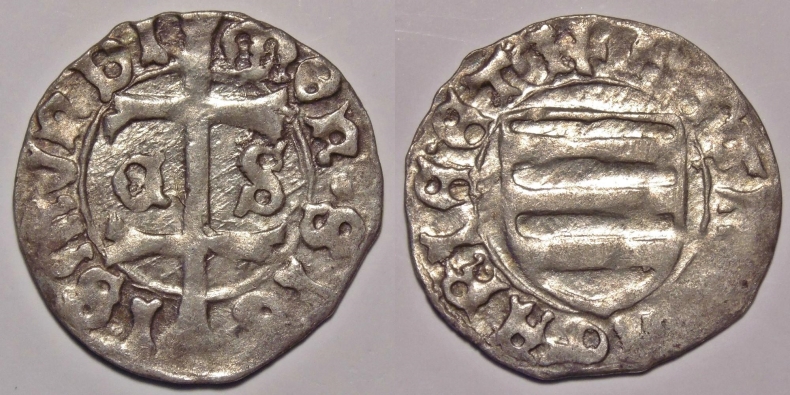 2. h-S mint mark;Huszar 578,Unger 450p,Pohl 118-8. 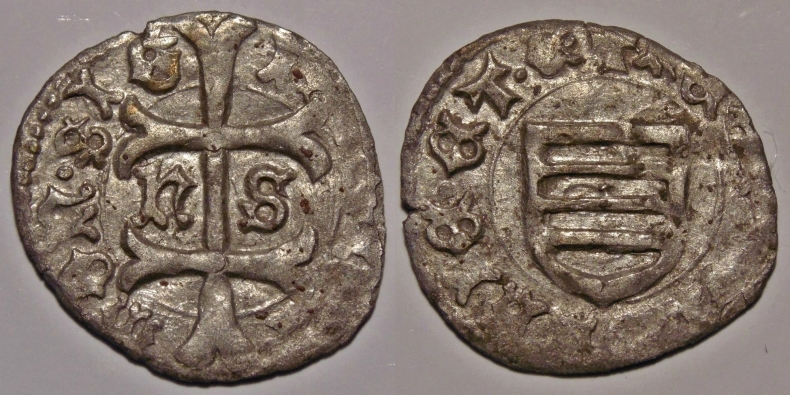 3. n-n mint mark;Huszar 578,Unger 450z,Pohl 118-25,Rehy II-124A. 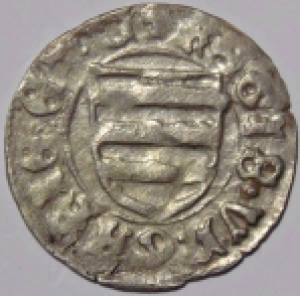 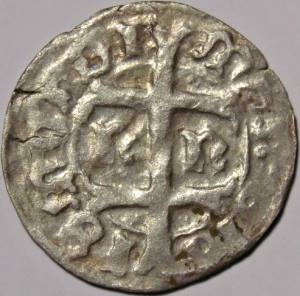 Edited by EddieDiz
11/17/2021 12:46 pm
|
|
Pillar of the Community
United Kingdom
725 Posts |
Quote:
Basically one cannot in general say with certainty that coins are minted only the year of the decree, but often that is the case since minting was done in batches. That's very interesting. It's lucky the documentation survived. But it shows how much work goes into dating coins. Talking of which, I have this Henry VI groat dated 1427-1434 by the various and revered auction houses that have sold it before. So in theory I can post it now. But I'm not so sure - it's a mule of two issues that seem to have crossed over in 1435. But what do I know. Henry VI First Reign Groat, 1427-1434, or perhaps 1435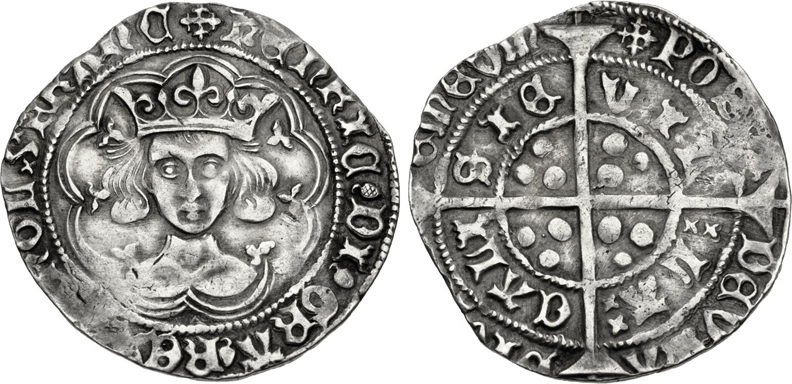 Calais. Silver, 28mm, 3.9g. Pinecone-mascle/Leaf-trefoil mule. +hENRIC.DI.GRA.REX.ANGL.S.FRANC. +POSVI DEVM:A DIVTOR EMEVM; VIL:LA: CALI SIE. Cross patonce mintmark (S 1875/1899). Calais. Silver, 28mm, 3.9g. Pinecone-mascle/Leaf-trefoil mule. +hENRIC.DI.GRA.REX.ANGL.S.FRANC. +POSVI DEVM:A DIVTOR EMEVM; VIL:LA: CALI SIE. Cross patonce mintmark (S 1875/1899). Ex Ivan Buck. It's from the Reigate Brokes Road (Surrey) Hoard, found in 1990 not far from a 1972 discovery of 987 coins. Two pottery jugs contained 6,705 groats, half-groats and pennies, stacked vertically in concentric circles. It was the largest post-1351 British hoard. Like the 1972 hoard, the coins dated from 1272 to 1455 and were mostly of Henry VI. It was abandoned around 1454, the year of peace between the Hundred Years' War and the Wars of the Roses. |
|
Pillar of the Community
Russian Federation
5186 Posts |
I wonder why the Calais coins were (consistently, it seems) labelled VILLA instead of CIVITAS. Was there some important difference in the status of Calais as opposed to the other mint cities?
|
|
Pillar of the Community
United Kingdom
725 Posts |
Quote:
I wonder why the Calais coins were (consistently, it seems) labelled VILLA instead of CIVITAS. Was there some important difference in the status of Calais as opposed to the other mint cities? I think it means 'town' instead of 'city'. 'Villa' applies to Bristol and Calais; 'Civitas' applies to Durham, York and London. Note in Britain, we are much more particular about what counts as a city than many other places, especially the US. Edited by JohnConduitt
11/17/2021 5:02 pm
|
|
Pillar of the Community
Russian Federation
5186 Posts |
Quote:
But I'm not so sure - it's a mule of two issues that seem to have crossed over in 1435. Normally when the obverse and reverse are from different series, it's an indicator that the correct date is that of the newer die, and the older die was left over. However, I have to admit that in this case (no leaves or trefoils in the reverse legend - nor pinecones or mascles*) it might instead be an indicator that perhaps the reverse die was incorrectly assigned to a period. How had it been attributed as a "leaf-trefoil" type? The 1435 date seems plausible anyway (and would be neat if true, because it's one of the relatively few years we're still missing). OTOH I can't see any reason why it couldn't be, say, 1436 or 1437. *) nor any visible mascles in the obverse legend, as it happens, because the place where the mascle would have been is a weak spot at 7h, but AFAICT there are no other pinecone types |
|
Pillar of the Community
United States
3552 Posts |
Quote:
...full description of the coins for those who are unfamiliar ...when consistently done, a very helpful suggestion for an abecedarian like me. Edited by mdpmedia
11/17/2021 9:26 pm
|
|
Pillar of the Community
United Kingdom
725 Posts |
Quote:
However, I have to admit that in this case (no leaves or trefoils in the reverse legend - nor pinecones or mascles*) it might instead be an indicator that perhaps the reverse die was incorrectly assigned to a period. How had it been attributed as a "leaf-trefoil" type? This is a good question. Apparently, the reverse is from the same die as a Calais 'trefoil' groat from the same hoard. But the trefoil series (1438-1443) was struck quite a bit after the pinecone-mascle series (1430-1434), while the leaf-trefoil series (1435-1438) followed directly afterwards. The Calais mint wasn't producing much at this time, so I suppose it's possible it could've been used in both series. It was described in the various auctions as 'leaf?-trefoil', so they hedged their bets. |
|
Moderator
United States
34572 Posts |
Great additions to the thread today! Here is a 1st cousin to @john's Groat. Mine was also minted in Calais, but is attributed as S-1826. I believe that it can be dated to between 1422 and 1427 AD. The obv inscription is HENRIC DI GRA REX ANGL Z FRANC and the rev inscription is POSVI DEVM ADNTORE MEVM VILLA CALISIE. 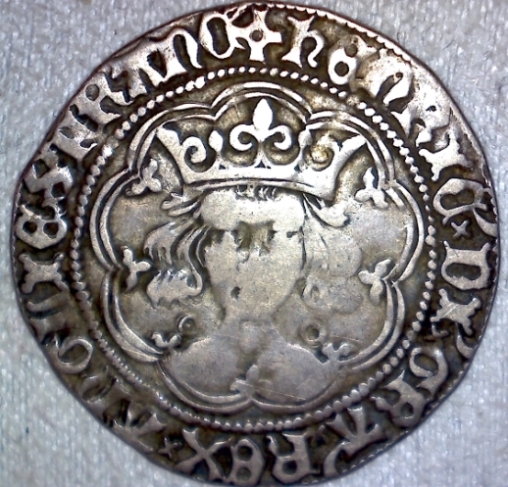 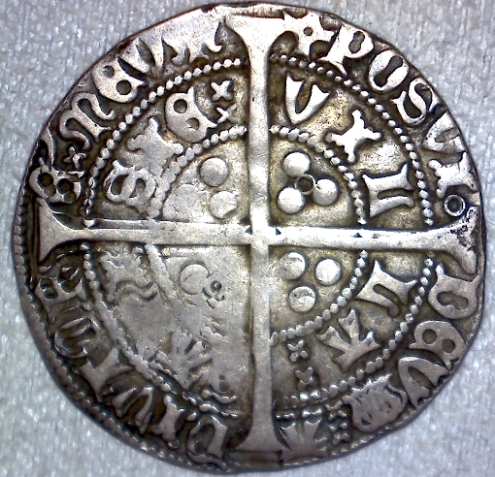 "If you climb a good tree, you get a push."
-----Ghanaian proverb
"The danger we all now face is distinguishing between what is authentic and what is performed."
-----King Adz
|
| |
Replies: 1,279 / Views: 81,829 |





 First Page
 Previous Page


 Posted 11/16/2021 01:10 am


