| Author |
 Replies: 1,279 / Views: 81,474 Replies: 1,279 / Views: 81,474 |
|
|
|
Moderator
  United States
34562 Posts |
@david, thx for posting this, but we are actually taking a more leisurely path backwards in time with this round and each decade is generally going to be getting a full week rather than a day. Therefore, we are still in the decade of the 1590s right now. I look forward to seeing your Sixpence next week though!  "If you climb a good tree, you get a push."
-----Ghanaian proverb
"The danger we all now face is distinguishing between what is authentic and what is performed."
-----King Adz
|
|
Pillar of the Community
Russian Federation
5186 Posts |
Quote:
Mint Pskov. Mintmark PSRZ (off flan). In fact the "RZ" part (looks like P3) is the date: (7)107 AM = 1598/9 AD. Interesting type! I don't have that one and should probably try to get it. Here's my PSRZ (last letter not very legible), but with corrected name of Boris (KG 193)... 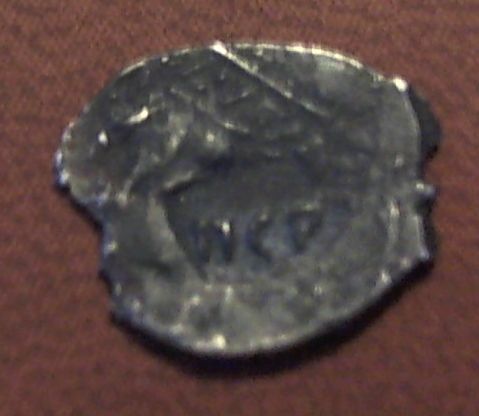 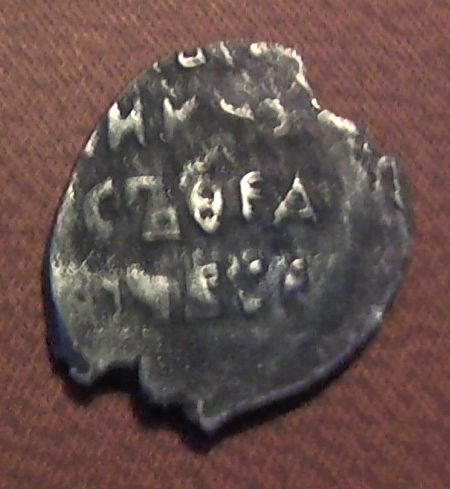 Sorry for the quality, those photos were taken with a webcam of all things! Somehow since 2014 I never bothered to take better pics of this coin (that I could recall, at least). |
|
Pillar of the Community
United Kingdom
725 Posts |
Quote:
Here's my PSRZ Yes you have the exact part I'm missing from the same obverse die! Quote:
In fact the "RZ" part (looks like P3) is the date: (7)107 AM = 1598/9 AD. Well that is very interesting. I never realised! It seems many of these wire kopeks I've assumed are undated are dated after all. For anyone else bemused by this, I found this page to show which Cyrillic letters represent which numbers: https://russianicons.wordpress.com/...date-system/This shows R = 100 and Z = 7, so RZ is 107. It also gives the formula for working out the date, since year zero is 5508 years earlier in Old Russian (at least it was after 1492). They were going for the date of Creation, rather than the birth of Christ: Cyrillic letter - 5508 = Julian date.So if RZ is 107, an abbreviation of 7107, we have: 7107 - 5508 = 1599 in the Julian Calendar. Of course, we then have to translate that into the Gregorian Calendar. At that time, New Year in Russia was on 1 September. (It was on 1 September from 1492 to 1700, when moderniser Peter the Great changed it to 1 January. But since Russia kept the Julian Calendar until 1918, their 'old' New Year got out of sync again and is now on January 14). So 1599 on the coin in the modern calendar would be September 1598 to August 1599. I think. Edited by JohnConduitt
07/26/2021 8:51 pm
|
|
Moderator
United States
34562 Posts |
Ok we are slowing down a bit with coins from the 1590s, so I'll give it another day or two and then we can drop back to the 1580s. How about Saturday? Or is it best to just wait until Sunday at that point?
"If you climb a good tree, you get a push."
-----Ghanaian proverb
"The danger we all now face is distinguishing between what is authentic and what is performed."
-----King Adz
|
|
Pillar of the Community
 United States
8056 Posts |
I was thinking the same thing.
You could declare "last call" for 1590s since we haven't had a new coin in something like 60 hours. And move ahead tomorrow or Saturday. That gives the whole weekend for everyone to dig out their 1580s coins.
|
|
Moderator
United States
34562 Posts |
Ok super. This is "last call" for posting your 1590s coins. Starting on Saturday we will drop back to the 1580s.
"If you climb a good tree, you get a push."
-----Ghanaian proverb
"The danger we all now face is distinguishing between what is authentic and what is performed."
-----King Adz
|
|
Pillar of the Community
United Kingdom
725 Posts |
It's Saturday here already so I get a head start  For the 1580s I have an Elizabeth I halfpenny from her 6th coinage (1582-1600), the first of Elizabeth's to include halfpennies. This was the smallest denomination she issued despite demand for smaller change, since at 0.24g it was already impractical. The date is more precise because the mintmark was only used from 1582-4. It features the portcullis, which appeared on pennies of Elizabeth II 400 years later. Elizabeth I Halfpenny, 1582-4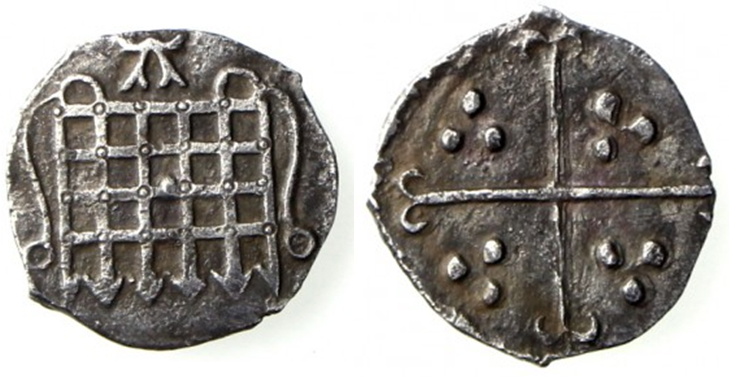 Tower. Silver, 9mm, 0.24g. Portcullis Gate with chains, mintmark A. Long cross fourchee, three pellets in each field (S 2581). Tower. Silver, 9mm, 0.24g. Portcullis Gate with chains, mintmark A. Long cross fourchee, three pellets in each field (S 2581). |
|
Pillar of the Community
United States
8056 Posts |
Very neat coin! (and VERY tiny!) Duchy of Lorraine, 1/4 teston, undated, Charles III (1545-1608) Obv: Elderly bust, right; armored and bareheaded. CAROL D G CAL LOTH B GEL DVX (Charles, by the grace of God, Duke of Calabria, Lorraine, Bar and Gelderland) Rev: Crowned arms of Lorraine (and all those other places). Crowned Lorraine cross on each side of shield. MONETA NOVA NANCEII CVSA (New coinage struck in Nancy), Initial G for mintmaster Nicolas Gennetaire. Boudeau 1534. Though Charles' reign spanned seven decades (one more than Elizabeth), this elderly bust followed several younger versions some of which appeared on coins dated up to 1583. For this 1/4 teston, Numista gives a date range 1582-1608, CGB dates this coin "from 1582." INumis dates it "circa 1584." A dated version from 1587 with the same bust exists. This uncertainty means it would not have been able to move us back. 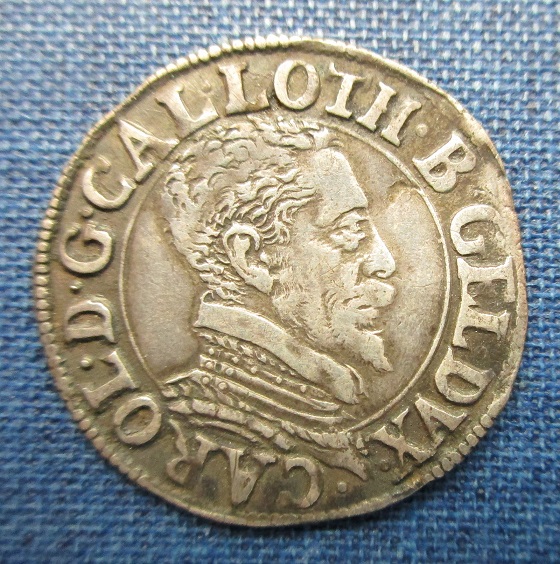 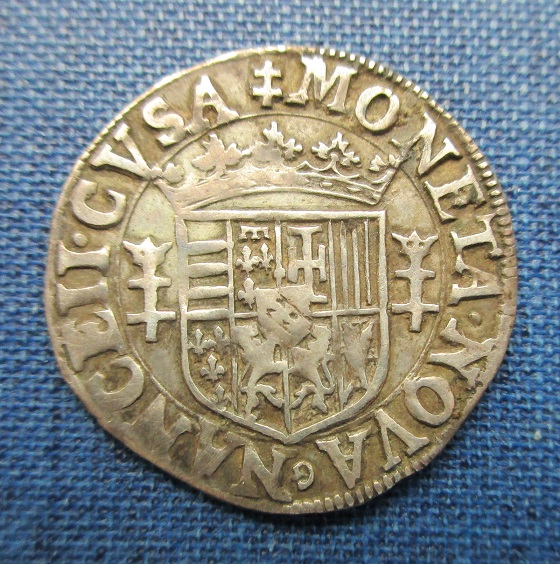 Edited by tdziemia
07/31/2021 08:28 am
|
|
Moderator
United States
34562 Posts |
Some great coins posted for this decade so far! I'm adding this Half Öre from Sweden dated 1580 AD. The inscriptions are "JOHANNS 3 DG SVEG REX IR" and "MONETA NOVA REG SVE 80". The attribution is Ahl-89. I've had it for nearly a dozen years, but this was one of the last coins that I bought from this decade. 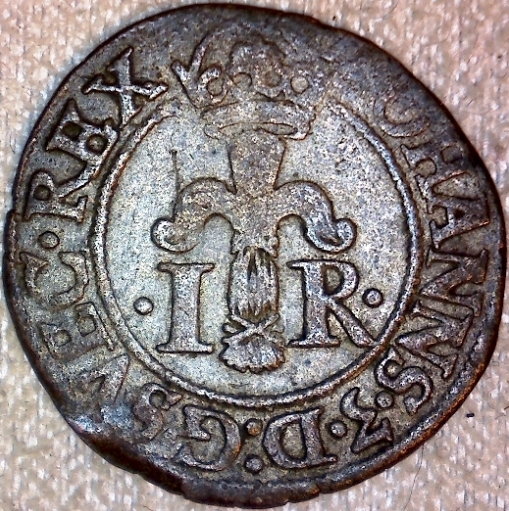 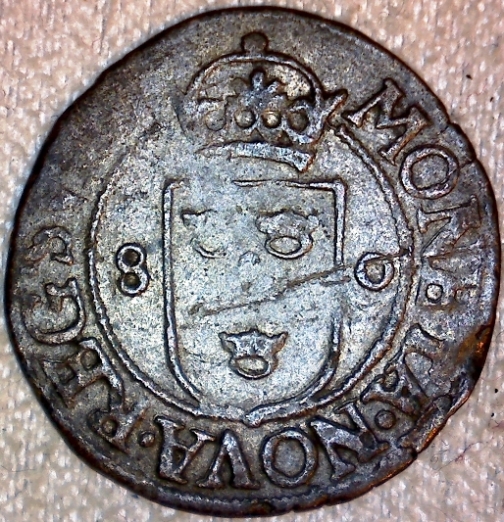 "If you climb a good tree, you get a push."
-----Ghanaian proverb
"The danger we all now face is distinguishing between what is authentic and what is performed."
-----King Adz
|
|
Pillar of the Community
Spain
2752 Posts |
Very nice all! @JohnConduitt...I've never seen this type before, sweet little coin....Now if you're going to write an 'A' that's the way to do it..Pretty!  |
|
Pillar of the Community
Sweden
2124 Posts |
A fantastically neat English coin, some (as always) nice Lorraine silver, and even a Swedish ½ öre! What a great start for the 1580s! Navarre/Bearn 1580, 1 franc, Henry II/III, Pau mint. 13.6 g, 35.5 mm. Duplessy (Feodales) 1319, Roberts 6993. 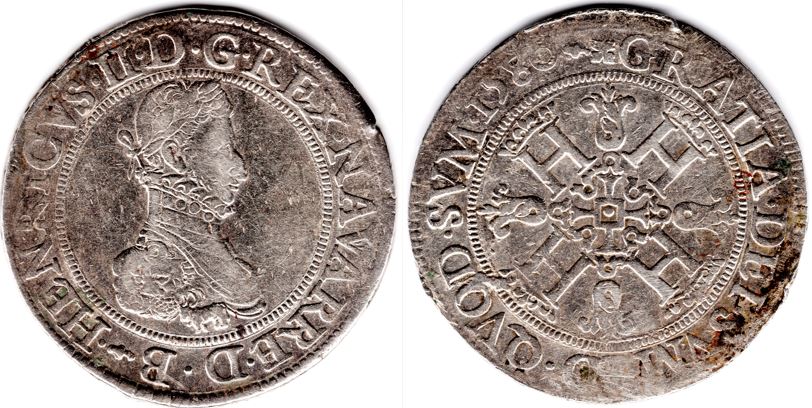 Obv: Henry III of Navarre, also Lord Henry II of Bearn (and future king Henry IV of France), here in his twenties. The cow below the bust is the symbol for Bearn. Inscription: HENRICVS II Dei Gratia REX NAVARRaE Dominus Bearnie (Henry II by Grace of God King of Navarre, Lord of Bearn). Rev: Flowered cross with crowned H's. Inscription: GRATIA DEI SVM ID QVOD SVM (By the Grace of God, I am what I am). This is the motto of Bearn. The Navarrese province of Bearn minted its own coins, with the same design as the coins of Navarre (and of France, with which Navarre's monetary system was harmonized), but with different coat of arms and modified inscriptions. On the coins from Bearn, Henry's lordship is signified by the letters DB - Dominus Bearnie - after his regal title (REX NAVARRAE D B). |
|
Pillar of the Community
United States
8056 Posts |
Lovely coin. Hard to keep track of what was and wasn't part of "France" back then. I'll make it 5 different issuing entities with this giulio from the Grand Duchy of Tuscany dated 1585. Obv: Crowned Medici arms. FRAN M MAGN DVX ETRURIAE II (Francesco Medici, second Grand Duke of Etruria (Tuscany). Rev: Standing figures of St. John the Baptist (left) and St. Francis of Assissi. DIVIS in exergue. IOH B PROT FRANCISC. MIR 192. 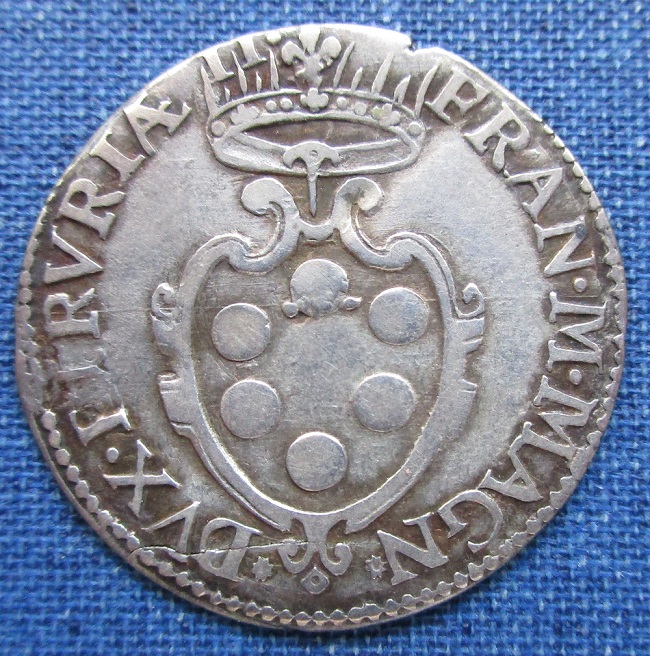 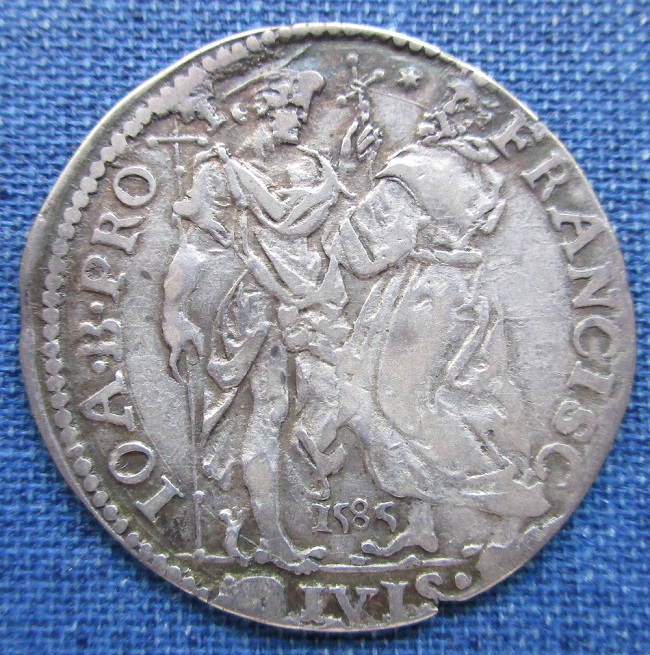 |
|
Pillar of the Community
United Kingdom
2624 Posts |
Sorry Spence, I saw it was after midnight and rushed ahead. 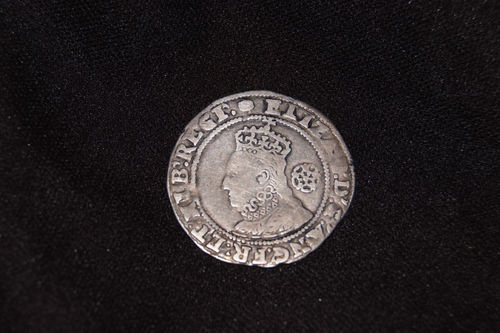 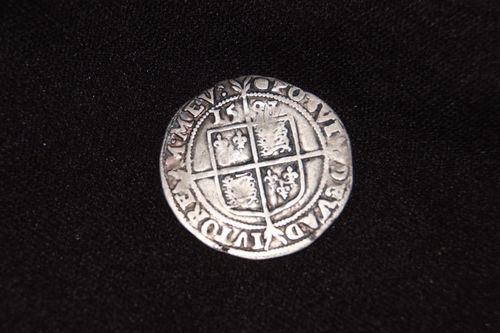 Silver sixpence dated 1587 Elizabeth I, these tend to have very worn portraits. |
|
Moderator
United States
34562 Posts |
Don't stress at all--we've shifted things up a bit for this newest version. I'm really glad to see that you've got some coins to post!
"If you climb a good tree, you get a push."
-----Ghanaian proverb
"The danger we all now face is distinguishing between what is authentic and what is performed."
-----King Adz
|
|
Pillar of the Community
Sweden
2124 Posts |
Quote:
I'll make it 5 different issuing entities Well, let's make that six then  . Here is a genuinely French coin. France 1584, 1 franc, Henry III, Toulouse (M). 13.9 g, 34.7 mm. Duplessy 1130A, Sombart 4720, Roberts 3612. 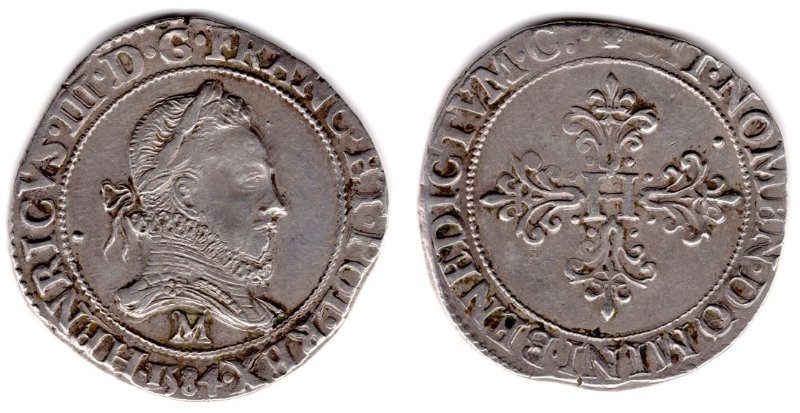 Obv: Henry III, in his best ruff collar. Inscription: HENRICVS III Dei Gratia FRANCiae ET POLoniae REX (Henry III by Grace of God King of France and Poland). Rev: Floreated cross with fleurs-de-lys, center H for Henry. Inscription: SIT NOMEN DOMINI BENEDICTVM (Blessed be the name of the Lord). Mint marks: C (after BENEDICTVM) stands for the mint master, Pierre Catellan. The shell at 12 o'clock is the mark of the engraver, Jean Martin. Mintage: 186,300 (according to Sombart). Henry III of France was brother-in-law and distant cousin of Henry III of Navarre. He kept the title of King of Poland, although he had effectively lost the Polish throne in 1575. It was Henry who began minting franc coins in 1578. This the largest silver coin was equal to 1 livre tournois. Its size and the uneven shape resulting from it being hammered* invited to clipping and forging, and it was rarely minted after 1586. * The Navarrese franc from 1580 I showed in my previous post is milled; the mint in Pau was an exception with its milled coinage at this time. |
| |
Replies: 1,279 / Views: 81,474 |






 First Page


 Posted 07/26/2021 6:35 pm


